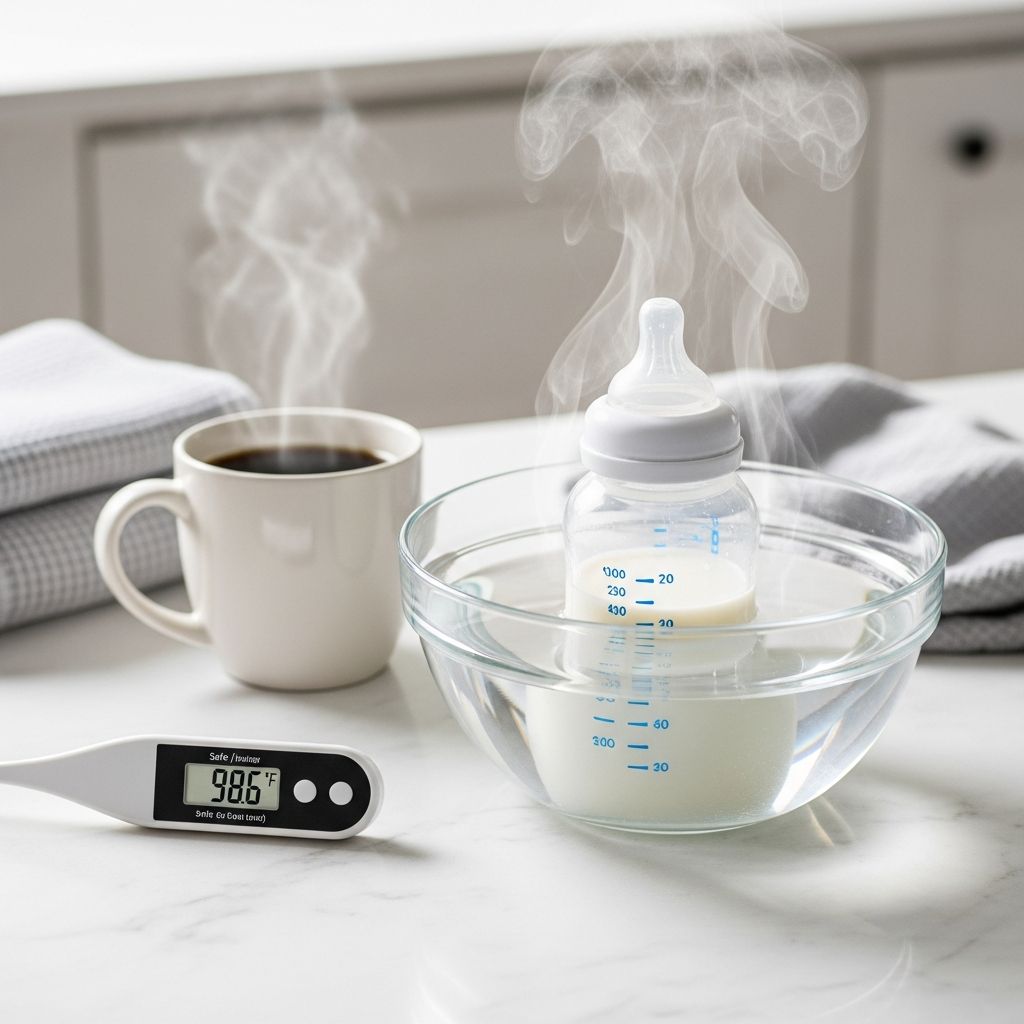
Expressing breast milk takes time, effort, and emotional energy, so understanding exactly how to warm and reheat it safely helps make sure none of that liquid gold goes to waste. This guide explains how to store, thaw, warm, and occasionally reheat breast milk while keeping your baby safe and preserving as many nutrients and immune factors as possible.
Why Warming Breast Milk Correctly Matters
Breast milk is a living fluid filled with proteins, fats, antibodies, enzymes, and beneficial bacteria that can be damaged by high heat or poor handling. Warming milk gently protects these components, helps prevent hot spots that could burn your baby, and supports both safety and nutrition.
Some babies happily drink cool or room-temperature milk, but others strongly prefer milk that feels close to body temperature. Knowing how to bring milk to a comfortable warmth without overheating it gives you flexibility and confidence, especially for nighttime feeds and feeds outside the home.
Storage Basics Before You Even Think About Reheating
Safe reheating starts with proper storage from the moment milk is expressed. Clean collection, correct containers, and clear labeling reduce the risk of bacterial growth and make it easier to know what can be safely used or needs to be thrown away.
- Wash hands thoroughly before pumping or handling breast milk.
- Use clean, food-grade containers designed for human milk, such as breast milk storage bags or BPA-free bottles with tight lids.
- Label each container with the date (and time if possible) the milk was expressed.
- Store smaller portions (for example, 2–4 ounces / 60–120 ml) to limit waste if baby does not finish a bottle.
General Time Limits for Stored Milk
Always follow the guidelines recommended by your pediatrician, hospital, or local health authority, as recommendations may vary slightly. As a rough, commonly used framework for healthy full-term babies:
| Location | Temperature | Approximate Maximum Time |
|---|---|---|
| Room temperature | Up to about 25℃ / 77℉ | About 4 hours (some sources allow slightly longer if very clean) |
| Refrigerator | About 4℃ / 39℉ | Up to 4 days for freshly expressed milk |
| Freezer (fridge with freezer compartment) | Approximately -18℃ / 0℉ or colder | Best within 6 months; acceptable up to 12 months if consistently frozen |
These timeframes assume healthy, full-term infants; babies born prematurely or with medical conditions may need stricter limits set by a healthcare provider.
Thawing Frozen Breast Milk Safely
Before reheating, frozen milk needs to be thawed in a way that prevents rapid bacterial growth and avoids exposing the milk to high temperatures. Planning ahead makes this step much less stressful, especially on busy mornings.
- Refrigerator thawing: Place the frozen bag or bottle in the refrigerator for several hours or overnight. This is the gentlest and safest method and is ideal when you can plan feeds in advance.
- Cool water bath: If you need milk more quickly, submerge the sealed container in a bowl of cool water, changing the water as it warms up until the milk is mostly thawed.
- Avoid leaving it on the counter: Letting frozen milk sit at room temperature for long periods can allow bacteria to multiply and is not considered best practice.
Once thawed, use the milk within 24 hours if it is kept in the refrigerator, and never refreeze thawed breast milk. Refreezing can damage the milk’s protective properties and increases the risk of spoilage.
Ideal Temperature for Warmed Breast Milk
Human body temperature is around 37℃ (98.6℉), and many babies prefer milk that is close to this, but your baby does not need perfectly exact measurements. Think “comfortably warm to the touch,” not hot, and always test the milk first.
- Shake a few drops onto the inside of your wrist; it should feel lukewarm or slightly warm, never hot.
- If it feels hot on your skin, it is too hot for the baby’s mouth and should be cooled before offering.
Remember that some babies are perfectly content with milk that is only slightly cool or just below room temperature, which can save time and avoid repeated warming cycles.
Step-by-Step: Warming Refrigerated Breast Milk
When milk has been stored in the refrigerator and is ready for a feed, the aim is to warm it gently and evenly. Rushing the process with high heat can destroy some immune factors and create dangerous hot spots.
- Check the label: Confirm that the milk is within its recommended storage time and looks and smells normal.
- Loosen or remove the cap: This helps equalize pressure as the milk warms.
- Use a warm water bath: Place the bottle or storage bag in a bowl or cup of warm (not boiling) water for several minutes. You can also use an electric bottle warmer set to a gentle setting if you follow the manufacturer’s instructions.
- Swirl, don’t shake: Gently swirl the bottle to mix separated fat back into the milk. Vigorous shaking can damage some of the milk’s delicate proteins.
- Test the temperature: Put a few drops on the inside of your wrist. If it feels comfortably warm, the milk is ready; if it is still cool, warm it for another minute and retest.
Try to warm only what you expect your baby to drink in that sitting. This reduces the need to reheat the same milk again, which can affect quality and safety.
How to Handle Reheating Previously Warmed Milk
The question many parents ask is whether it is safe to reheat milk that has already been warmed once. There is no single worldwide rule, but most safety-focused guidance leans toward limiting how many times a bottle is warmed to keep bacterial growth and nutrient loss lower.
As a practical house rule, many families choose to warm a bottle only once or at most twice, and then discard any leftover milk after a short period. This approach may feel wasteful, but it offers a larger margin of safety, especially for very young babies.
Common Reheating Scenarios
- Baby takes a few sips and stops: Keep the bottle at room temperature for up to about 1–2 hours. If the baby does not return to finish within that time, throw the milk away rather than refrigerating it again.
- Warmed bottle never offered: If the bottle was warmed but the baby fell asleep and never drank from it, many parents choose to cool it promptly and reuse it within a few hours, but not more than once more, depending on their pediatrician’s advice.
- Partially eaten refrigerated bottle: Once your baby’s mouth has touched the nipple, bacteria from the mouth begin to enter the milk. Repeatedly reheating this same bottle increases risk, so it is generally safer not to reheat more than once.
Because guidance can differ slightly, ask your pediatrician or lactation consultant what policy they recommend for your particular baby, especially if your baby was premature or has health conditions.
Never Use a Microwave for Breast Milk
Microwaving breast milk may seem convenient, but it is strongly discouraged. Microwaves can heat unevenly, creating pockets of very hot liquid that may not be obvious when you test just a drop on your skin.
- Hot spots can burn your baby’s mouth and throat even if the outside of the bottle feels only warm.
- High, rapid heat can damage the antibodies, enzymes, and other protective components in breast milk.
If family members or caregivers are tempted to use the microwave, post a note near the appliance or include microwave-free warming instructions with your baby’s milk to avoid accidents.
Recognizing When Reheated Milk Should Be Discarded
Even with careful storage and reheating, there will be times when milk needs to be thrown away. While this can feel frustrating, especially for pumping parents, prioritizing safety is more important than saving every ounce.
- Unusual smell: Breast milk can smell slightly soapy or metallic because of natural lipase, but a strongly sour or rotten odor is a concern.
- Odd appearance: Fat separating into a creamy layer on top is normal and can be mixed back in by swirling, but clumps that do not mix or a curdled look may suggest spoilage.
- Excess time at room temperature: Milk that has sat out beyond suggested room-temperature limits, especially after baby has started drinking from the bottle, is safer to discard.
If you are ever unsure about a bottle, err on the side of caution. The cost of discarding a questionable bottle is much lower than the risk of a stomach bug or infection for your baby.
Smart Strategies to Avoid Wasting Milk
Because pumped milk is so valuable, a few planning habits can dramatically reduce how often you face the difficult choice of discarding rehearsed milk. These routines also make day-to-day feeding smoother for everyone who cares for your baby.
- Freeze and store in small volumes so you can thaw exactly what is needed for each feed.
- Track your baby’s typical intake at different times of day and adjust bottle sizes accordingly.
- Offer slightly smaller bottles first; if baby finishes quickly and still seems hungry, warm a second small portion.
- Keep a written log or app record of which milk bags were thawed and when, to avoid uncertainty later.
With practice, you will get a good sense of your baby’s usual patterns, which means fewer half-finished bottles and less anxiety about reheating decisions.
Frequently Asked Questions About Reheating Breast Milk
Can I reheat breast milk more than once?
Most safety-oriented recommendations suggest avoiding multiple reheating cycles for the same bottle, especially after your baby has already started drinking from it. Every time milk is warmed and cooled again, bacteria have another chance to grow and sensitive milk components can degrade.
As a reasonable household guideline, many parents choose to warm a bottle once and discard any leftover milk after a limited time at room temperature. If you are considering reheating more than once, discuss it directly with your pediatrician.
How long can warmed milk sit out?
For freshly expressed milk that has just been warmed and has not yet been in contact with your baby’s mouth, commonly cited recommendations allow up to about 2 hours at room temperature before discarding. Once your baby begins drinking from the bottle, that same 1–2 hour window is a practical upper limit.
In very warm rooms or when you are traveling, it is better to stay on the conservative side and discard earlier rather than pushing the maximum time.
Can I put a warmed bottle back in the refrigerator?
If the bottle was warmed but your baby never touched it (for example, your baby fell asleep before feeding), some caregivers will cool it promptly and plan to use it within a short, clearly defined timeframe, often within a few hours. Once the milk has been in and out of the fridge and warmed again, it should not be cycled repeatedly.
Once a baby has started drinking, putting a partially consumed warmed bottle back into the refrigerator and reheating again later is generally discouraged because of the increased risk of bacterial growth.
Is it okay if my baby drinks cold breast milk?
Yes. From a safety perspective, chilled breast milk is fine as long as it has been stored correctly and is within recommended time limits. The main question is comfort and preference; some babies do not mind cool milk at all, while others strongly prefer it warm.
Offering cooler milk can be especially convenient for older babies and hot weather feeds, and it removes the need to worry about reheating in many situations.
Why does my stored milk smell soapy after reheating?
A soapy or metallic smell often comes from higher levels of the enzyme lipase, which breaks down fats in breast milk over time. This change can be more noticeable after freezing and reheating but does not automatically mean the milk is unsafe.
Most babies drink high-lipase milk without any issues, but a few may reject the taste. If your baby refuses it or you are unsure, talk with a lactation consultant about strategies such as scalding freshly pumped milk before freezing, which can deactivate some lipase activity.
Bringing It All Together
Safe reheating of breast milk rests on a few core ideas: store carefully, thaw gently, warm gradually, avoid microwaves, limit how often the same bottle is reheated, and follow your baby’s cues. With these principles in mind, you can build feeding routines that work smoothly for your family and feel confident that each bottle supports your baby’s health.
No system will be perfect, and there will be times when a bottle must be thrown away, but over time you will gain experience in estimating portions, planning ahead, and navigating those middle-of-the-night feeds with much less stress.