Sunburn affects millions of children each year, causing discomfort that ranges from mild redness to painful blistering. Prompt, gentle care at home can significantly ease symptoms and speed recovery for mild cases, drawing from recommendations by leading health authorities. This guide outlines evidence-based strategies tailored for kids, emphasizing safety and when professional help is essential.
Recognizing Sunburn Severity in Children
Understanding the degree of sunburn helps determine the right response. Mild sunburn appears as pinkish skin with slight tenderness, typically resolving in a few days. Moderate cases involve deeper red color, swelling, and pain, while severe sunburn features blisters, fever, chills, nausea, or confusion—signs requiring immediate medical attention.
- Mild: Warm, tender skin without blisters.
- Moderate: Intense redness, swelling, headache.
- Severe: Blisters, high fever, vomiting—call a doctor.
Children under 6 months should never be exposed without consulting a pediatrician, as their skin is highly sensitive.
Immediate Cooling Techniques for Quick Comfort
The first step in sunburn care is reducing skin temperature to curb inflammation. Cool water effectively draws heat away without shocking delicate child skin.
Take a cool bath or shower for 10 minutes, avoiding ice-cold water that could cause shivering. Add colloidal oatmeal or 2 ounces of baking soda to soothe itching and lock in moisture—pat dry gently afterward. For smaller areas, apply a cool, damp cloth for 10-15 minutes several times daily.
| Method | Benefits | Tips for Kids |
|---|---|---|
| Cool Bath | Reduces inflammation, eases pain | Use lukewarm water; 10 min max |
| Damp Compress | Targets spots like face/shoulders | Refresh every 10 min; no ice |
| Oatmeal Soak | Relieves itch, retains moisture | Grind plain oats finely |
Avoid hot water, as it worsens damage. These methods provide rapid relief, often within hours.
Moisturizing Essentials to Prevent Peeling
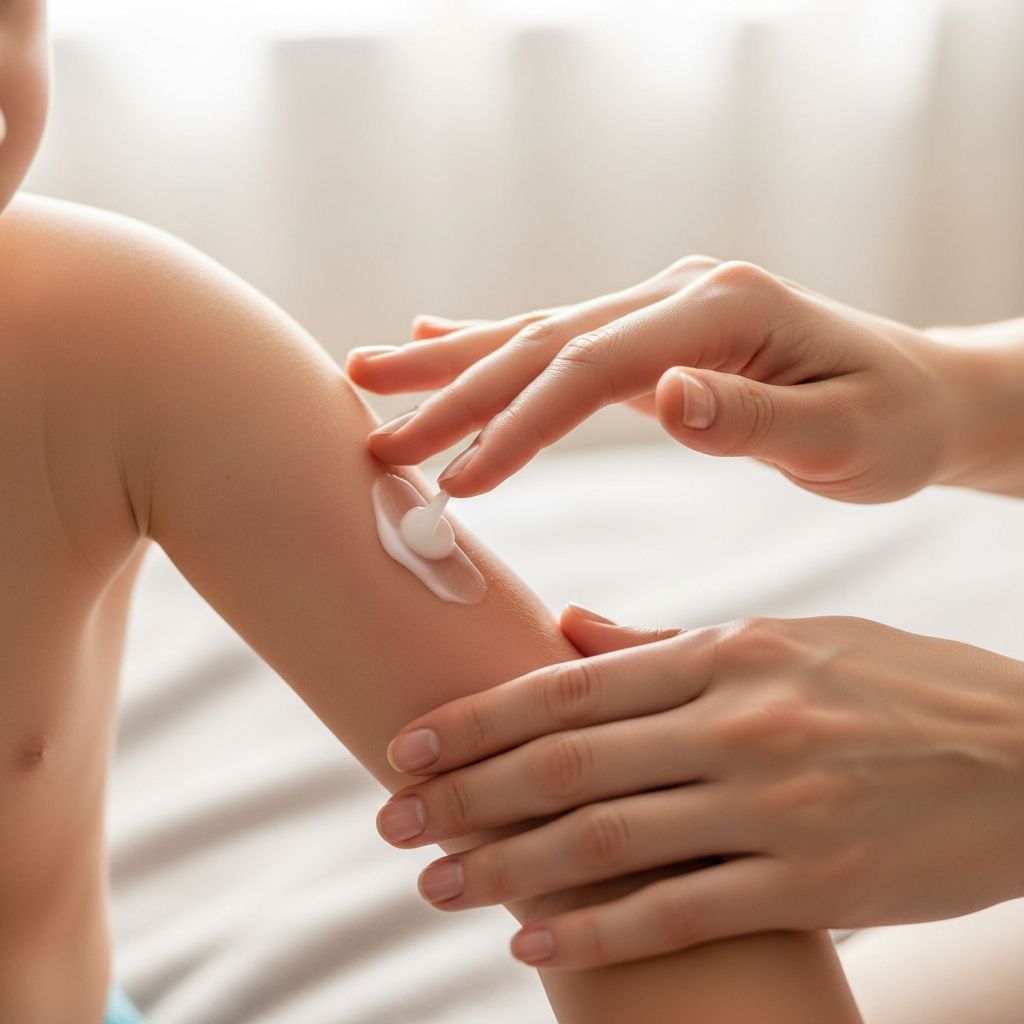
Sunburn dehydrates skin, leading to tightness and peeling. Apply fragrance-free moisturizers with aloe vera or soy immediately after cooling while skin is damp—this seals in hydration.
Aloe vera accelerates healing in mild second-degree burns, per recent studies, but use pure gel without alcohol. Refrigerate for extra cooling effect. Reapply several times daily, especially after baths.
- Choose lotions without dyes, scents, or benzocaine to avoid irritation.
- For babies, opt for pediatrician-approved products.
- Avoid petroleum jelly on blisters; it traps heat.
Consistent moisturizing minimizes peeling and supports skin barrier repair over 3-7 days.
Hydration and Pain Management Strategies
Sunburn pulls fluids to the skin surface, risking dehydration—especially in active kids. Encourage extra water intake, aiming for clear urine as a hydration check.
For pain and swelling, give age-appropriate ibuprofen or acetaminophen per package dosing—never exceed. These reduce inflammation better than aspirin for children.
Other comforts include loose, breathable cotton clothing and staying indoors during peak sun (10 a.m.-4 p.m.).
Natural Additions: Tea Compresses and More
Brewed chamomile tea, cooled and applied via washcloth, offers anti-inflammatory benefits for small areas, backed by studies on skin conditions. Black tea works similarly due to tannins.
Calamine lotion calms mild itching without antihistamines, which can sensitize skin. Hydrocortisone 1% cream (for ages 2+) can be used sparingly for 3 days under guidance.
Handling Blisters and Special Cases
Blisters signal second-degree burns—do not pop them, as they protect against infection. Cover loosely with petroleum jelly and a bandage.
For eyes: Cool compresses only; remove contacts. Infants: Consult doctor immediately for any redness. Watch for infection signs like pus or worsening pain.
Long-Term Skin Protection to Avoid Recurrence
Repeated sunburns raise skin cancer risk, per dermatologists. Prevent with:
- SPF 30+ broad-spectrum sunscreen, reapplied every 2 hours/water exposure.
- UFP clothing, hats, shade-seeking.
- Limit peak sun exposure.
For fair-skinned kids, daily SPF is vital year-round.
Common Myths Debunked
| Myth | Fact | Source |
|---|---|---|
| Vaseline heals sunburn | Traps heat; use post-blister | |
| Coconut oil protects | Not broad-spectrum; use sunscreen | |
| Baking soda alone cures | Best in baths with cool water |
Frequently Asked Questions
How long does kids’ sunburn last?
Mild cases heal in 3-5 days with care; severe may take weeks.
Is aloe vera safe for babies?
Yes, pure gel on mild cases, but check with pediatrician for under 6 months.
When to go to ER for sunburn?
If blisters cover large areas, fever >101°F, confusion, or dehydration.
Can I use essential oils?
Avoid; they irritate burned skin.
Does milk compress help?
Limited evidence; stick to proven cool water/aloe.
Building a Sun-Safe Routine for Families
Incorporate sunscreen into morning rituals, pack UPF gear for outings, and model protection. Educate kids on shade and reapplication fun—games make it stick.
By combining immediate relief with prevention, families reduce risks and enjoy outdoor time safely. Always prioritize doctor advice for uncertainties.
References
- Home Remedies for Sunburn: Cool Water, Aloe Vera, and More — Healthline. 2025-01-14. https://www.healthline.com/health/sunburn
- Treatment Dos and Don’ts for Soothing a Bad Sunburn — Banner Health. N/A. https://www.bannerhealth.com/healthcareblog/better-me/bad-sunburn-eight-tips-to-treat-and-find-some-relief
- Sunburn: First aid – Mayo Clinic — Mayo Clinic. N/A. https://www.mayoclinic.org/first-aid/first-aid-sunburn/basics/art-20056643
- How to treat sunburn — American Academy of Dermatology. N/A. https://www.aad.org/public/everyday-care/injured-skin/burns/treat-sunburn
- Sunburn: Treatment & Prevention — HealthyChildren.org (American Academy of Pediatrics). N/A. https://www.healthychildren.org/English/health-issues/conditions/skin/Pages/sunburn-treatment-and-prevention.aspx
- Sunburn — Skin Cancer Foundation. N/A. https://www.skincancer.org/risk-factors/sunburn/