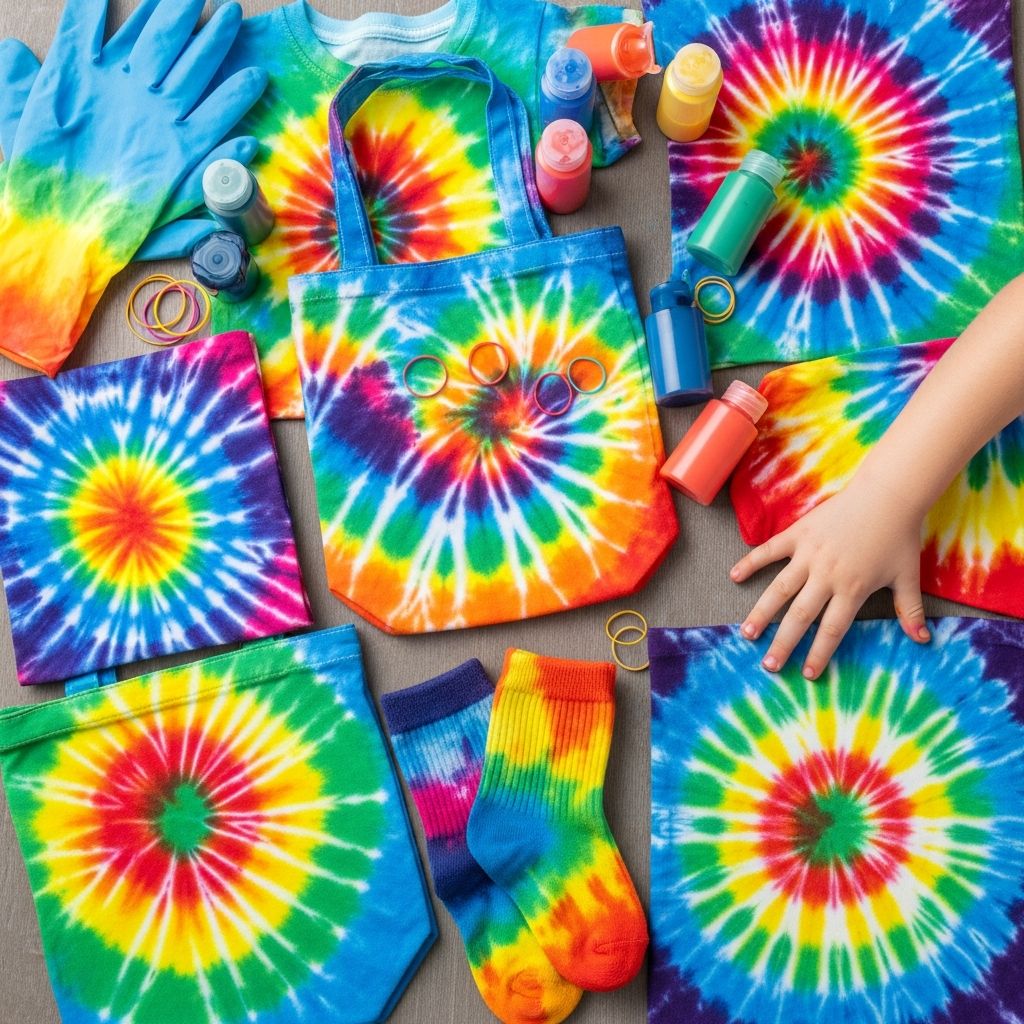
Tie-dye transforms plain fabrics into bursts of color, offering a hands-on way for children to explore creativity. This guide covers everything from gathering supplies to revealing final designs, ensuring safe, mess-free fun.
Gathering Essential Supplies
Start with natural-fiber items like cotton shirts, socks, or pillowcases, as they absorb dyes best. Key tools include fiber-reactive dyes in squeeze bottles, rubber bands, gloves, plastic wrap, and buckets for rinsing.
- Dyes: Procion MX types for bright, permanent results on cotton.
- Fixatives: Soda ash or urea water to help dyes bond to fabric.
- Binding materials: Rubber bands, string, or zip ties for securing folds.
- Protection: Gloves, aprons, and drop cloths to contain spills.
- Post-process needs: Washing soda, mild detergent, and zip-top bags for curing.
Pre-wash fabrics in hot water with detergent to remove sizing that blocks dye uptake.
Prepping Fabrics for Optimal Color
Soak shirts in a soda ash solution (1 cup soda ash per gallon of warm water) for 10-20 minutes. This raises the fabric’s pH, allowing dyes to form permanent bonds.
Wring out excess liquid until damp but not dripping. For intricate patterns, spin dry slightly to make folding easier.
| Prep Step | Purpose | Time |
|---|---|---|
| Wash fabric | Remove oils/dirt | 5-10 min |
| Soak in soda ash | Fix dye molecules | 10-20 min |
| Wring and fold | Prepare for patterns | Immediate |
Creative Folding Techniques
Folding defines the pattern. Lay fabric flat on a protected surface and experiment with these methods for unique effects.
Classic Spiral Swirl
Pinch the center (often under the collar), twist clockwise into a flat disk, and secure with three crisscrossing rubber bands. This creates rainbow wedges.
Bullseye Cones
Pinch spots and pull into cones, banding every inch. Multiple cones yield sunburst designs.
Accordion Stripes
Fold in 1-2 inch pleats lengthwise or widthwise, then band tightly for sharp lines.
Geometric Folds
Accordion-fold into squares or triangles, sandwich between cardboard, and bind. Ideal for mandala symmetry.
Shaped Designs
Fold in half, draw half a heart or shape with washable marker, and pleat along the line for defined outlines.
- Tip: Tighter folds mean more white space; looser ones blend colors.
- Vary band placement for custom looks.
Mixing and Applying Dyes
Wear gloves and work outdoors or over newspaper. Mix dyes per kit instructions, adding warm water and urea if needed for flow.
Squirt dye into folds, saturating all layers. Flip and repeat on the reverse. Overlap colors for secondary hues like purple from red and blue.
- Use squeeze bottles for precision or dip in buckets for immersion.
- Light colors first (yellow), then dark (navy) to avoid muddiness.
- Inject dye into crevices for full penetration and minimal white.
Curing for Lasting Vibrancy
Place dyed items in zip-top bags or wrap in plastic to stay damp. Let cure 4-24 hours in a warm spot (above 70°F for best results).
Longer curing yields brighter, more permanent colors as dye molecules bond.
Rinsing and Washing Revealed Designs
Remove bands outdoors or in a sink. Rinse under cold running water until clear, working from folds outward to preserve patterns.
Wash in hot water with synthrapol or dye-safe detergent, then machine dry. Colors set fully after one wash.
Safety Guidelines for Family Fun
Supervise kids closely; dyes stain skin/clothes temporarily. Use non-toxic kits, avoid ingestion, and rinse eyes if contact occurs.
- Ventilate area to avoid fumes.
- Dispose of excess dye responsibly per local rules.
- Allergies? Test dye on scrap fabric first.
Troubleshooting Common Issues
| Problem | Cause | Solution |
|---|---|---|
| Faded colors | Insufficient curing | Extend to 24 hours next time |
| Too much white | Loose folds | Tie tighter, dye deeper |
| Muddy hues | Color overlap errors | Apply lights first |
| Uneven dye | Dry fabric | Always pre-soak |
Advanced Variations and Ideas
Reverse-dye: Dye solid first, then tie and over-dye. Or use discharge paste to bleach patterns post-dye.
Kid projects: Bandanas, tote bags, or socks. Theme parties with matching galaxy or animal prints.
Frequently Asked Questions
What age is best for tie-dye?
Children 5+ with supervision; younger ones can assist with folding.
Can I tie-dye synthetic fabrics?
No, stick to cotton/linen for best results.
How long do colors last?
Fiber-reactive dyes withstand 50+ washes if set properly.
What’s the best dye brand?
Procion MX for pros; kits like Tulip for beginners.
Outdoor vs. indoor dyeing?
Outdoor preferred for easy cleanup and ventilation.
References
- How to Tie Dye – Easy Techniques for Beginners — Camp Southern Ground. Accessed 2026. https://campsouthernground.org/tie-dye/
- How to Tie-Dye: Step-by-Step for Beginners — Tie Dye Your Summer. Accessed 2026. https://www.tiedyeyoursummer.com/Technique/how-to-tie-dye
- Tie-Dye Instructions — Dharma Trading Co. Accessed 2026. https://www.dharmatrading.com/techniques/tiedye/tie-dye-instructions.html
- How to Tie Dye an Old White Shirt — Instructables. Accessed 2026. https://www.instructables.com/How-to-tie-dye-an-old-white-shirt-or-a-new-shirt-/
- Tie Dye Instructions — Grateful Dyes. Accessed 2026. https://grateful-dyes.com/tie-dye-instructions/
- A Step-by-Step Guide to Tie-Dye in the Classroom — The Art of Education University. 2016-06. https://theartofeducation.edu/2016/06/step-step-guide-tie-dye-classroom/