Expressed breast milk is often described as “liquid gold,” so it can be stressful to wonder if a bottle in the fridge or freezer is still safe for your baby. Knowing how to recognize spoiled milk, how long milk can be stored, and how to handle it properly can help you protect your baby and avoid wasting your hard work.
This guide explains, in simple and practical terms, how to spot breast milk that has gone bad, why it spoils, how to store it safely, and what to do if your baby accidentally drinks milk that is no longer good.
What Fresh Breast Milk Is Supposed to Look, Smell, and Taste Like
Before you can recognize spoiled milk, it helps to know what normal expressed milk looks and smells like.
- Color: Typically white, creamy, light yellow, or slightly bluish depending on fat content and time of day.
- Texture: After sitting, it naturally separates into a thinner layer on the bottom and a creamier layer on top; gentle swirling usually mixes it back together.
- Smell: Mild, sometimes slightly sweet or neutral; it should not be strongly sour or rotten.
- Taste: Lightly sweet, sometimes described as similar to sweetened water or mild nut milk.
Some parents notice a soapy or metallic smell after refrigeration or freezing. This can be related to normal enzyme activity (lipase) in the milk and does not always mean the milk is unsafe. Many babies drink this milk without any problems.
Clear Warning Signs Breast Milk Has Gone Bad
Trust your senses. If something seems strongly “off,” it is safer to discard the milk. Common indicators of spoiled breast milk include:
1. Strong Sour or Rotten Odor
Spoiled breast milk often has a smell similar to sour or spoiled cow’s milk. This may be described as:
- Sharp sour odor
- Rotten or fishy smell that makes you pull back from the bottle
- Smell that clearly seems worse than your usual stored milk
If the smell makes you recoil or gag, it is a good sign the milk should not be fed.
2. Texture That Will Not Mix Back Together
Separation into layers is normal, but completely spoiled milk often looks different:
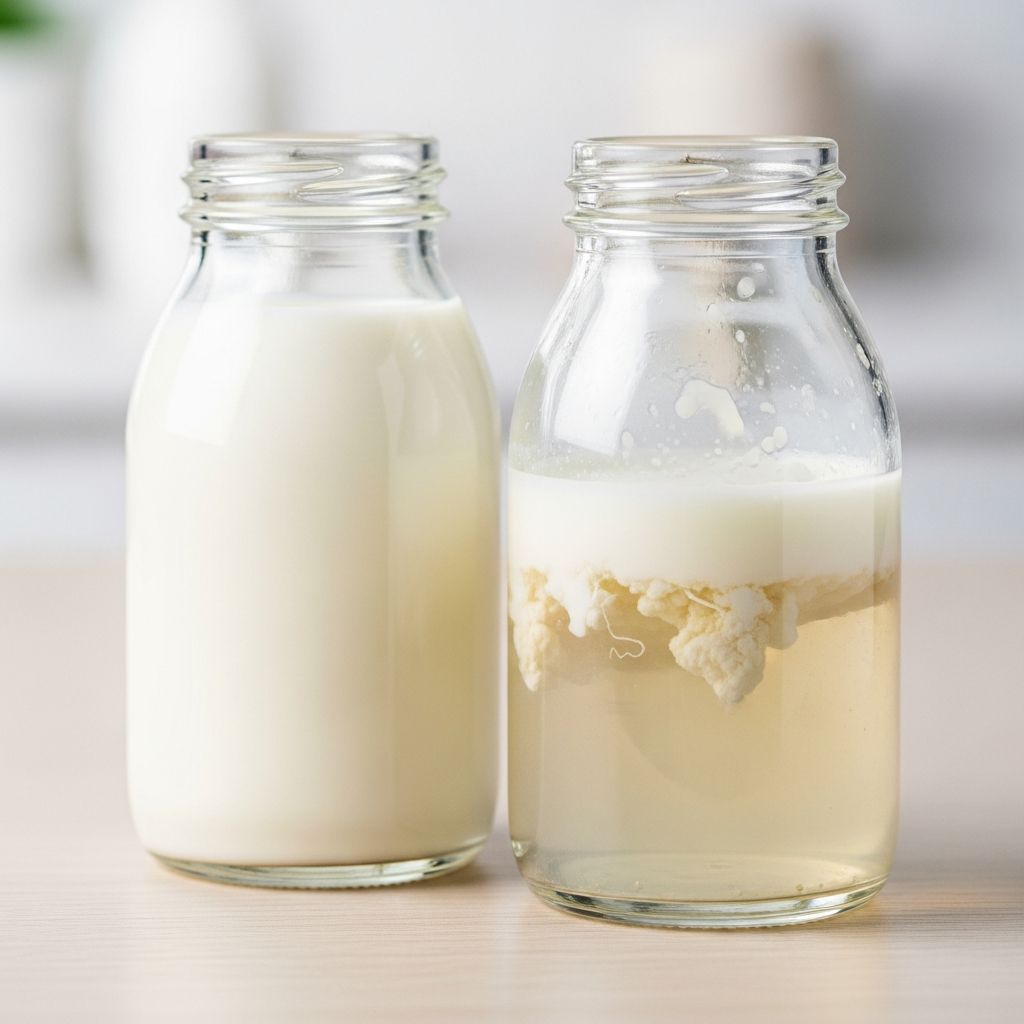
- Large clumps or curdled-looking bits throughout the milk that stay lumpy even after swirling
- Grainy or chunky texture that does not smooth out
- Stringy or slimy appearance on the surface
If you gently swirl (do not shake hard) and the fat layer will not blend back into the thinner layer at all, the milk is likely no longer good.
3. Unusual Color Change
Breast milk can be many normal colors (yellow, blue-tinted, even slightly green depending on your diet), so color alone rarely proves spoilage. However, be cautious if you notice:
- Milk that looks significantly darker and dull compared with your usual expressed milk from similar timing
- Obvious discoloration combined with bad smell or texture
Color changes plus sour odor or curdled texture are strong reasons to discard.
4. Rancid or Bitter Taste
If you are comfortable tasting the milk, you can use that as another check:
- Fresh milk usually tastes mildly sweet or neutral.
- Spoiled milk typically tastes very sour, rancid, or strongly bitter.
Be cautious when interpreting taste if you know you have “high lipase” milk that often tastes soapy after freezing. In those cases, compare to your usual previously frozen milk instead of fresh milk.
How to Tell Spoiled Milk from High-Lipase Milk
Some parents are alarmed when frozen milk smells soapy or metallic after thawing. This is often related to lipase, a natural enzyme that breaks down milk fat; in some people it is more active, which can change flavor faster.
| Feature | High-Lipase (Usually Safe) | Truly Spoiled Milk |
|---|---|---|
| Smell | Soapy or metallic; may be unusual but not rotten | Very sour, rotten, or fishy; strong off-putting odor |
| Texture | Normal separation that mixes when swirled | Clumpy, curdled, or slimy; does not remix |
| Baby’s reaction | Many babies drink without issues | May refuse bottle or show signs of tummy upset |
| Storage time | Within recommended storage limits | Stored longer than safe limits or mishandled |
If your milk only smells slightly soapy but looks normal, has been stored correctly, and your baby accepts it, it is usually considered safe.
How Long Breast Milk Can Be Safely Stored
International and national health authorities provide guidance on safe storage times for expressed milk. Recommendations may vary slightly, but the following are widely used time frames for healthy, full-term babies.
- At room temperature (up to 25 °C / 77 °F): About 4 hours is generally considered safe; shorter times are recommended in very warm environments.
- In the back of the refrigerator (≤4 °C / 39 °F): Use within up to 4 days; after that, discard or freeze.
- In the freezer compartment inside a fridge: Around 2 weeks is often advised.
- In a separate freezer with door on a fridge: Usually considered safe for about 3–6 months when kept at a constant freezing temperature.
- In a deep freezer (constant −18 °C / 0 °F or below): Can often be kept for 6–12 months, though using it earlier preserves more nutrients.
Always label milk with the date it was pumped and use the oldest milk first. When in doubt about storage conditions or time, it is safer to discard than to risk your baby’s health.
Why Breast Milk Goes Bad
Even though breast milk contains protective factors that slow bacterial growth, it can still spoil when conditions are not ideal.
- Time: The longer milk sits at room temperature or in the fridge, the more likely bacteria can multiply.
- Temperature changes: Repeated warming and cooling (for example, putting a half-finished warmed bottle back in the fridge) increases the risk of bacterial growth.
- Contamination: Bacteria can enter from unwashed hands, pump parts, unclean bottles, or dirty storage containers.
- Improper storage: Storing in the fridge door, frequent opening of the freezer, or using containers not meant for food can shorten safe storage time.
Careful handling and proper storage greatly reduce the chance that milk will spoil before you use it.
Health Risks If a Baby Drinks Spoiled Breast Milk
Many parents worry about what happens if their baby accidentally drinks a few sips of spoiled milk. The exact effect can vary with how spoiled the milk was and how sensitive the baby’s digestive system is. Possible issues include:
- Gastrointestinal upset: Vomiting, diarrhea, or stomach cramps due to bacterial contamination.
- Infections: Harmful bacteria such as Escherichia coli (E. coli) or Cronobacter sakazakii can cause serious intestinal or systemic infections in infants, especially if immunity is low.
- Fever and irritability: The baby may become fussy, lose appetite, or develop fever as the body reacts to infection.
- Dehydration: Repeated vomiting or diarrhea can quickly dehydrate babies because of their small body size.
If your baby shows ongoing vomiting, frequent diarrhea, high fever, or appears unusually sleepy or unresponsive, seek medical attention immediately. Young infants can become seriously ill quickly, and prompt care is essential.
Safe Handling and Storage Tips to Prevent Spoilage
Good hygiene and storage practices help keep your milk safe and extend its usable life.
- Wash hands thoroughly with soap and water before pumping or handling expressed milk.
- Use clean, food-grade containers such as BPA-free bottles or storage bags designed for breast milk.
- Label each container with the date (and time if helpful) of expression.
- Refrigerate or freeze promptly after pumping; avoid leaving milk at room temperature longer than necessary.
- Store in the back of the fridge or freezer, where temperatures are most stable, not in the door.
- Thaw safely: Thaw frozen milk in the refrigerator overnight or under warm running water. Do not thaw at room temperature for long periods.
- Warm gently: Place the container in a bowl of warm water; avoid boiling or microwaving, which can create hot spots and damage nutrients.
- Use quickly after warming: Most guidelines advise using warmed milk within a short time (commonly within 2 hours) and discarding leftovers rather than reheating.
What to Do If You Suspect the Milk Is Bad
If you are unsure about a particular bottle or bag of milk, follow these steps:
- Check the date and storage history. If it has been stored longer than recommended or temperature control was questionable, it is safer to discard.
- Use your senses. Smell, observe, and, if you are comfortable, briefly taste a small amount (spit it out afterward). Strong sour odor, curdled texture, or very rancid taste are reasons to throw it away.
- Watch your baby. If your baby has already taken some and then suddenly refuses the bottle, appears very fussy, or vomits, consider whether the milk might have been off.
- When in doubt, discard. It is difficult to throw away hard-earned milk, but your baby’s safety is more important than saving a few ounces.
Frequently Asked Questions (FAQs)
Can breast milk spoil while still in the breast?
No. Inside the breast, milk is protected by your body’s natural defenses and does not spoil there. Spoilage only becomes an issue after the milk is expressed and exposed to the outside environment.
How can I tell if refrigerated milk is still safe?
Check the date it was pumped and how long it has been in the refrigerator, ideally using or freezing within about four days. Then smell and visually inspect it. If it has a strong sour or rotten odor, curdled texture that will not mix, or any sign that concerns you, discard it.
My frozen milk smells soapy after thawing. Is it bad?
A soapy or metallic smell alone does not necessarily mean the milk is spoiled. It may be due to higher lipase activity, which changes flavor but not safety for most babies. If the milk was stored within recommended time limits, looks normal, and your baby drinks it without issue, it is usually considered safe.
What should I do if my baby drank spoiled milk and is now vomiting?
Offer small amounts of breast milk or an appropriate fluid to prevent dehydration and monitor your baby closely. If vomiting or diarrhea is frequent, if your baby shows signs of dehydration (such as fewer wet diapers, dry mouth, or unusual sleepiness), or if there is fever, contact a healthcare provider right away.
Can I refreeze breast milk once it has been thawed?
Most health authorities advise against refreezing fully thawed breast milk because of the increased risk of bacterial growth as it warms and cools again. It is better to thaw only what you expect to use in one feeding or one day.
Is it safe to mix freshly pumped milk with chilled or frozen milk?
It can be done safely if you first cool the newly pumped milk in the refrigerator and then combine it with milk that is already chilled or frozen so you do not warm the older milk. Always label the mixture with the date of the older milk.
References
- Breast Milk Storage Questions and Answers — Centers for Disease Control and Prevention (CDC). 2024-03-04. https://www.cdc.gov/breastfeeding/php/guidelines-recommendations/faqs.html
- Your Guide to Safely Storing Breast Milk — Children’s Health. 2022-06-15. https://www.childrens.com/health-wellness/your-guide-to-safely-storing-breast-milk
- Unusual Colours and Smells of Breastmilk — Australian Breastfeeding Association. 2023-02-10. https://www.breastfeeding.asn.au/resources/unusual-colours-smells-breastmilk
- Help! Is My Frozen Breast Milk Bad? — Thrive Lactation Center. 2023-07-01. https://www.thrivelactationcenter.com/blog/help-is-my-frozen-breast-milk-bad
- Characteristics of Expired Breast Milk and Side Effects for Babies — Prenagen. 2022-11-20. https://www.prenagen.com/en/characteristics-of-expired-breast-milk-and-side-effects-for-babies
- How to Tell If Breast Milk Is Bad: Signs and Storage Tips — Breastfeeding Perspectives. 2023-06-01. https://www.breastfeedingperspectives.com/how-to-tell-if-breast-milk-is-bad/
- 3 Tell-tale Spoiled Breast Milk Symptoms — Milkology. 2023-04-10. https://milkology.org/content/spoiled-breast-milk-symptoms