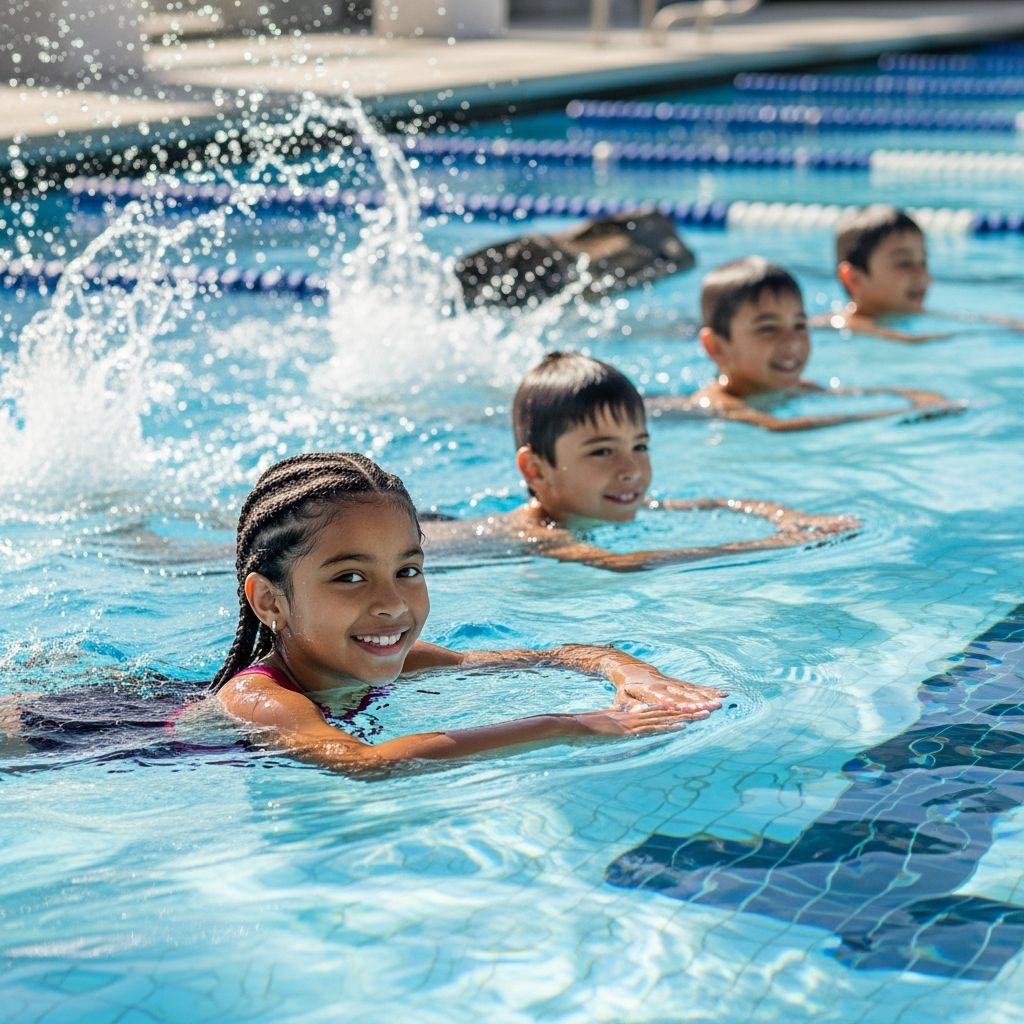
Water treading stands as a cornerstone of swimming proficiency, enabling children to maintain buoyancy and keep their heads above water without forward movement. This vital skill fosters independence in aquatic environments, reduces panic during unexpected situations, and serves as a foundation for more complex maneuvers. Parents play a pivotal role in introducing these techniques safely, starting in controlled settings like shallow pools.
Understanding the Fundamentals of Buoyancy Control
At its core, treading water involves coordinated arm and leg actions to displace water downward, counteracting gravity. Children must achieve an upright posture with ears aligned near the water surface and eyes forward for optimal visibility. Unlike swimming strokes that propel the body, treading emphasizes stationary lift through continuous motion. Natural flexibility in young bodies aids adoption of efficient patterns, but improper habits like rigid flutter kicks can lead to quick fatigue.
Key principles include maintaining a relaxed yet engaged core, rhythmic breathing to avoid hyperventilation, and body tilt adjustments for stability. Research from aquatic safety organizations underscores that proficient treaders can sustain efforts for minutes, crucial in emergencies where help may be delayed.
Building a Strong Foundation: Balance and Body Position
Before introducing limb movements, prioritize balance training to prevent tipping. Use supportive tools like pool noodles to simulate instability. Instruct children to sit astride a noodle as if biking, rocking gently to engage stabilizing muscles. Progress to releasing the noodle briefly, ensuring they regain equilibrium independently.
- Position feet flexed outward for a stable base.
- Encourage slight knee bends to mimic a seated posture.
- Practice rotations and leans to build directional control.
This phase instills confidence, teaching kids to sense water resistance intuitively. Sessions of 5-10 minutes yield noticeable improvements, setting the stage for integrated motions.
Arm Techniques: The Art of Sculling
Sculling forms the upper-body powerhouse for treading, involving sweeping hand motions that generate lift. Begin in waist-deep water: extend arms sideways at shoulder depth, palms down and slightly cupped. Sweep hands inward toward the chest in a figure-eight pattern, then outward, feeling water pressure against palms.
Emphasize wrist stiffness to maximize propulsion—imagine pushing pudding away. Common errors include loose wrists or colliding hands; correct by verbal cues like “sweep wide, then apart.” Practice standalone for 2-3 minutes before combining with legs. Older children (ages 6+) often master this quickly due to better coordination.
| Sculling Level | Description | Duration Goal |
|---|---|---|
| Beginner | Slow, narrow sweeps near chest | 30 seconds |
| Intermediate | Wider arcs with wrist pivot | 1 minute |
| Advanced | Alternating figure-eights | 2+ minutes |
Leg Power: From Basic Kicks to Eggbeater Mastery
Legs provide primary thrust; start with bent-knee stomps over straight flutter kicks to conserve energy. Holding the pool edge, have kids alternate knees upward and stomp downward forcefully, heels leading. This bicycle-like action pushes water efficiently.
Advance to breaststroke kicks: flex feet, whip heels toward glutes, then thrust outward and downward like a frog. Young learners benefit from wall support initially. For elite efficiency, introduce eggbeater—an alternating breaststroke where one leg powers while the other recovers—ideal for sustained treading.
- Bent-knee stomp: Powerful down-push for beginners.
- Breaststroke whip: Circular motion builds endurance.
- Eggbeater: Pro-level rotation for minimal fatigue.
Drill: Count stomps aloud to regulate rhythm, aiming for 60-80 per minute.
Integrating Arms and Legs for Full Treading
Combine skills in deeper water (child cannot touch bottom). Hold child’s hands or use a noodle under arms for security. Initiate simultaneous sculling and kicking, gradually reducing support. Remind: “Head up, breathe easy, stay calm.” Initial attempts may last 10-20 seconds; consistency extends to minutes.
Monitor for fatigue signs like shallow breathing or sinking shoulders. Intersperse with rests on back floats to recover. Parental proximity reassures without hindering independence.
Energy Conservation: Slow-Motion and Endurance Challenges
Once basic treading endures 1-2 minutes, shift to efficiency. Challenge kids to slow motions while maintaining buoyancy—minimal arm sweeps, subtle kicks. This mimics survival scenarios, extending capability from minutes to potentially hours.
Incorporate timers: “Tread for 3 minutes without stopping.” Reward progress to motivate. Emphasize that slower, deliberate actions outperform frantic paddling.
Essential Drills for Real-World Readiness
Simulate emergencies through targeted exercises:
- Tread-Swim Cycle: Tread, submerge face, swim 5 yards freestyle, resume treading.
- Back Float Recovery: From treading, tilt head back to float supine, rest 10 seconds, return upright.
- Direction Changes: Tread while pivoting 360 degrees, enhancing spatial awareness.
- Wind Simulation: Gently push child off-position; recover via treading.
These build resilience, teaching transitions critical for self-rescue.
Age-Appropriate Milestones and Progress Tracking
| Age Group | Expected Skills | Practice Frequency |
|---|---|---|
| 3-5 Years | 30-sec tread with support, basic scull/stomp | 3x/week, 10 min |
| 6-8 Years | 1-min independent, breaststroke kick | 4x/week, 15 min |
| 9+ Years | 3+ min, eggbeater, drills | Daily, 20 min |
Track via journal: duration, techniques used, confidence level (1-10). Adjust based on child’s pace.
Common Challenges and Troubleshooting Tips
Sinking head: Cue chin lift, faster sculling. Leg cramps: Promote hydration, stretch pre-session. Fear/panic: Short bursts, abundant praise. Flutter kick reliance: Demonstrate exhaustion contrast with stomps.
- Over-reliance on arms: Balance leg power equally.
- Tilted posture: Core engagement drills on land first.
- Breath holding: Practice rhythmic exhales mid-tread.
Safety First: Supervised Practice and Pool Guidelines
Always supervise within arm’s reach. Use life vests for beginners if needed, transitioning off gradually. Avoid teaching when child is cold, tired, or post-meal. Shallow-to-deep progression minimizes risks. While treading excels for survival, pair with back-floating as primary panic response for toddlers.
Enroll in certified lessons for reinforcement; home practice complements professionally.
Frequently Asked Questions
How long should a beginner child tread water?
Start with 10-20 seconds, building to 1 minute over weeks. Focus on form over duration.
What’s the best kick for young kids?
Bent-knee stomps or breaststroke; eggbeater suits ages 8+ with practice.
Can I teach without a pool noodle?
Yes, use wall holds or parental support under arms initially.
Is treading safe for 3-year-olds?
With support and short sessions, yes—but prioritize floating.
How does treading aid survival?
Allows signaling for help while conserving energy in deep water.
References
- How to Teach a Kid to Tread Water — Fatherly. 2023 (approx., based on content). https://www.fatherly.com/play/how-to-teach-kid-tread-water
- How to teach swimming lessons – Treading water — Swimming Lessons Ideas. N/A. https://www.swimminglessonsideas.com/blog/teach-swimming-lessons-treading-water/
- Teach Your Child to Tread Water — Shaquatics Water Polo (YouTube). 2023-08-07. https://www.youtube.com/watch?v=4ID30tMA-dY
- How to Teach a Child to Tread Water — YouTube (Unspecified Channel). N/A. https://www.youtube.com/watch?v=DfLgg2t5gQ4
- How to Tread Water: A Step-By-Step Guide — DanSwim. N/A. https://danswim.com/how-to-tread-water
- Why Treading Water is a Dangerous Safety Skill to Teach Young Child — FOSS Swim School. 2019-05-09. https://www.fossswimschool.com/2019/05/09/treading-water-dangerous-safety-skill-teach-young-child-2/