Instilling self-discipline and organizational abilities in children lays the foundation for their future independence and success. These skills, part of executive functioning, help kids manage time, tasks, and emotions effectively. Parents play a pivotal role by modeling behaviors and creating supportive environments that encourage gradual skill-building.
Understanding the Foundations of Discipline and Order
Self-discipline involves controlling impulses to achieve long-term goals, while organization refers to systematically arranging tasks and spaces. Research from child development experts emphasizes that these abilities develop through consistent practice rather than innate traits. Children who master them early tend to perform better academically and socially.
Executive functions like planning and self-regulation mature gradually, often challenged in neurodiverse children. Empathy is key: acknowledge efforts and strengths to build confidence. For instance, praising persistence during a challenging task reinforces neural pathways for habit formation.
Establishing Predictable Daily Flows
Rather than rigid timetables, introduce flexible daily rhythms that align with family life. Start mornings with shared breakfast followed by outdoor play, adjusting for individual needs. This predictability reduces anxiety, as children know what follows, fostering cooperation without force.
Visual aids like picture schedules or clocks clarify expectations. For example, a shoe rack by the door signals immediate placement upon entry. Consistency in these flows builds automaticity, turning organization into second nature over time.
- Use color-coded calendars for weekly overviews.
- Incorporate timers for transitions between activities.
- Review the day briefly at dinner to reinforce patterns.
Breaking Down Tasks for Manageable Progress
Overwhelm often derails young learners, so divide responsibilities into small steps. For homework, outline: gather materials, read instructions, complete section one, then review. This reveals structure—a start, middle, and end—making efforts less daunting.
Teach time estimation: predict duration for tasks like clearing the table (scrape scraps, load dishwasher, wipe surfaces), then compare actual time. Tools like apps track progress visually, improving accuracy with repetition.
| Task | Steps | Estimated Time |
|---|---|---|
| Bedroom Cleanup | 1. Pick up toys 2. Fold clothes 3. Make bed | 10 minutes |
| Homework Session | 1. Set up desk 2. Do math 3. Read chapter | 30 minutes |
| Table Clearing | 1. Scrape food 2. Load dishes 3. Wipe counters | 5 minutes |
Leveraging Checklists and Digital Aids
Short, task-specific lists empower children to track accomplishments independently. Place them near the activity: a whiteboard for homework steps or sticky notes in the kitchen for chores. As familiarity grows, transition to apps for portability.
Family-wide lists promote teamwork—model your own organization, sharing strategies openly. This accountability strengthens bonds and normalizes skill-building as a household value.
Offering Choices to Cultivate Autonomy
Empower decisions within limits to minimize resistance. “Brush teeth or pajamas first?” or “Walk or skip to the car?” These options provide control, boosting compliance by 80% in some observations. Children internalize responsibility when they co-own the process.
Explain rationales simply: “We tidy toys to prevent trips.” Understanding purpose shifts obedience to self-motivated action, deepening self-control.
Modeling Commitment and Persistence
Lead by example—demonstrate finishing commitments despite distractions. Share personal goals, like completing a workout, to illustrate determination’s rewards. Children mirror this resilience, learning to prioritize focus over fleeting urges.
- Discuss daily wins and setbacks openly.
- Encourage hobbies that yield accomplishment, like puzzles or sports.
- Celebrate incremental progress to sustain motivation.
Implementing Fair Consequences and Rewards
Balance accountability with positivity: unmet tasks trigger predefined, calm consequences, like no playtime until chores done. Consistency is crucial—follow through without emotion to build reliability.
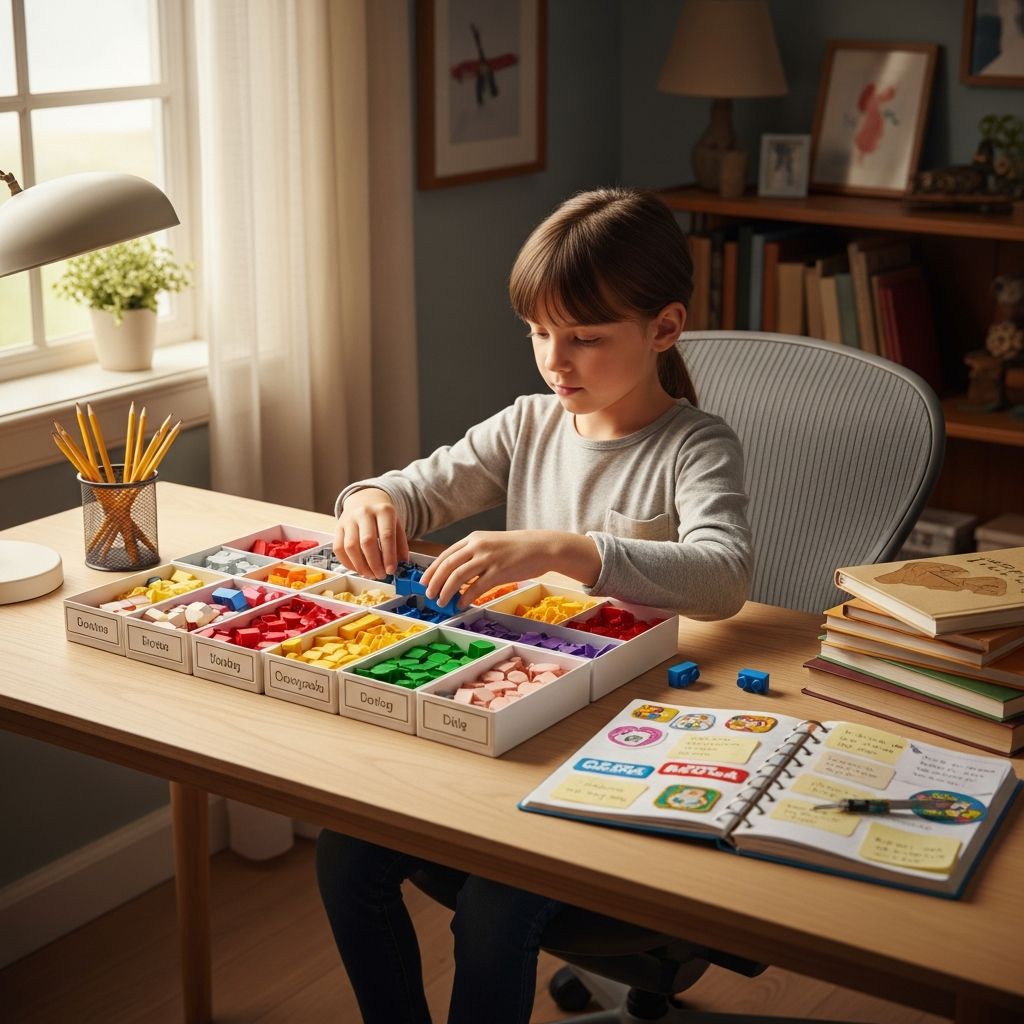
Rewards amplify success: praise specific efforts (“Great job sorting blocks quickly!”), use jars for tokens redeemable for privileges, or allowances for older kids. Gradually phase out external incentives as intrinsic pride emerges.
Fostering Ownership Through Age-Appropriate Guidance
Tailor expectations: toddlers mimic brushing toys, school-age kids manage rooms independently. Provide initial direction on ‘why’ and ‘how,’ then step back. Ownership blooms when children handle their spaces, deriving satisfaction from order.
Consistency across days reinforces habits—skipping tasks undermines growth. Enforce boundaries firmly yet kindly, preserving trust.
Promoting Long-Term Confidence and Growth
Set realistic goals, expecting trial-and-error. Progress is gradual; reduced supervision signals mastery. Activities sparking achievement, like music or crafts, bolster executive skills indirectly.
Family involvement—shared cleanups or goal-setting—creates a supportive culture. Over time, these practices yield teens ready for independence.
Frequently Asked Questions (FAQs)
What age should I start teaching organization?
Begin in toddlerhood with simple routines like toy pickup; expand as capabilities grow. Early habits compound over time.
How do I handle resistance to new routines?
Introduce gradually with choices and explanations. Empathy and praise ease transitions, reducing pushback.
Are rewards manipulative?
No, when used as bridges to intrinsic motivation. Fade them as self-satisfaction takes over.
What if my child struggles despite efforts?
Assess for executive function delays; consult educators. Persistence and tailored strategies yield results.
Can technology help with these skills?
Yes, apps for timers, lists, and calendars build awareness without over-reliance.
References
- Tips and Tricks for Teaching Organization Skills — Foothills Academy. 2023-05-15. https://www.foothillsacademy.org/community/articles/tips-and-tricks-for-teaching-organization-skills
- 10 Tips to Help Get Your Child Organized — Understood.org. 2024-01-10. https://www.understood.org/en/articles/10-tips-to-help-get-your-child-organized
- 5 Ways to Teach Children Self-Discipline — All Pro Dad. 2022-08-22. https://allprodad.com/5-ways-to-teach-children-self-discipline/
- The Art of Raising Disciplined Kids: 8 Strategies — Artful Parent. 2023-11-03. https://artfulparent.com/r-bt-the-art-of-raising-disciplined-kids-8-strategies-that-build-self-control-without-breaking-their-spirit/
- Teaching Your Kids the Lifelong Skills of Self Discipline and Organization — Austin Moms. 2019-04-03. https://austinmoms.com/2019/04/03/teaching-your-kids-the-lifelong-skills-of-self-discipline-and-organization/