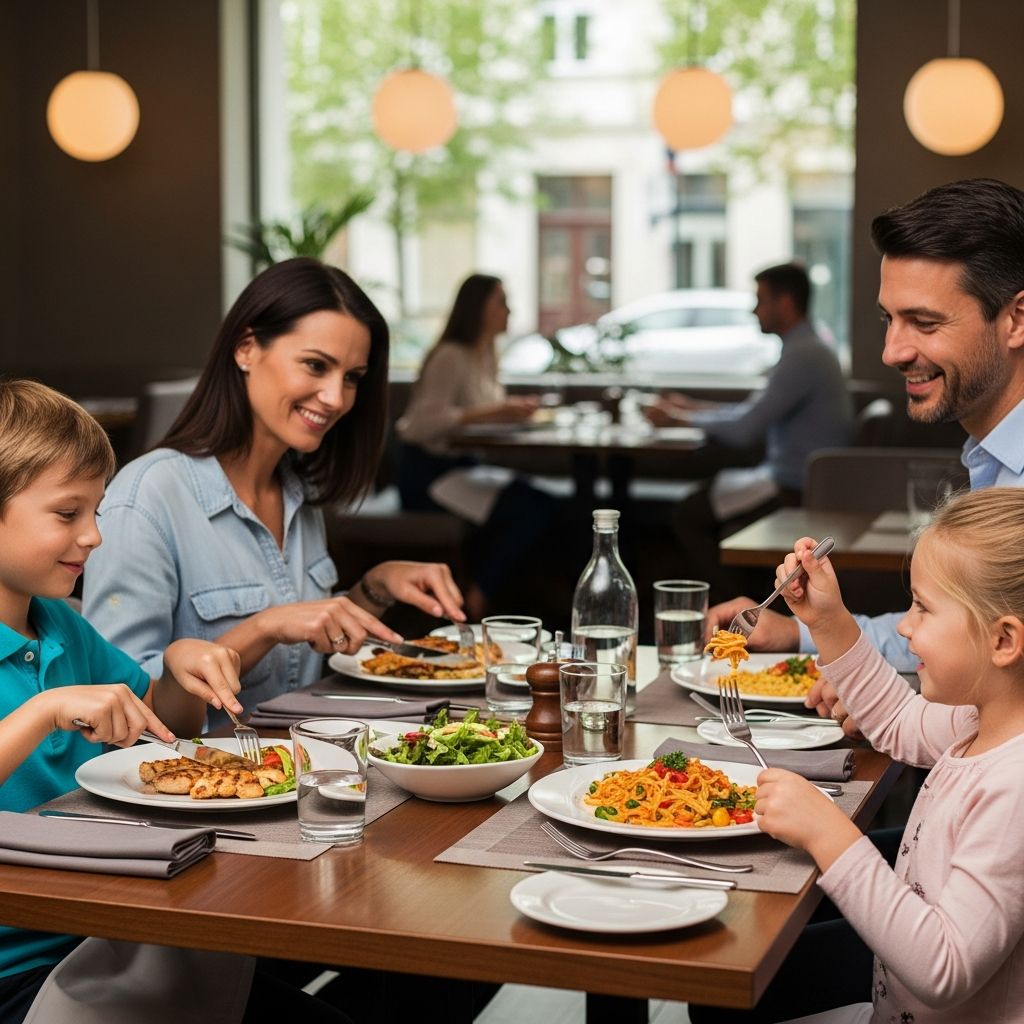
Eating out with kids does not have to feel like a high-stakes performance where every dropped fork or loud giggle makes you want to disappear under the table. With realistic expectations, thoughtful preparation, and consistency, most children can learn how to behave respectfully in restaurants while still being their curious, energetic selves.
Why Restaurant Manners Matter (And What They Don’t Mean)
Restaurant manners are not about raising perfectly silent, still children. They are about helping kids learn how to be considerate of others while also understanding that public spaces are shared spaces. When you focus on teaching skills instead of chasing perfection, both you and your child feel less pressure and more connection.
Good manners also serve your child in the long term. They build patience, empathy, and social awareness—skills that show up later in classrooms, friendships, and eventually workplaces. The goal is not to impress strangers for one meal, but to slowly build habits that help your child move comfortably and confidently in the world.
Start at Home: Your Dining Table as a Training Ground
The easiest place to begin teaching restaurant behavior is your own dining table. At home, you control the timing, the menu, the atmosphere, and the expectations. This allows you to introduce skills in small, manageable steps instead of trying to teach everything in the middle of a crowded dining room.
Think of home meals as low-pressure practice sessions. You can laugh about mistakes, reset as needed, and gently repeat your expectations without feeling self-conscious. Over time, the habits you build at home transfer naturally to restaurants.
Simple Home Practices That Translate to Restaurants
- Have at least a few meals a week with everyone sitting at the table with no screens.
- Use the same basic rules at home that you want in restaurants (for example, no running around the table, no shouting, ask before leaving your seat).
- Practice “please”, “thank you”, and making eye contact when asking for more food or passing items.
- Give children age-appropriate jobs: setting napkins, carrying spoons, or helping clear their dishes.
Setting Realistic Expectations by Age
Not all children are ready for the same level of self-control at the same age. Expecting a two-year-old to sit quietly for an hour is a recipe for frustration for both of you. Instead, match your expectations to your child’s developmental stage and build from there.
| Age Range | Reasonable Goals | Helpful Supports |
|---|---|---|
| Toddlers (1–3) |
|
|
| Preschoolers (3–5) |
|
|
| Early school-age (6–9) |
|
|
Choosing the Right Restaurant (Timing Matters Too)
Success often depends less on your child’s behavior and more on the situation you place them in. A dim, formal restaurant at 8 p.m. is going to be hard for most children, even those who generally have good manners. Make it easier on everyone by choosing settings that match your child’s current skill level.
As your child gains confidence and control, you can slowly introduce more challenging environments. Think of it as leveling up in a game: start with kid-friendly places and gradually move toward quieter, more formal spaces if that is something your family enjoys.
Smart Choices Before You Go
- Avoid peak meltdown times—do not plan dinner right at nap time or long past bedtime.
- Check menus online in advance so you can order quickly and know there are options your child will actually eat.
- Start with casual restaurants that are naturally noisier and more forgiving as “practice grounds.”
- Consider going at off-peak hours when the restaurant is less crowded, which reduces pressure and wait times.
Creating a Pre-Restaurant Ritual
Rituals help kids feel safe because they know what to expect. A short, predictable routine you follow every time you eat out can reduce anxiety and impulsive behavior. The key is to keep it brief, consistent, and calm rather than turning it into a lecture.
You might talk through the plan in the car, repeat the same three rules, or ask your child to explain the rules back to you. This transforms manners from something you announce to something they own and participate in.
A Simple Three-Rule System
Choose three clear, positive rules your child can remember. For example:
- We stay in our seat unless we ask to get up.
- We use quiet, indoor voices.
- We keep our hands and feet to ourselves.
Repeat these just before you walk in. For older kids, you can ask, “What are our restaurant rules?” and let them answer. When you need to remind them inside, you can calmly say, “Which rule are we forgetting right now?” instead of launching into a new speech.
Planning for Waiting Time (Before the Food Arrives)
Most children struggle not with the eating itself but with the waiting. Long gaps between ordering and food arriving stretch their patience to the limit, especially if they are hungry and overstimulated. Planning this window in advance can prevent many meltdowns.
Instead of relying on screens as the only solution, aim for a mix of quiet, engaging activities that still allow for conversation and connection. Screens can be one tool, but if they are the only one, transitioning back to real-world interaction often becomes a battle.
Low-Noise, Low-Mess Entertainment Ideas
- A small pouch of “restaurant only” toys such as mini puzzles, figurines, or fidget toys.
- Coloring books, blank notepads, and washable crayons or pens.
- Simple word games, “I spy”, or storytelling prompts that involve the whole table.
- Menu-based games for early readers: finding letters, numbers, or specific words.
Practical Table Manners Kids Can Learn
Table manners do not have to be fancy to be effective. Focus first on behaviors that protect other diners’ comfort and safety, then layer in more traditional etiquette over time. The goal is to show respect to staff and fellow customers while building your child’s confidence.
Introduce new skills gradually. Instead of correcting every misstep in one meal, pick one or two manners to work on. When those start to stick, move on to the next set so your child does not feel constantly criticized.
Foundational Skills to Prioritize
- Sitting safely: staying on the seat rather than kneeling on chairs or lying on the floor.
- Using utensils as tools, not toys: forks and spoons are for eating, not for drumming or sword fights.
- Keeping food on the table as much as possible instead of throwing or smearing it.
- Waiting to talk while chewing, and trying to keep mouths closed while eating.
- Using a napkin instead of sleeves for wiping hands and faces.
Respecting Restaurant Staff
Restaurants are a great place to teach children that manners are not just about rules but about how we treat other people. Servers, hosts, and kitchen staff are working hard under time pressure, and small gestures of respect help children see them as people, not just part of the furniture.
When kids learn to interact politely with staff, they practice social courage and kindness. It also helps staff feel more patient and warm toward your table, which can make the entire experience smoother.
Ways Kids Can Show Respect
- Using “please” and “thank you” when ordering or receiving food.
- Handing menus back calmly instead of dropping or crumpling them.
- Avoiding shouting for attention; asking a parent to call the server when needed.
- Helping tidy their area a bit before leaving, such as stacking dishes or picking up dropped napkins when possible.
Handling Meltdowns Without Losing Your Cool
Even with preparation, some meals will go sideways. A hungry, overtired child may melt down despite everyone’s best efforts. The goal is not to eliminate every future meltdown; it is to respond calmly, protect your child’s dignity, and minimize disruption for others.
Shame, threats, and public scolding often make things worse. Children in distress need fewer words and more calm, clear action. A quiet reset is usually more effective than a loud correction.
Step-by-Step Reset Strategy
- Notice early signs: wiggling, whining, or tossing items can all be early signals.
- Offer a simple choice: “Do you want to color or look out the window while we wait?”
- If behavior escalates, calmly step outside with your child for a short break.
- Once calm, briefly restate the rule: “We can go back in when your body is ready to sit at the table.”
- If your child truly cannot recover, it is okay to ask for your food to go and try again another day.
Balancing Fun and Structure
Kids behave better when they feel included, not constantly controlled. If restaurant meals are only a list of “don’t”s, children will naturally push back. When you build in playful moments, they are more likely to cooperate with the rules that really matter.
Structure provides predictability, and fun provides motivation. Blending both keeps the meal from feeling like a chore for either you or your child.
Ways to Keep Things Light
- Invite your child to help choose their meal or dessert within limits you set.
- Start a family tradition like “rose and thorn” (best and hardest part of the day) at restaurant meals.
- Play secret signal games: a gentle tap on the hand can be a reminder to lower their voice without public correction.
- Celebrate small wins, like quietly acknowledging when they stay seated or use good manners without prompting.
When to Take a Break from Restaurants
Sometimes the most loving choice is to pause restaurant outings for a while. If every meal out leaves everyone tense and exhausted, it may mean your child needs more practice at home or is just not in a developmental phase where public dining is realistic.
A break does not mean failure. It simply means you are respecting your child’s current capacity and your own energy. You can come back to restaurant practice when both of you have more resources to handle it.
Signs a Temporary Pause Might Help
- Frequent intense meltdowns that do not improve with breaks or support.
- You feel dread every time someone suggests eating out.
- Your child seems overwhelmed by noise, crowds, or new environments.
- Home meals are also chaotic, and you have not yet established any basic routine.
Frequently Asked Questions
How long should I expect my toddler to sit at a restaurant?
Most toddlers can manage around 15–20 minutes of relatively calm sitting, especially if they are not overly tired or hungry. Plan for short outings at first, and gradually extend the time only once they show they can handle it without major distress.
Is it okay to use screens at the table?
Screens can be a useful tool when used intentionally, but relying on them every time can prevent kids from learning other coping skills. If you choose to use devices, try setting clear limits and pairing them with other activities like conversation, coloring, or simple games so your child still practices social interaction.
What should I do if other diners glare or comment?
As long as you are actively trying to manage your child’s behavior and being respectful of others, you are allowed to exist in public spaces as a family. If a stranger is unkind, take a breath, focus on your child, and remember that your responsibility is to your child’s well-being, not to everyone else’s opinions.
How do I encourage my child to order politely?
Practice at home by role-playing restaurant scenarios. Let your child rehearse saying, “May I please have…” and making eye contact. In the restaurant, stay nearby for support, but allow them to speak directly to the server when they feel ready.
What if my child has sensory or developmental differences?
Children with sensory sensitivities, autism, ADHD, or other differences may find restaurants especially challenging. Adjust expectations, choose quieter spaces, and bring familiar comfort items. It can also help to call ahead and ask for a corner table or quicker service when possible, and to pace progress in very small steps.
Building Lifelong Confidence, One Meal at a Time
Restaurant manners are not learned in a single outing; they are built slowly through many everyday moments. Each time you model calm behavior, set simple rules, and support your child through big feelings, you are doing more than surviving a meal—you are helping them grow into a person who can handle shared spaces with kindness and confidence.
With patience, practice, and a sense of humor, eating out with kids can shift from something you dread to something your family genuinely enjoys. The goal is not a perfect performance, but a shared experience where everyone learns and laughs along the way.