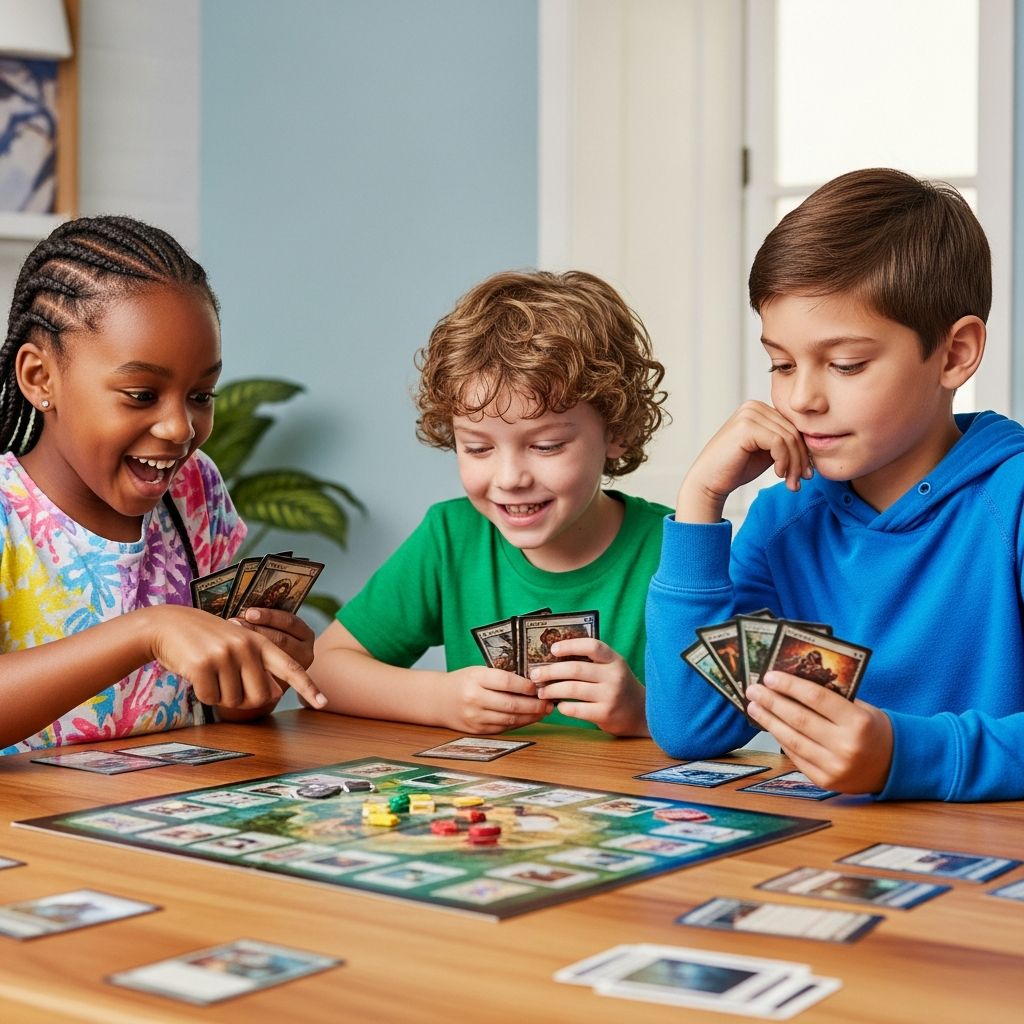
Magic: The Gathering can be an incredible bridge between your child’s favorite stories and real-world skills like reading, math, strategy, and sportsmanship. With a little planning, it can also become one of your most meaningful family traditions.
This guide shows how to introduce kids to Magic: The Gathering (MTG) using kid-friendly themes, simple teaching steps, and a focus on fun over winning.
Why Magic Works So Well for Kids
On the surface, Magic is a fantasy card game where wizards battle using creatures, spells, and artifacts. Beneath that, it is a learning engine disguised as play. Each turn asks kids to read, plan, calculate, and adapt to changing situations.
For parents, Magic is a rare mix of screen-free entertainment, shared storytelling, and quiet skill-building. Unlike many kids’ games that adults quickly outgrow, MTG scales in complexity as children mature, which means you can grow with the game together.
Key Benefits for Growing Minds
- Reading practice: Children constantly read card text, keywords, and abilities.
- Math skills: Life totals, combat damage, and card counts reinforce basic arithmetic.
- Strategic thinking: Kids learn to plan ahead, manage resources, and think in terms of cause and effect.
- Emotional resilience: Losing gracefully and trying again becomes part of play rather than a crisis.
- Social connection: Magic encourages communication, negotiation, and shared excitement around a common hobby.
Choosing the Right Age and Expectations
There is no single “perfect” age to start Magic, but most kids are ready to try a simplified version between ages 7 and 10. Younger kids might enjoy sorting cards by color, guessing what creatures do from the art, or helping choose a theme.
Instead of asking, “Is my child ready for the full rules?” ask, “Which parts of this game can my child enjoy right now?” You can always add more complexity later.
What Kids Can Handle at Different Ages
| Age Range | What to Focus On | Skip for Now |
|---|---|---|
| 5–7 | Artwork, storytelling, basic attacking and blocking, counting to 20. | Stack timing, complex card interactions, advanced formats. |
| 8–10 | Full turns, simple abilities, building small themed decks together. | Competitive play, intricate combo decks, tournament rules. |
| 11–13 | Deckbuilding choices, sideboarding, learning from wins and losses. | High-pressure events, large financial investments into cards. |
| 14+ | Advanced strategies, local events, long-term collections. | Still avoid tying self-worth to win rate or card value. |
Using Familiar Universes to Hook Their Interest
Modern Magic sets often collaborate with beloved franchises. These crossover worlds are a powerful tool for parents because kids instantly recognize characters, locations, and storylines. If your child already loves a universe, you can use it as an entry ramp to the rules of MTG.
When you anchor gameplay in stories they already care about, learning the rules starts to feel like exploring a favorite book or show rather than studying another set of instructions.
Examples of Kid-Friendly Themes
- Epic fantasy adventures: Worlds full of dragons, wizards, and quests are familiar to kids raised on fantasy films and books.
- Time-travel and sci-fi: Children drawn to spaceships, aliens, or time machines can connect with futuristic settings.
- Classic tales reimagined: Story-based sets that echo myths or legendary sagas help kids follow narratives across games.
- Creature-focused decks: Dinosaurs, elves, robots, and animals make great entry themes for younger players.
Step-by-Step: How to Teach Magic Without Overwhelming Your Child
The biggest mistake many adults make is trying to teach every rule at once. Treat the game like a series of small lessons that gradually stack together. Short, focused sessions beat one long, exhausting lecture.
Step 1: Start with Story, Not Rules
Begin by describing the fantasy premise in kid language: two powerful spellcasters in a world they love, each summoning allies and casting spells to protect themselves. Invite your child to imagine who their character might be in that universe.
Let them flip through cards and call out their favorites. Talk about the art, the creatures, and the cool moments that might happen in a game. Curiosity will do half the teaching for you.
Step 2: Introduce Only the Core Pieces
On the first day, limit the game to the absolute basics:
- Life totals and the idea that reaching zero means you lose.
- Lands as the resource that lets you cast spells.
- Creatures as the main way to attack and defend.
- Simple turn structure: draw, play a land, cast a creature, attack.
Remove or ignore cards with complicated timing or long paragraphs of text for now. It is completely fine to play with a simplified version of the game.
Step 3: Play Open-Handed Practice Games
For the first few sessions, play with your hands visible. Narrate what you are thinking: which creature you might cast, why you hold back a removal spell, or when you choose not to attack.
Encourage your child to explain their choices too. Ask gentle questions like, “What do you think will happen if you attack here?” or “Which card feels most exciting to play this turn?” The goal is exploration, not perfection.
Step 4: Add New Rules Gradually
Once your child is comfortable with basic turns, add new concepts one by one. Think of it as leveling up your shared ruleset.
- Introduce instants and sorceries in a short game focused only on spell timing.
- Bring in flying, trample, or other keywords as “special powers” and explain them during play.
- Keep a small sticky note of newly learned keywords on the table as a quick reminder.
If your child looks frustrated or confused, scale back. It is better to remove a mechanic temporarily than watch interest fade.
Step 5: Transition to Independent Decks
After several guided games, build or buy two simple decks that feel like true “characters” in your shared story. One can be aggressive and creature-heavy; the other can be slower and spell-focused. Avoid complex combos or tiny, hard-to-spot synergies.
Ask your child what style they enjoy most: swarming with creatures, defending until a big spell, or growing one heroically large threat. Let their preferences shape the deck they call their own.
Designing Kid-Friendly Starter Decks
Many pre-made decks are designed for adults and can be overwhelming. You can tweak them or build your own child-friendly versions with a few simple rules in mind.
Simple Deck Building Guidelines
- Stick to one or two colors to avoid mana issues.
- Use mostly creatures with short, clear text.
- Limit the number of different card types to reduce mental load.
- Include several copies of the same few cards so patterns become easier to see.
- Choose a clear theme: knights, wizards, robots, dragons, time travelers, or a favorite franchise.
Example Theme Ideas (No Specific Card Names Needed)
- Adventuring Party Deck: Focus on brave heroes, helpful allies, and equipment that makes your team stronger.
- Monsters & Guardians Deck: Big creatures, protective spells, and the story of defending a beloved realm.
- Time-Travel Trickster Deck: Spells that bounce, tap, or delay opponents’ threats, framed as jumping through time.
- Nature’s Allies Deck: Forest creatures, healing spells, and a story about protecting ancient lands.
Turning Game Night into a Family Ritual
Children stick with games that feel like a warm ritual, not a one-time experiment. A predictable, cozy game night gives them something to look forward to and turns MTG into part of your family culture.
Ideas to Make Magic Night Special
- Give your weekly game night a name, like “Friday Fantasy Battles” or “Family Spellcasting Night.”
- Let kids set up the table: life trackers, playmats, snacks, and music from the worlds you’re playing in.
- Start with a quick “story recap” of what happened last time, like a TV episode summary.
- End each session with high-fives, not post-game analysis. Save deeper strategy talks for another time.
Life Lessons Hidden in the Cards
One of the quiet strengths of Magic is how naturally it introduces deeper life skills. Instead of lectures, kids experience these lessons by playing with people they trust.
Sportsmanship and Emotional Skills
- Model how to say “Good game” whether you win or lose.
- Celebrate clever plays your child makes, even in games you win.
- Talk about luck: sometimes the deck cooperates, sometimes it does not, and that’s part of the fun.
- Help them label emotions: disappointed, proud, surprised, determined—then show that all of them are okay.
Critical Thinking and Planning
Over time, ask your child questions that nudge them toward deeper analysis without turning the game into homework.
- “What happens if you wait one more turn before playing this spell?”
- “Is it safer to attack with everyone or leave one creature back to block?”
- “If your goal is to protect your life total, which play helps you most?”
Staying Budget-Friendly and Setting Healthy Boundaries
Magic can become an expensive hobby if left unchecked, but it does not have to be. Early on, frame card buying as a shared, limited activity instead of endless collecting. This also teaches kids about money, priorities, and patience.
Practical Budget Tips
- Start with a small number of inexpensive decks or a beginner product rather than chasing rare cards.
- Set a monthly or seasonal card budget and involve your child in deciding how to use it.
- Emphasize fun and creativity over card value or power level.
- Use trading as a lesson in fairness: both sides should feel good about the exchange.
Healthy Play Limits
- Keep sessions fairly short for younger kids to avoid fatigue.
- Rotate Magic with other family activities so it remains special.
- Focus on in-person play and conversation rather than only digital versions.
- Check in regularly: ask if the game still feels fun and what they’d like to change.
Common Pitfalls Parents Can Avoid
Even well-meaning parents can accidentally sap the fun out of Magic by leaning too hard into competition or complexity. Being aware of a few common traps makes it much easier to steer around them.
Things to Watch Out For
- Over-coaching: Constantly telling your child the “correct” play can make them feel like a spectator rather than a player.
- Power mismatches: Using your strongest, most complex deck against a child’s simple starter can feel unfair.
- Rules lawyering: Arguing over minor rules points is a quick way to drain the joy from the table.
- Fixating on winning: If every game feels like a test, kids may quietly opt out.
Frequently Asked Questions
Is Magic: The Gathering too complicated for children?
Magic can be very complex, but you control how many pieces of that complexity show up at your table. By starting with simplified decks, open-hand games, and a handful of rules, you can create an age-appropriate version that grows with your child.
How long should a teaching game last?
For younger kids, aim for 15–30 minute games. Short, successful sessions leave them wanting more. If a game is dragging, you can end early by mutual agreement and narrate a fun conclusion to the story.
Do we need special beginner products?
Beginner products can be helpful, but they are not mandatory. You can build your own simplified decks by choosing easy-to-understand cards, limiting colors, and sticking to a clear theme your child loves.
What if my child hates losing?
That reaction is normal. Start with cooperative or low-stakes scenarios: play on the same team against a shared challenge, let them take back obvious mistakes, and emphasize cool plays over final scores. Gradually, losing will feel less personal and more like part of the adventure.
Can this actually count as learning time?
While it should always feel like play, Magic naturally reinforces reading fluency, mental math, and logical reasoning. If you want, you can lightly highlight these moments—such as asking them to calculate damage without a calculator—but keep the primary focus on enjoyment.
Embracing Magic as a Long-Term Shared Hobby
When introduced with patience and creativity, Magic: The Gathering offers far more than a stack of fantasy cards. It becomes a shared language of in-jokes, dramatic top-decks, and stories your family will retell for years.
By using familiar universes, simplified rules, and a steady focus on connection over competition, you can raise your own tiny planeswalkers—and give them a lifelong hobby they’ll always associate with time spent together.