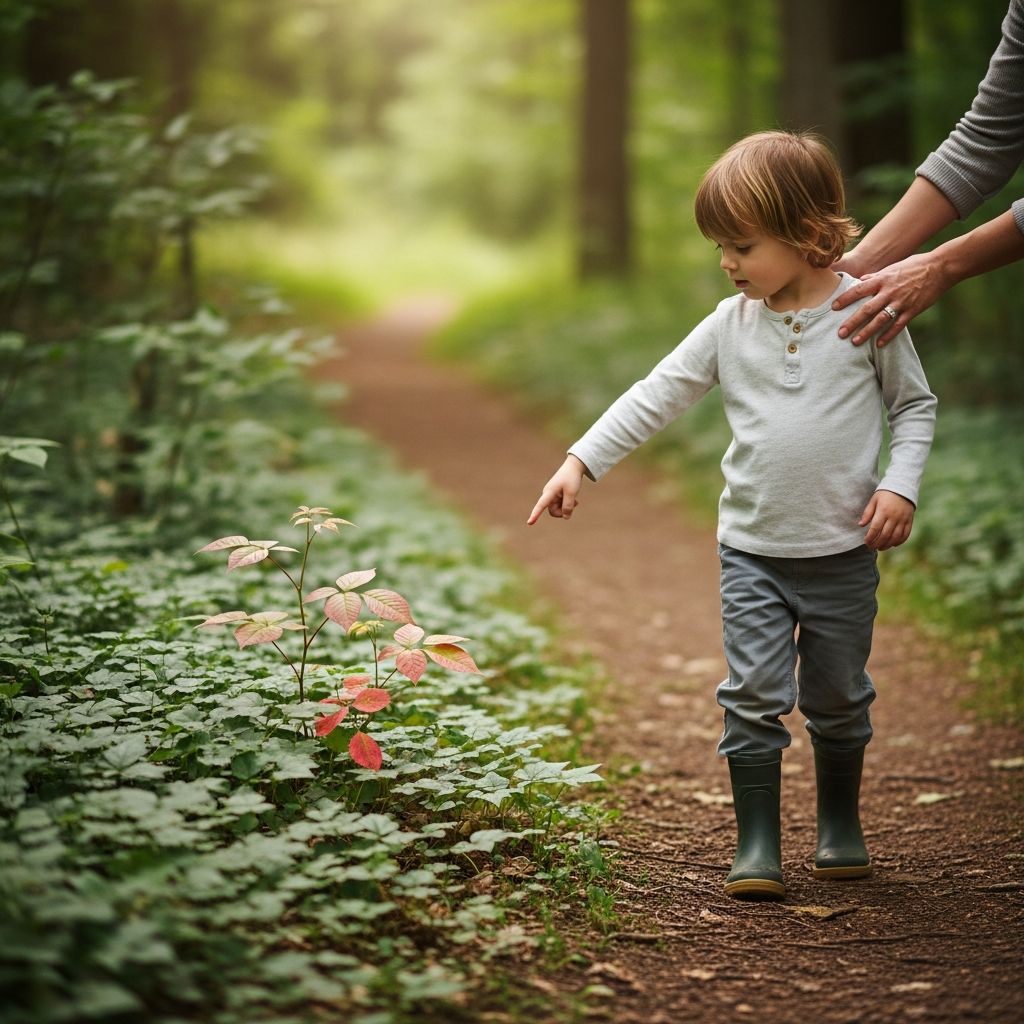
Poison ivy is a common plant that can turn a fun day outdoors into a very itchy experience, especially for children who love exploring nature. It causes an allergic skin reaction in many people, and the rash can be quite uncomfortable, but there are effective ways to prevent and treat it.
Understanding Poison Ivy and Its Irritating Oil
Poison ivy is a plant that produces an oily resin called urushiol, which is responsible for the allergic reaction on the skin. This resin is present in the leaves, stems, and roots, and can remain active on surfaces and objects for a long time. Even dried or dead plants may still carry urushiol, so they can cause a reaction if touched.
- Urushiol can transfer directly from the plant to skin, or indirectly from clothing, pets, tools, or toys.
- Only a tiny amount of urushiol is needed to cause a reaction in sensitive individuals.
- Most people become more sensitive to urushiol over time, meaning reactions can worsen with repeated exposures.
The rash itself is a type of allergic contact dermatitis, which means the immune system reacts to the oil as if it were a harmful invader. This reaction leads to redness, swelling, and intense itchiness on the affected areas of skin.
Where Poison Ivy Hides: Typical Habitats
Parents often assume poison ivy only grows deep in the woods, but it can appear in many everyday environments. Understanding where it likes to grow helps families avoid accidental contact.
- Wooded areas and forest edges, especially along paths and trails.
- Fence lines, stone walls, and the edges of backyards and playgrounds.
- Riverbanks, lakeshores, and damp or partially shaded ground.
- Vacant lots, overgrown fields, and areas where shrubs and vines are not regularly trimmed.
Poison ivy can grow as a low plant, a shrub, or a climbing vine on trees, fences, or buildings. This variety in appearance is one reason children (and adults) can easily overlook it.
Recognizing Poison Ivy: Visual Clues for Families
There is no single look for poison ivy, but certain visual patterns can help parents teach children what to avoid. Focusing on leaf shape and arrangement is more reliable than depending on color alone.
- Leaf groups: Typically, leaves grow in clusters of three leaflets on a single stem.
- Leaf edges: Some leaves have smooth edges, while others may appear slightly notched or toothed.
- Seasonal changes: In spring, leaves may emerge reddish; in summer, they are usually green; in fall, they can turn orange, red, or yellow.
- Growth form: May appear as ground cover, a small bush, or a vine climbing up a support.
Because appearance can vary by region and season, it is useful for parents and older children to review photos or plant guides from trusted sources before hiking or camping. Emphasize to kids that any unfamiliar “three-leaf clusters” should be left alone.
How the Rash Develops After Exposure
Not every child reacts the same way, and symptoms do not always appear immediately. The timing and pattern of the rash can offer clues about when and where exposure occurred.
| Time After Contact | What Parents May Notice |
|---|---|
| First few hours | Skin may itch or feel mildly irritated, often without any visible rash yet. |
| 1–2 days | Redness, swelling, and small bumps or streaky patches appear where the skin touched the oil. |
| 2–5 days | Itchy blisters can form; fluid may ooze and then crust over as the rash evolves. |
| 1–3 weeks | Rash gradually dries, peels, and fades if there are no complications and scratching is minimized. |
The rash often appears in lines or streaks, reflecting where a branch or leaf brushed the skin. It is important to know that the fluid from blisters does not spread the rash; spreading usually happens when residual oil remains on skin, under fingernails, on clothes, or on objects.
Common Symptoms Parents Should Watch For
Most cases of poison ivy cause mild to moderate discomfort, but they can still be very distressing for children. Recognizing key symptoms helps parents act quickly and appropriately.
- Red, itchy patches or streaks on areas that were exposed.
- Small bumps or raised areas that progress to fluid-filled blisters.
- Swelling around the rash, especially on the face or hands.
- Burning or stinging sensations where the skin is inflamed.
Some children experience a more widespread reaction, especially if they touched the plant and then rubbed other parts of the body. In these situations, it is essential to clean the skin well and monitor for more serious signs such as difficulty breathing, extensive swelling, or signs of infection.
When Poison Ivy Becomes an Emergency
While many rashes can be treated at home, certain situations require urgent medical attention. Parents should seek immediate care if any of the following occur:
- Rash near or inside the eyes, mouth, nose, or genital area.
- Swelling of the face, lips, or tongue, or any trouble breathing or swallowing.
- Rash covering a large portion of the body or spreading rapidly.
- Fever, pus, increased warmth, or intense redness that suggests infection.
- Severe pain, extreme itchiness that prevents sleep, or signs that the child is very unwell.
If a child has asthma, a history of severe allergies, or has reacted strongly to poison ivy before, parents should be especially cautious and consult a healthcare professional early if symptoms seem more than mild.
Immediate Steps After Possible Contact
Quick action right after exposure can significantly reduce the severity of a poison ivy reaction. Parents can follow a simple step-by-step approach when they think a child has touched the plant or its oil.
- Move away from the plant. Prevent further contact and keep siblings and pets away from the area.
- Remove contaminated clothing. Carefully take off shirts, socks, and pants, avoiding rubbing the plant against the child’s skin.
- Wash the skin promptly. Use lukewarm water and mild soap to gently cleanse the affected areas, including under nails, for at least several minutes.
- Rinse thoroughly. Make sure all soap and possible oil are rinsed away; consider showering instead of bathing so oil is washed down the drain.
- Handle clothing and gear carefully. Wash exposed clothes, shoes, and toys before reuse, following label directions.
Even if a rash has not appeared yet, this early cleaning can help remove urushiol and lessen or even prevent the reaction in some cases.
Home Care for Mild Poison Ivy Rash
Most children with a typical poison ivy rash can be treated at home with simple, soothing methods. The main goals are to reduce itching, protect the skin, and prevent infection from scratching.
- Cool compresses: Applying a clean, cool, damp cloth to the rash for short periods can ease itching and swelling.
- Lukewarm baths: Soaking in water with a colloidal oatmeal product or a gentle bath additive can soothe irritated skin.
- Topical lotions and creams: Products intended for itch relief, such as calamine lotion or low-strength over-the-counter anti-itch creams, may help when used as directed.
- Oral medications: In some cases, an oral allergy or itch relief medicine recommended by a pediatric provider can make the child more comfortable, especially at night.
- Nail care: Keeping fingernails short and clean reduces the risk of breaking the skin and introducing bacteria.
Parents should always follow package directions and, when unsure, ask a healthcare professional before giving any medicine to a child. Avoid home remedies that can irritate or damage the skin, such as harsh chemicals, bleach, or strong alcohol-based products.
Medical Treatments for More Severe Reactions
Some children develop more significant reactions that go beyond what home care can comfortably manage. In these cases, a healthcare provider may recommend or prescribe additional treatments.
- Stronger topical medicines: Prescription-strength steroid creams or ointments may be used to reduce inflammation and itching.
- Oral corticosteroids: For extensive or severe rashes, a short course of oral steroids may be recommended to calm the reaction.
- Prescription antihistamines: These may be used when over-the-counter products are not sufficient or appropriate.
- Antibiotics: If scratching leads to a secondary bacterial infection, an antibiotic may be needed.
Parents should never use prescription creams or pills intended for another person or for a previous condition without medical guidance. Each child’s age, weight, health history, and rash severity influence what is safe and effective.
Preventing Poison Ivy Exposure for Kids
Prevention is often easier than managing a full-blown rash. Simple habit changes and environmental adjustments can significantly lower the risk of contact with poison ivy.
- Teach plant awareness: Show children pictures of poison ivy and explain that unknown plants should not be touched.
- Dress for protection: Use long sleeves, long pants, and closed-toe shoes when hiking, camping, or working in overgrown areas.
- Use barrier products when appropriate: Some skin creams are designed to reduce urushiol absorption; follow directions carefully if using them.
- Keep yards maintained: Trim brush, remove vines properly, and keep play areas free of overgrown plants.
- Protect pets: Pets can carry urushiol on their fur; ask a veterinarian about safe bathing products if exposure is suspected.
When removing poison ivy from a property, adults should wear protective gear, avoid burning the plant, and follow local guidelines for safe disposal. Smoke from burning poison ivy can be dangerous if inhaled.
Myths and Facts About Poison Ivy
Many long-standing myths about poison ivy can confuse parents who are trying to care for their children. Clearing up these misunderstandings helps families respond more confidently and safely.
| Common Belief | Reality |
|---|---|
| “Blister fluid spreads the rash.” | The fluid inside blisters is not the urushiol oil and does not spread the rash. |
| “You can’t get poison ivy in winter.” | Even bare stems and roots can still contain urushiol, so contact can cause a reaction. |
| “Only kids with ‘sensitive skin’ get it.” | Most people can react to urushiol; sensitivity varies, but many children are affected. |
| “Scratching makes it ‘spread’ to other body parts.” | Spreading usually comes from moving leftover oil, not from the rash itself. |
Understanding these facts helps parents focus on thorough washing, itch control, and skin protection rather than worrying about blister fluid or “contagion” from the rash alone.
Helping Children Cope With Itching and Discomfort
Beyond medical treatment, there is an emotional and behavioral side to managing poison ivy. Itching can make kids irritable, disrupt sleep, and cause anxiety about going outdoors again.
- Offer distractions: Quiet activities like reading, drawing, or puzzles can redirect attention away from itching.
- Use soft clothing: Loose, breathable fabrics help reduce friction against the rash.
- Plan sleep support: A calming bedtime routine and, when advised by a healthcare provider, appropriate nighttime itch relief can help children rest.
- Talk about nature safety: Reassure children that they can still enjoy the outdoors, and that learning to recognize certain plants keeps them safe.
Validating a child’s discomfort while maintaining a calm, confident approach can make the experience less frightening and more manageable.
FAQ: Parents’ Most Common Questions About Poison Ivy
1. Can my child give poison ivy to friends or siblings?
The rash itself is not contagious; children cannot “catch” poison ivy from another person’s blisters. However, urushiol oil can linger on skin, under nails, clothing, shoes, sports equipment, and toys, so these items should be washed thoroughly.
2. How long does the rash usually last?
In many children, a typical poison ivy rash gradually improves over one to three weeks. The time frame depends on how much oil contacted the skin, how quickly it was washed off, and the child’s individual sensitivity.
3. Should I pop the blisters?
No. Blisters serve as a natural bandage and help protect the skin underneath. Popping them can increase the risk of infection and slow healing.
4. Can my child go to school or daycare with a poison ivy rash?
In most cases, yes, as long as the child feels well enough to participate and the rash is covered if recommended by the child’s healthcare provider. Because the rash is an allergic reaction rather than an infection, being near classmates usually does not pose a risk.
5. How do I know if this rash is really from poison ivy?
A streaky, itchy rash that appears one to two days after outdoor activity is a common pattern, but other skin conditions may look similar. If the rash is severe, unusual, or not improving, or if parents are uncertain about the cause, a healthcare professional should evaluate it.
6. Will my child always react the same way to poison ivy?
Reactions can change over time; some children may become more sensitive with repeated exposures. This is why prevention and early washing after suspected contact are so important, even if previous reactions seemed mild.
Key Takeaways for Busy Parents
- Poison ivy triggers a skin allergy through an oil called urushiol, which can remain active on many surfaces.
- Teaching children to avoid unknown “three-leaf” plants and dressing them in protective clothing greatly reduces risk.
- Prompt washing of skin, clothing, and gear after outdoor activities can limit or prevent a rash.
- Most rashes can be managed at home with cool compresses, soothing baths, and appropriate medicines, but parents should watch carefully for signs of a more serious reaction.
- Staying informed and prepared helps families enjoy the outdoors with confidence, even in areas where poison ivy grows.
With awareness, preparation, and sensible care, parents can protect their children from many of the discomforts caused by poison ivy while still encouraging them to explore and enjoy the natural world.