Introduction to Childhood Swimming Education
Swimming is one of the most valuable life skills a child can develop, offering both recreational enjoyment and critical safety benefits. When children learn to swim from an early age, they gain independence in aquatic environments while developing physical strength, coordination, and confidence. However, the journey of teaching a child to swim involves much more than simply placing them in water and hoping they naturally learn. It requires patience, structured instruction, appropriate safety measures, and an understanding of developmental stages. This comprehensive guide explores the essential components of teaching children to swim, from initial water familiarization through advanced stroke development.
Understanding Your Child’s Readiness for Water Instruction
Before enrolling your child in formal swimming lessons, it’s important to assess their developmental readiness and comfort level with water. Children progress at different rates, and what works for one child may not be appropriate for another. Several factors influence a child’s readiness to learn swimming, including their age, physical development, temperament, and previous exposure to water environments.
Young children, particularly those under three years old, benefit from water familiarization activities that focus on acclimation rather than formal instruction. These activities might include playing in shallow water, splashing, and becoming comfortable with water touching their face. Between ages three and five, children can typically begin more structured lessons where they learn basic water safety and fundamental movement patterns. Children aged six and older usually have the cognitive and physical development necessary to understand complex instructions and execute more advanced swimming techniques.
Beyond age considerations, observe your child’s comfort level with water. Some children take to water naturally, while others need extended periods of gradual exposure. Never force a child into the water if they show signs of fear or anxiety, as this can create negative associations that persist for years. Instead, allow them to progress at their own pace while providing consistent, supportive encouragement.
Selecting the Right Swimming Program
The quality of instruction significantly impacts your child’s progress and safety in the water. When choosing a swimming program, look for several key characteristics that indicate a well-run, effective facility.
- Qualified instructors: Instructors should have recognized certifications in swimming instruction and, ideally, pediatric CPR certification. Ask about their training background and teaching experience with children in your child’s age group.
- Age-appropriate class sizes: Smaller class ratios allow instructors to provide more individualized attention. Ideal ratios typically range from 3-4 children per instructor for young learners.
- Progressive curriculum: The program should have a clear framework that progressively builds skills from water comfort through stroke development and water safety awareness.
- Safety infrastructure: Verify that the facility has proper lifeguards on duty, maintained equipment, appropriate water temperature for children, and clear safety protocols.
- Parent involvement options: Programs that allow or encourage parental participation during lessons can enhance learning and help parents understand what their child is developing.
Essential Water Survival Skills Every Child Should Master
While learning to swim is important, understanding core water survival skills provides the foundation for water safety. These five fundamental competencies should be emphasized across any swimming instruction program.
Self-rescue entry and surface awareness: Children should learn to enter water safely—either stepping or jumping from a pool edge—and understand how to regain their footing or float to the surface. This skill is critical if a child accidentally falls into water, as the ability to get their head above water and breathe is paramount.
Orientation and directional awareness: After entering or being in water, children must develop the ability to turn around and locate safety. This includes understanding where the pool edge or shallow area is positioned and how to navigate toward it.
Floating and treading water: The ability to remain buoyant in water for extended periods can literally save a child’s life. Whether through passive floating techniques or active treading water, this skill provides a crucial buffer during emergencies. Teaching multiple floating techniques gives children options depending on their comfort level and water conditions.
Coordinated breathing and forward movement: Children must learn to combine breath control with purposeful movement through the water. This involves understanding when to breathe, how to position their body, and how to propel themselves forward efficiently.
Water exit strategies: Children should practice exiting water in various ways—climbing out of a pool, walking out of shallow water, and reaching for assistance when needed. Understanding different exit methods prepares them for various aquatic scenarios.
Establishing a Safe Learning Environment
Before diving into skill instruction, creating an environment where children feel secure is essential. Safety encompasses both physical protections and psychological comfort.
Supervision protocols: The foundation of water safety is constant, attentive supervision. For very young children and inexperienced swimmers, an adult should remain within arm’s reach while in the water. Even when children are participating in formal lessons with instructors, additional adult supervision provides an extra layer of protection. Supervising adults should remain focused on the water and avoid distractions such as mobile phones, which can compromise their ability to respond to emergencies.
Buddy system implementation: Teaching children to swim with buddies creates peer accountability and support. Buddies can alert adults if something goes wrong and provide companionship that makes swimming more enjoyable. This system works best when children understand their buddy responsibilities and practice checking on each other regularly.
Clear pool rules and boundaries: Establish firm rules about pool conduct and consistently enforce them. Children should understand that running on wet surfaces creates slip hazards, that rough play can lead to injuries, that pushing or dunking others is prohibited, and that diving is only permitted in designated deep areas.
Appropriate safety equipment: Life jackets and flotation devices serve important safety functions when selected properly. Choose USCG-approved life jackets that fit your child appropriately, and recognize that water wings and inflatable toys should never substitute for proper life jackets. Safety equipment should complement supervision, not replace it.
Progressive Skill Development Strategies
| Development Stage | Typical Age Range | Focus Areas |
|---|---|---|
| Water Familiarization | 18 months – 3 years | Comfort with water, face splashing, floating with support |
| Fundamental Skills | 3 – 5 years | Independent floating, basic movement, water safety awareness |
| Stroke Development | 5 – 8 years | Basic strokes, breathing techniques, directional swimming |
| Advanced Proficiency | 8+ years | Multiple strokes, distance swimming, advanced water skills |
Teaching swimming effectively requires breaking complex skills into manageable components. Rather than expecting a child to swim an entire lap immediately, instructors guide children through incremental progress.
Start with water acclimation activities that normalize the aquatic environment. Let children play in water, splash, pour water over themselves, and gradually become comfortable with water on their face. These activities build positive associations with water rather than creating anxiety.
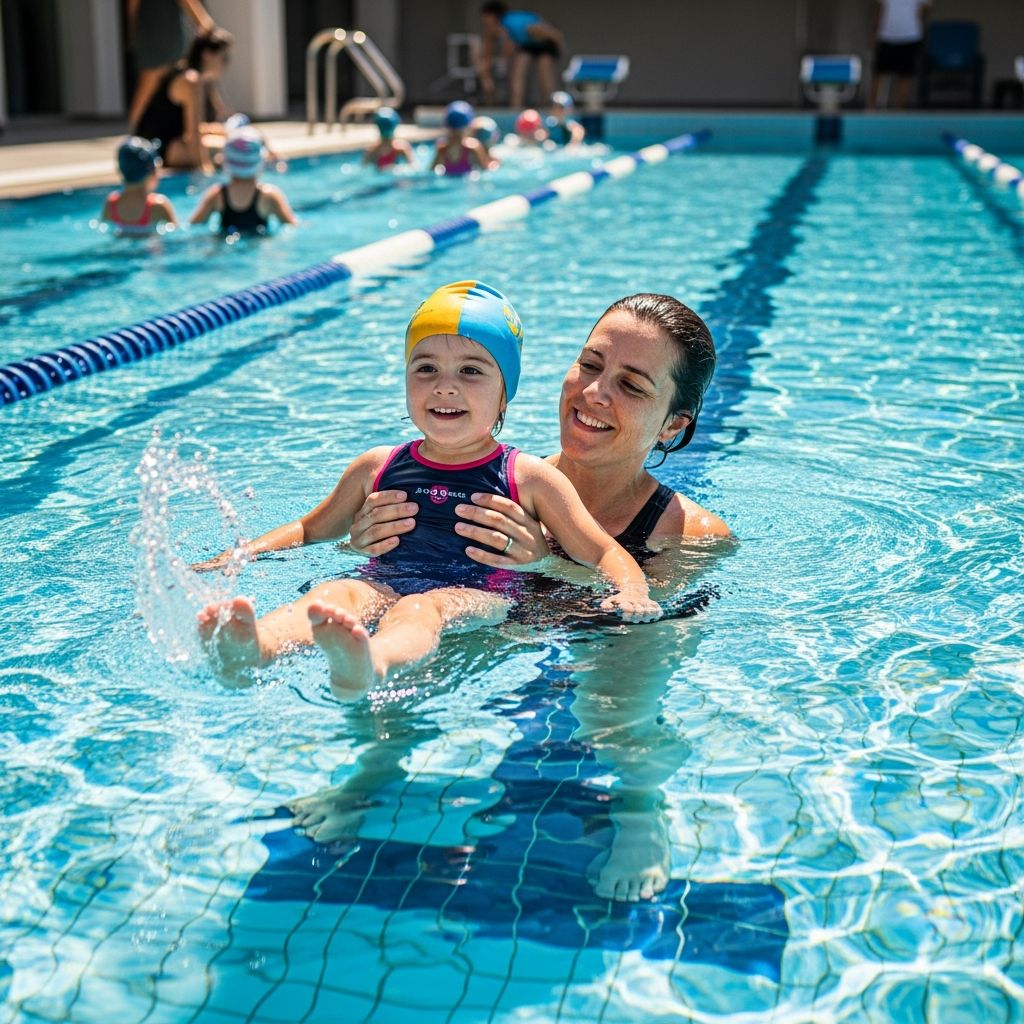
Once comfort is established, introduce floating with support. Children learn that water provides buoyancy and that their body can float when relaxed. Gradually reduce the amount of support as confidence grows, moving from holding an instructor’s hands to using kickboards or flotation aids to independent floating.
Teach breathing coordination early, as this is often the most challenging aspect for young swimmers. Children must learn to exhale into the water and turn their head to inhale—a pattern that feels unnatural initially. Practice breathing exercises in shallow water before incorporating them into full swimming movements.
Introduce basic strokes once children demonstrate adequate floating ability and breathing control. Different strokes serve different purposes—freestyle provides efficiency, backstroke allows swimmers to see where they’re going, and other strokes develop different muscle groups and water awareness. Children benefit from practicing varied strokes rather than specializing in one movement pattern.
Maintaining Motivation and Consistency
Learning to swim requires time and consistent practice. Children make greater progress with regular practice intervals rather than sporadic, intensive sessions. Ideally, children should participate in swimming instruction at least once weekly, with additional recreational swimming when possible.
Make swimming enjoyable by incorporating games, challenges, and fun activities alongside skill instruction. When children associate swimming with pleasure rather than struggle, they naturally develop greater enthusiasm. Celebrate progress, even small achievements, to maintain motivation and confidence.
Be patient with plateaus in learning. All children experience periods where progress seems to stall before sudden breakthroughs occur. These plateaus are normal and don’t indicate failure on the part of the child or instructor. Maintaining consistent, positive practice through these periods leads to breakthrough moments.
Water Safety Beyond the Pool
While pool swimming forms the foundation of water skills, children may encounter water in various settings that require different safety considerations. Open water environments like lakes, rivers, and oceans present different hazards than controlled pool settings.
Ocean swimming should only occur when lifeguards are on duty, providing professional supervision and rescue capabilities. Teach children about wave dynamics, undertow, and rip currents. If caught in a rip current, the correct response is to swim parallel to shore rather than fighting against the current directly. Children should never swim in fast-moving water like rivers or canals, where currents can overpower even strong swimmers.
Boating safety requires additional precautions. Children should wear U.S. Coast Guard-approved life jackets in all boating situations, not water wings or inflatable toys which provide inadequate protection. Adults supervising boating activities should avoid alcohol, drugs, and impairment from any source.
Critical Adult Competencies
Adults responsible for children in water settings must develop their own competencies beyond supervision. Learning CPR and first aid equips parents to respond effectively if emergencies occur. Even brief CPR training can mean the difference between recovery and tragedy in drowning situations.
Adults should also understand that drowning often occurs silently and rapidly. The image of a struggling, calling child is often inaccurate—actual drowning victims may show minimal visible signs while in critical distress. This understanding emphasizes why constant, undistracted supervision is non-negotiable.
Addressing Common Challenges
Many children experience water anxiety despite appropriate teaching approaches. Some have sensory sensitivities, others experienced negative incidents, and some simply need more time for acclimation. Rather than forcing progression, honor your child’s pace. Gradual exposure, patient reassurance, and avoiding pressure typically help anxious children eventually overcome their concerns.
Some children resist putting their face in water or opening their eyes underwater. Again, patience and gentle encouragement work better than pressure. Many children eventually overcome these barriers when they see peers doing so and when they feel secure.
Diving Safety Considerations
Diving represents a significant safety risk for children. The CDC and health organizations emphasize that children should never dive into water unless they have absolute certainty of the depth beforehand and the underwater area has been cleared of hazards. Children should never dive in above-ground pools, shallow areas of conventional pools, or any water where depth is uncertain.
Serious spinal cord injuries, brain damage, and fatalities result from diving into inadequate water depth. Unless your child receives formal diving instruction in appropriate settings with certified instructors, diving should not be part of their swimming practice.
Pool Maintenance and Drain Safety
Home pools require specific safety infrastructure. Pools should be surrounded by fencing at least four feet tall with self-closing, self-latching gates that prevent unauthorized access. This prevents unsupervised entry, particularly by young children who may wander toward the pool when adults are distracted.
Pool drains present specific hazards that many parents overlook. Children should be taught to stay away from drains and suction outlets, which can trap hair, limbs, or even the entire body. If your family uses home pools, ensure drain covers meet current safety standards and are properly maintained.
Frequently Asked Questions
At what age should children start swimming lessons?
Children can begin water familiarization activities as early as 12-18 months, though formal swim instruction typically begins between ages 3-4 years when children have adequate cognitive and physical development to understand instructions and execute techniques.
Is swimming lesson certification important for instructors?
Yes, instructors should have recognized swimming instruction certifications and ideally CPR certification. Proper training ensures instructors understand child development, appropriate teaching progressions, and how to respond to emergencies effectively.
Can my child swim unsupervised once they pass swimming lessons?
No. Even children with advanced swimming skills require close supervision in and around water. Accidents, medical emergencies, or unexpected situations can arise regardless of swimming ability. Constant adult supervision is essential at all ages.
What’s the difference between water wings and approved life jackets?
Water wings are inflatable toys designed for play and provide minimal actual flotation support. USCG-approved life jackets are safety equipment designed to keep wearers afloat and help prevent drowning. Life jackets should always be used instead of water wings for safety situations.
How can I help my child overcome water anxiety?
Progress at your child’s pace without pressure. Allow extended familiarization periods, provide positive reinforcement for small steps forward, model calm behavior around water, and consider one-on-one instruction with patient, experienced teachers who understand anxiety challenges.
What should I do if my child falls into water unexpectedly?
Remain calm and respond immediately. Remove the child from water, ensure they can breathe, and assess for signs of distress or water aspiration. Even if your child seems fine, monitor them for several hours as some water-related emergencies emerge later.
References
- Swimming Pool Safety Tips for Kids: A Guide for Parents — SwimNow UK. 2024. https://www.swimnow.co.uk/guide/swimming-pool-safety-tips-for-kids/
- Swimming Safety Tips — Children’s Hospital Pittsburgh. 2025. https://www.chp.edu/injury-prevention/safety/water-and-sun/swimming
- Water Safety Tips Keep Kids Water Smart — Sanford Health News. 2024. https://news.sanfordhealth.org/healthy-living/water-safety-tips-children/
- Water Safety at the Pool: 4 Key Tips for Parents — American Academy of Pediatrics (HealthyChildren.org). 2024. https://www.healthychildren.org/English/safety-prevention/at-play/Pages/Swimming-Pool-Safety.aspx
- Summer Swim Safety — Centers for Disease Control and Prevention. 2024. https://www.cdc.gov/drowning/prevention/summer-swim-safety.html
- Swimming Safety Tips — Safe Kids Worldwide. 2025. https://www.safekids.org/tip/swimming-safety-tips