The Middle East, a region spanning southwest Asia and parts of North Africa, often dominates global headlines due to its rich history, cultural depth, and persistent conflicts. As a parent, encountering news about wars, protests, or diplomatic tensions can feel daunting when children ask questions. This guide offers practical, original strategies to help families navigate these conversations, drawing on the region’s geographical, historical, and social context to build understanding and resilience in young minds.
Understanding the Region’s Core Identity
To discuss the Middle East effectively with kids, start with its foundational elements. Geographically, it covers about 2.5 million square miles, including vast deserts like the Rub al-Khali, towering mountains such as the Zagros, and key waterways like the Persian Gulf and Red Sea. Countries like Saudi Arabia, Iran, Turkey, Iraq, Israel, Egypt, and others form this diverse area, home to over 430 million people speaking primarily Arabic, with Turkish and Persian also prominent.
Historically, it’s the cradle of Judaism, Christianity, and Islam, with sacred sites in Jerusalem, Mecca, and Medina drawing millions. This shared religious heritage fosters deep connections but also fuels disputes over holy lands. Economically, oil and gas reserves drive wealth in Gulf states like Qatar and Kuwait, influencing global energy markets.
- Key geographical features: Arabian Peninsula (Saudi Arabia, Yemen), Anatolian Peninsula (Turkey), Mediterranean coastlines.
- Population diversity: Arabs (majority), Turks, Persians, Kurds, Jews, with Sunni and Shia Muslims predominant, plus Christian and other minorities.
- Climate impact: Arid conditions shape lifestyles, agriculture, and water challenges.
Framing these basics helps children see the Middle East not just as a conflict zone but as a vibrant hub of human civilization.
Why Children Notice Middle East News
Kids today access information via social media, school, or family discussions, often hearing terms like “Gaza,” “Israel-Hamas,” or “Iran tensions.” Sensational headlines can spark fear or confusion. Younger children (ages 4-7) might worry about personal safety, asking if “bombs will come here.” School-age kids (8-12) seek facts, while teens crave context on justice and politics.
Parents should recognize curiosity as a teachable moment. A 2023 study from child psychology experts notes that open dialogue reduces anxiety by 40% compared to avoidance. Monitor what kids see: limit graphic images and explain, “News shows big events far away, but we’re safe here.”
Age-Tailored Conversation Starters
Adapt your approach to developmental stages for maximum impact.
| Age Group | Approach | Example Phrases |
|---|---|---|
| Preschool (3-6) | Use stories and maps; focus on feelings. | “Some friends in a far place are arguing over land, like when you share toys.” |
| Elementary (7-10) | Simple facts, empathy exercises. | “Countries like Israel and neighbors disagree on homes; people want peace like at school.” |
| Tweens/Teens (11+) | Historical overviews, debate pros/cons. | “This started long ago with borders after wars; what do you think fair solutions look like?” |
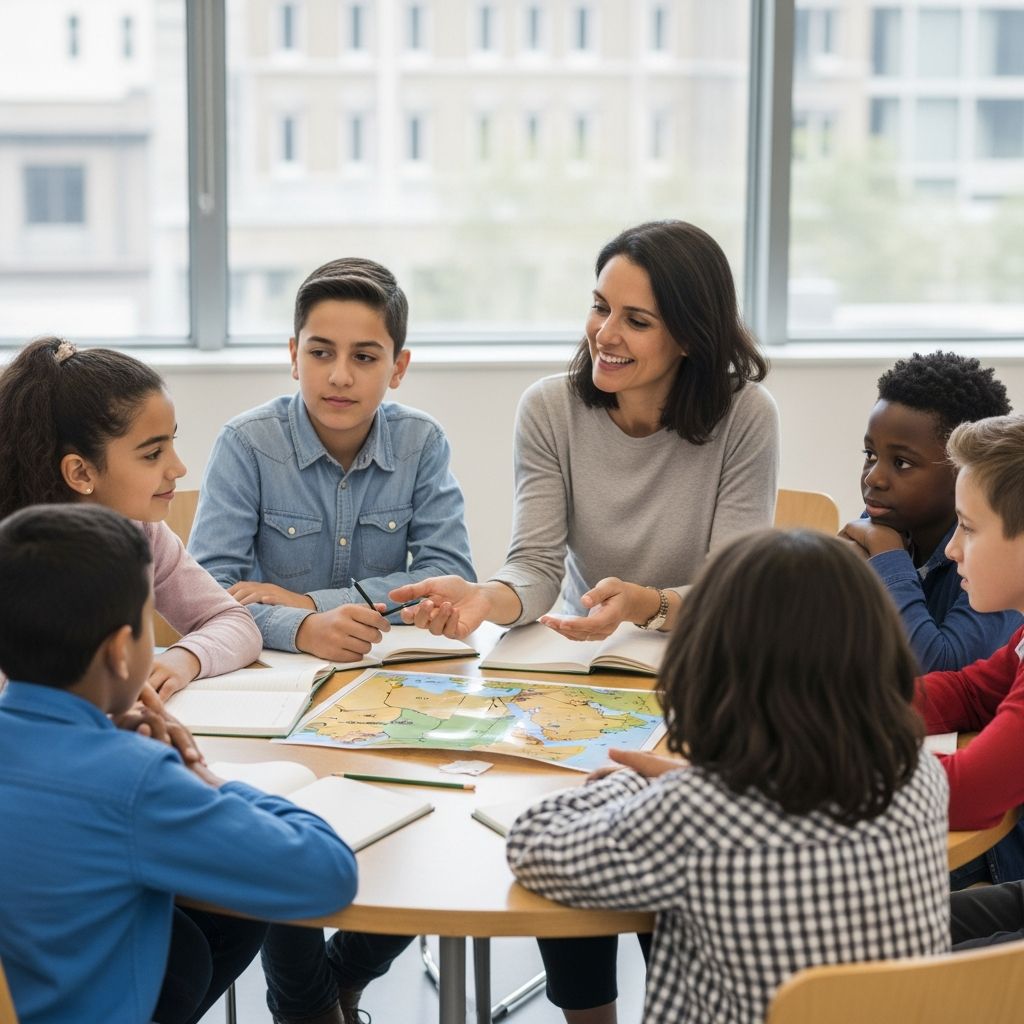
For all ages, use visuals: Print a kid-friendly map highlighting countries and fun facts, like Jordan’s ancient ruins or Qatar’s modern skyline.
Simplifying Complex Conflicts
Break down issues without bias. The Israeli-Palestinian conflict, for instance, involves land claims dating back centuries, intensified by 1948 statehood and wars. Explain: “Two groups love the same special places; they’re working on sharing, but it’s hard.” Ongoing events like regional wars or protests stem from resources, religion, and history.
- Oil’s role: Gulf nations supply 30% of world oil, sparking international interests.
- Religion’s influence: Islam’s Sunni-Shia divide mirrors family disagreements amplified globally.
- Modern triggers: Uprisings for rights, as in recent Arab Spring echoes.
Emphasize shared humanity: “Everyone wants safety, family, and friends, just like us.” Avoid labeling sides as “good” or “bad”; present multiple perspectives.
Addressing Fears and Building Reassurance
Fear is common—kids may imagine threats spreading. Reassure with facts: “Leaders and helpers worldwide work to stop fighting.” Discuss safety measures like international aid from UN bodies. Activities help: Draw “peace wishes” for Middle Eastern kids or watch animated explainers on geography.
Create a family media plan:
- Co-view news together.
- Follow with questions: “What surprised you? How do people feel?”
- Balance with positive stories, like Middle Eastern inventions in math or medicine.
Fostering Empathy and Cultural Appreciation
Turn talks into cultural bridges. Share Middle Eastern foods (hummus from Levant), music (oud instruments), or festivals (Eid celebrations). Books like “The Journey” depict refugee experiences gently. Visit virtual tours of Petra (Jordan) or Dubai’s wonders.
Encourage questions: “What would you do if your home was argued over?” This builds compassion. Research shows empathetic kids become informed global citizens.
Navigating School and Peer Influences
Schools may cover world events; prep kids: “Teachers explain fairly—ask me more later.” Counter peer misinformation: “Rumors spread fast; let’s check facts together.” Role-play debates to sharpen critical thinking.
Resources for Deeper Family Learning
- Interactive maps from National Geographic Kids.
- Age-appropriate videos on Khan Academy Kids for history basics.
- Books: “Map of the Middle East” series for visuals.
- Apps tracking global news simply, like News-O-Matic.
Follow kid-safe sites emphasizing unity over division.
Frequently Asked Questions (FAQs)
Q: What if my child sees violent images online?
A: Pause, comfort, and redirect: “That’s sad and far away. Helpers are fixing it.” Block graphic content and discuss media literacy.
Q: How do I stay neutral in biased discussions?
A: Stick to facts: “Both sides have stories.” Use sources like BBC Kids for balanced views.
Q: Should I avoid the topic altogether?
A: No—avoidance breeds fear. Brief, honest talks empower kids.
Q: How to handle religious questions?
A: “Many faiths started there and teach kindness.” Share simple parables if it fits your beliefs.
Q: What about teen activism on social media?
A: Guide to verified info; encourage writing letters to leaders for peace.
Long-Term Benefits of These Conversations
Regular dialogues cultivate global awareness, reducing prejudice. Kids learn conflict resolution, applicable to playground spats or future careers. Families grow closer through shared curiosity. As the Middle East evolves—with youth-led innovations in tech and sustainability—your child will be ready to engage positively.
In summary, approach with honesty, simplicity, and hope. You’re equipping the next generation for a connected world.
References
- Middle East (region) — EBSCO Research Starters. 2023. https://www.ebsco.com/research-starters/social-sciences-and-humanities/middle-east-region
- Middle East: characteristics, geography, culture and economy — Humanidades.com. 2024. https://humanidades.com/en/middle-east/
- What is the Middle East? — TeachMideast. 2023. https://teachmideast.org/what-is-the-middle-east/
- Middle East | Map, Countries, West Asia, History, Conflict, & Facts — Encyclopædia Britannica. 2025-01-10. https://www.britannica.com/place/Middle-East
- Middle East — Wikipedia (informational background). 2026. https://en.wikipedia.org/wiki/Middle_East
- Political Geography and Countries of the Middle East — Students of History. 2024. https://www.studentsofhistory.com/political-geography-countries-middle-east
- Middle East Facts — Idaho State University. 2023. https://www.isu.edu/history/student-opportunities/projects/middle-east-facts/