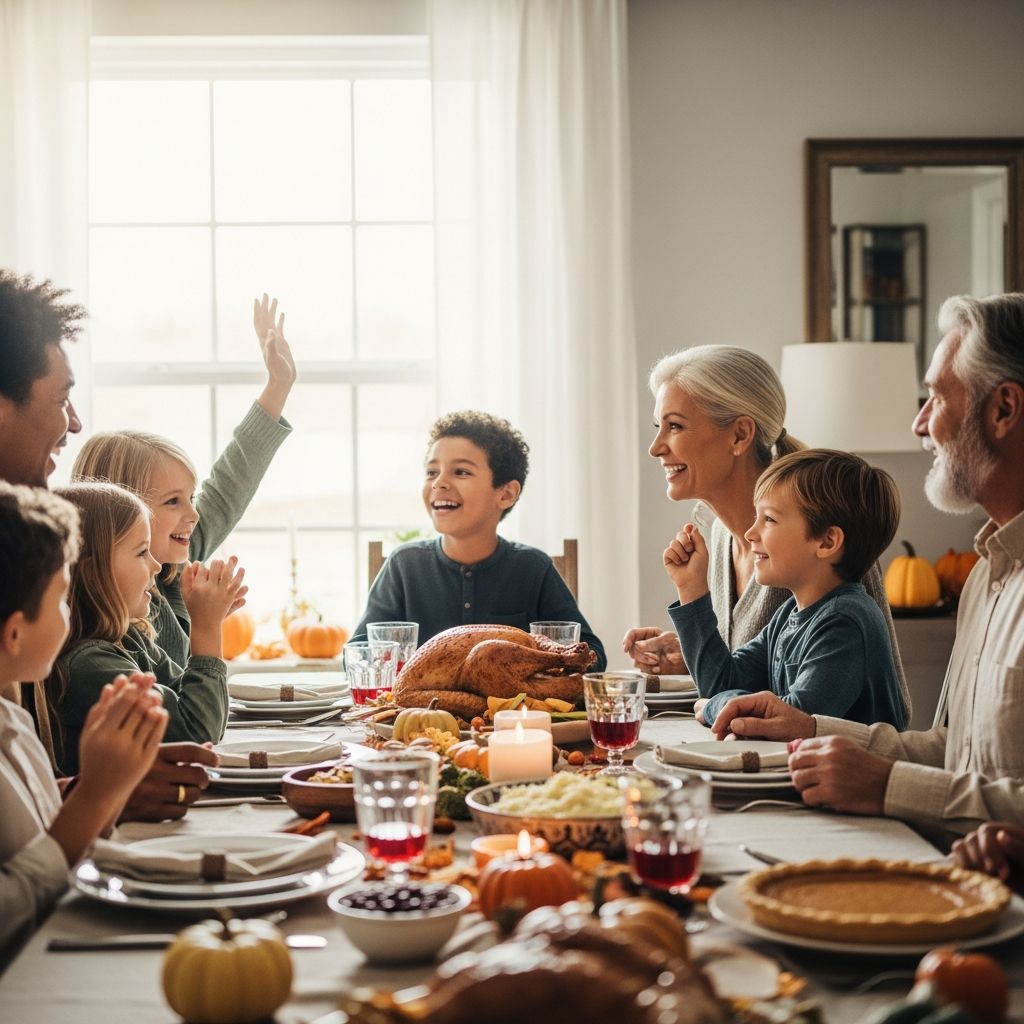
Thanksgiving offers a unique opportunity for families to gather, reflect on blessings, and delve into meaningful discussions with children. While traditional narratives often emphasize feasts and unity, modern parenting approaches encourage blending gratitude with historical context to create well-rounded understanding. This guide provides practical tools to navigate these talks effectively.
Building a Foundation of Gratitude
Gratitude forms the heart of Thanksgiving, promoting emotional well-being in children. Research shows that practicing thankfulness regularly enhances mental health and empathy. Parents can introduce simple exercises to make this concept tangible for young minds.
- Start a daily gratitude ritual where kids note three things they appreciate, using drawings for preschoolers.
- Discuss how expressing thanks strengthens relationships and boosts happiness.
- Incorporate stories of kindness, like sharing resources during tough times, to illustrate empathy.
These activities not only align with the holiday spirit but also build lifelong habits. For instance, comparing modern comforts to historical challenges helps children value what they have.
Age-Appropriate Ways to Introduce History
Approaching Thanksgiving’s past requires sensitivity to developmental stages. Toddlers benefit from focusing on thankfulness, while school-age kids can handle more nuanced facts.
| Age Group | Focus Areas | Example Prompts |
|---|---|---|
| 2-4 years | Gratitude and basic sharing | “What makes you happy today?” |
| 5-7 years | Initial historical mentions | “People helped each other long ago.” |
| 8+ years | Full context including challenges | “How did events affect Native communities?” |
For younger children, emphasize positive interactions like communal meals. As they grow, introduce realities such as land disputes and cultural impacts without overwhelming details. This layered method respects their readiness while promoting critical thinking.
Sparking Engaging Family Dialogues
Dinner tables can transform into hubs of connection with thoughtful prompts. Active listening—through eye contact and follow-ups—encourages kids to open up without pressure.
- Ask open-ended questions like, “Who would you invite from a storybook to our meal?”
- Share personal memories: “What stood out from last year’s gathering?”
- Explore school life: “What’s the coolest fact you’ve learned lately?”
Allow children to pose questions back, fostering reciprocity. Keep it light; if a child hesitates, shift topics gracefully. Such interactions build social skills and make holidays memorable.
Hands-On Activities for Deeper Learning
Beyond words, activities reinforce lessons. Create a “thankful bowl” with slips of paper for written or drawn appreciations, read aloud during meals.
- Prepare colorful strips with prompts in advance.
- Let each person contribute one item per round.
- End with a group toast to shared thanks.
Other ideas include crafting empathy cards for teachers or peers, or role-playing kind acts. These tie directly to Thanksgiving themes, extending benefits beyond the table. Journaling specific gratitudes, as supported by psychological studies, amplifies positive effects over time.
Navigating Cultural Sensitivities
Thanksgiving’s story involves complex histories, including European arrivals and Indigenous experiences. Teach that Native peoples thrived for millennia and continue vibrant cultures today. Avoid stereotypes; highlight feasts as specific events amid broader struggles.
Address school activities diplomatically. If costumes or plays misrepresent groups, explain why respectfully to educators and children. Frame discussions around fairness: “It wasn’t always easy for everyone involved.” This honesty builds trust and awareness.
Promoting Empathy Through Shared Stories
Link historical empathy—such as aid given to newcomers—to modern actions. Prompt reflections: “How has someone helped you? How can you help others?” This cultivates compassion, key for social development.
Encourage acts like inviting a lonely classmate or donating toys, turning abstract concepts into real impact. During the holiday week, track these deeds in a family log for reinforcement.
Common Challenges and Solutions
Parents often worry about spoiling the fun with heavy topics. Balance by surrounding facts with joy—turkey, parades, games. Respond to kids’ curiosities naturally; they sense inconsistencies and appreciate clarity.
- If questions arise about violence, simplify: “Times were hard, and not everyone was treated kindly.”
- Use books or videos from reputable sources for visuals.
- Reassure that learning truth honors all involved.
Long-Term Benefits of These Talks
Consistent conversations yield resilient, empathetic children. Gratitude practices correlate with better health outcomes, while historical knowledge fosters inclusivity. Families report stronger bonds from shared reflections.
Extend traditions year-round: weekly thank-you shares or cultural explorations. This holistic approach enriches Thanksgiving as a launchpad for growth.
Frequently Asked Questions
What if my child resists historical discussions?
Keep it optional and fun-focused initially. Gauge interest and introduce depth gradually as they mature.
How do I handle differing family views on history?
Present facts neutrally, emphasizing ongoing Indigenous presence and shared humanity.
Are gratitude journals effective for all ages?
Yes—adapt for non-readers with pictures. Benefits increase with specificity and regularity.
Can these talks improve family dynamics?
Absolutely; they encourage listening, sharing, and mutual respect beyond the holiday.
What resources complement these conversations?
Seek age-suited books on Native histories and gratitude from libraries or educators.
References
- Table Talk: Conversation Starters for Kids at Thanksgiving — Brighter Futures Indiana. 2023. https://brighterfuturesindiana.org/blog/table-talk-conversation-starters-for-kids-at-thanksgiving
- Tips for Approaching the True History of Thanksgiving — MoveOn.org. 2023. https://front.moveon.org/tips-for-approaching-the-true-history-of-thanksgiving-with-your-family-friends-and-kids/
- Use Thanksgiving to Teach Children About Gratitude — Prevent Child Abuse America. 2023. https://preventchildabuse.org/resources/thanksgiving-to-teach-gratitude/
- How To Teach Kids About The True History of Thanksgiving — The Mom Psychologist. 2022-10-18. https://themompsychologist.com/2022/10/18/how-to-teach-kids-about-the-true-history-of-thanksgiving/
- How should we teach kids about Thanksgiving? — University of Pittsburgh Pittwire. 2023. https://www.pittwire.pitt.edu/pittwire/features-articles/how-should-we-teach-kids-about-thanksgiving