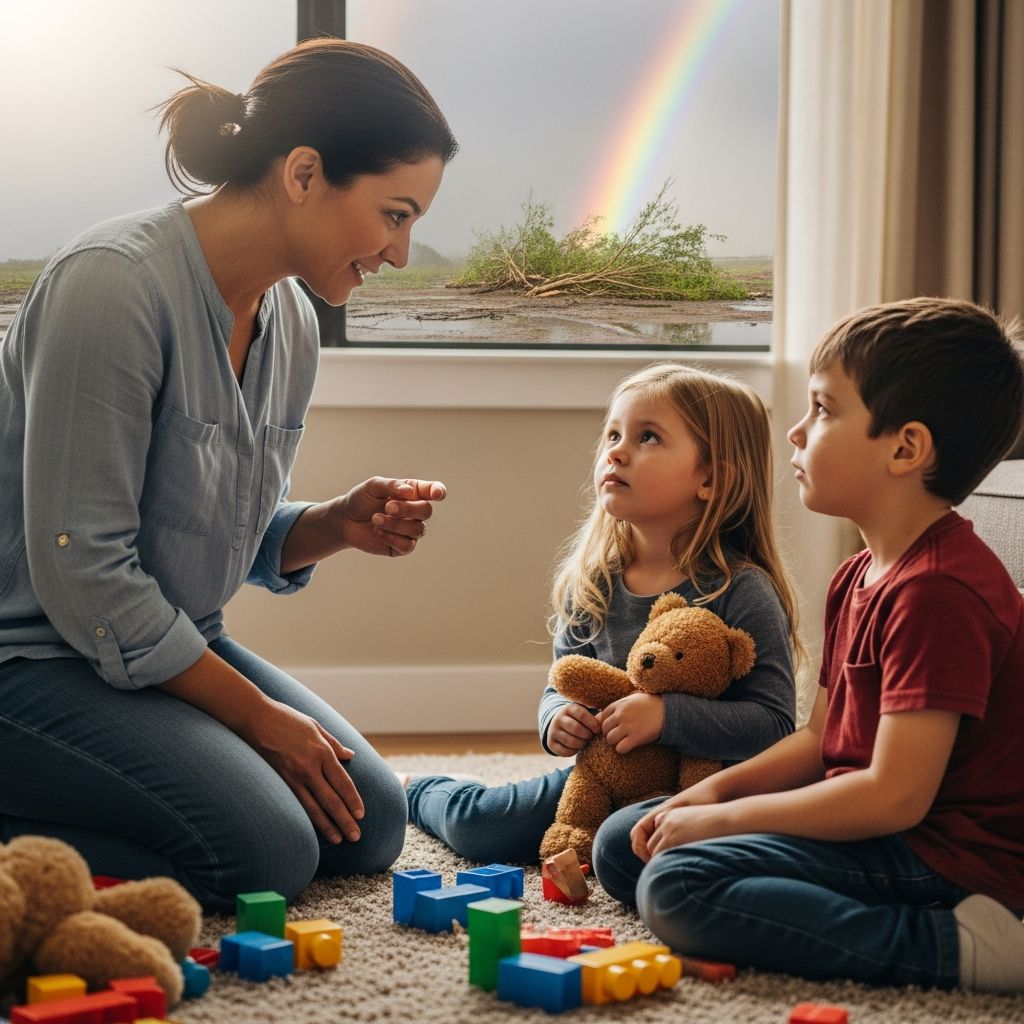
Natural disasters such as earthquakes, hurricanes, floods, and wildfires can evoke strong fears in children due to their unpredictable nature and media coverage. Parents play a crucial role in helping kids process these events by offering honest, age-suited explanations that emphasize safety and community resilience.
Understanding Children’s Reactions to Catastrophic Events
Children encounter news of natural disasters through television, social media, or school discussions, often leading to confusion and anxiety. Younger kids might imagine disasters as immediate threats, while older ones grapple with broader implications like loss of life or environmental damage. Research shows that repeated exposure to alarming images heightens stress, particularly for those with prior traumas.
Recognizing signs of distress—such as clinginess, sleep issues, or withdrawal—allows parents to intervene early. Validating these emotions with phrases like “It’s okay to feel worried” helps children feel understood, paving the way for constructive dialogue.
Age-Tailored Communication Strategies
Effective conversations adapt to developmental stages. For toddlers and preschoolers, focus on concrete reassurances: use maps to show distance from the event and highlight helpers like firefighters. School-age children benefit from simple science explanations, such as how warm ocean water fuels hurricanes.
- Preschoolers (Ages 2-5): Keep it brief and sensory-focused. “A big storm made rain fall a lot far away, but we’re safe here with our house.”
- Elementary (Ages 6-10): Introduce facts. “Earthquakes happen when rocks under ground move, but buildings are built strong now.”
- Tweens (Ages 11+): Discuss geography and preparation. “Hurricanes form over oceans; here’s our family plan if one comes near.”
This tiered approach ensures information matches comprehension levels, reducing overwhelm.
Explaining the Science Behind Major Natural Disasters
Demystifying disasters through science builds curiosity over fear. Earthquakes result from tectonic plates shifting, releasing energy as seismic waves. Hurricanes are rotating storms drawing energy from warm seas, with winds exceeding 74 mph. Floods occur when rivers overflow due to heavy rains, and wildfires spread rapidly in dry vegetation.
| Disaster Type | Primary Cause | Key Fact for Kids |
|---|---|---|
| Earthquake | Tectonic plate movement | Measured by Richter scale; most are mild. |
| Hurricane | Warm ocean waters | Spiral winds; weaken over land. |
| Flood | Excess rainfall | Rivers rise; avoid low areas. |
| Wildfire | Dry conditions, lightning | Firefighters create firebreaks. |
| Tornado | Thunderstorm rotation | Funnel clouds; seek shelter indoors. |
These explanations, paired with visuals like diagrams, help children see disasters as natural processes rather than monsters.
Emotional Support: Validating Feelings and Building Trust
Acknowledge emotions first: “Seeing those pictures can make anyone sad or scared.” This validation, per child psychologists, aids coping by making kids feel heard. Avoid dismissing fears; instead, model calm responses. Children mirror parental reactions, so maintaining composure during discussions reinforces security.
Encourage questions without fabricating answers. If uncertain, say, “Let’s find out together,” fostering trust and joint learning. Limit media exposure to prevent sensitization from repetitive footage.
Family Preparedness: Turning Talk into Action
Preparation empowers children. Create a family emergency plan covering evacuation routes, meeting spots, and kits with water, non-perishables, flashlights, and medications. Practice drills regularly to build confidence.
- Assemble a go-bag with essentials.
- Identify safe rooms for tornadoes or earthquakes.
- Discuss utility shutoffs and neighbor contacts.
- Role-play scenarios age-appropriately.
Assign kids tasks, like packing toys or alerting pets, to give them agency. Such routines transform abstract fears into manageable steps.
Hands-On Learning Activities for Resilience
Engage children through play-based education. Simulate volcanoes with baking soda eruptions to grasp lava flows. Build flood models using trays of water and barriers. Research past recoveries, like communities rebuilding post-hurricane, to highlight hope.
- Map disaster-prone areas worldwide.
- Create preparedness posters for school.
- Organize empathy drives for affected families.
These activities teach science, geography, and compassion, turning vulnerability into strength.
Fostering Long-Term Emotional Resilience
Beyond immediate talks, nurture resilience via routines, open communication, and community ties. Discuss how nature rebounds—volcanic soil enriches farms, forests regrow post-fire. Share stories of human perseverance, emphasizing helpers like aid workers.
Monitor for ongoing anxiety; consult professionals if needed. Consistent support equips kids to face uncertainties with optimism.
Frequently Asked Questions (FAQs)
What if my child won’t stop asking about a disaster?
Answer patiently, repeating key reassurances. Use drawings or stories to process fears, and redirect to fun activities once calmed.
How much detail should I share with young kids?
Stick to basics: what happened, it’s far away, adults are helping. Avoid graphic details; focus on safety.
Can discussing disasters cause more fear?
Not if handled calmly and factually. Proactive talks reduce anxiety by providing control and understanding.
What to include in a kid-friendly emergency kit?
Water, snacks, flashlight, blanket, favorite toy, whistle, and medical info. Make packing a family game.
How do I talk if we’re directly affected?
Prioritize safety, then emotions. Seek counseling; frame recovery as teamwork with community support.
Community and Empathy in Recovery
Highlight collective responses: neighbors aiding evacuations, global aid. Encourage donations or letters to survivors, teaching altruism. Post-disaster, debrief experiences to reinforce lessons learned.
(Word count: 1678)
References
- Four ways to talk with children about natural disasters — United Methodist Church. 2023-10-15. https://www.umc.org/en/content/how-to-talk-with-children-about-disasters
- Talking to Children about Natural Disasters — American Academy of Child and Adolescent Psychiatry (AACAP). 2022-05-01. https://www.aacap.org/App_Themes/AACAP/docs/resource_centers/disaster/disaster_resource_center_talking_to_children_about_natural_disasters.pdf
- How to talk to kids about natural disasters — ABC News. 2024-08-20. https://abcnews.go.com/GMA/Family/helping-kids-cope-disasters/story?id=117506326
- Talking to Kids About Natural Disasters — Focus on the Family. 2023-11-10. https://www.focusonthefamily.com/parenting/talking-to-kids-about-natural-disasters/
- Natural Disasters Explained — Twinkl USA. 2025-01-28. https://www.twinkl.com/blog/natural-disasters-explained-understanding-their-impact-on-our-world-usa