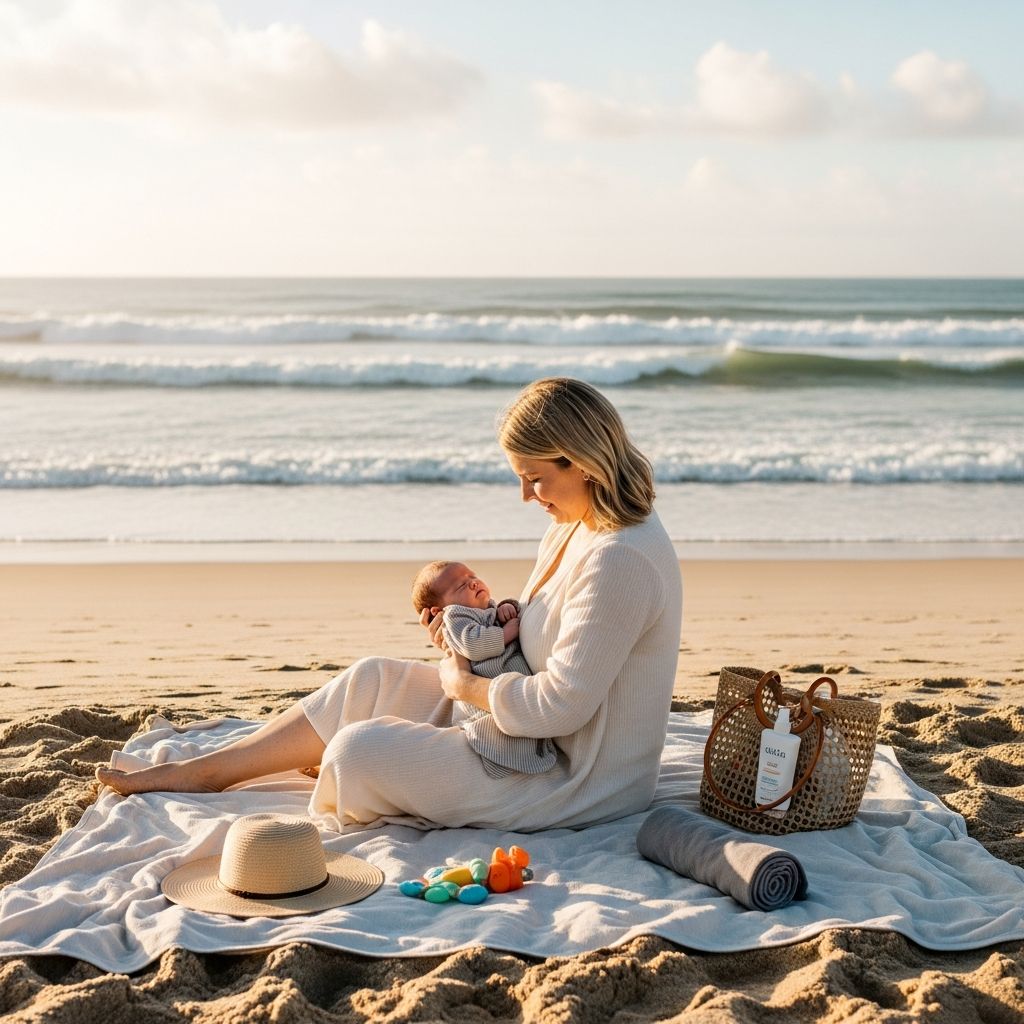
Bringing a newborn to the beach can look magical in photos, but in real life it raises big questions about safety, comfort, and logistics. This guide walks through when a beach trip makes sense, how to keep your baby protected from sun and heat, and what to pack so the day feels more like a gentle breeze than a sandstorm of stress.
Should You Take a Newborn to the Beach at All?
Before packing the car, it helps to think about whether this is the right season of life for a beach outing or whether it is better to wait. Very young babies have sensitive skin, immature temperature regulation, and limited tolerance for long, chaotic days.
- Consider your baby’s age and health; a full-term, healthy infant who is a few weeks old and gaining weight steadily is usually a better candidate than a medically fragile or premature baby.
- Ask what the beach day is really for—if it is primarily about older siblings or visiting relatives, you may decide to go for a short, carefully planned visit instead of an all-day event.
- If you feel anxious just imagining the logistics, that is information; beach memories can wait, and you are not missing out if you choose comfort and rest over surf and sand this season.
Best Time of Day for a Baby Beach Visit
Timing is one of the most effective ways to reduce risk without buying a single gadget. For newborns, avoiding intense sun and extreme heat matters more than catching a perfect sunset photo.
- Plan visits for early morning or late afternoon when the sun is lower, temperatures are gentler, and crowds tend to be thinner.
- Limit the total time at the beach, especially at first; an hour or two is often plenty for a very young baby.
- Watch the wind; strong gusts can blow sand and make it hard for your baby to breathe comfortably or keep eyes open.
Sun Protection for the Tiniest Beachgoers
Newborn skin burns easily and does not yet handle temperature swings well. The safest strategy is to treat your baby as someone who should not be in direct sun at all, and then build your plan around that idea.
- Rely on physical barriers first: shade, clothing, and hats should do most of the work rather than sunscreen.
- Choose lightweight, long-sleeved tops and pants in breathable fabrics, plus a wide-brim hat that covers ears and the back of the neck.
- Use a sunshade, canopy, or tent that blocks UV rays and allows air to move freely; avoid completely closed spaces that trap heat.
- For babies old enough for sunscreen (follow your pediatrician’s advice), apply a baby-specific product to small exposed areas like hands and cheeks and reapply as directed.
Heat, Hydration, and Overheating
The combination of sun, humidity, and reflection from sand and water can make the beach more intense than the weather report suggests. Babies can overheat quickly without showing obvious signs right away.
- Dress in light layers you can add or remove easily, and periodically feel your baby’s neck or chest to gauge warmth rather than hands or feet alone.
- Offer feeds a bit more frequently than at home; breastfed and formula-fed babies both may need extra fluids in hot conditions.
- Watch for warning signs such as flushed skin, rapid breathing, unusual fussiness, or lethargy, and move to a cooler indoor space if you are concerned.
Setting Up a Baby-Friendly Beach Base
Think of your beach setup as a tiny, portable living room that happens to be in the sand. You want a defined area where your baby can rest, feed, and observe without being constantly jostled or showered in grit.
- Choose a spot away from busy walkways, sports areas, and breaking waves, ideally within sight of a lifeguard station and near an exit or parking lot.
- Use a large blanket or mat under a shade structure, then place a portable bassinet, stroller, or travel crib on top to give your baby a familiar, contained space.
- Anchor umbrellas or tents securely to avoid sudden collapses or tipping on windy days.
Suggested Base Camp Layout
| Area | Purpose | Simple Setup Ideas |
|---|---|---|
| Shaded sleep zone | Safe resting and napping | Portable bassinet or stroller under a UV tent or large umbrella |
| Caregiver seat | Feeding and cuddling | Low beach chair or firm sand spot near the baby’s sleep space |
| Gear corner | Organized storage | Soft-sided cooler and bag placed up-slope, away from the tide line |
| Sibling play edge | Older kids’ activities | Toys and sand tools at the outer border so active play stays a bit removed |
Packing Checklist: What to Bring (and What to Skip)
It is easy to overpack when you are worried about every possible scenario. Focusing on a core set of items makes it more likely that you can actually carry everything and still have a hand free for your baby.
Essentials for Baby
- Shade: UV-blocking tent, sturdy umbrella, or canopy.
- Sun gear: wide-brim hat, lightweight long sleeves and pants, baby sunglasses if tolerated.
- Comfort: swaddles or light blankets, a familiar toy or lovey, pacifiers if used.
- Feeding: extra bottles and formula if bottle-feeding, nursing cover if you prefer one, burp cloths, and cleaning supplies.
- Diapering: plenty of diapers, wipes, disposable bags for trash, portable changing pad, and a change of clothes or two.
Helpful Extras for Everyone
- Large beach blanket or fitted sheet to define a clean area.
- Soft cooler with water and snacks for adults and older siblings.
- Lightweight baby carrier for walks or contact naps.
- Small first-aid kit with bandages, baby-safe pain reliever if recommended by your provider, and saline for rinsing eyes.
- Plastic bags or wet bags to separate damp or sandy items on the way home.
Things You Can Usually Skip
- Large collections of toys: one or two simple rattles or crinkly books are usually enough for a newborn.
- Heavy blankets or thick quilts: these trap heat and collect sand.
- Open buckets of water near your base: for newborns, any standing water near where they rest is an unnecessary hazard.
Feeding Your Newborn at the Beach
Whether you are breastfeeding, formula feeding, or doing a combination, feeding on the beach adds wind, heat, and distraction into the mix. A bit of planning can make those feeds smoother and keep your baby comfortable.
- Try to feed just before arriving so your baby is content while you set up; then follow their usual hunger cues rather than the clock.
- If breastfeeding, position yourself in the shade and use a light cover only if it does not trap heat or stress you out; your comfort helps your milk flow and your baby’s latch.
- If using bottles, pre-measure formula or pumped milk in well-sealed containers, keep them cool as recommended, and wash or wipe your hands before handling nipples.
Naps and Sleep Routines by the Sea
Many newborns doze happily with the sound of waves in the background, but others struggle with the brightness and new environment. It can help to treat the beach as a flexible nap space rather than expecting perfect daytime sleep.
- Use your baby’s usual nap cues—yawns, glazed eyes, turning away from stimulation—to time when you offer a quiet, shaded space to rest.
- Offer familiar sleep signals like a particular song, swaddle, or white noise app to bridge the gap between home and the beach.
- If your baby only naps in motion, consider a walk along the waterline with a carrier or stroller, staying in the shade as much as possible.
Keeping Sand and Salt Under Control
Sand and saltwater are part of the charm of the beach, but they can irritate a newborn’s skin and eyes. A few small habits greatly reduce the chances of rashes and discomfort later in the day.
- Set a “no bare feet in wet sand” rule for very young babies; keeping them on a blanket or in a bassinet reduces grit in folds and diapers.
- Use a soft cloth and fresh water to wipe your baby’s face and hands periodically, especially before feeds.
- Rinse your baby off with clean, lukewarm water after leaving the beach and change into dry clothes promptly to avoid lingering salt and sand on skin.
Water Safety and Why the Ocean Is Mostly for Adults Right Now
For newborns and young infants, the beach is primarily a sensory experience, not a swimming destination. The water itself is cold, unpredictable, and can be contaminated with bacteria or strong currents.
- Avoid submerging a newborn in the ocean; brief toe dips in warm, calm, shallow water may be enough, and only if your baby is healthy and comfortable.
- Keep your baby in your arms or in a secure carrier on your body when near the waterline, and stay well back from breaking waves.
- Maintain constant supervision even when your baby is in a bassinet or stroller; unexpected waves and shifting tides can reach farther than they appear.
Managing Older Siblings While Caring for a Newborn
If this beach trip is really for big brothers or sisters, the newborn’s needs still come first for safety, but you can plan the day so older kids feel included. Clear roles and routines prevent one caregiver from feeling overloaded.
- Assign one adult as the primary baby watcher and another as the main ocean and sand supervisor for older children, and swap roles periodically so everyone gets a break.
- Set boundaries for siblings, such as a visible landmark they cannot cross without an adult and regular check-ins back at the base.
- Invite older kids to help with baby-friendly tasks like gently fanning the baby, choosing a shade spot, or singing soft songs while the baby rests.
Leaving the Beach: The Exit Strategy
How you wrap up the day can shape your overall memory as much as how it began. Having a clear exit plan reduces meltdowns—for both babies and adults.
- Begin packing slowly while your baby naps or is content, leaving out only the items you will need for the last feed or diaper change.
- Do a quick “de-sand” step at the edge of the beach: shake out blankets, brush off feet, and change your baby into a clean outfit for the ride home.
- Expect your baby to be more tired or stimulated than usual that evening; loosen up your schedule and allow extra time for soothing and feeds.
Frequently Asked Questions About Newborns and the Beach
How old should my baby be before a beach trip?
There is no single perfect age, but many families find that waiting until the first few weeks have passed makes the experience easier. By that point, you may have had a postpartum checkup, feeding patterns are a bit more predictable, and you will have a better sense of your baby’s temperament.
Can my newborn wear sunscreen?
Guidelines often suggest avoiding sunscreen on very young babies and relying on shade and clothing as the main form of protection. Because recommendations can change and babies differ, it is safest to ask your pediatrician what they prefer for your specific child and climate.
Is it safe for my baby to nap on the beach?
Naps can be safe if you apply the same safe-sleep principles you use at home: a firm, flat surface, no loose bedding over the baby’s face, and an adult close by and attentive. Make sure the nap area is shaded, well-ventilated, and positioned away from the tide line.
What if my baby cries the whole time?
Sometimes the beach is simply too bright, noisy, or hot for a newborn to relax. If you have tried feeding, changing, soothing, and cooling and your baby still seems distressed, it is entirely reasonable to cut the trip short and head home; comfort and safety matter more than forcing a particular memory.
Is a beach trip with a newborn really worth it?
That depends on your expectations. If you imagine a photo-perfect, all-day event, you may feel disappointed; if you frame it as a brief outing to get fresh air, introduce your baby to the sound of the waves, or let older siblings play, even an hour or two can feel satisfying.
Final Thoughts: Redefining a “Successful” Beach Day
With a newborn, a successful beach day is not about how long you stay or how many pictures you capture; it is about returning home with a baby who stayed safe, reasonably comfortable, and mostly content. By choosing a gentle time of day, prioritizing shade and hydration, simplifying your packing list, and keeping expectations flexible, you can enjoy the shoreline in this season of life—even if your toes barely touch the water.