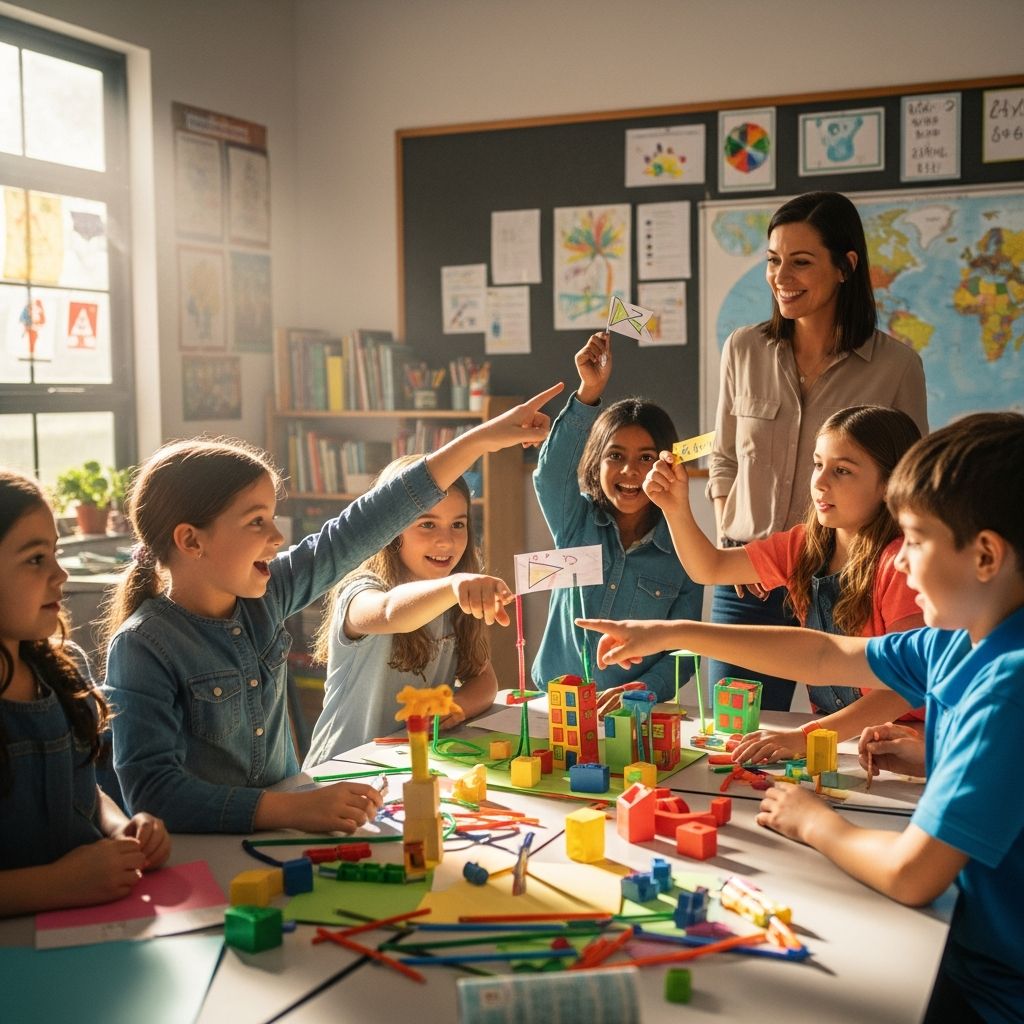
School boredom affects a significant number of students, leading to disengagement and reduced learning outcomes. By implementing varied teaching methods, parents and teachers can foster curiosity and maintain interest throughout the school day.
Understanding the Roots of Student Disinterest
Boredom in classrooms often stems from repetitive routines, lack of relevance to real life, or mismatched challenge levels. When lessons fail to stimulate, students disengage, impacting retention and motivation. Research shows that interactive elements can increase memory retention to about 70% through discussion-based activities. Recognizing these triggers allows for targeted interventions that revitalize the learning environment.
Common causes include monotonous lectures, insufficient hands-on opportunities, and limited student input. Addressing these by diversifying approaches helps sustain attention and encourages active participation.
Interactive Discussions and Brainstorming Techniques
Encouraging open brainstorming sessions where students share ideas freely builds confidence and deepens understanding. These activities challenge critical thinking through application and evaluation questions, making abstract concepts tangible.
- Start with low-stakes prompts to build comfort.
- Facilitate group sharing to amplify retention via verbal processing.
- Integrate real-world examples to connect curriculum to daily life.
In higher education settings, shifting from long lectures to student-led discussions in small groups proves effective, even in larger classes by rotating shares. This method not only combats boredom but also enhances collaborative skills essential for future success.
Harnessing Creativity Through Art and Visual Tools
Students with strong visual-spatial intelligence thrive when allowed to draw concepts, turning passive listening into active creation. Incorporating artwork related to lesson topics boosts academic performance by engaging multiple senses.
Simple sketches of historical events or scientific processes help solidify knowledge. Parents can reinforce this at home by providing drawing prompts tied to homework, bridging school and family learning.
Experiential Learning: Field Trips and Real-World Exploration
Nothing rivals the impact of real-world experiences on memory. Traditional field trips to museums or sites imprint lessons durably, while virtual options expand access to distant locations without logistical hurdles.
Teachers can simulate these through virtual reality tours or local outings. For parents, suggesting community resources like parks for nature studies aligns home support with classroom goals, making learning an adventure.
Gamification: Turning Lessons into Play
Announcing a game instantly lowers stress and heightens focus. Formats like Jeopardy, ball toss reviews, or Family Feud style quizzes review material playfully while ensuring content mastery.
- Align games directly with objectives for dual purpose.
- Incorporate physical elements for kinesthetic learners.
- Use digital platforms for tech-savvy engagement.
Seasonal slumps respond well to increased game integration, revitalizing stale routines and improving behavior through purpose-driven fun.
Music and Rhythm as Memory Aids
Leveraging songs, rhymes, or raps for content recall taps into natural retention strengths, as seen in how lyrics stick effortlessly. Even in challenging cases like memory loss, musical cues activate recall.
Create class chants for math formulas or history timelines. At home, parents might record family versions, personalizing reinforcement and making review enjoyable.
Dramatic Role-Playing for Immersive Understanding
Acting out scenarios— from math problems to historical events—ensures long-term retention by embodying concepts. Pantomimes and charades add non-verbal layers, ideal for diverse learners.
These activities build empathy and public speaking while embedding knowledge deeply. Encourage school plays or home skits to extend benefits beyond the classroom.
Storytelling to Captivate and Educate
Stories command attention, especially emotional ones, magnifying engagement. Weaving narratives into lessons transforms dry facts into memorable tales.
Teachers sharing personal anecdotes or student-generated stories heighten connection. Parents can continue this by discussing daily events as stories, nurturing narrative skills alongside academics.
Hands-On Work and Apprenticeships
Real-life application through internships or work studies fulfills Aristotle’s wisdom: learning by doing. These bridge theory and practice, motivating through relevance.
For younger students, mock apprenticeships like classroom jobs simulate this. Parents partnering with local businesses for shadowing opportunities enrich perspectives.
Journaling and Quick Writes for Reflection
Handwritten notes outperform typing for retention, particularly via periodic quick writes during lessons. This pauses processing, aiding consolidation.
Implement daily journals for reflections. Parents can use prompted notebooks at home to track progress and insights, fostering metacognition.
Tech-Driven Interactive Classrooms
Personal response systems via apps or devices turn polls into instant feedback loops, channeling device use productively. This interactivity curbs distraction by providing stimulation.
| Strategy | Benefits | Tools |
|---|---|---|
| Polling Apps | Real-time engagement | Smartphones, Clickers |
| Group Discussions | Collaborative learning | Breakout Rooms |
| Simulations | Decision-making practice | Online Platforms |
Outdoor and Environmental Shifts
Relocating lessons outdoors refreshes dynamics, combating mid-year monotony. Nature boosts focus and creativity, offering natural motivation.
Simple changes like seating rearrangements or urgency-infused delivery further invigorate. Parents advocating for outdoor time enhance these effects.
Empowering Student Choice and Open-Ended Tasks
Offering assignment choices or open-ended projects sparks intrinsic motivation. Students pursuing interests via passion projects like Genius Hour explore deeply.
- Provide broad topics for self-directed research.
- Allow multiple solution paths.
- Differentiate for advanced learners.
This autonomy differentiates naturally, reducing boredom across ability levels.
Cooperative Learning Models
Jigsaw methods, where teams tackle parts of a task collaboratively, demand interaction and accountability. This shifts from passive to participatory learning.
Results include sustained attention and peer teaching benefits, ideal for diverse classrooms.
Incorporating Humor and Positive States
Humor primes the brain for optimal learning by fostering positivity. Quick jokes or light-hearted moments elevate mood and retention.
Balance with structure ensures focus remains on objectives.
Frequently Asked Questions
What causes most school boredom?
Lectures without interaction, irrelevant content, and routine repetition are primary culprits. Diversifying methods addresses these effectively.
How can parents help at home?
Reinforce with games, stories, art, and discussions tied to schoolwork. Advocate for engaging strategies with teachers.
Are games suitable for all ages?
Yes, adapted appropriately—simple tosses for young kids, complex quizzes for older students.
Does technology always help?
When purposeful, like response systems, it boosts engagement; mindless use distracts.
How often to change routines?
Weekly infusions prevent staleness, especially mid-year.
References
- 20 Instructional Strategies to Rescue the Bored of Education — Corwin Connect. 2017-09-20. https://corwin-connect.com/2017/09/20-instructional-strategies-rescue-bored-education/
- Why Students Get Bored in Class and What to Do About It — McGraw Hill Education. 2024-06. https://www.mheducation.com/highered/blog/2024/06/why-students-get-bored-in-class-and-what-to-do-about-it.html
- How to Jump-Start a Stale, Boring Classroom — Smart Classroom Management. 2025-02-21. https://smartclassroommanagement.com/2025/02/21/teacher-boring-classroom/
- Are You Contributing to Bored Students in the Classroom? — Graduate Programs. N/A. https://www.graduateprogram.org/blog/are-you-contributing-to-bored-students-in-the-classroom/
- Easy Ways to Conquer Boredom in the Classroom — Undercover Classroom. N/A. https://www.undercoverclassroom.com/easy-ways-to-conquer-boredom-in-the-classroom/