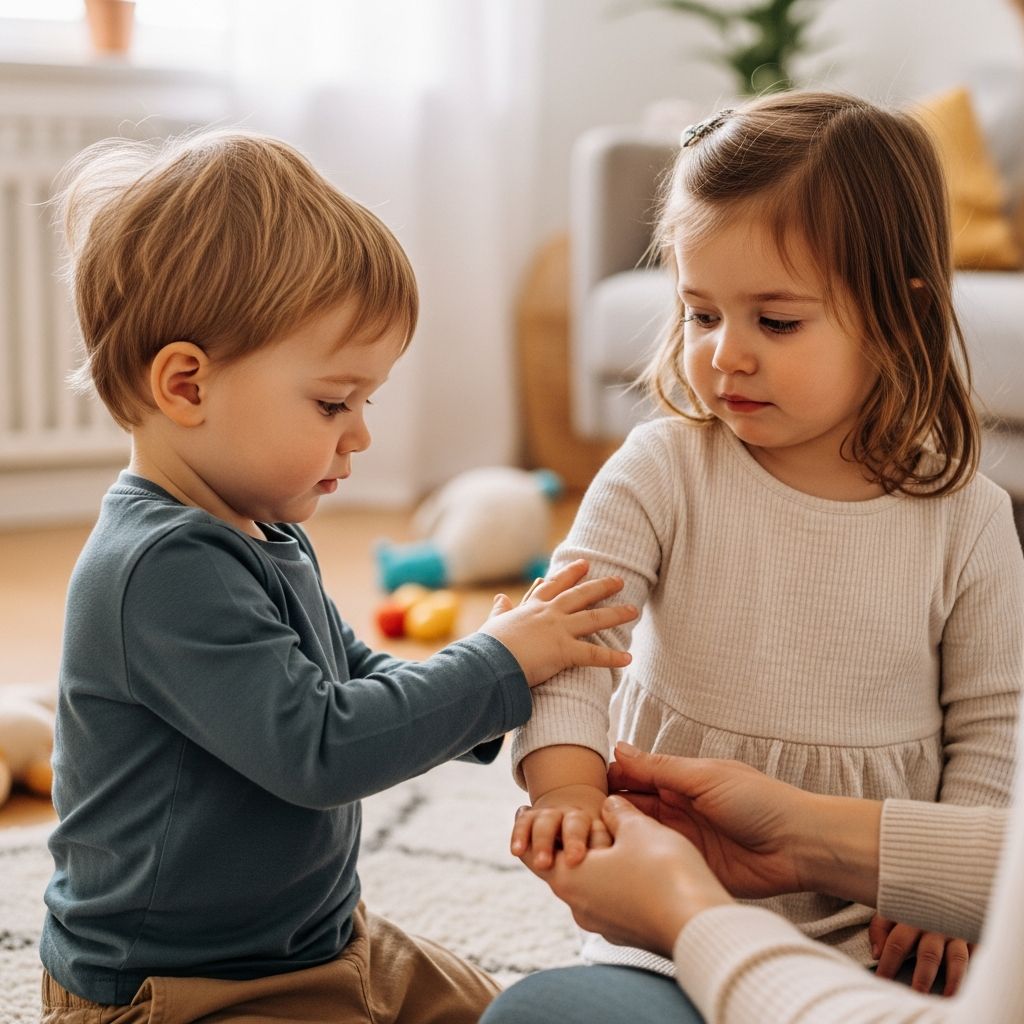
Watching a toddler hit an older sibling can be upsetting, embarrassing, and confusing. You want to protect the older child, guide the younger one, and somehow keep your cool at the same time. This article explains why toddlers do this and how you can respond in ways that protect everyone’s safety, build emotional skills, and reduce the hitting over time.
Why Toddlers Hit: What Is Really Going On?
Toddlers are not born knowing how to share, wait, or negotiate; they are dominated by big feelings and immature impulse control. When they hit, it is nearly always a clumsy attempt to solve a problem or discharge frustration rather than a calculated act of cruelty. Beneath each swing of a little hand, there is almost always an unmet need or overwhelming emotion.
Understanding the “why” behind the behavior does not excuse the hitting, but it helps you respond with guidance instead of anger. When you see a struggling child rather than a “naughty” one, it becomes easier to stay calm and effective.
Common Triggers Behind Toddler Hitting
- Frustration over toys, space, or attention.
- Jealousy of the older sibling’s abilities, privileges, or closeness with a parent.
- Overstimulation from noise, crowds, or chaotic play.
- Tiredness, hunger, or general discomfort.
- Copying rough behavior seen in older kids, media, or adults.
When you notice patterns in these triggers, you can start to prevent many conflicts before they spiral into hitting.
First Priority: Safety for Everyone
In the moment of hitting, your first job is not to teach a lesson but to create safety. That means stopping the hitting quickly, shielding the older sibling, and lowering the emotional temperature of the situation. Once everyone is safe, you can move into coaching and problem-solving.
Step-by-Step Response in the Moment
- Physically block or separate. Gently move your toddler’s body or hand, or step between the children so the older sibling cannot be hit again.
- Use a brief, clear limit. Say one short sentence such as: “I won’t let you hit.” Avoid lecturing while emotions are peaking.
- Check on the older sibling. Look at the child who was hit and say something like: “That hurt; I’m here with you.” This reinforces that safety and care are your priority.
- Help the toddler calm down. Once the danger has passed, offer closeness: “You’re really upset. I’m right here.” Some toddlers need space; others need a cuddle.
Sample Calm-Response Script
Here is an example of what you might say, in your own warm tone:
“I see hands hitting. I can’t let you hit your brother. I’m going to move you over here with me. Your brother’s crying; that shows it hurt. When you want the toy, you can say, ‘My turn now,’ and I’ll help you.”
Protecting the Older Child Without Shaming the Younger
Many parents worry that focusing on the toddler’s feelings means the older child is left unprotected or ignored. In reality, you can support both children at once by giving attention first to the hurt child and then turning to the hitter with firm, kind guidance.
Supporting the Older Sibling
- Offer simple validation: “That was scary,” or “That hurt your arm.”
- Ask what they need: a hug, a break in another room, or help with a toy.
- Reassure: “I’m working with your brother so this happens less and less.”
These responses show the older child that you take their experience seriously while also modeling calm conflict resolution.
Guiding the Toddler Without Labels
Instead of calling the toddler “mean” or “a bully,” focus on the behavior and the skill they are learning. A child who hears repeatedly that they are bad often behaves worse, because they internalize that identity. A child who hears that their feelings are real but their actions must change is more likely to cooperate and grow.
Teaching Skills: What to Do Instead of Hitting
Once everyone is calm, the hitting incident becomes a teaching moment. Toddlers need very concrete alternatives to aggressive behavior, repeated many times, in simple language and through play.
Practical Alternatives You Can Teach
- Using words: “My turn,” “Stop,” “Move please,” or “Help me.”
- Getting an adult: “When you feel mad, come get me and say, ‘Help.’”
- Hands for safe actions: High-fives, clapping, building, pushing playdough, or drumming.
- Taking space: A cozy reading corner, quiet play area, or cushion they can sit on to reset.
Simple Role-Play Games
Short, playful practice sessions outside of conflict make it far more likely your toddler will remember what to do when feelings surge. For example, you can act out a scene with stuffed animals: one grabs a toy, the other feels mad, and you demonstrate using words or asking for help instead of hitting.
Keep these practices light and fun rather than moralistic. Laughter and play help new skills stick.
Prevention: Setting Up the Day for Fewer Clashes
While you cannot prevent every incident, thoughtful routines and environments can dramatically reduce the number of times a toddler feels pushed to the edge. Prevention is often far more effective than constant reaction.
Everyday Prevention Strategies
- Protect vulnerable times. Expect more outbursts before meals, naps, or bedtime, and add extra support and supervision then.
- Limit high-conflict toys. If one particular toy always causes a battle, consider rotating it out or insisting it be used only with an adult present.
- Offer frequent movement. Toddlers need to run, jump, and climb; pent-up energy often turns into swats at a sibling.
- Shorten transitions. Long errands or extended social events can overwhelm young children; keep outings age-appropriate.
- Build in one-on-one time. Even 10 minutes of undistracted connection with you can lower a toddler’s jealousy and need to compete with a sibling.
Helping Siblings Understand Each Other
A key part of reducing conflict is helping siblings see each other as teammates rather than rivals. This does not mean forcing constant sharing or demanding that the older child “just be nice,” but encouraging mutual respect and realistic expectations.
What to Explain to the Older Sibling
- “Your brother’s brain is still learning. He forgets the rules sometimes.”
- “You never deserve to be hit. I will always step in to protect you.”
- “You can call me if you feel unsafe or if he won’t stop.”
These messages help the older child feel both informed and supported instead of feeling that the toddler “gets away with it.”
What to Emphasize to the Toddler
- “Your sister is someone you can play with and learn from.”
- “Hands can help your sister, like giving her a block or a hug if she wants one.”
- “You and your sister both matter to me. There is room for both of you in my heart.”
Parent Emotions: Staying Steady When You Want to Explode
Parental calm is one of the strongest influences on how quickly conflict settles. Of course, calm is not always easy. Watching one child hurt another can trigger fierce anger or even memories of your own childhood. Yet, every time you regulate yourself, you teach your children that big feelings can be handled without violence.
Quick Grounding Tools for Parents
- Take three slow breaths before speaking.
- Silently name your own feeling: “I am furious” or “I am scared.” Naming often softens intensity.
- Lower your voice instead of raising it; this can bring down the emotional heat in the room.
- Remind yourself: “This is a skill-building moment, not an emergency.”
Natural Consequences vs. Punishments
Many caregivers ask whether there should be a consequence for hitting. The key distinction is between punitive reactions that create fear or shame and guidance-based responses that connect actions to real outcomes. The goal is learning, not payback.
Examples of Guidance-Based Consequences
- Loss of access to the situation, not love. After hitting, the toddler may move to a quieter space while you help them calm down. Emphasize that they are still loved, but their hands must be safe to play near siblings.
- Repair whenever possible. Invite the toddler to offer a kind gesture: checking if the sibling is okay, giving an ice pack, returning a toy, or saying a simple sorry if genuine.
- Reset and re-teach. Before returning to play, briefly rehearse: “Show me how you ask for a turn,” and celebrate any small effort.
Why Harsh Punishments Often Backfire
Yelling, shaming, or physical punishment may stop the behavior in the moment, but they usually increase fear, resentment, and aggression over time. A child who feels attacked is less able to learn self-control and more likely to either fight back or shut down.
Sample Parent Response Table
The table below offers some common scenarios and example responses that balance protection, empathy, and clear limits.
| Situation | What You Might Say | What Skill You Are Teaching |
|---|---|---|
| Toddler hits when toy is taken. | “You wanted the truck and you hit. I won’t let you hit. Next time say, ‘My turn.’ Let’s practice now.” | Using words instead of hands when frustrated. |
| Toddler hits to get your attention. | “You hit to get me. Hitting hurts. When you need me, you can tap my arm and say, ‘Mama/Daddy, look.’ I listen better to gentle touches.” | Asking for attention in a respectful way. |
| Toddler hits during rough play. | “Play got too wild and hands started hurting. Play stops when bodies aren’t safe. If you want to wrestle, we need to keep hands gentle.” | Recognizing limits during physical play. |
| Toddler hits when overstimulated. | “Too much noise; your body feels wild. We’re going to the cozy corner to rest together.” | Tuning into early signs of overwhelm and taking breaks. |
Frequently Asked Questions
Is it normal for a toddler to hit an older sibling?
Occasional hitting is very common in toddlers, even in loving families. Their brains are still developing impulse control and language skills, so they tend to act out feelings with their bodies first. What matters most is how consistently you respond with safety, clear limits, and emotional coaching.
Should my toddler apologize after hitting?
Forced apologies often sound hollow and do little to build genuine empathy. It is more helpful to focus first on calming, then on repair. You might say, “When we hurt someone, we help them feel better,” and offer options such as bringing a toy, saying a gentle word, or giving an ice pack if the sibling wants it.
What if the older sibling hits back?
When the older child hits back, treat that behavior as another opportunity for guidance, not justification. Acknowledge their frustration, affirm that everyone is responsible for keeping hands gentle, and help both children learn better ways to respond. Over time, coach the older child to call for you or move away instead of retaliating.
How long does this phase usually last?
There is no exact timeline, but with consistent, calm responses and plenty of practice in using words and taking breaks, most children hit less frequently as their language and self-regulation improve. You are not failing if the behavior does not disappear overnight; think in terms of gradual progress, not instant transformation.
When should I seek professional help?
Consider speaking with a pediatrician or child development professional if the hitting is very frequent, severe, or accompanied by other concerning signs such as extreme withdrawal, regression, or significant changes in sleep and appetite. Outside support is not a sign of weakness; it is a proactive step to help your whole family.
Bringing It All Together
A toddler who hits an older sibling is not destined to become a violent person; they are a young child whose emotional and social skills are still under construction. By focusing on safety first, then teaching practical alternatives to hitting, you help both children feel protected and empowered.
Over time, your calm, consistent guidance becomes the template your children use for handling frustration, jealousy, and conflict in the wider world. Every incident you handle with firmness and empathy is an investment in a more peaceful home and more emotionally resilient kids.