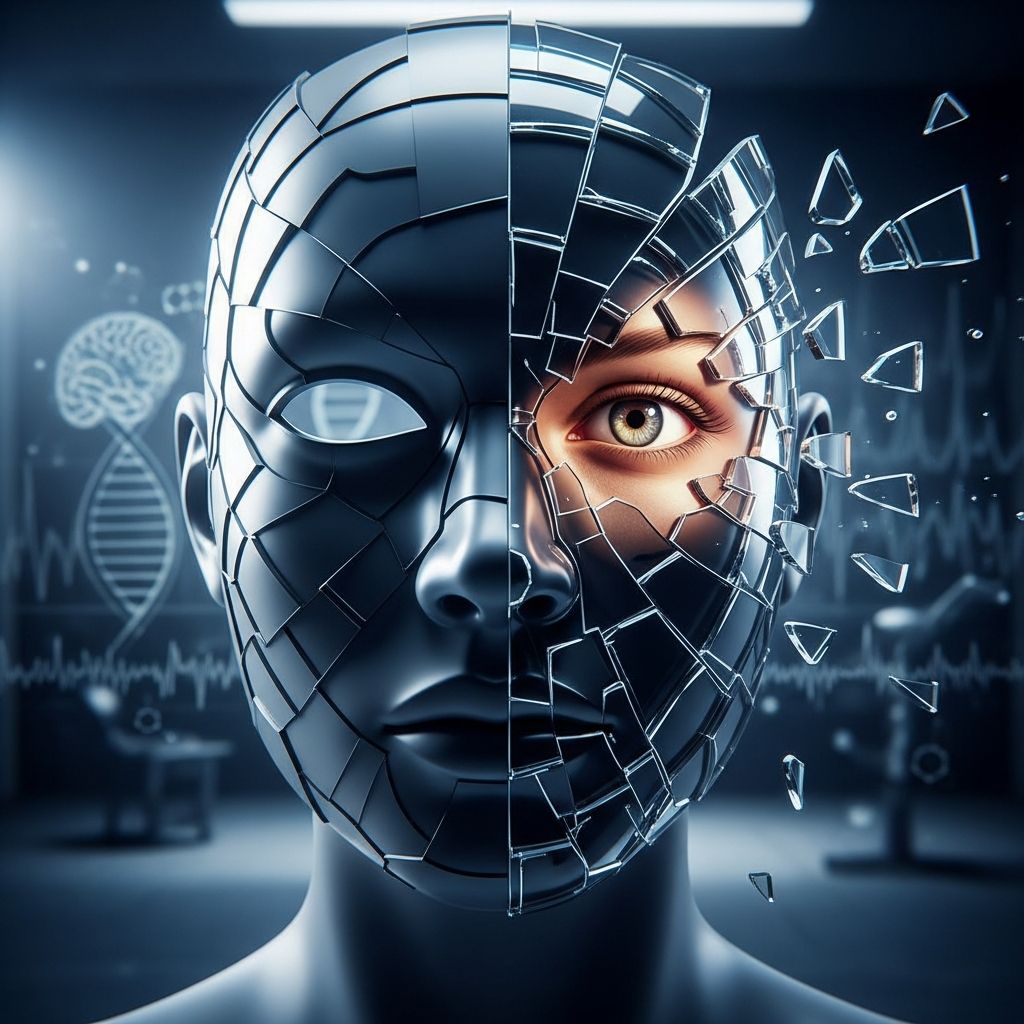
Detecting when someone is not telling the truth is a skill rooted in understanding human behavior, cognition, and emerging technology. While no method is foolproof, research from psychology and neuroscience offers reliable indicators, particularly through verbal analysis and subtle nonverbal signals. This article explores practical, evidence-based approaches to improve your ability to discern truth from deception in everyday interactions, professional settings, and high-stakes situations.
Understanding the Foundations of Lie Detection
Lie detection relies on the cognitive load imposed by fabricating stories. Truth-tellers recall genuine memories effortlessly, while liars construct narratives, leading to detectable inconsistencies. Psychological studies emphasize that deception often manifests in speech patterns rather than dramatic gestures. For instance, liars may produce fewer details, repeat phrases, or avoid commitments to specific facts, as their mental effort focuses on avoiding contradictions.
Historical attempts like polygraphs measure physiological responses such as heart rate and skin conductivity, but they lack reliability for broad application. Modern science shifts toward verbal and behavioral cues, which show medium to large effect sizes in distinguishing truths from lies. Key is context: high-stakes lies with personal relevance yield clearer signals.
Verbal Indicators: Listening for the Truth
Words reveal more than we think. Analysis of naturalistic statements shows liars use simpler language, fewer sensory details, and more evasive structures. Criterion-Based Content Analysis (CBCA) evaluates statements for logical structure, unusual details, and contextual embedding—markers of authenticity. Meta-analyses confirm CBCA’s effectiveness, with effect sizes indicating reliable discrimination between true and false accounts.
- Logical Structure: Truths follow a clear timeline; lies jump erratically.
- Unrelated Details: Genuine recalls include irrelevant but vivid peripherals; fabrications omit them.
- Contextual Ties: Real events connect to broader life contexts; lies feel isolated.
Automated verbal analysis tools, like those using Linguistic Inquiry and Word Count (LIWC), achieve up to 67% accuracy by scanning for function words and emotional tones absent in truthful writing. In interviews, techniques like the Cognitive Interview—asking for reverse-order recounts or multiple perspectives—overloads liars’ working memory, eliciting more cues.
Nonverbal Signals: Beyond Words to Body Language
Body movements and facial expressions offer supplementary clues, especially when combined with verbal analysis. Micro-expressions, fleeting facial flashes lasting under a fifth of a second, betray concealed emotions like guilt or anger. These are hard to fake and most reliable for emotional lies.
| Cue Type | Truth-Teller Behavior | Liar Behavior |
|---|---|---|
| Facial | Consistent expressions matching words | Micro-expressions of discord (e.g., smirk during denial) |
| Gestures | Illustrative hand movements | Self-soothing touches (neck rubbing, lip biting) |
| Posture | Open, stable | Shifts, leaning away |
Research indicates combining channels—speech, face, body—boosts accuracy, particularly unprepared lies under pressure. Voice stress analyzers detect microtremors in pitch and frequency, though evidence is mixed; they perform better in controlled settings.
Advanced Interview Techniques for Eliciting Truth
Strategic questioning disrupts deception. The Reality Interview adds yes/no probes to Cognitive Interviews, forcing liars to overthink responses. Shifting evidence revelation late—known as SUE (Strategic Use of Evidence)—prevents tailoring lies, revealing inconsistencies when facts emerge.
Expectancy violations, like unexpected questions, increase cognitive demands. Truth-tellers adapt smoothly; liars falter, providing fewer details or contradictions. Studies show these methods yield 70-80% detection rates in lab settings, far surpassing untrained judgments at 54%.
Technological Frontiers in Deception Detection
Neuroscience introduces brain-based tools. Functional MRI (fMRI) scans detect heightened prefrontal cortex activity during lies, as fabricating requires executive control. In guilty knowledge tests, fMRI identifies salience responses to crime-related stimuli with localized brain changes. However, practical limitations like cost and mobility hinder widespread use.
AI-driven analysis excels with verbal and digital data. Machine learning on trial videos achieves 70% accuracy, outperforming humans. Personalized models, trained on baselines like social media, predict lies at 74% for prolific posters by flagging linguistic shifts. Automated systems scale for security screenings or online verification.
Practical Applications in Real-World Scenarios
In parenting, spotting teen fibs involves baseline familiarity: note deviations in detail richness or eye contact consistency. Professionals use these in negotiations—probe with reverse chronologies to test narratives. Law enforcement favors CBCA and SUE for witness statements, reducing false confessions.
Daily tips: Establish rapport first for natural baselines. Ask open-ended questions early, then pivot to specifics. Cross-check statements against known facts. Avoid over-relying on myths like eye avoidance; context matters.
Limitations and Ethical Considerations
No technique exceeds 85% accuracy consistently; baselines vary by culture, stress, and practice. False positives risk injustice, especially with neurotech raising privacy issues. Ethical use demands training and corroboration. Research stresses integrated approaches over single cues.
Frequently Asked Questions
Can anyone learn to detect lies effectively?
Yes, with training on verbal methods like CBCA, accuracy rises from 54% to 70-80%. Practice recognizing baselines improves intuition.
Is polygraph testing reliable for lie detection?
No, polygraphs measure anxiety, not deceit directly, with error rates too high for court admissibility.
Do AI lie detectors work on everyone?
Best for those with data profiles (e.g., social media users); general accuracy hovers at 70%, needing human oversight.
What if someone is nervous but truthful?
Nervousness mimics cues—use strategic questions to differentiate; truths withstand scrutiny.
Are micro-expressions foolproof?
They indicate concealed emotions but not always guilt; combine with verbal checks.
Building Your Lie Detection Toolkit
Start with verbal scrutiny: demand details, vary question order. Observe clusters of cues, not isolates. Leverage tech where available, but trust corroborated evidence. Consistent practice hones this vital social skill, fostering trust in relationships and decisions.
(Word count: 1678)
References
- The Science of Lie Detection by Verbal Cues — Lehner, H.N., et al. National Library of Medicine. 2022-04-26. https://pmc.ncbi.nlm.nih.gov/articles/PMC9037296/
- The Polygraph and Lie Detection — National Research Council. National Academies Press. 2003-01-01. https://www.nationalacademies.org/read/10420/chapter/8
- Lie Detection — Wikipedia Contributors. Wikimedia Foundation. 2026-02-01. https://en.wikipedia.org/wiki/Lie_detection
- fMRI Lie Detection: Is there Science Behind Deception? — Journal of Young Investigators. 2009-09-01. https://www.jyi.org/2009-september/2017/10/27/fmri-lie-detection-is-there-science-behind-deception
- How to actually catch a liar, according to the new science of lie detection — BBC Science Focus Magazine. 2023-01-15. https://www.sciencefocus.com/the-human-body/how-to-catch-a-liar