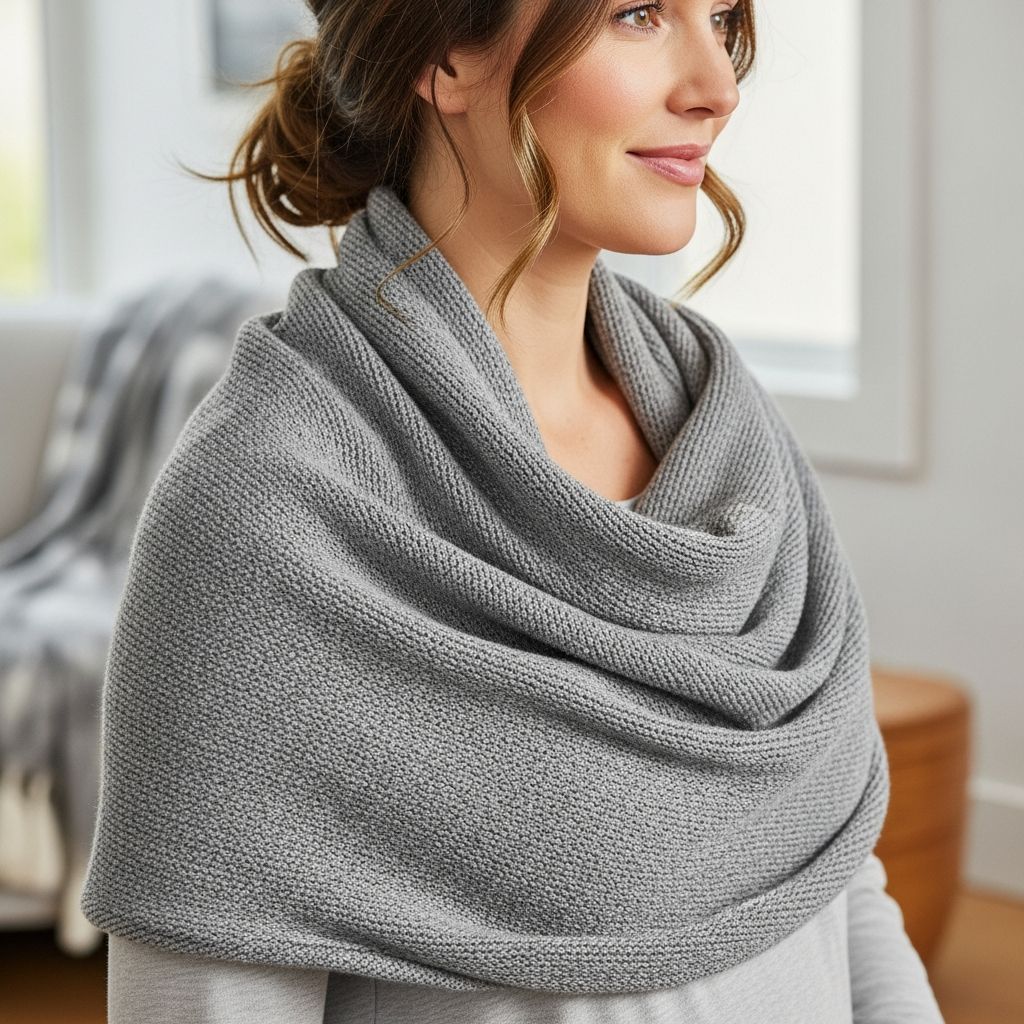
An infinity nursing scarf is a clever accessory that works as both a chic scarf and a practical breastfeeding cover, helping new parents feel confident, cozy, and prepared wherever they go.
What Is an Infinity Nursing Scarf?
An infinity nursing scarf is a looped, continuous circle of fabric that can be worn around the neck like a regular scarf, then unfolded to provide coverage while breastfeeding. Instead of dangling straps or rigid necklines, it drapes smoothly around your shoulders to create a soft, private space for you and your baby.
Because it looks like everyday clothing, you can keep it on between feeds without drawing attention to its dual purpose. When it is time to nurse, you simply adjust the loop over your chest and baby, turning a regular outfit into a convenient, mobile feeding station.
Why Many Parents Love Infinity Nursing Scarves
Infinity nursing scarves appeal to breastfeeding parents who want a balance of privacy, practicality, and personal style. They are especially popular among those who frequently feed on the go, whether at a café, the park, or during family gatherings.
Unlike more structured nursing covers, a scarf design blends into your wardrobe and does not require separate packing or assembly. This ease of use can make breastfeeding in public feel less stressful and more natural.
Key Benefits at a Glance
- Discreet appearance: Looks like a regular fashion scarf when not in use as a cover.
- Soft coverage: Drapes gently over you and baby without stiff boning or hardware.
- Space-saving: Eliminates the need to carry a separate nursing cover in your diaper bag.
- Multi-purpose use: Can double as a light blanket, car seat shade, or stroller cover in a pinch.
- Budget-friendly: Simple to sew at home, even for beginners with basic sewing skills.
Choosing the Right Fabric and Size
Fabric choice dramatically affects how comfortable and practical your infinity nursing scarf will feel. When selecting material, focus on softness, breathability, and stretch so that both you and your baby stay at ease during feeds.
Light to medium-weight knits, modal blends, rayon jersey, and soft cotton knits are all popular because they drape well and move easily over the body. Avoid heavy or scratchy fabrics, which can trap heat or irritate sensitive newborn skin.
Suggested Measurements
Though there is no universal standard, the following dimensions work well for most adults:
- Width: About 22–30 inches (56–76 cm) for generous coverage.
- Length (before joining into a loop): About 60–70 inches (152–178 cm), depending on how many times you want it to wrap around your neck.
- Stretch: A bit of horizontal stretch makes it easier to maneuver while nursing.
Fabric Options Overview
| Fabric Type | Pros | Cons | Best For |
|---|---|---|---|
| Cotton jersey knit | Soft, breathable, easy to sew, good stretch | May curl at edges, can shrink if not prewashed | Everyday use in most climates |
| Rayon or modal blend | Beautiful drape, lightweight, stylish | Can be slippery to sew, sometimes more delicate | Dressier outfits and warmer environments |
| Cotton interlock knit | Stable, less rolling at edges, cozy | Bulkier than jersey, warmer | Cooler seasons or air-conditioned spaces |
| Lightweight bamboo knit | Very soft, breathable, eco-conscious choice | Can grow or stretch out over time | Sensitive skin and warm weather |
Tools and Supplies You Will Need
Before you start sewing your infinity nursing scarf, gather a few basic tools so the process runs smoothly. Most supplies are standard items found in beginning sewing kits or easily purchased from a fabric store or online retailer.
- Soft knit fabric cut to your chosen width and length
- Sewing machine with a stretch or zigzag stitch option
- Matching polyester thread (stronger and more flexible than cotton)
- Fabric scissors or rotary cutter and cutting mat
- Straight pins or clips to hold seams together
- Measuring tape or ruler
- Iron and ironing board for pressing seams if desired
Optional but helpful items include ballpoint or stretch sewing machine needles and a walking foot attachment, both of which help prevent skipped stitches and wavy seams on knit fabric.
Step-by-Step: How to Sew an Infinity Nursing Scarf
This simple project is friendly for beginners and can often be completed in under an hour. Taking your time with measuring and pinning will make the finished scarf look neater, but the overall construction is straightforward.
Step 1: Prepare and Cut the Fabric
Prewash and dry your fabric the same way you plan to launder the finished scarf. This helps minimize shrinking later and keeps the scarf’s size consistent after multiple washes.
Spread the fabric on a flat surface and measure out a rectangle to your desired dimensions. Use sharp fabric scissors or a rotary cutter to trim clean edges, as neat cuts make sewing much easier.
Step 2: Fold and Sew the Long Edge
Fold the rectangle in half lengthwise with the right sides of the fabric facing each other, aligning the long edges. Pin or clip along this long side to keep the layers from shifting.
Sew along the pinned edge using a stretch stitch or a narrow zigzag stitch, leaving a seam allowance of about 1/2 inch (1.3 cm). This creates a long fabric tube with the seam running down the middle of the inside.
Step 3: Turn the Tube Right Side Out
Carefully turn the tube right side out by pulling the fabric through itself. You now have a long, smooth tube with the right side of the fabric on the outside.
Run your fingers along the seam to straighten it and, if desired, lightly press the tube with an iron on the appropriate heat setting for your fabric.
Step 4: Join the Ends into a Loop
Lay the tube flat so the seam runs along one side. Bring the two short ends of the tube together, being careful not to twist, unless you want a slight twist in your finished loop for styling.
Align the raw edges of the two ends, right sides facing, and pin or clip around the circle. Sew around the circumference, leaving a small opening of a few inches so you can tuck in the remaining fabric.
Step 5: Close the Final Opening
Turn the joined area so the seam allowance is inside the loop. Use a small hand-sewn ladder stitch or a narrow zigzag on your machine to close the remaining opening.
Once the opening is secure, smooth out the scarf and check that the loop lies comfortably around your neck and offers enough fabric to cover your torso while breastfeeding.
How to Wear Your Infinity Nursing Scarf
After finishing your scarf, you can experiment with multiple ways to style it during and between feeds. The goal is to find a configuration that feels natural, secure, and comfortable for both you and your baby.
Everyday Styling Ideas
- Single loop: Wear it as one long loop for a relaxed, casual look over T-shirts and dresses.
- Double wrap: Twist the loop once and wrap it around your neck twice for a fuller, cozier style.
- Shoulder wrap: Spread the scarf out over your shoulders like a light shawl in air-conditioned places.
Using It as a Nursing Cover
- Loosen one loop of the scarf and pull it down over your chest.
- Place your baby in position and adjust the fabric so it covers the side where you are nursing.
- Spread the fabric across your shoulder and upper back to keep it from slipping.
- Peek down through the top opening or gently lift one edge to check on your baby as needed.
If you prefer more airflow, leave one side slightly open or position your baby’s head nearer to the edge of the fabric rather than directly in the center.
Safety and Comfort Tips
Safety should always come before convenience or aesthetics when breastfeeding with any kind of cover. Your baby needs plenty of air circulation and freedom to latch and breathe comfortably.
- Keep the fabric loose around your baby’s face and nose so that air flows easily.
- Check frequently to ensure your baby’s airway is clear and their head is not pressed into your chest or the fabric.
- In hot weather, opt for very lightweight material and take breaks from using the cover to prevent overheating.
- Never use the scarf to secure or tie your baby in any position; it is not a carrier or sling.
- Stop using the scarf immediately if your baby appears flushed, sweaty, or fussy from heat.
Listening to your baby’s cues is crucial; if they seem distracted or uncomfortable under the cover, you can always adjust the scarf or nurse without it in a more private spot.
Care and Washing Instructions
Because infinity nursing scarves are often exposed to milk drips, spit-up, and everyday wear, they need to be easy to clean. Most knit fabrics used for scarves handle machine washing well when cared for properly.
- Prewash fabric before sewing to reduce later shrinking.
- Wash the finished scarf in cold or warm water on a gentle cycle.
- Use mild detergent without heavy fragrances if your baby has sensitive skin.
- Tumble dry on low heat or lay flat to dry to preserve stretch and shape.
- A quick low-heat iron or steam can smooth wrinkles if the fabric type allows it.
Creative Variations to Try
Once you are comfortable with the basic scarf, you can adapt the pattern to better fit your personal style or seasonal needs. Small changes in fabric, width, and embellishment can completely change the look while preserving function.
- Reversible scarf: Sew two different fabrics together so each side has a distinct color or print.
- Extra-wide loop: Increase the width for more torso coverage and a cozier wrap in cold weather.
- Lightweight summer version: Choose very thin, breathable knit for hotter climates or outdoor use.
- Decorative seams: Use contrast thread or decorative stitches along the long seam for visual interest.
- Coordinated set: Make matching burp cloths or a small baby blanket from leftover fabric for a cohesive look.
Frequently Asked Questions
Do I need sewing experience to make an infinity nursing scarf?
No advanced skills are required; straight-line sewing and basic measuring are the main tasks. Taking time to pin or clip your edges and choosing a stable knit will help beginners achieve a tidy result.
Can I use woven (non-stretch) fabric instead of knit?
Woven fabrics can work, but they will drape differently and may feel less flexible while positioning your baby. If you choose a woven option, consider cutting it a bit wider so you still get comfortable coverage.
How many wraps should the scarf make around my neck?
Most people prefer a loop that can comfortably double around the neck without feeling tight. A length in the 60–70 inch range typically allows for one elegant drape or a double wrap, depending on your preference and body size.
Is an infinity nursing scarf suitable for pumping in public?
Yes, many parents use the same scarf to cover their pump and flanges while expressing milk away from home. The looped design can shield your torso while still letting you monitor the pump under the fabric.
What if my baby dislikes feeding under a cover?
Some babies prefer to nurse without any fabric near their face, especially as they grow older and more aware of their surroundings. In that case, you can wear the scarf for your own comfort and warmth but skip using it as a cover, or only drape it lightly across your shoulder for minimal coverage.
Bringing Style and Function Together
An infinity nursing scarf is a small project that can make a big difference in day-to-day life with a baby. By combining the look of a favorite accessory with the practicality of a nursing cover, it offers flexibility and comfort during a season that demands both.
Whether you sew one for yourself, receive it as a gift, or make a few for friends, this simple loop of fabric can support your breastfeeding journey in a subtle yet meaningful way.