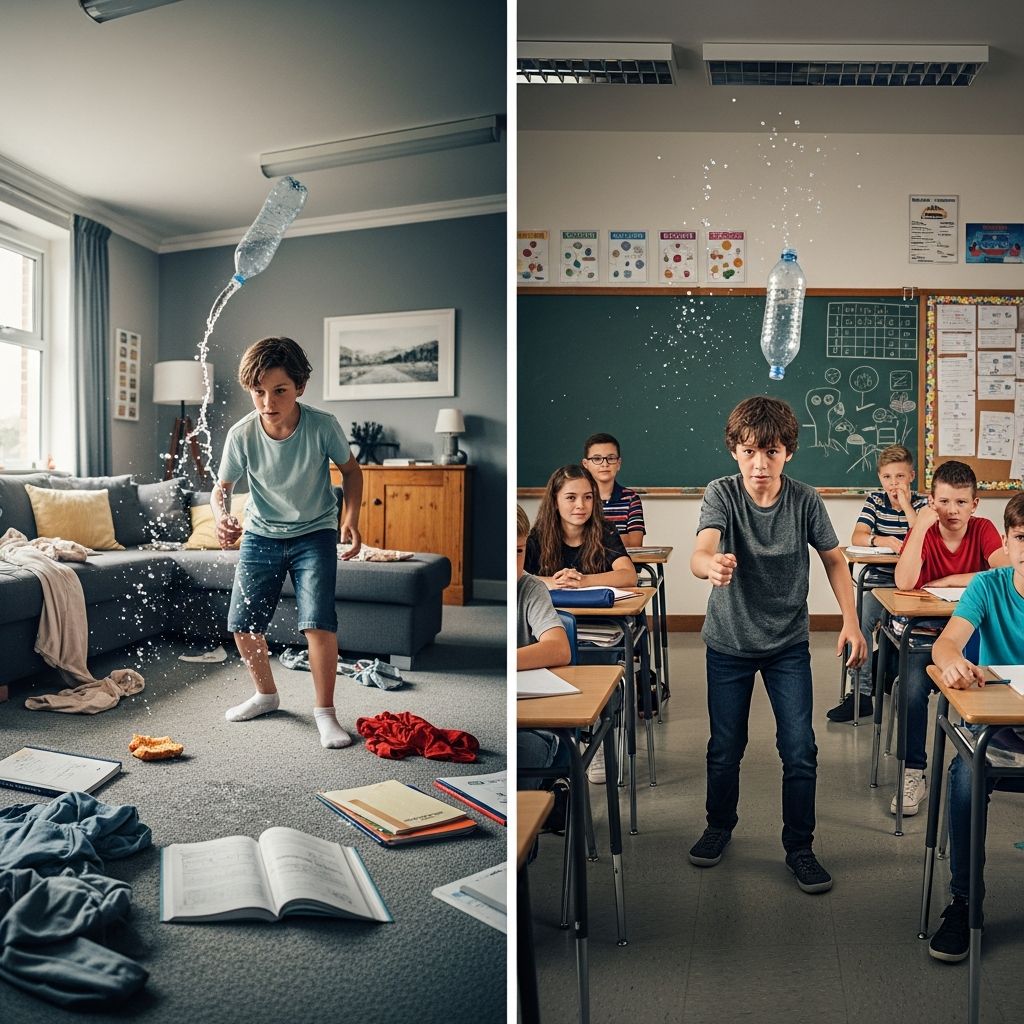
If you share a home or classroom with kids, you have probably heard the unmistakable thunk of a half-filled plastic bottle landing — over and over and over again. The water bottle flipping craze can quickly turn from a harmless trend into a full-blown household irritation or classroom disruption.
This guide offers practical, realistic strategies for parents and caregivers who want to set sane limits, protect their nerves, and still allow kids to enjoy a fad that, in many ways, is normal childhood play.
Why Kids Get Hooked on Water Bottle Flipping
Before deciding how to respond, it helps to understand why the bottle flip is so weirdly appealing to kids.
- Instant feedback: Every flip is either a success or a fail, which gives kids a quick dopamine hit when it lands upright.
- Low skill entry, high mastery ceiling: Anyone can try it, but landing it consistently (and from trickier angles) takes practice.
- Social currency: It is an easy way to show off in front of friends and join in a shared trend.
- Portable and cheap: No fancy gear or screens needed; just a partly filled bottle and enough space to annoy nearby adults.
From a developmental angle, repetitive play, practice, and simple challenges are normal parts of childhood learning and motor skill development. That does not mean you must enjoy the constant noise or accept it in all situations — but it explains why your child is not “just” trying to bother you.
Common Problems the Bottle Flip Craze Creates
Most parents are not upset that kids are flipping bottles. They are upset about the fallout from the flipping.
- Noise fatigue: The persistent clatter can be stressful, especially when you are working, caring for a baby, or already overloaded.
- Mess and damage risk: Spilled water, cracked bottles, scratched furniture, and flying bottles near electronics.
- Sibling conflict: One child wants to flip; another wants quiet or feels harassed by constant attempts to get a reaction.
- School disruption: In classrooms, repeated flipping breaks focus and can derail lessons or group activities.
- Power struggles: As soon as you say “stop,” your child may escalate, hide the bottle, or turn it into a battle of wills.
The key is not to outlaw every flip forever. It is to channel the behavior into appropriate times and places so kids still feel respected while you preserve your sanity.
Step 1: Decide Your Realistic Bottom Lines
Healthy rules are easier to follow when you are clear on your own limits. Think through your actual non-negotiables instead of reacting in the moment.
Consider these questions:
- When is noise genuinely a problem (meetings, naps, homework time)?
- Which areas of your home are too small or fragile for flying bottles?
- Are there times when you do not care if they flip to their heart’s content (outside, garage, basement)?
- What consequences are you realistically willing to enforce more than once?
Once you know your bottom lines, you can explain them calmly instead of shouting new rules every hour.
Step 2: Create a Simple “Flip Policy” at Home
Kids typically respond better to clear guidelines than to vague “stop that!” demands. Try making a short, specific home “flip policy.”
Elements of an Effective Flip Policy
- Where flipping is allowed: For example, “You can flip bottles in the yard, driveway, or basement.”
- Where it is not allowed: Such as “No bottle flipping in the living room, kitchen, or near the TV and computer.”
- Time limits or windows: Maybe the rule is “No flipping before 8 a.m. or after 8 p.m.” or “Flip breaks during afternoon free time only.”
- Noise expectations: Agree on what is acceptable, like “No shouting when it lands” or “If someone says they need quiet, you move to an allowed area.”
- Automatic consequences: Decide ahead: “If you ignore a reminder, the bottle goes away for the rest of the afternoon.”
| Rule Type | Example Rule |
|---|---|
| Allowed Zones | Backyard, driveway, unfinished basement |
| Quiet Zones | Living room, home office, bedrooms during quiet time |
| Time Limits | 15-minute flip sessions, twice a day on school days |
| Safety Rules | No flipping near screens, glass, or younger siblings |
| Consequence | One reminder; then the bottle is put away until tomorrow |
Step 3: Involve Your Child in Setting the Rules
Children are more likely to respect limits when they have some voice in creating them. Involving them also builds decision-making and communication skills.
Try a short family conversation:
- Explain your concern: “The noise is making it hard for me to work, but I know this is fun for you.”
- Ask for their input: “Where do you think would be a good flipping spot so you don’t break anything?”
- Brainstorm together: Write down all ideas (even silly ones) and then choose the ones that feel fair.
- Agree on a test period: “Let’s try these rules for a week and then check if they’re working.”
This approach shifts the dynamic from “me vs. you” to “us vs. the problem,” which tends to reduce stubborn oppositional behavior.
Step 4: Keep Consequences Predictable and Boring
Many kids enjoy the emotional fireworks just as much as the flipping itself. If you explode every time the bottle lands on your table, you have accidentally turned the entire routine into a high-drama game.
Instead, aim for consequences that are:
- Clear: “If you flip in the living room, the bottle is done for the day.”
- Consistent: Follow through the same way each time, without lectures.
- Calm: Speak quietly, remove the bottle, and move on.
- Short-term: Younger children in particular respond better to same-day consequences.
Staying calm is not about being permissive. It is about teaching self-control by modeling it — something that child development experts emphasize as a key part of effective discipline.
Step 5: Offer Alternatives, Don’t Just Say “Stop”
If kids only hear “stop flipping” without what they can do, they are more likely to push back or sneak around rules. Have a menu of alternative activities ready for when the water bottle needs a break.
Quiet Alternatives for Indoors
- Small building challenges (blocks, magnetic tiles, LEGO).
- Card games, simple board games, or solo puzzles.
- Drawing, comics, or making up trick-shot diagrams on paper.
- Practice skills that need similar focus, like card shuffling or coin tricks.
Active Alternatives for Outdoors
- Basketball “trick shots” into a low hoop or laundry basket.
- Chalk obstacle courses or hopscotch.
- Jump rope, hula hoop, or ball games.
Physical play is linked to better mood regulation and attention in children, and can ease the intensity around any single fad activity.
Step 6: Understand What Might Be Behind the Intensity
For many kids, bottle flipping is just a silly trend. For others, it may reflect deeper needs:
- Sensory seeking: Some children crave repetitive motion and sound; the flip and thud may feel satisfying to their nervous systems.
- Stress outlet: Repetitive actions can be calming when kids are anxious or overwhelmed.
- Control and competence: Tweens especially may cling to a skill that makes them feel capable as other parts of life feel harder.
If your child melts down when you remove the bottle, responds with extreme anger, or seems unable to stop flipping even after several reminders, it might be a sign they are coping with stress or have additional sensory or regulation needs. In such cases, consulting your pediatrician or a child psychologist can help you understand what is typical for their age and whether extra support is needed.
School and Classroom Considerations
If you are a teacher or a parent hearing complaints from teachers, bottle flipping can quickly feel like a bigger problem.
For Teachers
- Set clear classroom rules: for example, “Water bottles are for drinking only during lessons. No tossing or flipping.”
- Give specific times: allow movement and playful fads during recess or designated brain breaks.
- Teach self-regulation: short lessons on impulse control, coping with boredom, and respecting shared spaces support overall classroom behavior, not just bottle rules.
Professional guidelines on classroom management emphasize that proactive, well-communicated rules are more effective than purely reactive punishment.
For Parents Working With Schools
- Back the teacher’s rules at home: tell your child you support the classroom policy, even if your home rules are different.
- Ask your child what makes it hard to follow the rule: boredom, peer pressure, or wanting attention may be real issues to address.
- Coordinate with the teacher if needed: especially if your child has attention or sensory challenges that make repetitive play more compelling.
Choosing the Right Bottle (Yes, It Matters)
The type of container your child uses can affect both safety and the level of annoyance.
- Soft-sided plastic bottles: Less likely to dent surfaces, but still noisy when tossed indoors.
- Metal bottles: Durable for daily use, but very loud and more likely to damage furniture if flipped.
- Reusable, non-spill bottles: Better for hydration and the environment, but may still become “flip toys” if the trend is in full force.
If water is spilling everywhere, consider dedicated “flip bottles” that only go outside, while regular school bottles stay in backpacks or on desks for drinking only. Public health guidance also recommends encouraging plain water as the main drink for kids, ideally from reusable bottles to reduce sugar intake and plastic waste.
Turning a Trend into a Teachable Moment
As irritating as this fad can be, it is also a chance to teach important life skills.
- Respecting shared spaces: Learning that your fun cannot constantly come at someone else’s expense.
- Time and place awareness: Some activities are fine in one context (backyard) and not another (in the car, during class).
- Handling frustration: Not every flip will land; practicing persistence and good sportsmanship is valuable.
- Negotiation and compromise: Working together as a family to find solutions that meet multiple needs.
These are exactly the types of executive-function and social-emotional skills that support kids’ success in school and life.
Frequently Asked Questions (FAQs)
Should I ban water bottle flipping completely?
Unless it is causing real safety issues or severe disruption, a full ban often turns the fad into forbidden fruit. It is usually more effective to allow flipping in specific places and times, with clear consequences if rules are ignored.
My child keeps flipping even after consequences. What now?
If they repeatedly ignore rules, try shortening the time between behavior and consequence (for example, the bottle is put away for one hour instead of a full day), and check in about what they are feeling when you remove it. If defiance is extreme or part of a larger pattern of behavior concerns, talk with your pediatrician for guidance.
Is this kind of fad play bad for my child’s development?
In moderation, no. Repetitive skill practice, experimenting with angles and force, and playing along with peers are all typical parts of development. Problems arise when it interferes with sleep, schoolwork, relationships, or safety.
What if my child only seems interested in flipping bottles and nothing else?
Strong interests are normal, but if they cannot transition to other activities, become extremely distressed when you set limits, or seem withdrawn from other types of play, consider discussing this with a health professional to rule out underlying issues.
How long will this phase last?
Most trends fade on their own, especially when adults respond with calm boundaries instead of big emotional reactions. As new games and social interests appear, water bottle flipping usually becomes just one of many activities rather than the main one.
References
- The Ultimate Guide to Cup Drinking — Feeding Littles. 2023-05-01. https://feedinglittles.com/blogs/blog/the-ultimate-guide-to-cup-drinking
- Transitioning from Bottle to Cup — Kennedy Krieger Institute. 2022-04-15. https://www.kennedykrieger.org/stories/home-plate-pediatric-feeding-disorders-program-blog/transitioning-bottle-cup
- Weaning from Bottle: Tips from Pediatrician McKinney TX — Kidsville Pediatrics. 2023-02-20. https://www.kidsvillepeds.com/blog/1348618-expert-strategies-for-weaning-from-bottle-before-18-months/
- From Bottle to Cup: Helping Your Child Make a Healthy Transition — Best Start Pediatrics. 2022-11-10. https://www.beststartpediatrics.com/from-bottle-to-cup-helping-your-child-make-a-healthy-transition/
- 4 tips to transition from the bottle — Marshfield Clinic Health System (Shine365). 2021-08-05. https://shine365.marshfieldclinic.org/kids-health/4-tips-to-transition-from-the-bottle/
- Tips for Transitioning Baby from a Bottle to a Cup — Learning Care Group. 2022-03-18. https://www.learningcaregroup.com/news/tips-for-transitioning-baby-from-a-bottle-to-a-cup/