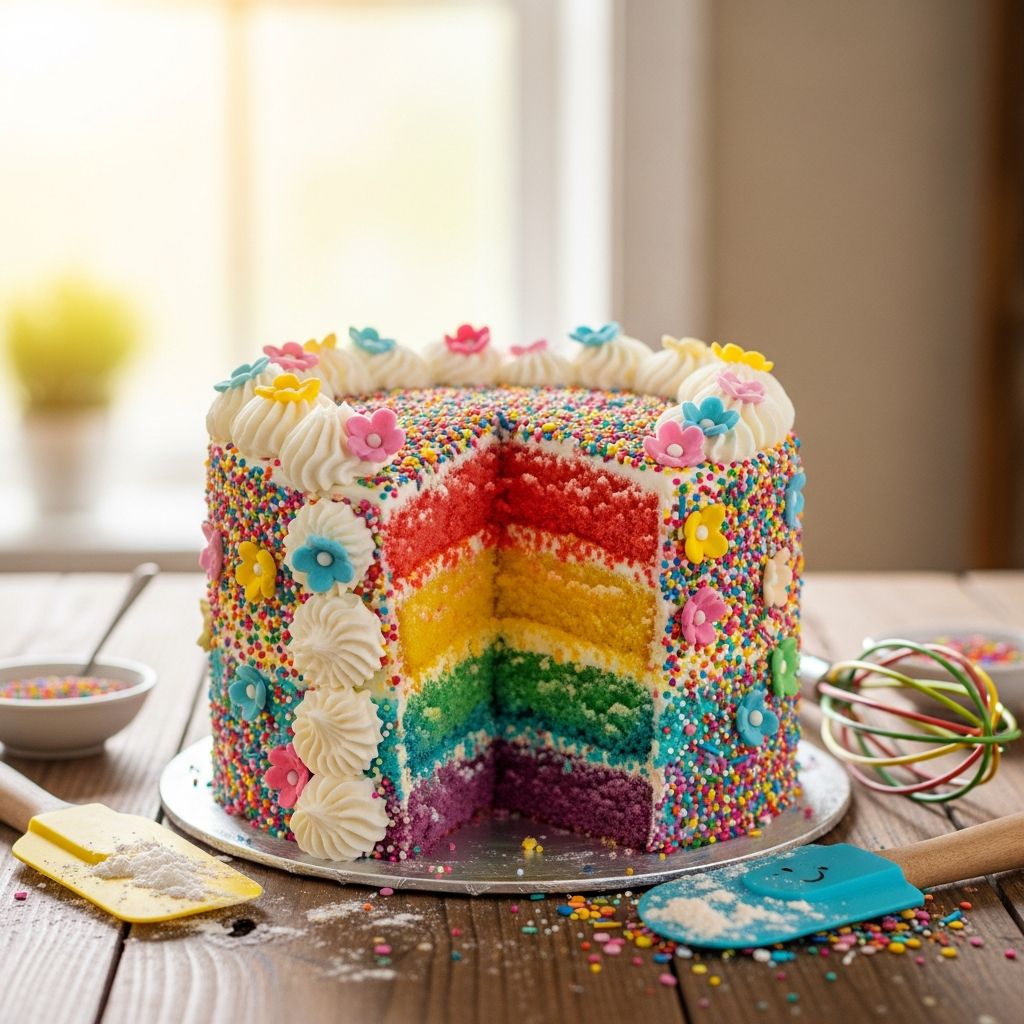
Every parent who has ever promised a magical birthday cake knows the pressure: the child has a specific vision, guests are on the way, and the cake in your kitchen looks nothing like the one in your head. This guide shows how to rescue a rainbow cake that seems doomed, while keeping the celebration joyful and low-stress.
Why Rainbow Cakes Go Wrong (And Why That’s Okay)
Rainbow cakes are deceptively tricky. Multiple colors, several layers, and lots of handling mean more chances for something to crack, crumble, or tilt. Yet those same features make them some of the most loved cakes at children’s parties, because they deliver drama and surprise when sliced.
When things go wrong, the cake rarely needs to be thrown away. In most cases, it can be repaired, disguised, or repurposed into something that still feels special to the birthday child. The key is to shift the goal from “picture-perfect” to “joyful and delicious.”
Spot the Problem: Common Rainbow Cake Emergencies
Understanding what, exactly, went wrong helps you choose the fastest and least stressful fix. Most rainbow cake disasters fall into a few familiar categories.
- Dry or overbaked layers: Cake feels dense, dry, or crumbly at the edges.
- Sunken or uneven centers: The middle dips down or refuses to rise properly.
- Cracked or broken layers: Layers break when removed from pans or while being stacked.
- Leaning tower effect: The cake tilts or looks like it is about to slide.
- Patchy or streaky colors: The rainbow interior looks muddled instead of vibrant.
- Messy frosting: Crumbs mix into the frosting, sides aren’t smooth, or colors bleed.
Once you name the problem, you can move from panic to problem-solving. Many issues can be hidden under frosting, decorations, or a clever change in presentation.
Quick Fixes for Damaged Cake Layers
Broken or crumbling layers are the most intimidating issue, but they are often the easiest to disguise. Think of frosting as glue, and of the final cake as a sculpture rather than a fragile artwork.
- Use frosting as adhesive: If a layer cracks in half, place it on the plate and press the pieces together with a thin layer of frosting between them.
- Turn crumbs into a feature: Trim ragged edges and save the scraps to create cake pops, cake truffles, or a crumble topping for ice cream.
- Convert to a single-layer cake: If stacking feels risky, use the two best layers for a sturdy single or double layer and repurpose the rest as a bonus dessert.
- Hide imperfections under decorations: Sprinkles, colored sugar, or small candies along the edges can cover uneven cuts or patched seams.
What to Do with a Leaning or Wobbly Rainbow Cake
A leaning cake can be nerve-wracking, especially if transport is involved. Before declaring defeat, try stabilizing from the inside and simplifying the design from the outside.
- Flatten the layers: Gently level domed tops with a long serrated knife to create flat surfaces before stacking.
- Use supports: Insert clean wooden skewers or drinking straws down through the center to help hold layers together.
- Downsize the height: If the cake is too tall for comfort, remove one layer and serve it separately with a bit of extra frosting.
- Embrace a rustic look: A slightly uneven cake can still be charming when decorated with playful, casual finishing touches rather than sharp, formal edges.
Rescuing Dry, Dense, or Overbaked Layers
Dry cake is disappointing, but it is rarely hopeless. Moisture can be added back in, and flavorful frosting goes a long way toward improving each bite.
- Brush with simple syrup: Combine equal parts sugar and water, heat until dissolved, cool, and lightly brush over each layer before frosting.
- Add a creamy filling: Use whipped cream, mousse, or a generous layer of buttercream between layers to create contrast with any dryness.
- Serve with ice cream: Pair slices with ice cream or whipped topping so each serving feels rich and indulgent.
- Convert to trifles: If a layer is especially overbaked, cube it and layer with pudding or cream in clear cups for instant mini desserts.
Color Problems: When the Rainbow Isn’t Quite Right
Sometimes the cake bakes up duller than expected or the colors blend together in unexpected ways. Children are usually thrilled to see any color inside a cake, but a few tactics can help bring the rainbow back to life.
- Emphasize color on the outside: Use bright sprinkles, colored candies, or a rainbow-patterned border so the theme feels clear at first glance.
- Add a colorful frosting layer: Tint frosting in bold shades and apply stripes, swirls, or an ombré effect to shift focus to the exterior.
- Use a rainbow topper: A simple rainbow-shaped decoration, paper banner, or toy figures can tell the story even if the interior layers are subtle.
- Slice strategically: When serving, cut slices that showcase the most distinct sections of color and turn them outward on plates.
Frosting Troubleshooting: From Crumb-Coated to Party-Ready
Frosting is where many home bakers start to panic. Crumbs get dragged across the surface, colors smear, and the cake looks worse before it looks better. The solution is to work in layers and not demand perfection from the first pass.
- Start with a crumb coat: Spread a very thin layer of frosting to trap crumbs, then chill the cake briefly before adding the main layer.
- Don’t chase absolute smoothness: Rustic swirls, swoops, or textured patterns are easier to manage and often more forgiving.
- Use one signature detail: A border of candies, a simple piped shell, or a single rainbow on top can make the cake look intentional and festive.
- Keep colors simple: If time is short or the cake is fragile, use one main color of frosting and rely on sprinkles or toppers for the rainbow element.
Baker’s Decision Table: How Bad Is It, Really?
When the cake looks tragic and time is ticking, it helps to make a quick, calm decision about whether to repair, repurpose, or start over. The table below offers a simple way to choose a path without spiraling into stress.
| Situation | Reality Check | Best Move |
|---|---|---|
| Layers cracked but edible | Cake still tastes good; structure is the only issue. | Patch with frosting, stabilize with skewers, cover joins with decorations. |
| Cake very dry, but intact | Texture is off, but flavor can be boosted. | Brush with syrup, add generous filling, serve with ice cream or cream. |
| Cake completely collapsed or underbaked | Center is gooey or inedible. | Cut away raw sections; turn the rest into trifles or cake pops and consider a quick backup cake. |
| Colors dull or muddy | Still safe to eat; only appearance is affected. | Highlight theme with colorful frosting, sprinkles, and themed toppers. |
| Leaning tower of rainbow | Risk of collapse if moved or stacked higher. | Remove top layer if needed, insert supports, and keep the design low and stable. |
Decorations That Rescue Any Imperfect Cake
Strategic decorations can transform a slightly lopsided cake into one that children remember with delight. Instead of chasing bakery-style perfection, aim for personality and color.
- Heavy use of sprinkles: Press sprinkles around the base or up the sides to hide uneven frosting and crumbs.
- Candy borders: Line the bottom edge with colorful candies like chocolate pieces or gummies to distract from gaps.
- Paper toppers and banners: Create a small birthday banner or name topper using paper and toothpicks for height and focus.
- Toys as toppers: Place clean, themed toys or figures on top to instantly connect the cake to your child’s favorite characters.
- Whipped cream clouds: Dollops of whipped cream can hide dents or frosting flaws while enhancing a rainbow or sky theme.
Smart Backup Strategies for Low-Stress Parties
One of the most effective ways to remain calm in the face of a baking disaster is to plan a gentle safety net. This does not mean expecting failure; it simply means being practical about time and energy.
- Keep a boxed cake mix on hand: A simple mix can become a backup sheet cake if the main project fails at the last minute.
- Have store-bought cupcakes as Plan B: A box of undecorated or simply frosted cupcakes can be quickly dressed up with sprinkles and toppers.
- Serve multiple desserts: Present a smaller cake alongside cookies, fruit, or ice cream so no single dessert has to carry the whole event.
- Let the child help decorate: Inviting the birthday child to add sprinkles or toppers makes the cake feel special regardless of its shape.
Emotional First Aid for the Stressed Birthday Baker
The hardest part of a cake crisis is often not the cake itself, but the pressure parents feel to deliver a magical experience. Remember that the child is more excited about the celebration, the attention, and the candles than about perfect frosting lines.
- Redefine success: Swap the idea of a flawless cake for one that tastes good and makes your child smile.
- Take a short break: Step away for a few minutes, drink some water, and return with a calmer outlook.
- Use humor: Give the cake a playful nickname like “The Wonky Rainbow” to turn imperfection into a story.
- Focus on the moment: Picture your child blowing out candles and laughing with friends, not the cake’s flaws.
Preventing Future Rainbow Cake Disasters
Each baking mishap teaches something valuable for next time. A few simple habits can dramatically reduce your chances of a repeat emergency and make future parties easier.
- Test new recipes early: Try a smaller version of the cake weeks before the party to learn how it behaves in your oven.
- Chill layers before stacking: Slightly chilled cake is firmer and less likely to break or shed crumbs.
- Allow extra time: Start baking earlier in the day, or even the day before, so there is room for cooling, leveling, and fixing.
- Keep decorations simple: A clean, bright design is often easier and more impressive than overly complicated techniques.
FAQs: Saving Rainbow Birthday Cakes
What if the cake is still slightly raw in the middle?
If the center is underbaked but the outer portions are done, carefully cut out the raw section and bake a small replacement piece in a cupcake tin or small pan. Once cooked through, place it into the gap with frosting used as glue and cover generously with icing so the repair is not visible.
Can I freeze the layers to make them easier to work with?
Yes. Briefly chilling or partially freezing baked layers firms them up and makes them less likely to crumble while you frost and stack. Wrap them well before chilling so they do not dry out, and allow them to sit at room temperature for a short time before applying the final coat of frosting.
How do I fix frosting that is pulling up crumbs?
Apply a thin crumb coat first, using just enough frosting to seal in crumbs, and then refrigerate the cake until that layer is slightly firm. After that, spread a thicker, smoother coat on top of the chilled base, working gently and cleaning your spatula as needed.
Is it okay to serve a cake that looks messy but tastes good?
Absolutely. Children are generally more excited about sweetness, color, and the ritual of candle-blowing than about professional-level decorating. A cake made with care and enthusiasm often becomes a cherished memory regardless of how polished it appears.
What should I do if everything really does fall apart?
If the main cake is beyond reasonable repair, turn the edible pieces into cake cups, trifles, or cake pops and present them in clear glasses or fun wrappers. Pair them with a small backup cake or a plate of store-bought treats so the birthday child still has something special for candles and photos.
Making the Memory Sweeter Than the Cake
Rescuing a rainbow birthday cake is about more than sugar and food coloring. It is about flexibility, creativity, and the willingness to laugh when the plan changes. In the end, the story of the almost-disaster often becomes part of the family lore, retold with affection long after the last crumbs are gone.
When the next birthday comes around, you will bring not only better baking skills but also the confidence of having survived a cake crisis. That resilience, more than any perfect layer, is what makes you the real hero of the party.