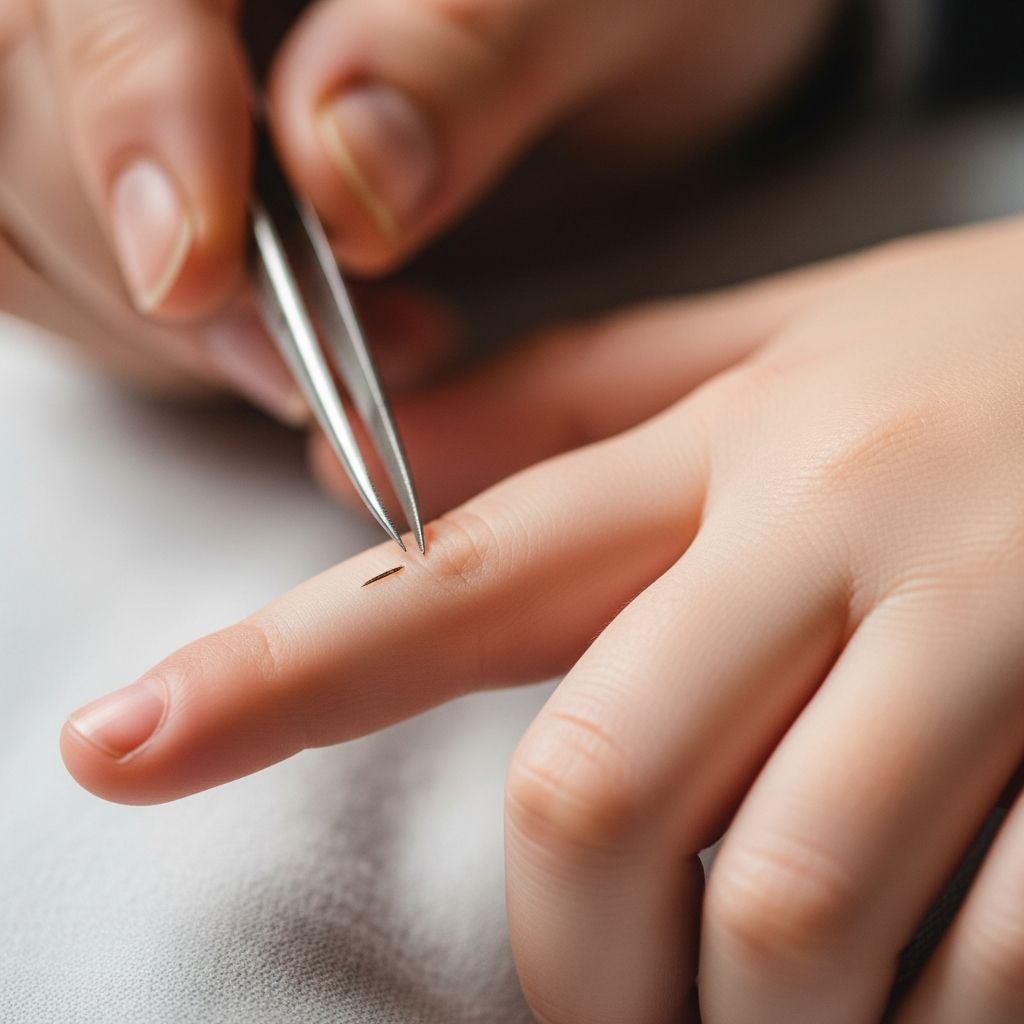
Splinters are one of the most common minor injuries in childhood, especially for kids who love running barefoot, exploring playgrounds, or helping with crafts. Although they look small, splinters can cause discomfort, tears, and worry for both children and parents. This guide explains how to recognize a splinter, when to remove it at home, when it is safer to wait, and when your child needs medical help.
What Exactly Is a Splinter?
A splinter is any small, sharp fragment that becomes lodged in or just under the surface of the skin. These tiny pieces most often come from wood, but glass, metal, plastic, thorns, and plant material can also cause splinters. Children typically get splinters on the hands, fingers, feet, or toes, where the skin is exposed to rough surfaces.
Most splinters stay in the top layers of skin and are more irritating than dangerous. However, some can work deeper, break, or be made of materials that increase the risk of infection. That is why it helps to know how to assess the situation calmly and choose the safest response.
Common Causes and Risky Situations
Understanding where splinters come from can help you reduce your child’s risk. Many splinter injuries are preventable with a few simple precautions and habits.
- Wooden surfaces such as picnic tables, benches, playground structures, and unfinished furniture.
- Outdoor play in areas with thorns, dried plants, or rough wooden fences.
- Walking or running barefoot on decks, docks, wooden floors, or near broken glass.
- Crafts or hobbies involving wood, metal wire, or glass without proper supervision.
Kids are naturally curious and tactile, so they touch, drag, and climb over surfaces adults might avoid. That curiosity is healthy, but it makes splinters almost inevitable at some point.
How to Tell if Your Child Has a Splinter
Sometimes a splinter is obvious, and sometimes the only clue is that your child complains about a sore spot. A quick check can usually confirm what is going on.
- A visible dark or light line, dot, or speck under the skin.
- Redness or mild swelling around a tiny point of entry.
- Pain or tenderness when the area is touched, pressed, or used.
- A feeling of something “stuck” or “poking” inside the skin, especially when walking or gripping an object.
Use bright light and, if possible, a magnifying glass to inspect the area. For very small splinters, this extra visibility can make removal much quicker and less stressful.
Stay Calm: Talking Your Child Through It
For a child, the idea of someone coming near a sore spot with tweezers or a needle can be very scary. Your approach and tone matter as much as your tools. Before you start, explain that your goal is to help the sore spot feel better and that the process will be quick.
- Use simple, reassuring language, like “We’re just going to take out this tiny piece that’s bugging you.”
- Let your child sit on your lap or hold a favorite toy for comfort.
- If possible, have another adult nearby to distract with a story or video.
When children feel in control, they tend to sit more still, which makes removal safer and easier.
When a Splinter Can Stay Put (Watch and Wait)
Not every splinter requires removal. In some situations, trying to dig out a tiny, painless sliver can cause more irritation than simply leaving it alone. The body often works small, shallow pieces out naturally as the skin sheds.
You can usually watch and wait if:
- The splinter is very small and close to the surface.
- Your child does not complain of pain when walking, touching, or bumping the area.
- The skin looks calm, without spreading redness, warmth, or drainage.
In these cases, keep the area clean and check it daily. If pain or signs of irritation appear later, then removal or a medical visit may be needed.
When You Should Remove a Splinter at Home
Many splinters are safe to remove at home with basic first-aid supplies. Home removal is usually appropriate when the splinter is clearly visible, easy to reach, and causing discomfort.
It is generally reasonable to try removal if:
- Part of the splinter is sticking out of the skin so you can grasp it.
- The splinter is just beneath the surface and you can see the full length.
- Your child is able to stay reasonably still and tolerate gentle handling.
If several gentle tries do not work, it is better to stop than to dig or cut. At that point, contacting your child’s healthcare provider is the safest choice.
Step-by-Step Home Removal Guide
Gather what you need before you begin so the process goes smoothly. A calm, organized approach will keep your child more relaxed and reduce the risk of problems.
Supplies to Prepare
- Soap and clean water.
- Fine-tip tweezers.
- A clean, sharp needle (optional, for just-under-the-skin splinters).
- Rubbing alcohol or an alcohol swab to clean tools.
- Clean cotton pads or gauze.
- Antibiotic ointment or plain petroleum jelly (if recommended by your child’s doctor).
- Small adhesive bandage.
Safe Removal Technique
Use this basic method for most straightforward splinters:
- Wash your hands and your child’s skin. Use soap and water to gently clean the area and your hands. Pat dry.
- Disinfect your tools. Wipe tweezers and any needle you plan to use with rubbing alcohol and let them air dry.
- Position your child comfortably. Make sure you have good lighting and your child’s body part is supported and steady.
- Grasp the exposed end. If a portion of the splinter sticks out, use tweezers to grasp it firmly.
- Pull along the entry path. Draw the splinter out in the same direction it entered to reduce breakage and tissue damage.
- For just-under-the-skin splinters. If the entire fragment is below the surface but clearly visible, you may very gently open the top layer of skin with a sterile needle and lift the splinter toward the opening before grabbing it with tweezers.
- Stop if your child is very distressed. If pain, bleeding, or anxiety are increasing, pause and consider calling a healthcare provider instead of continuing at home.
Aftercare: What to Do Once the Splinter Is Out
Once the splinter is removed, the goal is to prevent infection and help the skin heal quickly. Proper aftercare is simple but important.
- Wash the area again with mild soap and water to remove any remaining dirt.
- Pat dry with a clean towel or gauze.
- Apply a thin layer of antibiotic ointment or petroleum jelly if your child’s healthcare provider recommends it.
- Cover with a small bandage if the area is likely to rub against shoes, clothing, or outdoor surfaces.
Check the site over the next few days. Mild redness and tenderness right after removal are common, but these should fade. Increasing redness, warmth, pus, or pain means a call to the doctor is needed.
Signs of Infection You Should Never Ignore
Even small skin injuries can let germs into the body. While most splinter wounds heal without trouble, some become infected. Early recognition and treatment can prevent complications.
Call your child’s healthcare provider if you notice:
- Redness spreading outward from the wound or forming a red streak.
- Increasing swelling or the area feels warm or hot to the touch.
- Pus, cloudy fluid, or unusual drainage from the site.
- Worsening pain, especially if the splinter has already been removed.
- Fever or your child seems unusually tired or unwell.
In some cases, antibiotics or further cleaning by a professional may be needed, especially if the splinter was dirty or the wound is deep.
When to Call the Doctor Right Away
Certain splinters are more complicated and are better handled by a healthcare professional from the start. Trying to manage these at home can increase pain or push the fragment deeper.
| Situation | Why It Matters |
|---|---|
| Splinter under a fingernail or toenail | Hard to reach, more painful, higher risk of breaking during removal. |
| Deeply embedded or invisible end | Difficult to grasp; digging can damage healthy tissue. |
| Splinter in the eye or face | Urgent situation; requires immediate professional care, not home treatment. |
| Large splinter or from a high-speed injury | Possible deeper tissue damage that needs evaluation. |
| Child is not up to date on tetanus shots | Doctor may recommend tetanus protection, especially with dirty wounds. |
If you are unsure whether a splinter needs medical attention, it is always acceptable to call your child’s doctor or a nurse advice line for guidance.
Special Types of Splinters
Not all splinters behave the same way. Some materials require extra caution, and certain locations make professional care nearly always necessary.
- Glass fragments: May be clear and difficult to see; sometimes imaging is needed if the child continues to feel pain.
- Metal pieces: May pose a higher risk of infection or rust exposure; medical advice is recommended, particularly with deep wounds.
- Plant thorns or spines: Certain plants can cause strong skin reactions; watch closely for redness and swelling.
- Fishhooks or barbed objects: Usually require expert removal to avoid tearing the skin.
When in doubt about the material or depth, involve a healthcare professional rather than experimenting with different home techniques.
Prevention Tips for Parents and Caregivers
Completely avoiding splinters is unrealistic, but practical steps can reduce how often they happen and how severe they are. Prevention also teaches children about safety and body awareness.
- Encourage shoes or sandals outdoors, especially on decks, docks, and gravel areas.
- Inspect and sand rough wooden surfaces in your home or yard.
- Remind children not to run their hands along wooden railings or fences.
- Provide protective gloves for older kids helping with yard work or DIY projects.
- Check playground equipment regularly and choose play areas that are well maintained.
Teaching kids to tell an adult right away when they feel something sharp in their skin can also prevent deeper penetration and infection.
Helping Children Overcome Fear of Splinter Removal
Children who have had a painful experience with a splinter may become extremely anxious about future removals. Gentle handling now can make any future injuries much easier to manage.
- Explain each step before you do it, using age-appropriate terms.
- Offer choices when possible, such as which finger to hold, which cartoon to watch, or which bandage design to use.
- Praise cooperation and bravery, even if there are tears; focus on how well your child tried.
If your child is extremely anxious, a short break or a phone call to the pediatrician for advice can help you decide whether to continue at home or seek care in the office.
Frequently Asked Questions About Splinters in Kids
1. What happens if a small splinter is left in?
Many tiny splinters that are shallow and not painful will gradually work their way out of the skin as it naturally sheds. In these cases, the body treats the splinter like a minor foreign object and slowly pushes it toward the surface. However, if redness, swelling, or pain develop, or if the splinter is made of dirty or unusual material, it is important to contact your child’s healthcare provider.
2. Is it safe to use home remedies like tape or glue?
Some caregivers try methods such as applying adhesive tape or a thin layer of dried glue to pull out very small splinters. While these approaches may sometimes lift superficial particles, they can also irritate sensitive skin or fail to remove the entire fragment. Direct removal with clean tools is typically more reliable, and complicated splinters should be evaluated by a professional.
3. Does my child need antibiotics every time?
Most simple splinters that are quickly removed and properly cleaned do not require antibiotic medicine. Topical ointments and good hygiene are usually enough for minor wounds. A doctor may consider antibiotics if the splinter was dirty, the wound is deep, signs of infection appear, or your child has underlying health conditions that affect healing.
4. How do I know if my child needs a tetanus shot?
Tetanus is a serious infection caused by bacteria that can enter the body through breaks in the skin, especially from contaminated objects or soil. Whether your child needs a tetanus booster depends on their vaccination history, the type of object, and the nature of the wound. If you are unsure when your child’s last tetanus-containing vaccine was given, call the doctor or check the immunization record and follow the advice you receive.
5. Can a splinter cause long-term problems?
Most splinters cause only short-term discomfort and heal without issues once removed. Rarely, a forgotten or deeply embedded splinter can lead to persistent inflammation, infection, or a small lump of scar-like tissue. Ongoing pain, swelling, or repeated infections near a previous splinter site should always be evaluated by a healthcare professional.
Key Takeaways for Busy Parents
- Most splinters are minor and can be safely removed at home with clean tools and a calm approach.
- Tiny, painless splinters that barely break the surface can sometimes be left to work out on their own while you monitor for changes.
- Deep, painful, or hard-to-reach splinters; splinters under nails; and those in the face or eye should be seen by a medical professional.
- Good aftercare and watching for infection signs are just as important as removal.
- Simple preventive steps—like shoes, smooth surfaces, and child-friendly safety lessons—can greatly reduce the frequency and severity of splinters.