Introducing vegetables to children’s diets is crucial for their growth and health, but safety must come first to avoid choking incidents. This guide provides parents with evidence-based strategies to prepare vegetables appropriately for different age groups, ensuring meals are both nutritious and secure.
Understanding Choking Risks in Young Eaters
Choking is a leading concern when feeding solid foods to infants and toddlers, particularly with raw or hard vegetables. Children under 4 years old have developing chewing and swallowing skills, making round, firm, or stringy vegetables dangerous. According to health experts, modifying texture and size significantly lowers these risks while preserving nutritional value.
- High-risk vegetables: Raw carrots, cherry tomatoes, celery sticks, and whole grapes pose threats due to their shape and firmness.
- Age-specific vulnerabilities: Babies 6-12 months need purees; toddlers require soft, small pieces.
- Prevention basics: Always supervise meals and learn infant CPR.
Steaming or cooking vegetables softens them, making them easier to mash with gums and safer to swallow. This approach aligns with recommendations from child health authorities emphasizing preparation over avoidance.
Age-Appropriate Vegetable Preparation Techniques
Tailor vegetable prep to your child’s developmental stage for optimal safety and acceptance. Infants start with smooth textures, progressing to finger foods as motor skills improve.
| Age Group | Recommended Preparation | Examples | Safety Notes |
|---|---|---|---|
| 6-12 months | Purees or mashed | Steamed carrots, peas, sweet potatoes | Ensure silky smooth; no lumps |
| 1-2 years | Soft small pieces (<1> | Cooked green beans cut lengthwise, broccoli florets | Quarter round foods like cherry tomatoes |
| 3-4 years | Thin sticks or bite-sized | Roasted zucchini spears, cucumber strips peeled | Avoid hard raw veggies |
| 5+ years | Mostly adult-style with supervision | Raw bell pepper strips, carrot sticks | Monitor chewing habits |
For babies, steam vegetables until fork-tender, then blend with breast milk or formula for familiarity. Toddlers benefit from roasting, which caramelizes natural sugars, enhancing appeal without added sugars.
Cutting Methods to Minimize Dangers
Proper cutting transforms risky veggies into safe options. The key is eliminating cylindrical shapes and reducing size.
- Round vegetables (e.g., tomatoes, cucumbers): Cut into quarters lengthwise before slicing to prevent rolling or lodging in airways.
- Hard sticks (e.g., carrots, celery): Cook until soft, then slice into thin matchsticks no longer than 1.5 inches.
- Stringy types (e.g., green beans, asparagus): Trim ends and slice lengthwise into thin strips.
- Small round items (e.g., peas, corn): Mash or incorporate into purees for under 2s.
Tools like crinkle cutters add fun shapes for older kids, but prioritize dull blades for safety during family prep sessions.
Cooking Approaches for Safety and Taste
Cooking not only reduces choking hazards but also boosts digestibility and flavor, encouraging picky eaters.
- Steaming: Retains nutrients; ideal for broccoli, cauliflower—aim for mashable texture.
- Roasting: At 400°F, enhances sweetness in carrots, beets; cut uniformly for even cooking.
- Boiling/Blanching: Quick for green beans; overcook slightly for toddlers.
- Microwaving: Fast softening for squash; stir midway to avoid hot spots.
Avoid frying for young children due to oiliness, which can make swallowing tricky. Pair cooked veggies with familiar proteins to build positive associations.
Creative Ways to Make Veggies Appealing
Safety pairs with creativity to foster veggie love. Involve kids early to build ownership.
- Family involvement: Let children wash, tear lettuce, or stir sauces—supervised tasks boost willingness to try.
- Garden growing: Planting seeds teaches patience; harvesting radishes feels rewarding.
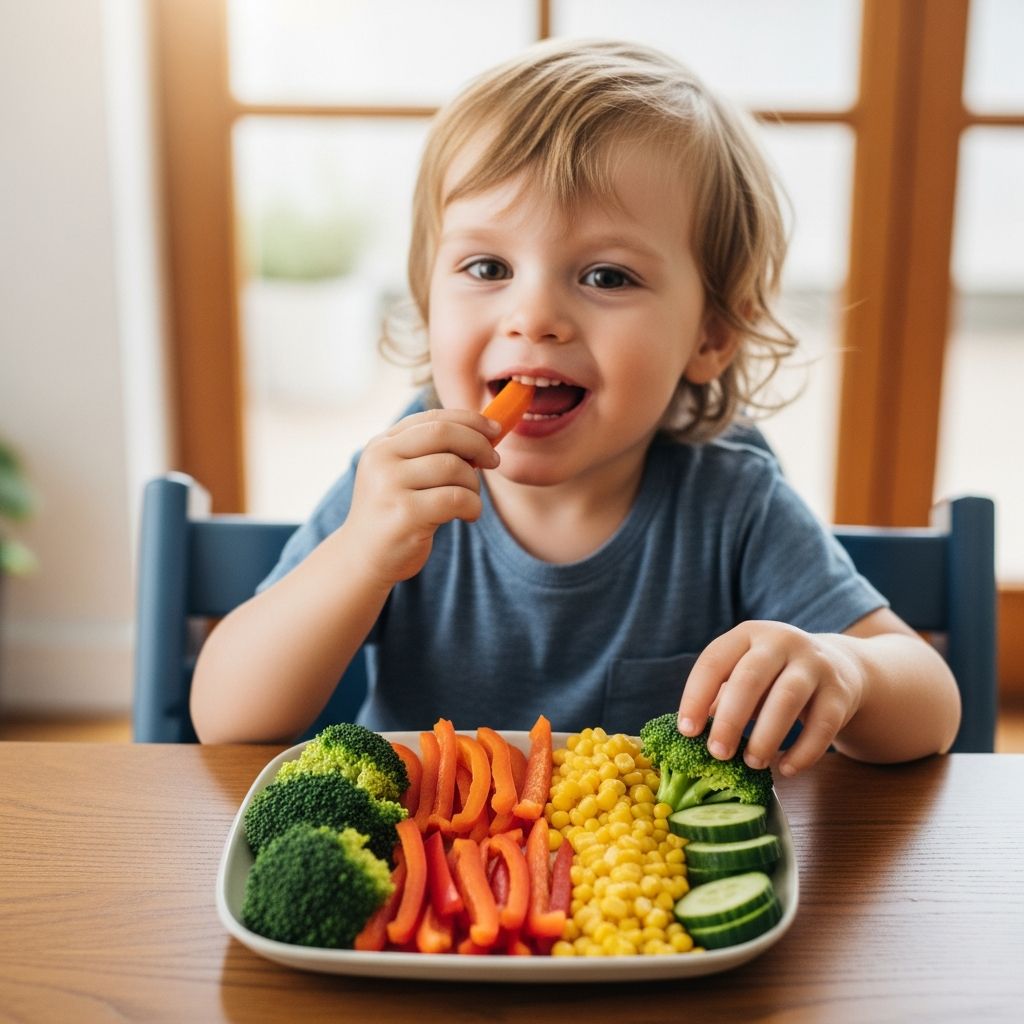
- Fun presentations: Arrange carrot sticks as ‘trees’ or make veggie faces on plates.
- Dips and pairings: Hummus, yogurt ranch, or cheese sauce make raw strips exciting for preschoolers.
Recipes like veggie-loaded muffins or smoothies hide nutrition initially, transitioning to visible forms for familiarity.
Snack Ideas with Built-In Safety
Snacks bridge meals, offering veggie practice without pressure.
- Chilled cucumber wheels (peeled, quartered).
- Roasted chickpea ‘popcorn’ for 3+.
- Apple slices with thin avocado spread.
- Frozen edamame pods (older kids spit shells).
Stock prepped containers for grab-and-go, limiting junk alternatives.
Overcoming Picky Eating Challenges
Persistence pays: Offer varieties repeatedly without forcing. Model enjoyment at family tables—kids mimic parents. Praise efforts, not just consumption, to avoid stress.
Track progress: A ‘veggie adventure chart’ rewards exploration with stickers. If concerns persist, consult pediatricians for tailored advice.
Frequently Asked Questions
What if my child gags on vegetables?
Gagging is normal as kids learn; it’s different from choking (no sound, clutching throat). Offer smaller pieces and softer textures.
Can I give raw veggies to toddlers?
Limited to soft ones like ripe avocado; cook most for safety under 4 years.
How do I store cut veggies safely?
Refrigerate in airtight containers up to 3-4 days; refresh in water for crispness.
Are frozen veggies safe?
Yes, steam or boil; avoid as standalone snacks for choking risks in young ones.
What about allergies?
Introduce one at a time; watch for reactions, especially with family history.
Sample Weekly Veggie Meal Plan
| Day | Lunch Veggie | Dinner Veggie | Snack |
|---|---|---|---|
| Monday | Mashed peas | Roasted carrots | Cucumber sticks w/ yogurt dip |
| Tuesday | Broccoli puree | Zucchini fries | Tomato quarters |
| Wednesday | Sweet potato mash | Green bean strips | Bell pepper strips |
| Thursday | Cauliflower rice | Spinach in quesadilla | Carrot matchsticks |
| Friday | Butternut squash | Brussels sprouts roasted | Snap peas cooked |
| Weekend | Variety plate | Garden salad soft | Fun veggie faces |
This plan varies textures and colors, promoting broad nutrient intake safely.
References
- Top Tips for Getting Your Child to Eat Vegetables — Oklahoma State University Extension. 2023. https://extension.okstate.edu/fact-sheets/top-tips-for-getting-your-child-to-eat-vegetables.html
- How to Get Kids to Eat Vegetables — Children’s Health. 2024. https://www.childrens.com/health-wellness/how-to-get-kids-to-eat-vegetables
- Vegetables: Encouraging Kids to Eat Vegies — Raising Children Network (Australian Government-funded). 2025-01-10. https://raisingchildren.net.au/toddlers/nutrition-fitness/healthy-eating-habits/vegetables
- Preventing Choking in Young Children — Centers for Disease Control and Prevention (CDC). 2024-06-15. https://www.cdc.gov/choking-prevention/index.html
- Safe Preparation of Fruits and Vegetables for Children — American Academy of Pediatrics. 2023-11-20. https://publications.aap.org/pediatrics/article/152/5/e2023063796/193000
- Child Food Choking Prevention — World Health Organization (WHO). 2024. https://www.who.int/news-room/fact-sheets/detail/food-safety