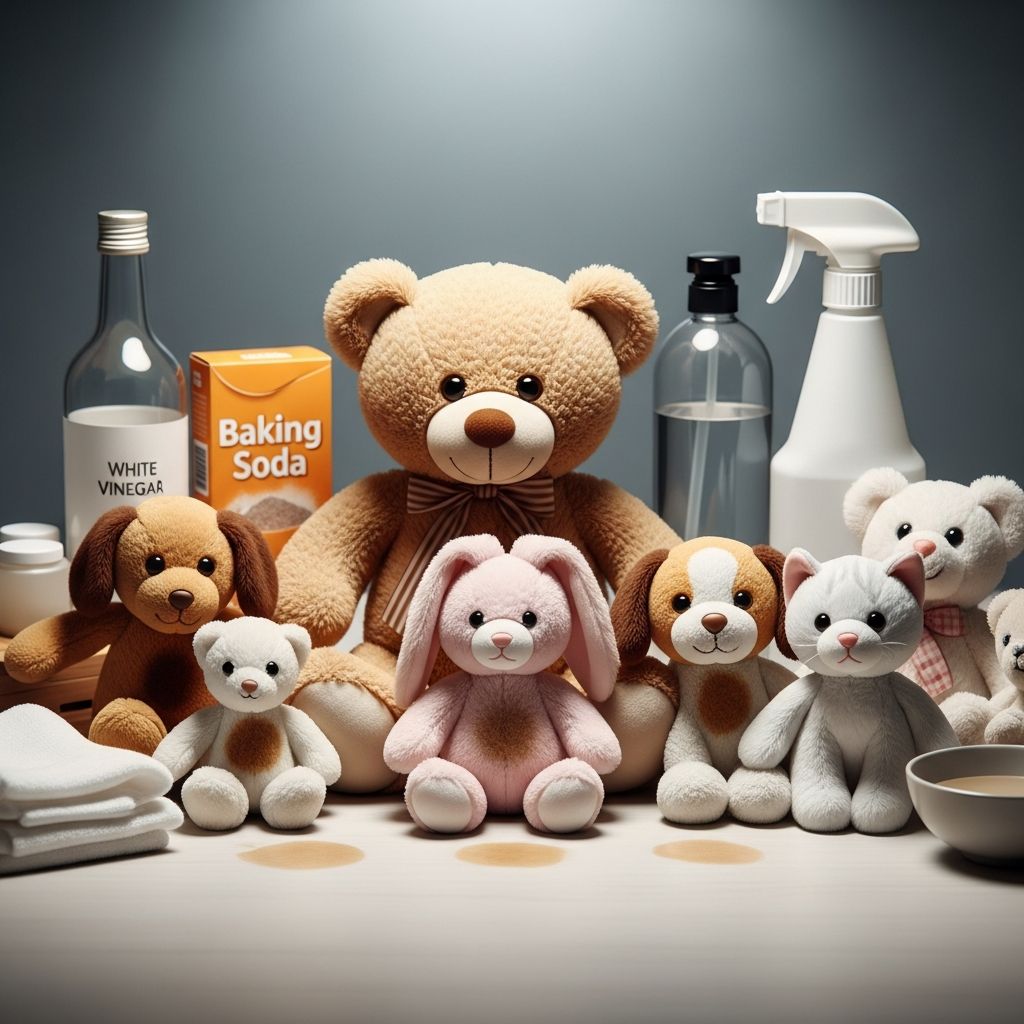
When a favorite stuffed animal gets peed on, it can feel like a small emergency: your child is upset, the toy smells terrible, and you are worried about damaging something that carries real emotional value. The good news is that, with a bit of care, most plush toys can be fully cleaned and deodorized while still looking and feeling like themselves.
This guide walks through practical, gentle methods to remove urine smell from stuffed animals, whether the accident just happened or you are dealing with a lingering odor from weeks ago. You will learn what to do first, how to choose between machine washing and hand washing, and how to avoid common mistakes that can permanently damage a beloved toy.
Understanding Urine Odor in Plush Toys
Urine odor is stubborn because it seeps deep into soft materials and dries into crystals that continue to smell long after the fabric feels dry to the touch. Stuffed animals are often thick, layered, and densely filled, so the odor rarely stays just on the surface.
To remove the smell successfully, cleaning efforts need to do three things:
- Neutralize the odor-causing compounds, not just cover them with fragrance.
- Reach into the stuffing and seams where liquid tends to collect.
- Allow the toy to dry completely so new smells (like mildew) do not develop.
First Steps: What to Do Immediately After an Accident
Acting quickly makes a big difference. If the urine is still wet, your goal is to remove as much as possible before it soaks deeper into the toy.
Immediate damage control
- Blot, do not rub: Use clean, dry towels or paper towels to gently press on the damp areas. Rubbing pushes urine further in and can distort fur or fabric.
- Work from the outside in: Press around the edges of the wet spot first, moving toward the center to keep the liquid from spreading.
- Remove accessories: If the toy has removable clothes, plastic pieces, or a detachable outfit, take those off and set them aside for separate cleaning.
Quick odor-control pre-treatment
Before doing a full wash, a simple pre-treatment can start breaking down odors and reduce staining.
- Mix a light solution of cool water and a small amount of gentle detergent in a bowl.
- Dampen (do not soak) a clean cloth in the solution and dab the affected zones.
- Blot again with a dry cloth to pull out loosened urine and extra moisture.
Check the Toy’s Construction Before Washing
Not every stuffed animal should go straight into the washing machine. Before choosing a cleaning method, take a moment to examine how the toy is made.
Questions to ask
- Is there a care tag with washing instructions?
- Does the toy contain electronics, sound boxes, lights, or batteries?
- Are there delicate materials like glued-on eyes, sequins, or metallic fabric?
- Is this toy extremely old, fragile, or collectible?
For toys with electronics or special materials, focus on spot cleaning and surface odor removal instead of full immersion in water. For most modern plush toys without electronic parts, gentle washing—by hand or machine—is usually safe.
Machine Washing: When and How to Use the Washer Safely
If the toy is sturdy and clearly labeled machine washable, the washing machine can save time and energy. However, a few precautions will protect both the toy and your washer.
Machine-wash checklist
- Place the toy in a zippered pillowcase or a mesh laundry bag to reduce wear and protect small parts.
- Use a gentle, fragrance-free detergent that rinses out cleanly.
- Select cold water and a delicate or hand-wash cycle.
- Choose a low or medium spin speed to avoid distorting stuffing.
Boosting odor removal in the wash
For strong urine smells, enhancing the wash water can make a big difference.
- Add a small amount of baking soda to the drum to help absorb and neutralize odors.
- Use an extra rinse cycle if your machine offers it, ensuring no detergent or odor remains trapped inside the stuffing.
- Avoid heavy fabric softeners, which can leave residues and trap smells over time.
Hand Washing: Gentle Deep-Cleaning for Delicate Toys
Hand washing gives you more control over how wet the toy becomes and how much pressure you apply. This is ideal for toys that are loved, worn, or lightly fragile but still able to handle some water.
Step-by-step hand-wash method
- Prepare a basin: Fill a clean sink or tub with cool or lukewarm water and a small amount of mild detergent.
- Submerge carefully: Lower the toy into the water and gently squeeze it to help the soapy water move into the stuffing.
- Target the problem spots: Pay special attention to the areas that were wet with urine, compressing and releasing them so fresh soapy water circulates through.
- Rinse thoroughly: Drain the water, refill with clean water, and continue gently squeezing until no more suds appear when you press the toy.
- Press out excess water: Support the toy with two hands and press—not twist or wring—to remove as much water as possible.
If the water still smells like urine after rinsing, repeat the wash and rinse process. It is better to do two gentle cycles than one aggressive one that may distort the shape.
Safe Odor-Neutralizing Options
Sometimes, basic washing is not enough to erase a strong urine smell. In that case, pairing washing with odor-neutralizing methods can help restore the toy completely.
Common approaches at a glance
| Method | Best For | Key Benefits | Things to Watch Out For |
|---|---|---|---|
| Baking soda soak or dusting | General odor reduction on washable and non-washable toys | Gentle, inexpensive, and safe for most fabrics | Needs thorough removal; leftover powder can irritate sensitive skin |
| Enzyme-based cleaner (for fabrics) | Persistent urine smells and older stains | Targets organic residues that cause odor | Patch test first; follow label directions carefully |
| Sunlight and fresh air | Final deodorizing and drying | Helps disperse smells and speeds drying | Direct sun can fade colors on some fabrics |
| Odor-absorbing sachets in storage | Prevention and long-term freshness | Helps keep stored toys from developing new odors | Do not use heavily perfumed products around sensitive children |
Using baking soda on plush toys
- For washable toys, add a small amount of baking soda to wash water or create a light paste with water and dab onto problem areas before rinsing thoroughly.
- For toys that should not be soaked, place them in a large bag with a few spoonfuls of baking soda, gently shake, leave for a while, then brush or vacuum away the powder.
Drying Stuffed Animals Without Causing Damage
Even if a stuffed animal smells clean, it can quickly develop a musty odor or even mold if it does not dry completely. Drying is just as important as washing, especially for thick or tightly packed toys.
Air-drying basics
- Lay the toy on a clean towel and reshape it gently, smoothing fur or fabric in its natural direction.
- Roll it in a dry towel to remove more moisture, pressing gently as you go.
- Place it in a warm, well-ventilated spot out of direct, intense sunlight, and rotate occasionally so all sides dry.
Using a dryer with caution
Some stuffed animals can tolerate a low-heat or no-heat dryer setting, but this should be done carefully.
- Keep the toy in a pillowcase or mesh bag to protect delicate parts.
- Use low or no heat and short cycles, checking regularly for overheating, shrinking, or damage.
- Add a few clean, dry towels to help absorb moisture and to cushion the toy as it tumbles.
Special Situations: Old Odors and Non-Washable Toys
Sometimes the toy that smells has already been dried and put back into rotation, or it cannot be immersed in water at all. In those cases, a more targeted, gradual approach is needed.
Dealing with old, set-in urine smells
- Plan on repeating the cleaning cycle more than once; old odors are often layered.
- Alternate between a thorough wash and a drying period in fresh air before evaluating whether the smell is gone.
- For very persistent odors, consider using a fabric-safe, enzyme-based odor remover according to the manufacturer’s instructions.
Cleaning toys that cannot be soaked
For toys with electronics, special fillings, or fragile construction, keep moisture to the surface only.
- Use slightly damp cloths (never dripping wet) with mild soap solution to gently clean outer fabric.
- Follow with a cloth dampened in plain water to remove any soapy residue.
- Allow plenty of time for air drying and use odor-absorbing methods like baking soda in a bag or odor-neutralizing sachets in the storage area.
Health and Safety Tips for Kids and Pets
Since stuffed animals spend so much time near faces, mouths, and hands, prioritize safety when choosing cleaners or odor neutralizers. Harsh chemicals may remove odor but create other problems.
- Choose products and detergents labeled gentle or suitable for baby clothes whenever possible.
- Rinse thoroughly so no cleaner remains trapped in the stuffing or along seams.
- Check the toy for loose parts, broken stitching, or exposed stuffing after washing and drying, and repair before returning it to a child.
Preventing Future Odors and Accidents
Once the current crisis is over, a few simple habits can reduce the chances of dealing with urine-soaked stuffed animals again, or at least make cleanup easier next time.
Simple prevention strategies
- Rotate sleep buddies so the same toy is not constantly in the line of fire during potty training or nighttime accidents.
- Encourage kids to keep favorite plush toys off training potties and away from litter boxes, puppy pads, or crates.
- Keep a spare “backup” stuffed friend if your child depends heavily on one specific toy, so you can clean one while the other is in use.
Frequently Asked Questions
1. Is it safe to put all stuffed animals in the washing machine?
No. Toys with electronics, glued-on decorations, or very fragile seams should not be fully machine washed. Check the care tag and examine the toy first; if there is any doubt, hand washing or spot cleaning is the safer choice.
2. The toy still smells after washing once. What should I do?
If the odor persists, it usually means some residue is still trapped inside the stuffing. Try a second wash with an extra rinse, pair it with a gentle odor-neutralizing method, and make sure the toy dries completely before judging the result.
3. Can fragrance sprays or perfumes fix the problem?
Fragrance sprays may temporarily mask odors but do not remove the compounds that cause them. Layering perfume over urine often results in a more unpleasant combined smell and may irritate sensitive skin or noses.
4. What if the toy has sentimental or monetary value?
For rare, antique, or highly sentimental toys, it may be worth consulting a professional cleaner or textile conservator. They can recommend the gentlest possible methods or handle the cleaning themselves to reduce the risk of damage.
5. How long should I expect drying to take?
Drying time depends on the size and thickness of the stuffed animal, as well as the temperature and airflow in your home. Plan for at least several hours, and sometimes a full day or more, before the toy is thoroughly dry all the way through.
6. Is it okay to use disinfecting wipes on stuffed animals?
Disinfecting wipes are usually designed for hard surfaces, not fabrics that children cuddle or chew on. If you use them, follow up by gently wiping with a cloth dampened in plain water and let the toy dry completely before returning it to a child.
With patience, gentle products, and the right techniques, even the most beloved—and occasionally accident-prone—stuffed animals can be restored to fresh, cuddly glory. A little care now helps preserve the memories attached to those soft companions for many years to come.