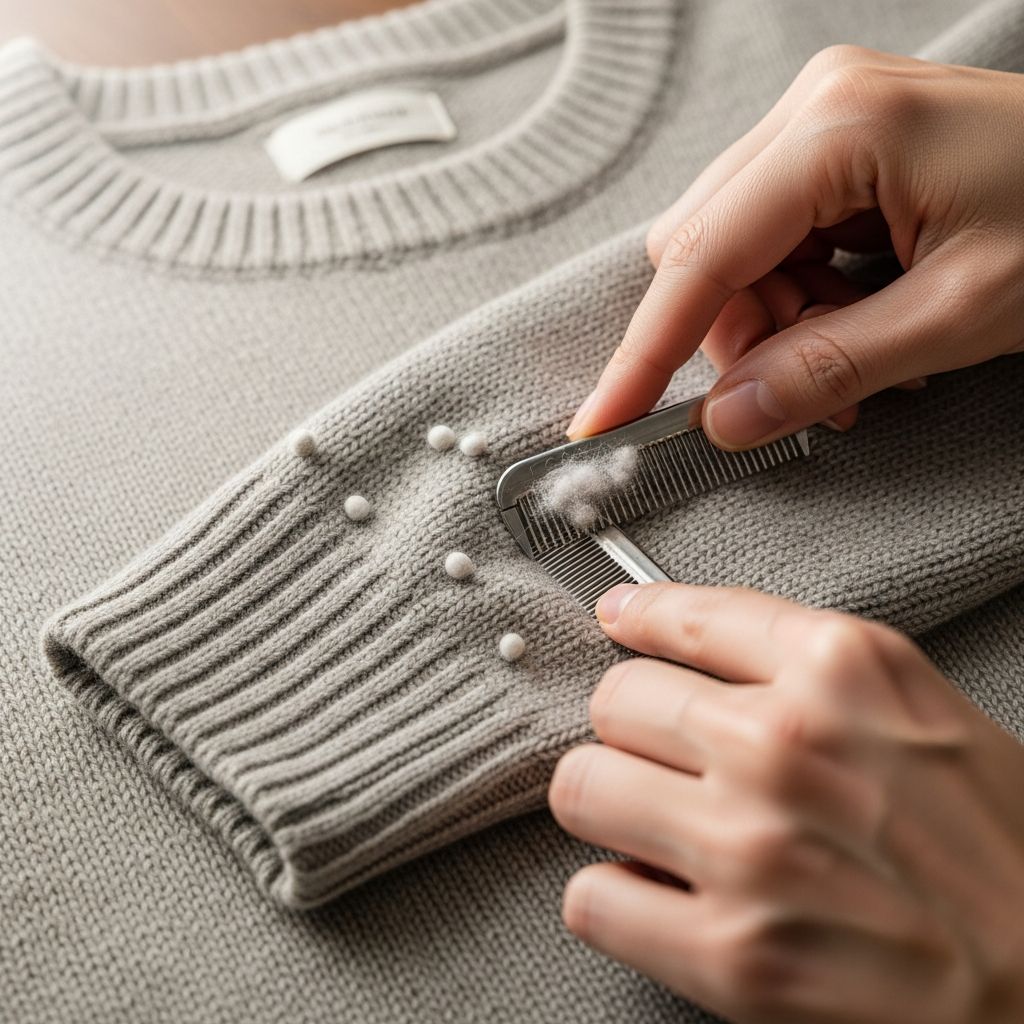
Fabric pilling is a common issue that affects knitwear, causing small balls of fuzz to form on the surface and diminish the appearance of your favorite sweaters. This guide explores what causes pilling, shares multiple removal techniques backed by reliable methods, and offers prevention strategies to maintain your wardrobe’s quality over time.
Understanding Fabric Pilling: Causes and Common Fabrics
Pilling occurs when short fibers on the surface of fabrics loosen, tangle, and form tiny balls due to friction from wear, washing, or storage. It commonly appears on areas like armpits, elbows, and hems where fabrics rub together repeatedly.
Wool, cashmere, cotton, and synthetic blends like polyester are particularly susceptible because their fibers break down under stress. Natural fibers such as merino wool pill more visibly due to their soft texture, while treated ‘superwash’ wools become slippery, exacerbating the issue. Fleece and knitted garments are also prone, as loose loops in the knit structure allow pills to form easily.
- Abrasion from daily use: Rubbing against bags, chairs, or skin accelerates fiber breakdown.
- Improper washing: Agitation in machines causes fibers to snag and clump.
- Fiber quality: Cheaper yarns with shorter staples pill faster than high-quality, long-fiber options.
Recognizing these triggers helps in both treatment and avoidance, ensuring your knits stay smooth and vibrant.
Prevention Strategies: Keep Pills at Bay from the Start
Preventing pilling is easier than removing it. Start with proper care routines to minimize fiber stress.
Optimal Washing Techniques
Always check the care label first, as it dictates safe methods. Turn sweaters inside out to protect the outer surface from friction. Opt for gentle cycles or hand washing with dye-free, clean-rinsing detergents to avoid residue buildup.
Avoid hot water, which weakens fibers, and skip fabric softeners that coat yarns, making them prone to clumping. After washing, roll the damp sweater in a towel to extract water without wringing, then reshape and lay flat to dry. This prevents stretching and uneven drying that leads to weak spots.
Storage and Wear Tips
- Lay sweaters flat in breathable cotton bags; never hang to avoid distortion.
- Alternate wears to reduce friction on high-wear zones.
- Brush lightly after each use with a soft clothes brush to remove loose fibers before they pill.
Invest in high-quality knits from reputable sources, as longer fibers resist pilling better.
Manual Removal Methods: Simple, No-Cost Solutions
For light pilling, household items work effectively without damaging fabric.
| Method | Best For | Pros | Cons |
|---|---|---|---|
| Lint Roller | Loose surface pills on cashmere or wool | Quick, gentle, no residue | Ineffective on embedded pills |
| Fine-Tooth Comb or Pill Comb | Soft knits like merino | Precise, low risk of snags | Time-consuming for heavy pilling |
| Tweezers or Small Scissors | Isolated pills | Targeted removal | Labor-intensive, risk of cuts if not careful |
To use a lint roller, roll gently over the fabric in one direction, replacing sheets as needed. For combing, work in small sections with light pressure, pulling pills away and brushing off residue. With tweezers, pluck pills from the base, avoiding pulling threads. These methods suit delicate items and require patience.
Specialized Tools for Efficient De-Pilling
Dedicated tools handle stubborn pills faster and safer than manual options.
Sweater Stones and Pumice
Pumice-like sweater stones use micropores to lift pills without abrading the fabric. Rub gently in circular motions, then shake off debris. Effective on wool and cashmere, they renew texture without pulling threads.
Electric Fabric Shavers
Battery-operated shavers feature blades that trim pills into a collection chamber. They excel on heavy pilling, removing lint, pet hair, and fuzz from sweaters, blankets, and upholstery. Tests show they outperform razors and stones in speed and safety, scoring high for efficiency.
Choose models under $20 with adjustable guards for delicates. Empty the chamber frequently and use on a flat surface for best results.
Other Options: Razors and Brushes
A disposable razor or safety razor glides over fabric to shave pills, but requires steady hands to avoid nicks. Clothes brushes dislodge loose fibers post-wear, preventing buildup. Avoid sandpaper or nail files, as they damage yarns.
Step-by-Step De-Pilling Process
Follow this routine for any sweater:
- Prepare: Lay flat on a towel outdoors or over newspaper.
- Assess: Start with gentlest method (lint roller or comb) for light pills; escalate to shaver for dense areas.
- Work Sectionally: Divide into quadrants, using short strokes. Maintain light pressure.
- Clean Up: Vacuum residue or shake outdoors.
- Finish: Brush smooth and air dry fully before storing.
For best outcomes, de-pill routinely after 2-3 wears.
Advanced Care for Luxury Fibers
Cashmere and fine wool demand extra caution. Hand-pluck minor pills and use fabric combs weekly. Electric shavers with fine blades preserve the luxurious hand-feel. For superwash wools, comb after every wear to combat slipperiness. Professional dry cleaning restores deeply pilled items but check for chemical sensitivities.
Tool Comparison: Which One Wins?
Based on tests across nine methods, electric sweater shavers top the list for speed, safety, and results on wool knits, earning perfect scores without fabric damage. Lint rollers and combs suit minimal upkeep, while razors risk cuts on uneven surfaces.
| Tool | Effectiveness (1-10) | Safety (1-10) | Cost |
|---|---|---|---|
| Electric Shaver | 10 | 10 | Low |
| Sweater Stone | 8 | 9 | Low |
| Comb | 7 | 9 | Free/Low |
| Razor | 6 | 5 | Free |
Frequently Asked Questions (FAQs)
Can I machine wash pilled sweaters?
Yes, but de-pill first, turn inside out, and use a delicate cycle with gentle detergent. Air dry flat.
Is pilling a sign of poor quality?
Not always; even premium knits pill from friction. Longer fibers reduce it.
How often should I de-pill?
After 2-3 wears or when visible, to prevent spreading.
Do fabric shavers work on all materials?
Best on knits; test on synthetics and avoid silks.
Can I prevent pilling entirely?
No, but proper care minimizes it significantly.
Long-Term Wardrobe Revival Tips
Integrate de-pilling into your routine: inspect monthly, rotate knits, and mend loose threads promptly. This extends garment life, saving money and reducing waste. For families, teach kids gentle handling to protect shared favorites.
Experiment with tools to find your preference, but prioritize safety. Revived sweaters not only look new but feel softer after pill removal, as surface clutter is cleared.
References
- Find out How to Wash and Depill a Sweater — Tide. 2023. https://tide.com/en-us/how-to-wash-clothes/washing-different-fabrics-and-colors/how-to-depill-a-sweater
- How to Remove Pilling from Clothes — Patagonia. 2023. https://www.patagonia.com/stories/guides/care-repair/how-to-remove-pilling-from-clothes/story-167962.html
- What is pilling? — Woolmark. 2023. https://www.woolmark.com/care/pilling/
- The ONLY Way I’d Remove Pilling From My Sweaters — Gentleman’s Gazette (YouTube). 2023. https://www.youtube.com/watch?v=7Q71bAqM0rg
- Remove pills, lint, and fuzz from knitted sweaters — Yarn Barn of Kansas (YouTube). 2023. https://www.youtube.com/watch?v=X_tmsKJLNj8