Finding a tick on your child can be alarming, but staying calm and acting quickly makes a big difference. The sooner a tick is removed, the lower the chance of it spreading disease. This guide walks you through safe, simple steps to remove a tick, explains what to watch for afterward, and helps you decide when to call your child’s doctor.
Understanding Ticks and Why Quick Removal Matters
Ticks are tiny, spider-like parasites that feed on blood from humans and animals. They often live in grassy, wooded, or brushy areas and can attach to skin without causing pain, which is why they are easy to miss at first. Removing a tick properly and promptly lowers the risk of infections like Lyme disease and other tick-borne illnesses that can sometimes follow a bite.
- Most tick bites do not lead to serious illness, especially when the tick is removed early.
- The chances of disease transmission increase the longer a tick stays attached and feeding.
- Safe removal focuses on detaching the tick completely without squeezing or crushing its body.
Preparing to Remove a Tick from Your Child
Before touching the tick, gather a few basic supplies and help your child feel as relaxed as possible. Taking a moment to get ready can make the process smoother, faster, and less frightening for both of you.
Essential Supplies You Will Need
- Fine-tipped tweezers (or a tick-removal tool designed for people)
- Soap and water, or alcohol-based hand sanitizer
- Rubbing alcohol or antiseptic wipes
- Small sealable plastic bag or clean container
- Gloves (optional, but helpful if available)
- A bright light and, if possible, a magnifying glass
Explain to your child that you are going to “pinch the bug” and take it off gently. Let them hold a stuffed toy, watch a short video, or focus on slow breathing to stay calm during the process.
Step-by-Step Tick Removal: Safe Technique with Tweezers
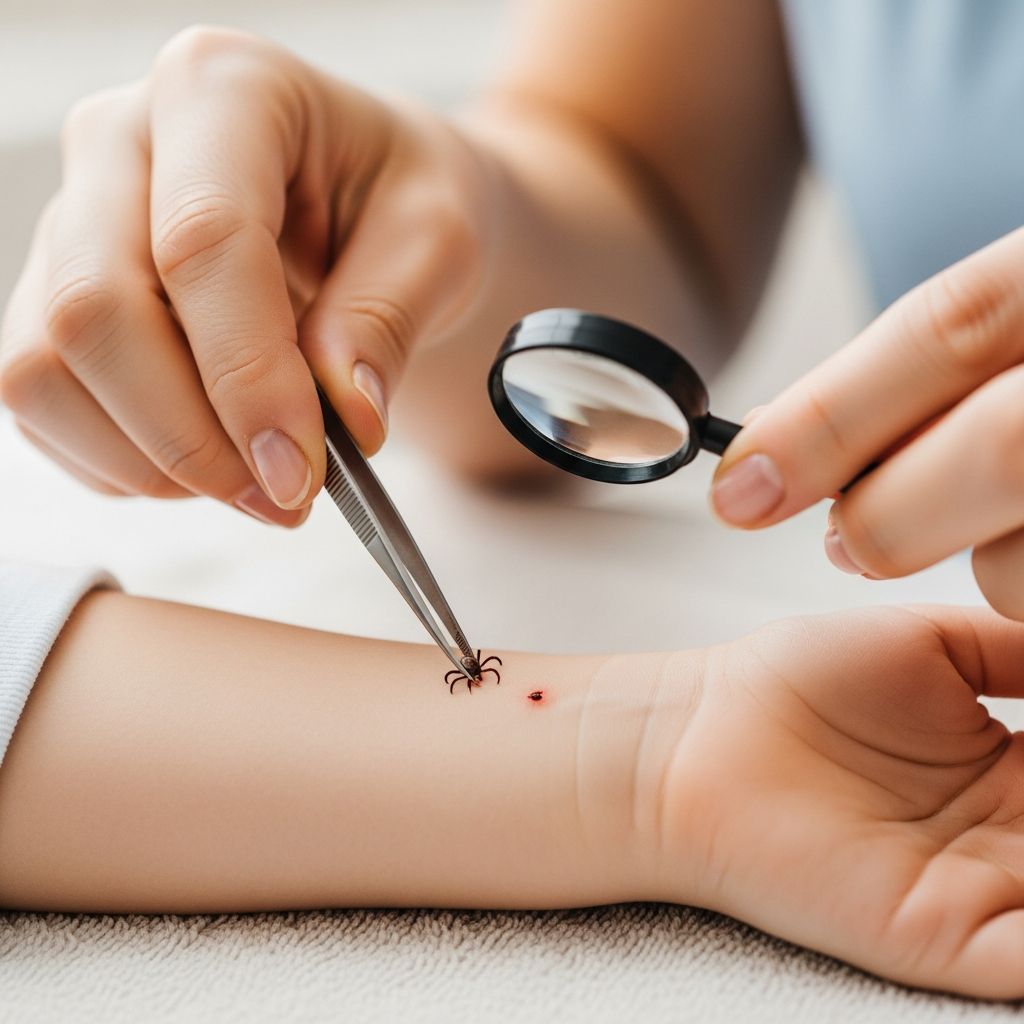
The most recommended way to remove a tick at home is with fine-tipped tweezers. The goal is to grab the tick as close to the skin as possible and pull it out in one steady motion.
Step 1: Clean Your Hands and the Area
- Wash your hands with soap and water or use hand sanitizer.
- Gently clean the skin around the tick with soap and water or an alcohol wipe.
- Position the child comfortably so you have a clear view of the tick.
Step 2: Grasp the Tick Near the Skin
- Use fine-tipped tweezers to grab the tick as close to the skin’s surface as possible.
- Aim for the head or mouthparts, not the swollen body, to avoid squeezing the tick.
- Keep the tweezers parallel to the skin, not angled, so you do not pinch the skin.
Step 3: Pull Straight Out with Steady Pressure
- Pull upward slowly and firmly without twisting or jerking.
- Do not rock the tick side to side; steady traction helps the mouthparts release.
- If the tick does not come out right away, maintain gentle pressure and wait a few seconds.
Sometimes, a small part of the tick’s mouth may remain in the skin. If it is easy to grasp with tweezers, you can gently remove that piece as well. If it is too deeply embedded or difficult to see, leave it alone; the skin will usually push it out over time like a tiny splinter.
Step 4: Clean and Disinfect the Bite
- After the tick is out, wash the bite area with soap and water.
- Apply rubbing alcohol or an antiseptic wipe to the area to reduce the chance of infection.
- Wash your hands again once you are finished.
Step 5: Save or Dispose of the Tick Properly
It can be helpful to save the tick in case your child later develops symptoms and the doctor wants to see it. If you prefer to throw it away, do so safely.
- To save the tick, place it in a small sealable plastic bag or clean container.
- You may add a few drops of rubbing alcohol to preserve it.
- Label the bag or container with the date and the body area where the tick was found.
- If you choose to dispose of it, seal it in tape or a bag and throw it away, or flush it down the toilet.
Important Don’ts: Unsafe Tick Removal Methods
Some popular home methods for tick removal are not safe and can actually increase the risk of disease transmission. The key is to avoid anything that irritates the tick or makes it release more saliva or bodily fluids into the skin.
- Do not burn the tick with matches, lighters, or heated objects.
- Do not smother the tick with petroleum jelly, nail polish, oils, or chemical sprays.
- Do not squeeze or crush the tick’s body while it is still attached.
- Do not cut around the tick with a blade or attempt to dig it out.
- Do not delay removal while you search for special tools or home remedies.
These approaches may cause the tick to inject more fluid into the bite or damage your child’s skin without actually removing the tick completely.
Tick Removal at a Glance
| Action | Safe or Unsafe? | Why |
|---|---|---|
| Use fine-tipped tweezers to pull straight up | Safe | Removes the tick quickly and completely with minimal squeezing. |
| Twist or jerk the tick | Unsafe | Can break off mouthparts and increase irritation. |
| Apply petroleum jelly, nail polish, or oil | Unsafe | May stress the tick and cause more saliva to enter the bite. |
| Burn the tick with a hot object | Unsafe | Risks burns to your child and can make the tick vomit into the wound. |
| Clean the bite with soap and water, then antiseptic | Safe | Helps prevent local skin infections after removal. |
Aftercare: What to Watch for in the Days and Weeks After a Tick Bite
Most children who have a tick removed never develop serious problems. Still, it is important to monitor the bite site and your child’s overall health for a few weeks. Some tick-borne infections can take days or even weeks to show symptoms.
Normal Reactions at the Bite Site
- A small red bump where the tick was attached.
- Mild tenderness or itchiness that fades within a few days.
- A tiny scab as the skin heals.
These changes often look similar to a mosquito bite and usually are not a sign of infection.
Warning Signs That Need Medical Attention
Call your child’s healthcare provider if you notice any of the following symptoms within several days to weeks after a tick bite:
- A large expanding rash, sometimes with a clear center, at or near the bite.
- Fever, chills, or flu-like symptoms such as fatigue, headache, or body aches.
- Joint pain, especially in the knees or other large joints.
- Neck stiffness, unusual irritability, or extreme tiredness.
- New weakness, trouble walking, or changes in facial movement.
- Signs of infection at the bite, such as increasing redness, warmth, swelling, or pus.
Make a note of when you removed the tick and bring the saved tick, if you kept it, to the appointment. This information can help the doctor decide which tests or treatments, if any, are needed.
When to Call the Doctor Right Away
Sometimes, you should seek medical care promptly, even before any symptoms appear. Contact your child’s healthcare provider or an urgent care clinic if:
- You are unable to remove the tick completely, or the head is deeply embedded.
- The tick looks very large and engorged (swollen with blood).
- You believe the tick has been attached for many hours or possibly longer than a day.
- Your child has a weakened immune system or other serious health conditions.
- You live in or visited an area known for a high rate of tick-borne diseases.
The doctor may recommend observation only, blood tests later on, or in some situations a preventive dose of medicine. This decision depends on your child’s age, the type of tick, how long it was attached, and local disease patterns.
Preventing Tick Bites: Practical Steps for Families
Preventing tick bites is easier than dealing with them after they happen. A few simple habits before and after outdoor activities can greatly reduce your child’s chances of being bitten.
Before Going Outdoors
- Dress children in long sleeves, long pants, and socks when playing in brushy or wooded areas.
- Tuck pants into socks and shirts into pants to reduce gaps where ticks can reach the skin.
- Choose light-colored clothing so ticks are easier to spot.
- Use an appropriate insect repellent on exposed skin and clothing, following age and safety guidelines.
After Outdoor Play or Hikes
- Do a full-body tick check on your child, paying attention to warm, hidden areas.
- Shower or bathe your child soon after coming inside to help wash off crawling ticks.
- Put outdoor clothing in a hot dryer for several minutes to help kill any ticks on fabric.
- Check pets, backpacks, and outdoor gear, as ticks can hitch a ride indoors.
Common Hiding Places for Ticks on a Child’s Body
Ticks prefer warm, moist, and hidden locations. When doing a tick check, look carefully in all of the following areas:
- Scalp, hairline, and behind the ears
- Under the arms and around the bra line in older children
- Around the waistline and belly button
- Behind the knees and between the legs
- Between toes and along sock lines
Use a bright light and part the hair with your fingers or a comb to look closely at the scalp. Young children may need checks performed while they sit in your lap or during bath time.
Frequently Asked Questions About Tick Removal in Children
1. What if the tick’s head stays in the skin?
If the tick’s mouthparts break off and remain in the skin, do not panic. Try to gently remove any visible piece with clean tweezers. If that is not possible or it seems very deep, leave it alone and watch the area. The skin typically pushes out tiny remnants as it heals. Call your child’s doctor if the area becomes more red, swollen, or painful over the next few days.
2. Should my child get antibiotics after every tick bite?
Not every tick bite requires antibiotics. Whether preventive medicine is recommended depends on several factors, such as the type of tick, how long it was attached, your child’s age, and the risk of disease in your area. Only a healthcare professional can make this decision, so call your child’s doctor for advice if you are concerned.
3. Can I use a tick remover tool instead of tweezers?
Yes, many commercially available tick-removal tools are designed to work in a similar way to tweezers by grasping the tick close to the skin and pulling it out. Follow the instructions that come with the tool, and use the same basic principles: avoid squeezing the body, avoid twisting, and pull steadily until the tick releases.
4. How soon after a tick bite would symptoms start if my child got sick?
The timing depends on the specific disease. Some infections may cause symptoms within a few days, while others take weeks. Because the timeline can vary, keep an eye on your child’s health for several weeks after the bite, and contact the doctor if you notice fever, rash, unusual tiredness, or other concerning signs.
5. Do all ticks carry Lyme disease?
No, not all ticks carry Lyme disease, and even in areas where Lyme disease exists, only certain species and a portion of them are infected. Risk also depends on how long the tick was feeding. However, because parents often cannot identify tick species confidently, it is still wise to remove any tick quickly and consult your child’s healthcare provider if worrying symptoms appear.
6. Is it safe to remove a tick from around my child’s eyes or genitals?
Ticks can attach in very sensitive areas, and removal there may be challenging. Do not use sharp objects or aggressive techniques on these areas. If you are uncomfortable or the tick is attached very close to the eye or in the genital region, seek medical care so a professional can remove it safely.
Helping Your Child Feel Less Afraid of Ticks
Children often take their emotional cues from adults. Staying calm, speaking gently, and explaining each step can help your child feel more in control. Focus on the idea that you are “helping their body by taking off the bug” and that most kids who get a tick bite stay healthy, especially when the tick is removed quickly.
- Offer reassurance that the process is quick and that you will stop if they need a break.
- Allow them to choose a small reward or calming activity afterward.
- Use the experience as a chance to teach safe outdoor habits, not to scare them away from nature.
With the right knowledge and a calm approach, parents can handle tick bites confidently. Knowing how to remove a tick safely, what warning signs to watch for, and when to seek medical advice helps protect your child’s health while still allowing them to enjoy time outdoors.