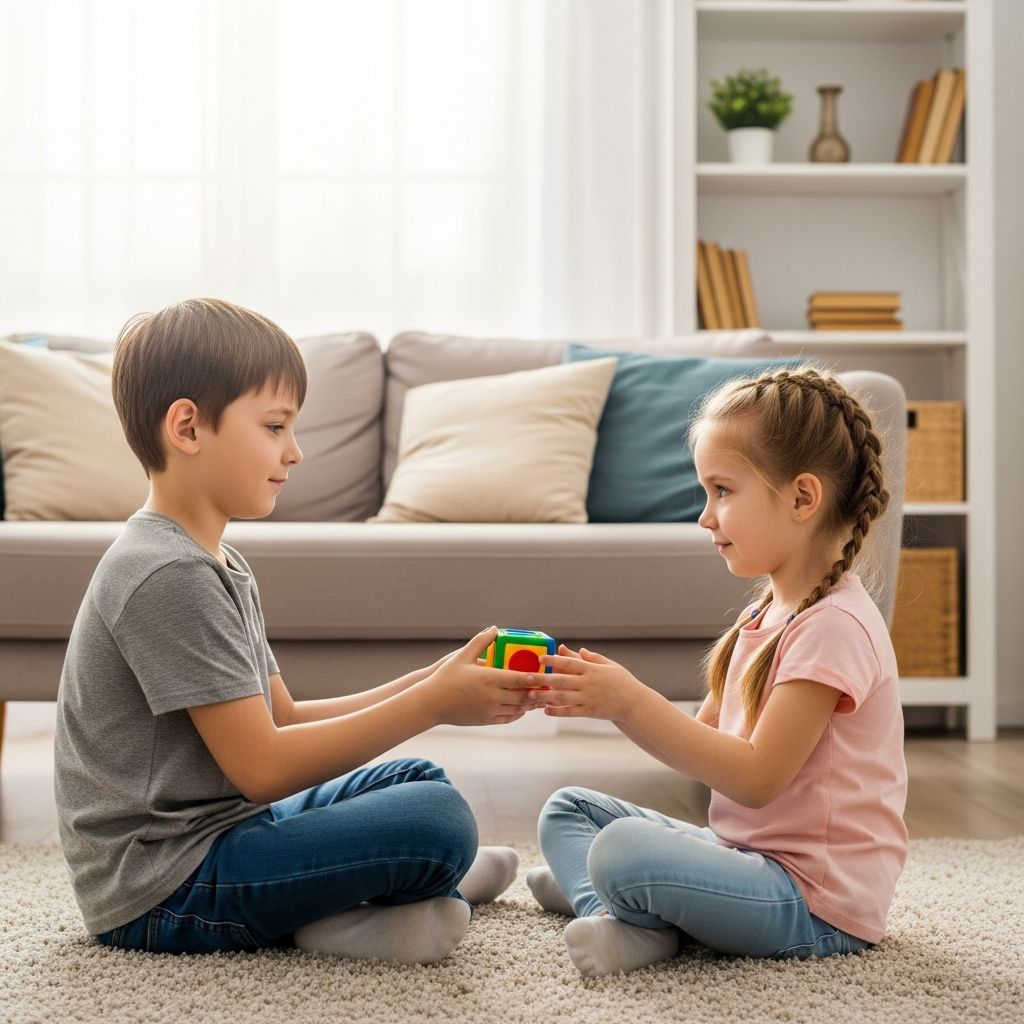
Creating a Foundation for Family Harmony
Sibling conflict is one of the most common challenges families face. Whether it manifests as constant bickering, territorial disputes over toys, or heated arguments about fairness, the tension between brothers and sisters can strain the entire household. Parents often find themselves acting as referees, mediating disputes, and wondering whether the conflict is normal childhood behavior or a sign of deeper issues. The reality is that while some level of disagreement is developmentally appropriate, proactive strategies can significantly reduce the frequency and intensity of sibling conflicts while teaching children valuable life skills.
Understanding the roots of sibling rivalry helps parents respond more effectively. Competition for parental attention, perceived unfairness, developmental differences, and unmet emotional needs all contribute to conflict between siblings. Rather than viewing these conflicts as problems to eliminate entirely, parents can reframe them as teaching opportunities that help children develop negotiation skills, emotional regulation, and empathy.
Building Individual Connections Through Dedicated Attention
One of the most effective interventions for reducing sibling rivalry is establishing regular one-on-one time with each child. This strategy addresses a fundamental driver of sibling conflict: the competition for parental attention. When children feel secure in their access to their parent’s time and focus, they experience less need to compete with siblings or engage in attention-seeking behaviors, including misbehavior and quarreling.
The concept of dedicated individual time doesn’t require elaborate outings or expensive activities. Research indicates that even brief, consistent periods of undivided attention—approximately ten to fifteen minutes daily—can substantially reduce sibling rivalry and improve overall family dynamics. During this time, the child should have the parent’s complete focus without interruptions from siblings, phones, or other distractions. This creates what parenting experts refer to as an emotional connection opportunity where children feel genuinely valued and heard.
The mechanics of this strategy are straightforward: when children’s attention baskets are filled through positive, intentional parenting, they have less motivation to engage in attention-seeking behaviors. Misbehavior and conflict often emerge when children feel emotionally neglected or perceive that their siblings are receiving preferential treatment. By proactively meeting each child’s need for connection, parents can prevent much of the conflict before it starts.
Implementation tips for one-on-one time:
- Schedule specific times that are predictable and non-negotiable for each child
- Allow the child to choose the activity within reasonable parameters
- Put away phones and eliminate distractions during this period
- Keep the focus on connection rather than accomplishment or productivity
- Use this time to listen and understand each child’s perspective and feelings
Establishing Clear Family Rules and Boundaries
Structure provides children with clarity about expectations and helps parents respond consistently to conflict. Family rules communicate core values and create a framework for acceptable behavior within the household. When rules are established thoughtfully and communicated clearly, they serve as preventative measures that reduce conflict by setting expectations in advance.
Effective family rules should address the most common sources of conflict in your specific household. Rather than creating an exhaustive list, focus on rules that reflect your family’s values and address behaviors you’re most concerned about. Rules might address physical aggression, verbal disrespect, property rights, toy sharing, screen time boundaries, or noise levels.
Key characteristics of effective family rules:
- Clear and specific rather than vague
- Age-appropriate and enforceable
- Communicated clearly to all children
- Consistently enforced with logical consequences
- Established with family input when possible
The process of creating rules together with children can itself reduce conflict by giving them a voice in family governance. When children participate in establishing expectations, they develop greater buy-in and understanding of the reasoning behind the rules. This is particularly effective with school-age children and adolescents who can engage in more sophisticated discussions about fairness and family values.
Mastering the Art of Guided Problem-Solving
Rather than immediately stopping conflicts or imposing parental judgments, parents can use sibling disputes as opportunities to teach conflict resolution skills. This approach, sometimes called mediation rather than refereeing, fundamentally shifts the child’s role from passive recipient of parental decisions to active participant in finding solutions.
When conflicts arise, the initial step is helping children calm down. Emotional escalation prevents rational thinking and productive problem-solving. Once children are calm, parents can guide them through a structured process: having each child explain their perspective, identifying the underlying needs or feelings, brainstorming potential solutions, and agreeing on a resolution. This process takes longer than parental decree but builds critical skills that serve children throughout life.
This approach teaches children that you believe they are capable of solving their own problems. Over time, children begin to apply these skills independently, approaching their siblings to work out disagreements without parental intervention. The skills developed through guided problem-solving—perspective-taking, creative thinking, compromise, and communication—are precisely those that research shows contribute to healthy adult relationships.
Steps for guided problem-solving:
- Help children calm down using breathing techniques or cool-off time
- Have each child describe their view of the situation without interruption
- Ask clarifying questions to ensure understanding of each perspective
- Help them identify the underlying needs or feelings driving the conflict
- Brainstorm potential solutions together without judgment
- Evaluate options and agree on a plan
- Follow up to see whether the solution worked
Recognizing and Valuing Individual Uniqueness
Comparison and labeling are among the most harmful parenting practices in the context of sibling relationships. When parents compare siblings—either favorably or unfavorably—they inadvertently intensify competition and rivalry. A child labeled as the “athletic one” or “smart one” feels pressure to maintain that identity and may resent a sibling for encroaching on their territory. Similarly, unfavorable comparisons damage self-esteem and breed resentment.
Effective parenting involves recognizing and celebrating each child’s unique strengths, interests, and accomplishments. This doesn’t mean treating children identically—in fact, equitable parenting often means treating children differently based on their individual needs and developmental stages. A five-year-old and a thirteen-year-old require different bedtimes, responsibilities, and privileges. Explaining this distinction to children helps them understand that differentiation isn’t unfair; it’s responsive to their actual needs.
When parents highlight what makes each child special and valuable—without comparing to siblings—children develop secure self-concepts that aren’t dependent on being better than or different from their siblings. They can appreciate their siblings’ strengths without feeling threatened. This creates space for genuine connection and cooperation.
Strategies for valuing individuality:
- Acknowledge each child’s specific interests and talents
- Spend time with each child engaging in their preferred activities
- Avoid generalizations about either child’s abilities or personality
- Praise effort and specific behaviors rather than traits
- Create opportunities for each child to shine in different domains
Teaching Emotional Awareness and Coping Skills
Many sibling conflicts escalate because children lack skills to manage strong emotions. When frustration, anger, or jealousy become overwhelming, children express these feelings through conflict with siblings. Teaching children to recognize, name, and regulate their emotions provides them with alternatives to fighting or aggressive behavior.
Emotional regulation skills include recognizing physical sensations associated with emotions, using breathing techniques, taking time away from the situation, and expressing feelings with words rather than actions. Children benefit from explicit instruction in these skills, practiced during calm moments rather than during the heat of conflict. Parents can model these skills by demonstrating how they manage their own frustration or anger.
Creating a designated calm-down space in the home provides children with a concrete tool for emotional regulation. This space might include stress balls, coloring materials, music, or soft seating—whatever helps individual children transition from an activated emotional state to a calmer one. The key is framing this space as a tool for self-management rather than as punishment.
When parents teach children that feeling angry or frustrated is acceptable, but hitting, screaming, or verbal cruelty are not, they help children develop sophisticated emotional lives. The message is that emotions are valid and important, but they must be expressed in respectful ways that don’t harm others.
Fostering Cooperation Over Competition
Family systems organized around competition inevitably produce rivalry and conflict. When parents inadvertently create competitive dynamics—comparing achievements, allocating rewards based on individual performance, or taking sides in disputes—they reinforce the zero-sum thinking that fuels sibling rivalry.
Deliberately creating opportunities for siblings to work together toward common goals shifts the dynamic from competition to cooperation. Joint family projects, collaborative problem-solving, team sports, or shared responsibility for household tasks create situations where children benefit from cooperation. When parents celebrate these collaborative successes and emphasize the value of teamwork, they reinforce cooperative values.
This approach doesn’t eliminate individual achievement or accomplishment, but it places it in a broader context that includes family interdependence. Children learn that their own success is connected to family wellbeing and that supporting their siblings ultimately benefits them as well.
Ideas for fostering cooperation:
- Assign shared family projects with roles for each child
- Create family traditions that require cooperation
- Establish shared responsibilities with natural consequences
- Play cooperative games rather than competitive ones
- Celebrate family achievements alongside individual accomplishments
Modeling Respectful Communication and Conflict Management
Children learn how to manage conflict by observing how the adults in their lives handle disagreement and frustration. When parents model calm, respectful communication—especially when addressing parenting disagreements with co-parents—they provide a template that children internalize and replicate. Conversely, when parents engage in yelling, disrespect, or escalation, children learn that these are acceptable conflict responses.
Parental modeling extends to how parents treat their children during conflict. When parents maintain calm, use respectful language, and focus on solving problems rather than assigning blame, they demonstrate the behaviors they want children to develop. This is particularly important in moments of high emotion when the parent’s composure is most tested.
Parents should also be intentional about the messages they communicate about sibling relationships. Statements like “your siblings will be your friends for life” or “your siblings have your back” reinforce positive relationship expectations. Conversely, frequently commenting that children “fight all the time” or “never get along” can become self-fulfilling prophecies that children unconsciously act out.
Frequently Asked Questions
Is it normal for siblings to fight frequently?
Some level of sibling conflict is developmentally normal, particularly during childhood and adolescence. However, the frequency, intensity, and nature of the conflict should be considered. Occasional disagreements are typical; constant aggression, verbal cruelty, or escalating cycles of retaliation may warrant intervention or professional consultation.
Should parents intervene in every sibling conflict?
No. Harmless bickering or minor disagreements are opportunities for children to develop conflict resolution skills independently. Parents should intervene when safety is at risk, when children are unable to resolve the situation, or when the conflict involves bullying or cruelty. The goal is gradually shifting responsibility for conflict resolution to children.
How can parents be fair without treating children identically?
Fairness means responding to each child’s actual needs rather than treating all children the same way. Explain to children that different ages have different privileges and responsibilities. For example, a teenager may have a later bedtime than a younger sibling because of developmental differences, not favoritism.
What should parents do about tattling?
Distinguish between safety concerns and tattling. If a sibling is doing something dangerous, children should report it. For minor infractions, parents can redirect by saying, “That sounds like something you two need to work out together.” This encourages independence while maintaining safety.
When should parents seek professional help for sibling conflict?
Consider professional support if conflict is consistently violent, involves bullying or exclusion patterns, significantly impacts family functioning, or persists despite parental intervention efforts. A family therapist can help identify underlying issues and teach additional skills.
How do age gaps affect sibling relationships?
Large age gaps can reduce some competition-based conflict but may create different challenges related to shared interests and communication. Structured one-on-one time with each child becomes particularly important in families with wide age spreads.
References
- How to Reduce Sibling Rivalry: 5 Tips for Fostering Harmony at Home — Positive Parenting Solutions. 2024. https://www.positiveparentingsolutions.com/reduce-sibling-rivalry/
- Coping with Sibling Rivalry — Center for Parenting Education. 2024. https://centerforparentingeducation.org/library-of-articles/sibling-rivalry/coping-sibling-rivalry/
- How to Manage Sibling Conflict: Practical Strategies for Parents and Caregivers — PracticeWise. 2024. https://welcome.practicewise.com/how-to-manage-sibling-conflict-practical-strategies-for-parents-and-caregivers/
- Dealing With Sibling Rivalry — Focus on the Family. 2024. https://www.focusonthefamily.com/family-qa/dealing-with-sibling-rivalry/
- Sibling Conflict — Positive Discipline Association. 2024. https://positivediscipline.org/sibling-conflict-article/
- 10 Tips To Prevent And Manage Sibling Fighting — YouTube. 2024. https://www.youtube.com/watch?v=-xXxOgnsF5I