Most brothers and sisters argue. A lot. For parents, the noise, tears, and doors slamming can feel endless. Yet research shows that when adults respond thoughtfully, sibling conflicts become powerful opportunities for children to learn empathy, problem-solving, and self-control, skills that last far beyond childhood.
This guide offers a practical, evidence-informed approach to easing daily battles and building a warmer, more cooperative relationship between your children.
Why Siblings Fight: Understanding What’s Really Going On
Before changing behavior, it helps to understand what fuels the conflict. Most sibling battles are not about the toy or the remote; they are about deeper needs.
- Attention and belonging: Children may fight when they feel overlooked or less valued compared to a sibling.
- Perceived unfairness: Kids are highly sensitive to justice. Small differences in privileges, chores, or praise can feel huge.
- Developing identity: Siblings sometimes compete as they figure out who they are in the family (the funny one, the smart one, the athletic one).
- Skill gaps: Young children (and many older ones) are still learning how to share, wait, negotiate, and manage strong emotions.
- Stress and environment: Tiredness, hunger, changes at school, or parental conflict can lower everyone’s tolerance and increase fighting.
Seeing conflict as a sign of unmet needs or under-developed skills—not simply “bad behavior”—makes it easier to respond helpfully rather than react impulsively.
Safety First: When Parents Must Step In Immediately
Not every argument needs adult involvement. But there are clear moments when you must intervene at once.
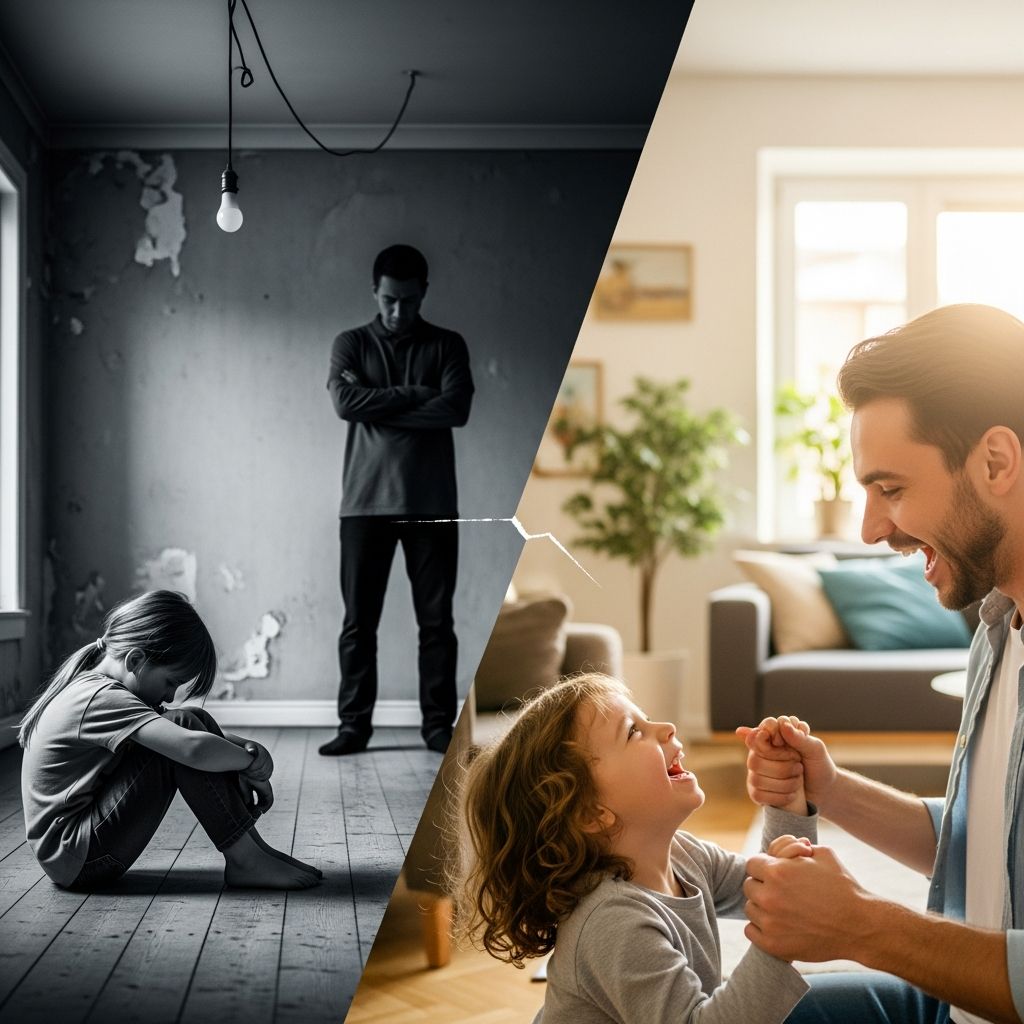
- Any physical aggression: hitting, kicking, choking, pushing, throwing objects, or dangerous roughhousing.
- Serious emotional harm: repeated insults, bullying, threats, or deliberate humiliation.
- Large power differences: for example, a much older or stronger child intimidating a younger one.
Step in calmly but firmly. You are not choosing a “winner”; you are protecting everyone’s physical and emotional safety.
Sample safety script
“I will not allow hitting. I’m separating you two so everyone can calm down. We’ll figure out what happened once bodies are safe.”
A Calm-First Approach: Regulating Before Resolving
Brain science shows that children who are very upset cannot think clearly or problem-solve well; their emotional centers are active while their reasoning skills are offline. That means the first step after a heated clash should be to help everyone calm down, not to investigate who started it.
Simple calming tools for kids
- Pause and breathe: Invite a few slow breaths together (“Smell the flower, blow out the candle”).
- Space: Separate siblings briefly so each has room to settle.
- Body reset: A drink of water, a short walk, stretching, or jumping jacks can reduce physical tension.
- Comfort: Some children settle faster with a hug; others need quiet alone time. Offer choices.
Once voices and bodies are calmer, you can guide them through the real work: understanding and resolving the disagreement.
Coaching Kids to Solve Their Own Conflicts
Research on family conflict shows that when parents use a mediation or coaching style, children become more constructive in their arguments and more willing to compromise. Instead of taking over, you act as a neutral guide.
| Common Parent Reaction | Coaching Alternative |
|---|---|
| “Stop it! I don’t care who started it. Give me the toy.” | “I hear there’s a problem about the toy. Let’s hear from each of you and then we’ll look for a solution together.” |
| Automatically siding with the younger child | Staying neutral and focusing on feelings and solutions, not blame. |
| Separating kids without discussion | Helping them express their views, listen to each other, and reach an agreement they both accept. |
Step-by-step conflict coaching
- Set ground rules
Briefly state a few rules: no name-calling, no interruptions, and indoor voices. Ask for their agreement. - Listen to each child
Invite one child at a time to explain what happened and how they feel: “Tell me what happened from your view.” - Reflect feelings and check understanding
Paraphrase each child’s words to show you heard them: “You felt frustrated because you were using the game and it was taken without asking.” - Encourage perspective-taking
Ask each child to repeat what the other said and how the other felt.
“Can you tell me how your brother says he felt?” - Invite them to suggest solutions
Ask: “What ideas do you have to fix this so it feels fair to both of you?” - Reality-check and agree
Help them choose a plan that is safe and reasonable, then have them agree to it out loud.
This method takes more time than simply handing down a verdict, but studies indicate that children who experience mediation become more skilled at resolving disagreements over time.
Staying Neutral: Why Taking Sides Makes Things Worse
Many parents, wanting to protect the younger or more sensitive child, unintentionally create more rivalry by repeatedly siding with one sibling. Experts warn that comments like “You’re older, you should know better” or “Let your little sister have it, she’s younger” often leave older children feeling unfairly blamed and excluded, which can fuel more aggression.
Neutral language that reduces rivalry
- Replace “Who started it?” with “What problem are we trying to solve?”
- Replace “Be nice, you’re the big brother” with “Everyone in this family deserves respect, no matter their age.”
- Replace “Give it to your sister, she’s smaller” with “Let’s find a solution that feels fair to both of you.”
Neutrality does not mean ignoring harm. You still enforce boundaries around safety and respect; you just avoid casting one child as the permanent victim and the other as the permanent aggressor.
Preventing Fights Before They Start
You cannot eliminate all arguments, but you can greatly reduce their frequency and intensity by shaping the family environment and routines.
Practical prevention strategies
- Clarify routines and rules
Predictable rules (for example, a clear system for turns in the front seat or on the console) leave less room for daily battles. - Minimize competition
Avoid comparing siblings’ abilities, grades, or behavior. Focus on each child’s individual progress rather than who did it “better.” - Separate high-conflict triggers
If certain toys or games always lead to fights, temporarily limit access or establish structured sharing times. - Protect one-on-one time
Short, regular periods of undivided attention with each child can reduce bids for attention through conflict. - Mind the basics
Sleep, nutrition, and manageable schedules play a major role in how easily kids lose their tempers.
Building Positive Sibling Connection
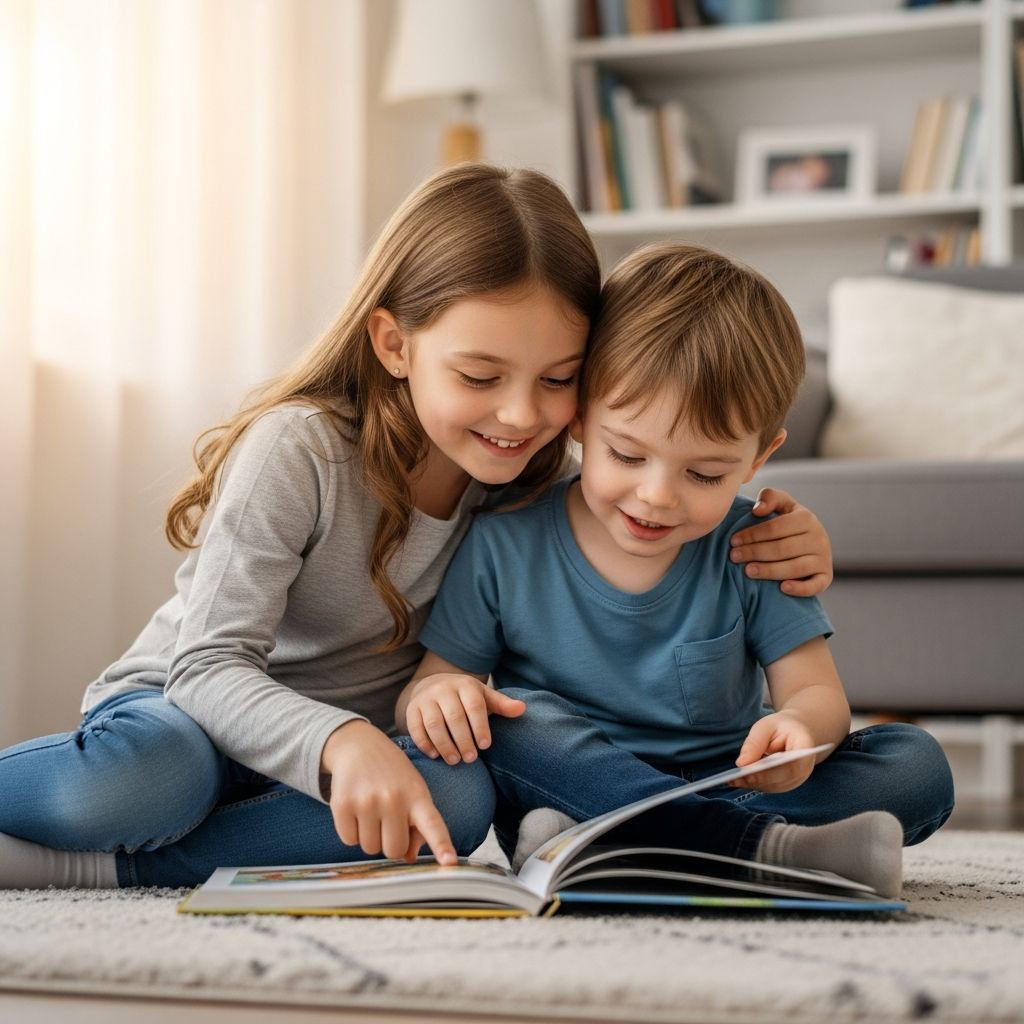
Reducing conflict is only half the work. Children also need chances to experience each other as allies, not only as competitors. Research suggests that positive sibling relationships are linked with better mental health, social skills, and adjustment later in life.
Ways to strengthen the sibling bond
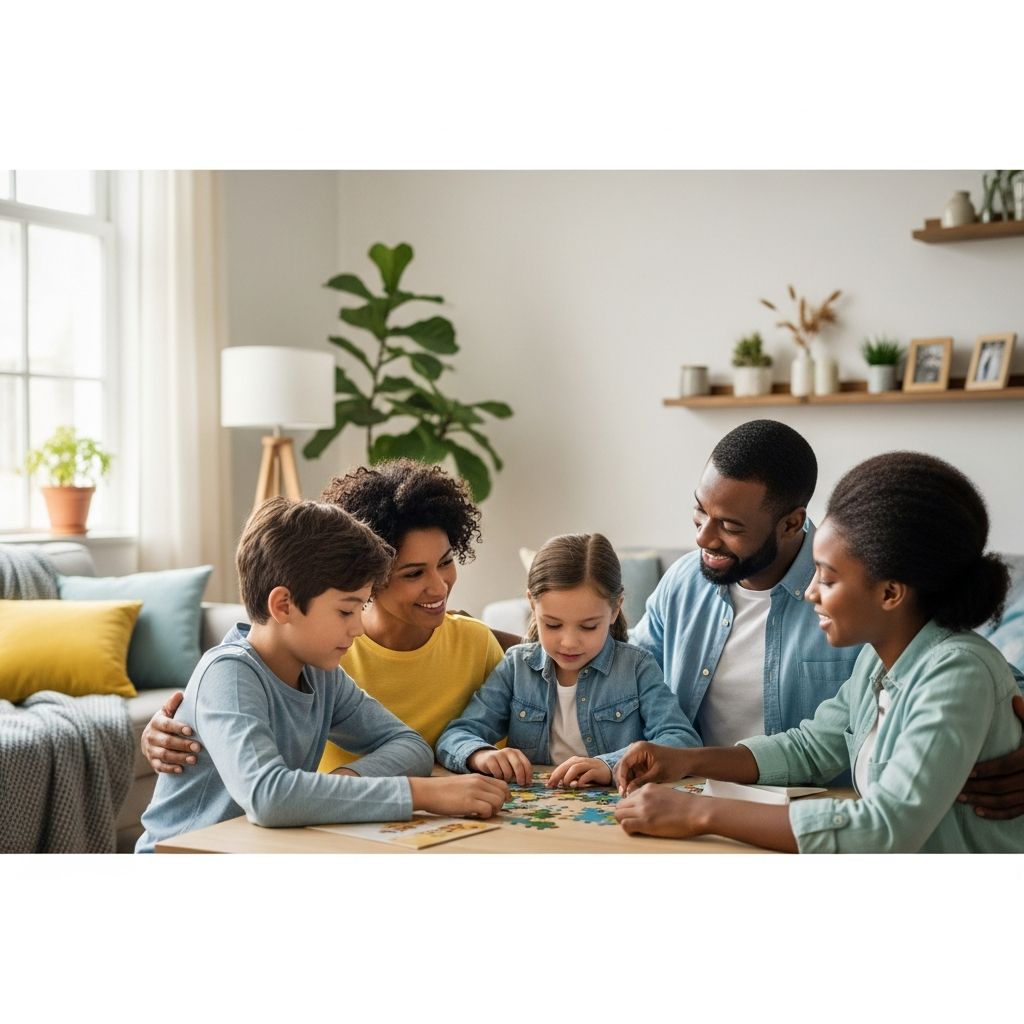
- Create shared fun
Plan simple activities both children can enjoy: board games, cooking together, building a blanket fort, cooperative video games, or family walks. - Notice and praise cooperation
When you catch them sharing, helping, or comforting each other, describe what you see: “You two worked out a way to share the markers. That’s real teamwork.” - Encourage supportive roles
Invite older children to teach a skill or help with a project with you, not instead of you, so it feels like partnership rather than pressure. - Protect individuality
Support different interests and friendships. Children are less likely to compete intensely when they do not feel constantly compared.
When to Step Back and Let Them Work It Out
Not every disagreement needs adult input. Learning to solve low-stakes conflicts independently is part of growing up.
Signs you can stay out (but nearby)
- Voices may be raised, but no one is threatening or insulting.
- There is no physical contact or destruction of property.
- Both children seem engaged in the discussion, not overwhelmed or frozen.
You might say:
“I hear you’re trying to figure out who gets the game first. I trust you can find a solution that feels fair. If you get stuck or someone feels hurt, I’m available to help.”
Studies suggest that when parents avoid over-intervening and instead coach occasionally, children gain important negotiation skills and a stronger sense of competence.
Special Situations: When Conflict Is More Intense
Some families face extra challenges—such as a child with ADHD or another condition that affects impulse control. In these cases, fights may escalate faster and feel more extreme.
Extra supports that can help
- Teach and practice skills in calm moments
Role-play asking before borrowing, saying “stop,” or walking away when angry. - Brief, separate check-ins
Talking to each child individually after a conflict can make it easier to validate their feelings without appearing to take sides. - Visual reminders
Simple posters or cue cards with steps like “Pause, Breathe, Speak Calmly, Listen, Find a Fix” can guide children in the heat of the moment. - Professional help
If fights involve serious harm, extreme cruelty, or are tied to high family stress, it may be useful to consult a pediatrician, mental health professional, or family therapist.
Frequently Asked Questions (FAQs)
Is it normal for my kids to fight every day?
Some level of daily bickering is common, especially in close ages. What matters more is how they fight and how it is handled. If disagreements usually stay verbal, no one feels consistently targeted, and you are helping them repair afterward, it is often part of normal development.
Should I always find out who started it?
Focusing on the “starter” tends to create winners and losers. It is often more productive to focus on safety, feelings, and finding a fair solution than to re-create every detail. An exception is when there is a clear pattern of bullying or repeated aggression, in which case extra support and boundaries are needed.
What if one child seems to get blamed more often?
If you notice one child regularly cast as “the problem,” pause and reassess. That child may have more difficulty with impulse control or emotion regulation and might need more coaching and structure, not more criticism. Try to look for—and name—moments when they are kind or cooperative to rebalance the picture.
How can I stop feeling triggered by their constant arguing?
Start by noticing your own stress signals—tight shoulders, raised voice, racing thoughts—and give yourself a quick reset (a breath, a sip of water, stepping into another room briefly) before intervening. Reminding yourself that conflict is also a chance to teach can reduce the feeling of emergency and help you respond more calmly.
When is sibling conflict a sign of a serious problem?
Seek professional help if there are frequent injuries, threats, intense fear from one child, cruelty toward people or animals, or if conflict is tied to strong marital or family stress. Research indicates that severe, ongoing sibling aggression can have long-term mental health impacts and deserves serious attention.
References
- How to Manage Sibling Conflict: Practical Strategies for Parents and Caregivers — PracticeWise. 2023-06-01. https://welcome.practicewise.com/how-to-manage-sibling-conflict-practical-strategies-for-parents-and-caregivers/
- Raising Loving Siblings: Expert Parenting Tips to Stop Fighting and Build Lifelong Bonds — Montclair State University News Center. 2024-12-13. https://www.montclair.edu/newscenter/2024/12/13/raising-loving-siblings-expert-parenting-tips-to-stop-fighting-and-build-lifelong-bonds/
- How to Teach Siblings to Resolve Their Own Arguments — Greater Good Magazine, UC Berkeley. 2022-04-07. https://greatergood.berkeley.edu/article/item/how_to_teach_siblings_to_resolve_their_own_arguments
- Siblings Fighting: ADHD Family Conflict Resolution — ADDitude Magazine. 2021-05-10. https://www.additudemag.com/siblings-fighting-conflict-resolution-adhd-family/
- Sibling Conflict — Positive Discipline Association. 2019-03-01. https://positivediscipline.org/sibling-conflict-article/
- Recommendations for Parents on Managing Sibling Conflict and Aggression — University of New Hampshire Crimes against Children Research Center. 2014-01-01. https://www.unh.edu/ccrc/resource/saara-bulletin-2