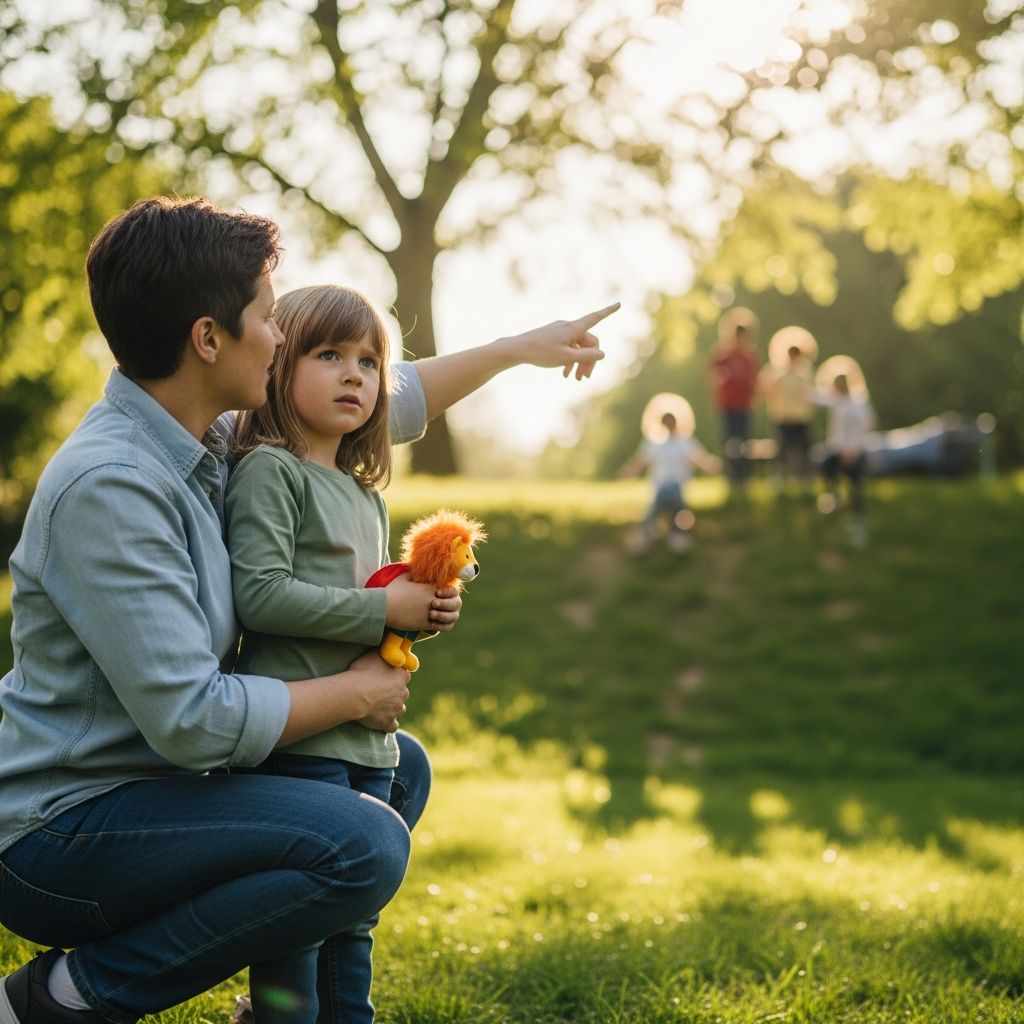
Courage in childhood does not only mean daring adventures or loud heroism. It often looks like a quiet child walking into a new classroom, a teenager telling the truth when lying would be easier, or a sensitive kid admitting, “I’m scared,” instead of shutting down. As a parent or caregiver, you have a powerful role in helping your child meet life with this kind of everyday bravery.
This guide explores what courage really is, why it matters for your child’s long-term wellbeing, and how to nurture it in age-appropriate, emotionally respectful ways.
What Courage Really Means for Children
Many adults imagine courage as the absence of fear, but for children, courage is the ability to move forward gently even while feeling scared, unsure, or uncomfortable. It is less about boldness and more about staying present and choosing values when fear appears.
For kids, courage often shows up in small, easily overlooked moments:
- Trying again after failing a test or losing a game.
- Walking into a social situation without knowing anyone well.
- Telling a parent the truth about a mistake instead of hiding it.
- Standing up for a sibling or friend who is being treated unkindly.
- Sharing a vulnerable feeling like sadness, jealousy, or embarrassment.
When you see courage this way, you realize that nearly every day offers a chance to help your child practice it, not as a performance, but as a way of living with integrity and resilience.
The Three Faces of Courage in Childhood
Courage is not one single skill. It is easier to support when you recognize its different forms. For most children, courage shows up in at least three overlapping areas: emotional courage, social courage, and moral courage.
Emotional Courage
Emotional courage is the willingness to feel difficult emotions without running away, numbing out, or attacking others. Children with emotional courage can notice fear, sadness, or anger and still choose constructive actions.
Signs of growing emotional courage include:
- Using words to describe feelings instead of acting them out.
- Accepting comfort or support when upset.
- Attempting challenging tasks even when they feel nervous.
- Admitting when they are wrong or have hurt someone.
Social Courage
Social courage is the bravery required to enter new groups, form friendships, and navigate conflict without abandoning one’s self-respect. This type of courage especially matters as children enter school and adolescence.
You might notice social courage when your child:
- Talks to a new classmate or sits with someone alone at lunch.
- Participates in class even if they worry about being wrong.
- Expresses their own preferences respectfully, even when different from friends.
- Attempts to repair a misunderstanding instead of avoiding the person.
Moral Courage
Moral courage is the strength to act according to values, even when it is unpopular or uncomfortable. It develops slowly as children gain a sense of right and wrong and see those values actually matter at home.
Moral courage becomes visible when kids:
- Tell the truth when lying would be easier or more convenient.
- Refuse to join in teasing, bullying, or excluding others.
- Apologize sincerely without being forced into it.
- Speak up about unfairness, even if it makes them nervous.
Why Courage Matters More Than Perfection
Parents often feel pressure to help children succeed academically, socially, and in activities. Yet courage is a deeper foundation, shaping how kids respond to both success and disappointment. A child who trusts their own ability to face fear and discomfort is better prepared for real life than a child who has only been shielded from challenges.
Key benefits of cultivating courage include:
- Resilience: Courage allows kids to treat setbacks as part of learning rather than signs that they are “not good enough.”
- Confidence: Over time, repeated brave actions build an internal sense of “I can handle hard things.”
- Integrity: Children who practice moral courage begin to see themselves as people who try to do what’s right, not just what’s easy.
- Emotional health: Facing feelings rather than avoiding them helps prevent long-term patterns of anxiety, numbing, or explosive behavior.
How Parents Accidentally Block Courage
Most parents deeply want strong, brave children, but common protective instincts can unintentionally get in the way. Recognizing these patterns is the first step to changing them without harsh self-judgment.
Doing Too Much Rescuing
When adults constantly smooth the path, intervene at the first sign of discomfort, or finish tasks for a struggling child, kids receive the quiet message: “You can’t handle this without me.” They may become dependent on rescue rather than learning they can survive frustration, failure, and conflict.
Rescuing often shows up as:
- Rushing forgotten homework to school every time.
- Fixing all social conflicts for your child instead of coaching them.
- Allowing them to quit any activity the moment it becomes challenging.
Minimizing or Shaming Feelings
Comments like “Don’t be silly, there’s nothing to cry about” or “Big kids aren’t scared of that” may be well-intended, but they teach children to doubt or suppress their inner experience. Without permission to feel, children cannot develop the emotional courage needed to move through fear.
Instead of becoming braver, kids may learn to hide vulnerabilities or express them through anger, withdrawal, or perfectionism.
Overcontrolling in the Name of Safety
Of course, adults must keep children physically safe, especially when they are young. The problem arises when control expands far beyond what is necessary, leaving little room for kids to practice independence and responsible risk-taking.
Older children who never get to make meaningful choices may struggle later with peer pressure, decision-making, and self-trust.
Principles for Courage-Building Parenting
Encouraging courage does not require harshness or cold “tough love.” Instead, it rests on a blend of warmth, structure, and trust in your child’s emerging strengths. The following core principles can reshape the climate of your home.
| Principle | What It Looks Like | How It Builds Courage |
|---|---|---|
| Connection before correction | Listening, naming feelings, then discussing limits and solutions. | Kids feel safe enough to face hard truths and try again. |
| Allowing tolerable struggle | Letting children wrestle with challenges while staying nearby and supportive. | They learn “I can survive discomfort and keep going.” |
| Modeling vulnerability | Admitting mistakes, apologizing, and sharing age-appropriate feelings. | Children see that being brave and being imperfect can coexist. |
| Focusing on effort and values | Noticing persistence, kindness, and honesty instead of only outcomes. | Bravery becomes about living one’s values, not just winning. |
| Gradual independence | Offering choices, responsibilities, and decision-making opportunities. | Kids practice courage in manageable steps instead of all at once. |
Practical Ways to Encourage Everyday Bravery
Abstract principles become powerful when translated into small daily actions. Below are practical strategies you can start using right away, adjusting them to your child’s age and temperament.
1. Name and Normalize Fear
When your child feels afraid, the goal is not to “talk them out of it” but to help them understand what is happening inside. Naming emotions gives them shape, which makes them less overwhelming.
Helpful approaches include:
- Reflecting what you see: “Your hands are tight and your eyes look worried. I wonder if you’re feeling nervous about going in.”
- Normalizing the experience: “Everyone feels scared sometimes when they try something new.”
- Connecting fear and choice: “Being brave doesn’t mean you’re not scared. It means you feel scared and still take a small step.”
2. Break Challenges into Smaller Steps
Children shut down when challenges feel too big and vague. You can make courage more accessible by turning intimidating tasks into specific, manageable steps and celebrating each step, not just the final achievement.
For example, if a child is anxious about joining a sports team, possible steps could be:
- Watching one practice together from the sidelines.
- Meeting the coach briefly after practice.
- Attending the first practice with a clear plan for what to do if they feel overwhelmed.
- Checking in afterward about one thing that went well, even if it was a hard experience.
3. Use Curious Questions Instead of Pressure
Pressure often backfires, increasing resistance or perfectionism. Curious, open-ended questions invite your child to think for themselves and discover their own courage.
Try questions such as:
- “What feels hardest about this for you?”
- “What kind of help would make this feel a little easier?”
- “If the bravest part of you could talk, what would it say right now?”
4. Tell Stories of Realistic Courage
Children absorb values through stories—both from books and from your family’s history. Aim for stories in which characters experience fear, doubt, or failure and still act according to their values, rather than tales of flawless heroes.
You can:
- Share simple family stories about times you felt scared and what helped you move forward.
- Discuss characters in books or shows and ask, “What do you think was brave about what they did?”
- Highlight everyday acts of courage your child already shows, so they start to see themselves as a brave person.
Balancing Support and Challenge by Age
Courage looks different at each developmental stage. The same parenting approach that empowers a preschooler may feel controlling to a teenager. The goal is to stay attuned to what is appropriately challenging for your child’s current abilities.
Early Childhood (Ages 3–7)
Young children are just beginning to understand their feelings and to separate imagination from reality. They need lots of physical closeness, predictable routines, and concrete reassurance, while also being allowed to try things for themselves.
- Invite small acts of independence, like putting on shoes or saying hello to a neighbor, while staying close.
- Use simple language to describe feelings and bodies: “Your tummy feels funny because this is new.”
- Offer playful practice for scary situations (pretend doctor visits, first day of school roleplays).
Middle Childhood (Ages 8–12)
At this stage, peer relationships and competence in school or activities become central. Children are old enough to talk about values, fairness, and long-term consequences.
- Encourage involvement in activities that require practice and persistence, not just natural talent.
- Talk openly about peer pressure and what it might feel like to be the only one saying no.
- Give them chances to solve problems before stepping in, while staying available as a coach.
Adolescence (Ages 13+)
Teenagers are forming identity and moral beliefs, often questioning family rules and worldviews. They need increasing autonomy, combined with clear, respectful boundaries that reflect core values rather than control for its own sake.
- Invite them into real conversations about choices, risks, and values, listening more than you lecture.
- Share your reasoning behind limits, tying them to safety, respect, and long-term goals.
- Recognize and appreciate when they show courage, especially in subtle ways like telling the truth about a mistake.
Helping Children Stand Up for Themselves and Others
One of the most important applications of courage is learning to protect one’s own dignity and the dignity of others. This is not about teaching children to be confrontational; it is about giving them tools to respond to unfairness and unkindness without losing themselves.
Teaching Respectful Assertiveness
Assertiveness sits between aggression and passivity. It allows children to communicate needs and boundaries clearly while still respecting other people. You can teach this by modeling calm, firm communication at home and encouraging your child to use similar language.
Examples of assertive statements include:
- “Please stop. I don’t like that.”
- “I need a break right now.”
- “I want a turn too.”
Practicing Bystander Courage
Children need explicit guidance about what to do when they witness teasing, exclusion, or bullying. Waiting for them to “just know” can leave them frozen by fear or confusion.
Possible options to practice include:
- Going to stand next to the targeted child so they are not alone.
- Inviting the person being excluded to play or sit together.
- Seeking help from a trusted adult when a situation feels unsafe or overwhelming.
- Talking with you afterward about what happened and what they might do next time.
When Your Own Fear Gets in the Way
Supporting your child’s courage often means confronting your own fears: fear of their discomfort, fear of judgment from other adults, or fear that you are failing as a parent. This inner work is not a sign that you are doing something wrong; it is part of the courageous parenting journey.
Some helpful practices include:
- Noticing your own physical signals of fear (tight chest, racing thoughts) before reacting.
- Asking, “Is my response about my child’s actual safety or about soothing my discomfort?”
- Talking with a friend, partner, or professional about patterns from your own childhood that make it hard to tolerate your child’s feelings or risks.
When you show that adults, too, are still learning courage, you give your child a living example that bravery is a lifelong practice, not a fixed trait.
Frequently Asked Questions About Raising Courageous Kids
1. How do I know if I am pushing my child too hard?
A useful guideline is to look for the difference between stretch and overwhelm. A stretching challenge may make your child nervous, but they can still think, speak, and recover with your support. Overwhelm shows up as total shutdown, panic, or persistent distress that does not ease even with comfort and rest.
If you suspect you have pushed too far, you can say something like, “That was a lot. Let’s step back and find a smaller step that still feels brave but not so scary.” This shows that courage is about wise risk, not about enduring intolerable stress.
2. My child is very cautious. Can they still be courageous?
Absolutely. Caution can coexist with deep courage. Some children are naturally more sensitive or thoughtful before acting. Their version of bravery may involve quiet persistence, careful truth-telling, or standing by their values when others rush ahead.
Instead of comparing your child to bolder peers, focus on their personal growth: what feels brave for them right now compared to six months ago. Celebrate those steps so they recognize their own progress.
3. What if my child seems fearless and always takes big risks?
Apparent fearlessness is not always true courage; sometimes it reflects impulsivity, thrill-seeking, or difficulty sensing danger. Your role is to acknowledge their bold spirit while teaching thoughtful decision-making and respect for safety.
Talk openly about consequences, offer structured outlets for risk (sports, climbing, performance), and set firm boundaries around behaviors that endanger themselves or others. You are not trying to extinguish their boldness but to guide it toward wisdom.
4. How can I praise courage without creating pressure?
Try to notice effort, choices, and values rather than labeling your child as “brave” in a way that might feel like a standard they must always meet. Instead of, “You’re so brave, you’re never scared,” you might say, “You felt nervous and still walked into the room. That took courage.”
This helps your child understand that courage is something they do, not a fragile identity they must constantly prove.
5. When should I seek professional help?
While fear and hesitation are normal, you might consider consulting a professional if your child’s anxiety or avoidance significantly interferes with daily life—such as refusing school long-term, avoiding all social contact, or showing signs of panic that do not improve with gentle support.
A child therapist, counselor, or pediatrician can help you distinguish between typical developmental worries and more serious concerns, and can offer tailored strategies for your family.
Closing Thoughts: Courage as a Daily Practice
Raising courageous children is not about forcing them into frightening situations or expecting stoic toughness. It is about walking beside them as they learn to feel their feelings, listen to their values, and take one small step at a time toward what matters most.
Every time you listen instead of dismiss, invite a small risk instead of overprotecting, and tell the truth about your own imperfections, you are building a home where courage can grow. In that environment, children come to trust that fear is not a stop sign but a signal that something important is happening—and that they do not have to face it alone.