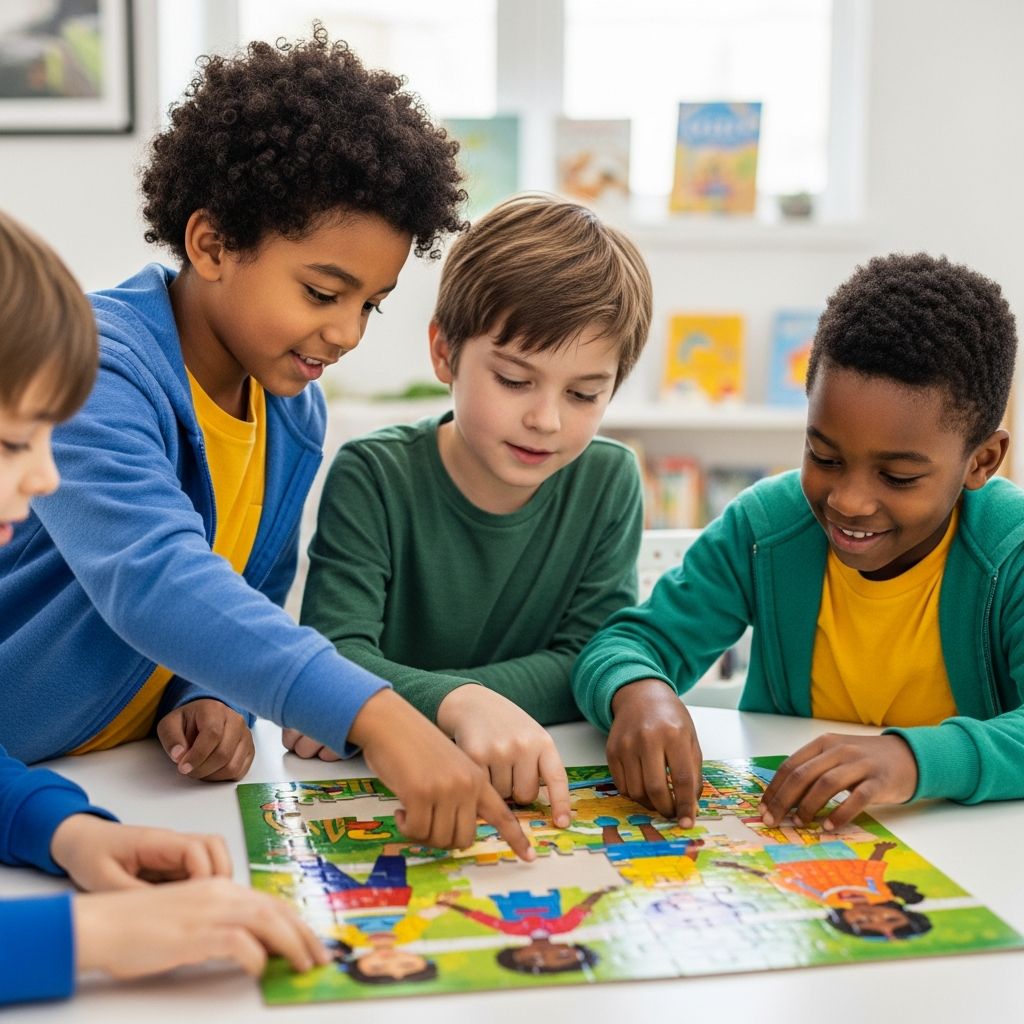
Many parents want their sons to grow up believing that every person deserves respect and opportunity, regardless of gender. Cultivating that belief does not happen by accident; it comes from thousands of small choices in how adults speak, model behavior, set boundaries, and respond to the world around them.
This article offers practical, concrete ways to raise boys who see equality as normal, kindness as strength, and fairness as their responsibility. It focuses on everyday actions rather than perfection, because meaningful change begins at home and is built over time.
Why Teaching Equality to Boys Matters
Boys absorb messages about gender from the moment they are born. These messages come from relatives, media, school, peers, and even casual comments overheard at the grocery store. When those messages go unchallenged, boys can grow up believing that leadership belongs mostly to men, that emotions are a weakness, and that girls’ experiences are less important.
Helping boys understand fairness benefits everyone. It reduces pressure on boys to be constantly tough, and it creates space for them to be caring, gentle, and expressive without shame. It also raises the likelihood that they will support equal pay, share care work, and challenge harassment or discrimination when they see it.
Core Principles for Raising Equality-Minded Boys
Parents do not need a perfect script to raise thoughtful, fair-minded sons, but clarifying a few guiding principles can be helpful. These principles anchor day-to-day decisions and offer a reference point when the culture sends mixed signals.
- Respect is non-negotiable: Every person deserves to be treated with dignity, even during conflict or frustration.
- Feelings are human, not gendered: Boys are allowed to cry, be afraid, feel tender, and ask for help.
- Power should come with responsibility: If boys are granted advantages, they should also learn how to use those advantages to support fairness.
- Learning is ongoing: No family gets this right all the time; repair and honest conversations are part of the process.
Encouraging Emotional Confidence in Boys
One common barrier to equality is the idea that masculinity requires emotional silence, except for anger. Boys quickly detect when sadness is mocked or when compassion is dismissed as being “soft.” Over time, this can make it harder for them to empathize with others or to speak up when something feels wrong.
Parents can normalize emotional literacy by naming feelings, linking them to physical sensations, and modeling healthy coping strategies. This helps boys recognize emotions in themselves and others, making it more natural to respond with care instead of dismissal or ridicule.
- When a boy cries, acknowledge the feeling instead of rushing him to stop or to “toughen up.”
- Use everyday moments—like disappointment about a game or excitement about a new toy—to practice naming emotions.
- Talk about how strong people can still feel scared, sad, or unsure.
Teaching Consent and Bodily Autonomy Early
Consent is not just about dating or sex; it begins with how children learn to treat one another’s bodies and their own. When boys are taught that everyone gets to decide what happens to their body, they grow up more likely to respect boundaries in friendships, relationships, and public spaces.
Small daily habits make a significant difference. Respecting a child’s “no” when they do not want a hug, encouraging them to ask before touching others, and reinforcing that tickling stops the moment someone says “stop” are all tangible ways to teach consent from the start.
- Ask for permission before kissing, hugging, or picking up a child, and honor their answer whenever safety allows.
- Teach simple scripts like, “You need to ask before you touch someone,” and, “If they say no, you stop.”
- Model checking in with other adults too (“Is it okay if I give you a hug?”) so boys see this as a normal part of respectful interaction.
Challenging Gender Stereotypes in Daily Life
Boys are frequently told—directly or indirectly—that they should like certain colors, toys, and activities, and that other interests are reserved for girls. These limits not only restrict what boys feel allowed to enjoy, they also reinforce the idea that anything associated with girls is lesser.
Creating an environment where a boy can choose a doll, a truck, a dance class, or a soccer league without teasing sends a powerful message: interests and talents are not gendered. Over time, this mindset makes it easier for him to respect diverse choices in others.
- Offer a wide range of toys and activities without labeling them as “for boys” or “for girls.”
- Challenge comments like “that’s not for boys” with simple responses such as, “Toys are for everyone.”
- Highlight male role models who cook, care for children, create art, and show kindness alongside those who are athletic or technically skilled.
Using Media as a Teaching Tool
Books, shows, games, and movies shape children’s ideas about who is important and what roles different genders can occupy. When boys consume mostly stories in which boys are heroes and girls are side characters or prizes, they internalize narrow ideas of value.
Parents can balance this by actively choosing media that centers strong, complex girls and women, as well as boys who are kind, collaborative, and emotionally expressive. Engaging in conversation about media—not just limiting it—encourages boys to think critically about the stories they see.
| Media Element | Questions to Ask Your Son |
|---|---|
| Hero or main character | “Who is making the important decisions in this story? Who could also be a leader here?” |
| Side characters | “What do the girls or women in this story do? Are they as interesting as the boys?” |
| Jokes or teasing | “Was that joke kind or mean? Would it feel okay if someone said that to you or your friend?” |
| Conflict and resolution | “How did they solve the problem? Did anyone listen, apologize, or change their mind?” |
Modeling Equality at Home
Children watch how adults divide chores, talk to one another, and make decisions. If they see one person consistently doing emotional and household labor while another holds most of the authority, they often internalize that imbalance as normal.
Demonstrating shared responsibility at home gives boys a daily lesson in fairness. When care work—such as cooking, cleaning, scheduling, and comforting—is valued and shared, boys learn that contribution is not determined by gender but by participation in a family or community.
- Involve boys in tasks like laundry, dishwashing, and caring for younger siblings, framing these as life skills, not “helping Mom” or “women’s work.”
- Talk openly about how decisions are made (“We listened to each other and compromised”) so children see collaboration in action.
- Acknowledge and appreciate emotional labor, such as planning birthdays or remembering appointments, so it is seen as real work.
Talking About Privilege and Fairness
As boys get older, they can grasp more abstract ideas about fairness. They may notice that certain groups seem to have more power, representation, or safety than others. Rather than shying away from these observations, parents can use them as openings to discuss privilege in age-appropriate ways.
Framing privilege as an opportunity to help, not a reason to feel guilty, keeps boys engaged rather than defensive. They can learn to ask who is missing from the conversation, who might be left out, and what they can do in small ways to address unfairness.
- Use concrete examples from daily life, such as who talks most in class or whose sports teams get the best time slots, to explore fairness.
- Encourage questions and be willing to say, “That is a good question; let’s learn more together,” when you do not know the answer.
- Highlight people of all genders who work for justice, showing that equality is a shared project.
Helping Boys Respond to Peer Pressure
Even in thoughtful families, boys encounter peers who reinforce harmful stereotypes, use sexist language, or pressure one another to prove their toughness. Teaching boys how to navigate these situations prepares them to act with integrity when adults are not present.
Practicing possible responses can make a big difference. Boys who have rehearsed how to challenge a cruel joke, change the subject, or leave a situation often feel more confident doing so in real life.
- Role-play scenarios in which a friend uses sexist or homophobic language, and brainstorm different ways your son might respond.
- Reassure him that even small actions—like refusing to laugh at a hurtful joke—matter.
- Validate that it can be hard to speak up and praise effort, not just perfect outcomes.
Encouraging Friendships Across Genders
When boys have close friendships with girls, it becomes more difficult for them to see girls as a vague, separate group. Instead, they see individual people with interests, strengths, and flaws, just like themselves. This personal connection builds empathy and reduces the likelihood of adopting dismissive attitudes about “girls” as a category.
Adults can support these friendships by avoiding teasing or comments that romanticize every cross-gender interaction. Instead, treating these relationships as normal and valuable underscores that connection and respect—not gender—are what matter in choosing friends.
- Invite children of different genders to playdates, group activities, and birthday parties without making it a big deal.
- Discourage teasing that frames friendships as crushes, which can make kids self-conscious.
- Talk positively about your own friendships with people of various genders so boys see it modeled.
Supporting Boys Who Do Not Fit Traditional Norms
Some boys are especially sensitive, artistic, quiet, or uninterested in stereotypically “masculine” activities. Others may question or not identify with the gender assigned to them at birth. In many environments, these boys face more pressure and scrutiny.
Creating a home where difference is affirmed gives these children critical protection. When boys know that they are loved and valued as they are, they are more likely to develop confidence and less likely to internalize shame about not fitting into narrow boxes.
- Reassure boys that there are many ways to be a boy or to express who they are.
- Listen carefully when a child talks about feeling different, and take those feelings seriously.
- Seek out community, books, and resources that reflect and affirm diverse identities and expressions.
Turning Mistakes into Learning Moments
Even in the most mindful families, boys will repeat harmful jokes, exclude others, or act in ways that reflect stereotypes. Treating these moments only as reasons for punishment can shut down conversation. Instead, approaching them as opportunities to learn helps boys grow more aware and responsible.
This does not mean ignoring harm. It means pairing accountability with guidance so that boys understand what went wrong and how to repair it. Over time, this approach teaches them that doing better is always possible.
- Ask questions such as, “How do you think that made her feel?” and “What could you do now to make this right?”
- Encourage apologies that acknowledge specific actions, not just a quick “sorry.”
- Share your own mistakes and how you learned from them to normalize growth.
Frequently Asked Questions
Is it confusing for boys if I avoid labeling some things as “for boys” and others as “for girls”?
Children can understand that people have different bodies and experiences without rigidly assigning toys, colors, or interests to genders. When adults present options neutrally and focus on values like kindness, curiosity, and effort, most children adapt easily. If confusion arises, it can become a starting point for a simple conversation about how everyone deserves choices.
How early should I start talking about topics like consent and equality?
Conversations can begin in very simple forms in early childhood, long before a child encounters topics like dating. Teaching a toddler that they can say “no” to a hug or that they must stop when someone else says “stop” lays the groundwork for later discussions. As children grow, language and examples can become more detailed, always matched to their age and understanding.
What if other adults in my child’s life send conflicting messages?
Most families cannot completely control the messages children receive from relatives, coaches, or media. Parents can still provide a strong counterbalance by calmly naming when they disagree with a message and explaining why. Over time, consistent explanations and modeling at home often carry significant weight, even alongside conflicting views.
Can I raise boys who care about equality if I am still unlearning some of my own biases?
Perfection is not required. Being honest about the fact that everyone is still learning can actually strengthen your message. When boys see adults reflecting, apologizing, and changing their minds in response to new information, they learn that growth is part of being a responsible person.
Will focusing on equality make my son feel guilty about being a boy?
The goal is not to instill guilt for being male but to cultivate awareness of how gender expectations affect everyone. Emphasizing that boys can use their advantages to help create a fairer world keeps the focus on responsibility instead of shame. Many children feel empowered, rather than burdened, when they see that their choices can contribute to positive change.
Everyday Choices, Lasting Impact
Raising boys who champion equality is less about delivering perfect speeches and more about repeated, small choices: the language used at the dinner table, the chores shared at home, the stories read at bedtime, and the way adults handle conflict and apology. Over time, these choices shape what boys see as normal and acceptable.
When boys learn that empathy is strength, that boundaries matter, and that everyone deserves respect, they carry these lessons into their friendships, classrooms, and future workplaces. Those quiet lessons, practiced patiently over years, are what ultimately help build a more just and humane world for everyone.