Bullying affects millions of children worldwide, leading to emotional distress, academic struggles, and long-term mental health issues. Parents and educators play a crucial role in prevention by implementing proactive measures that build resilience and promote positive social behaviors. This guide outlines practical, evidence-based approaches to safeguard children, drawing from expert recommendations and successful programs.
Understanding the Impact of Bullying on Young Minds
Bullying involves repeated aggressive actions intended to harm or intimidate, manifesting physically, verbally, relationally, or online. Its consequences extend beyond immediate pain, often resulting in anxiety, depression, and reduced self-worth in victims. Research highlights that early intervention significantly reduces these risks, emphasizing prevention over reaction.
Parents must recognize signs like sudden withdrawal, declining grades, or unexplained injuries. Cyberbullying adds complexity, occurring 24/7 via digital platforms, amplifying harm through permanence and wide reach. Addressing bullying holistically requires understanding its forms to tailor effective responses.
Fostering Open Lines of Communication at Home
Creating a safe space for dialogue is foundational. Encourage daily check-ins with non-judgmental questions like “What was the best part of your day?” to normalize sharing. Active listening—nodding, paraphrasing, and validating feelings—builds trust, making children more likely to disclose issues early.
- Ask specific, open-ended questions about social interactions.
- Validate emotions without immediate problem-solving to make kids feel heard.
- Follow up consistently to show ongoing support.
Regular family discussions about emotions equip children to articulate experiences, reducing isolation. Studies show that communicative homes correlate with lower bullying incidence.
Building Emotional Strength Through Confidence Activities
Confident children deter bullies and recover faster. Enroll them in extracurriculars like sports, arts, or clubs to foster achievements and friendships. These build self-efficacy, a key buffer against victimization.
Teach assertiveness: Practice firm voice tone, direct eye contact, and phrases like “Stop that, I don’t like it.” Role-playing scenarios prepares kids for real encounters without fear.
| Activity Type | Benefits | Examples |
|---|---|---|
| Physical | Boosts endorphins, teaches teamwork | Soccer, martial arts |
| Creative | Enhances self-expression | Art classes, theater |
| Social | Develops peer bonds | Scouts, debate clubs |
Positive reinforcement, such as praising effort over outcomes, solidifies gains. Self-esteem programs in schools have shown measurable reductions in bullying reports.
Cultivating Empathy to Curb Aggressive Tendencies
Empathy training transforms potential bullies into allies. Use stories, videos, or discussions to explore others’ perspectives, asking “How might that person feel?” Role-playing bully-victim scenarios reveals emotional impacts.
Incorporate daily kindness challenges: Help a classmate or compliment a sibling. Model empathy yourself—express understanding during conflicts. Schools integrating empathy curricula report fewer incidents.
- Read diverse books highlighting compassion.
- Discuss media portrayals of mistreatment.
- Reward empathetic acts publicly.
Navigating the Digital World Safely
Cyberbullying demands vigilant oversight. Set screen limits, review privacy settings, and co-monitor accounts initially. Teach the “think before post” rule: Is it kind? True? Necessary?.
Instruct reporting mechanisms: Block, screenshot evidence, and tell adults immediately. Family media agreements outline rules, preventing escalation. Parental involvement correlates with safer online experiences.
Empowering Peers as Active Upstanders
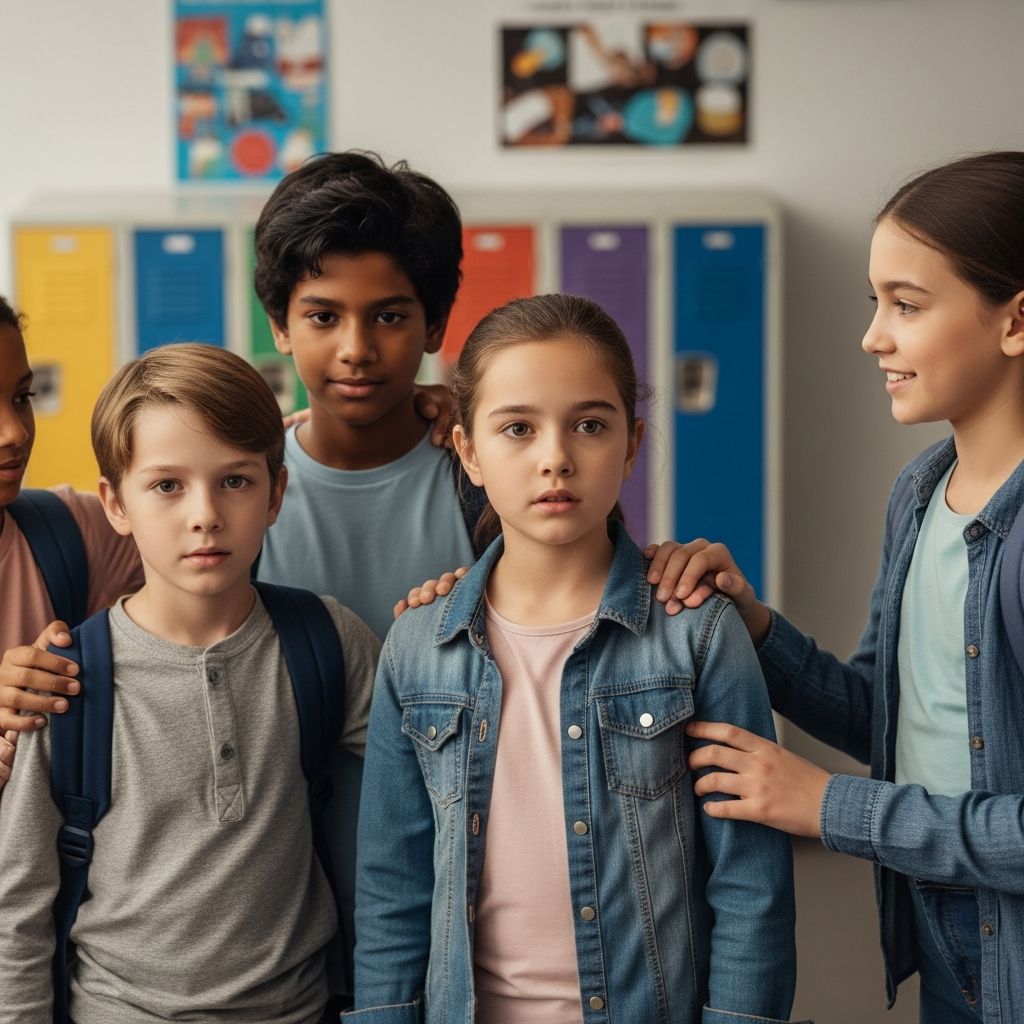
Bystanders witness 85% of incidents; empowering them shifts dynamics. Teach safe interventions: Distract (change subject), delegate (alert adult), or directly support (“That’s not cool, let’s go”).
School programs train students via assemblies and peer mentoring. When bystanders act, bullying decreases dramatically, as aggressors lose audiences. Role-play empowers without risk.
Establishing Firm Rules and Expectations
Clear policies deter bullying. Homes and schools need defined behaviors, consequences, and rewards. Consistent enforcement teaches accountability.
Conflict resolution skills—deep breaths, “I feel” statements, compromise—replace aggression. Positive behavior interventions (PBIS) frameworks reduce issues by 20-50%.
Collaborating Across Home, School, and Community
Unified efforts amplify impact. Parents reinforce school policies; join PTA anti-bullying committees. Communities host workshops, leveraging resources like StopBullying.gov.
Monitor progress via surveys; adjust based on data. Whole-school approaches with parent training yield best outcomes.
Recognizing When Professional Help is Needed
If bullying persists or causes severe distress, seek counselors or therapists. Early intervention prevents trauma. Schools often provide free resources.
Frequently Asked Questions (FAQs)
What should I do if my child is being bullied?
Listen empathetically, document incidents, notify school officials, and teach coping strategies. Avoid retaliation; focus on support.
How can I tell if it’s bullying or just teasing?
Bullying is repeated, power-imbalanced aggression; teasing is playful and mutual. Patterns and intent distinguish them.
Is cyberbullying more harmful than in-person?
Yes, due to anonymity, permanence, and reach, often intensifying isolation.
Can activities really prevent bullying?
Yes, they build confidence and social skills, reducing vulnerability.
What role do bystanders play?
Critical—they can stop 57% of incidents by intervening safely.
Long-Term Resilience: Sustaining a Bully-Free Future
Sustained prevention evolves with age. Adolescents need advanced digital literacy and leadership roles. Track emotional health annually; celebrate progress. By embedding these strategies, children thrive in kind environments.
(Word count: 1678)
References
- Effective Strategies and Resources for Preventing Childhood Bullying — Hughes & Coleman. 2023. https://www.hughesandcoleman.com/resources/effective-strategies-and-resources-for-preventing-childhood-bullying/
- Building a Safe Space: Strategies for Bullying Prevention Year-Round — Elite DNA Behavioral Health. 2024. https://elitedna.com/building-a-safe-space-strategies-for-bullying-prevention-year-round/
- Preventive Interventions – Preventing Bullying Through Science, Policy, and Practice — National Center for Biotechnology Information (NCBI). 2016-09-15. https://www.ncbi.nlm.nih.gov/books/NBK390407/
- Bullying Prevention and Intervention Strategies — Nebraska Department of Education. 2024. https://www.education.ne.gov/safety/bullying-cyberbullying/bullying-prevention-and-intervention-strategies/
- Bullying and Cyberbullying Prevention Strategies and Resources — SchoolSafety.gov. 2025-09. https://www.ncsby.org/sites/default/files/2025-09/SchoolSafety.gov_Bullying%20and%20Cyberbullying%20Prevention%20Strategies%20and%20Resources_508_0.pdf
- How to Prevent Bullying — StopBullying.gov. 2024. https://www.stopbullying.gov/prevention/how-to-prevent-bullying
- Bullying Prevention — Center on PBIS. 2024. https://www.pbis.org/topics/bullying-prevention