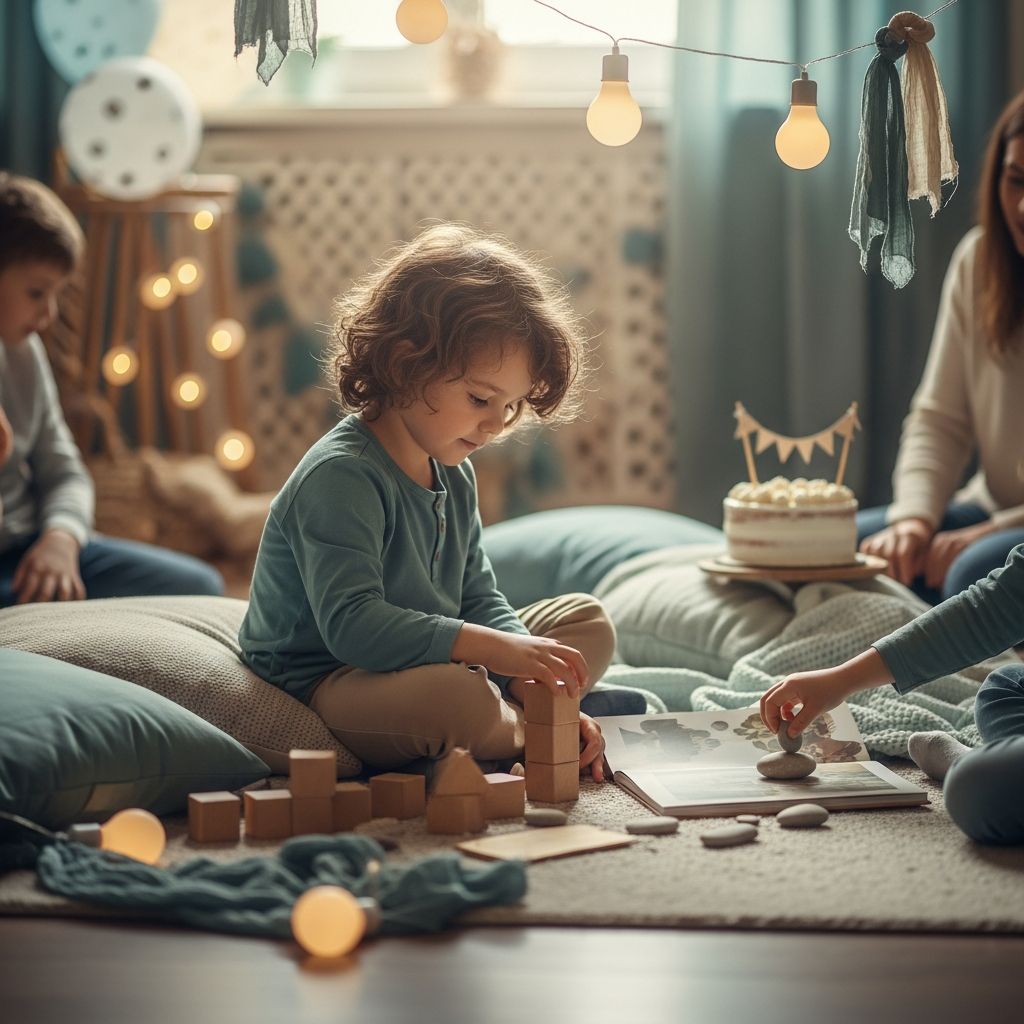
Many children find birthdays exciting; for a sensory-sensitive child, they can also be exhausting, confusing, or overwhelming. With a bit of thoughtful planning, you can design a celebration that respects your child’s limits and still feels wonderfully special.
This guide offers practical ideas to help you create birthdays that are sensory-aware, flexible, and genuinely fun for your child and guests.
Understanding Sensory Sensitivity at Birthday Parties
Birthday parties combine bright decorations, loud noise, unfamiliar people, new food, and changes in routine. Children who are autistic, have ADHD, or live with sensory processing differences may find some or all of this overstimulating or even painful.
Common challenges at parties include:
- Noise overload from music, excited chatter, and sudden sounds like balloon pops or cheering.
- Visual overload from bright colors, flashing lights, or crowded decorations.
- Touch and space issues, such as crowded rooms, unexpected hugs, or scratchy costume fabrics.
- Smell and taste sensitivity, especially with strong food smells, candles, or unfamiliar snacks.
- Difficulty with unpredictability: not knowing what happens next, when people will sing, or when presents will be opened.
Adapting the celebration does not mean making it “less of a birthday.” It means removing barriers so your child can enjoy what matters most: feeling loved, seen, and safe.
Start With Your Child: Building the Party Around Their Needs
Instead of asking, “What should a birthday party look like?” start by asking, “What helps my child feel comfortable and happy?”
Consider these questions:
- Does my child prefer quiet play or lots of movement?
- Do they enjoy being the center of attention, or do they prefer to watch?
- What sensory inputs are hardest—noise, light, crowds, smells?
- What topics, toys, or activities do they gravitate toward when they are relaxed?
Use the answers to shape the party’s size, structure, and theme. Research on sensory processing differences highlights that adapting the environment often reduces stress and supports participation more effectively than trying to change the child’s behavior.
Choosing a Sensory-Smart Location
The right environment makes every other part of planning easier. When possible, pick a setting where you can control noise, lighting, and crowd size.
| Location Option | Benefits for Sensory-Sensitive Kids | Things to Watch |
|---|---|---|
| At home | Familiar sights, smells, and rules; easy access to favorite toys and calm spaces. | May feel crowded; you handle all setup and cleanup. |
| Quiet outdoor space (yard, park) | More room to spread out; natural sounds; flexible noise level. | Weather, unpredictable noise (lawnmowers, traffic), visual distractions. |
| Sensory-friendly venue | Some gyms, museums, and centers offer reduced-noise, low-light, or private sessions. | Cost, scheduling, and possible limits on bringing your own food or decor. |
Wherever you host, visit or imagine the space ahead of time and note:
- Potential noise sources (speakers, traffic, echoey rooms).
- Lighting (harsh fluorescent lights, bright sunlight, or dimmable lamps).
- Places that can become a quiet retreat if your child needs a break.
Designing a Calm, Predictable Atmosphere
Many children with sensory differences function best when sensory input is moderated and routines are clear.
Keep Decorations Gentle, Not Overwhelming
- Choose soft colors or a simple color palette instead of very bright, clashing colors.
- Use a few themed items your child loves rather than decorating every surface.
- Avoid flashing lights, spinning toys with intense light patterns, or fog machines.
- Limit balloons, or keep them in one area to reduce popping surprises.
Manage Sound and Light
- Keep music low, instrumental, or skip it entirely; background noise is a common trigger.
- Use dimmable lamps or natural light instead of harsh overhead lighting.
- Have noise-reducing tools available: ear defenders, noise-canceling headphones, or soft hats.
Create a Quiet Corner
Research on sensory-friendly spaces suggests that having a designated low-stimulation area helps children self-regulate and reduces meltdowns.
Set up a small “reset zone” with:
- Soft seating (beanbags, pillows, blanket).
- A few comfort items: fidget toys, squishy balls, chewable jewelry, or favorite books.
- Lower light and minimal decorations.
- Clear permission: everyone knows it’s okay to take a break.
Planning Activities That Support Regulation Instead of Overload
Many traditional party games (musical chairs, loud team games, surprise-based activities) can be stressful for a sensory-sensitive child. Opt for options where kids can join in at their own pace, without loud competition or pressure.
Low-Pressure Activity Ideas
- Open-ended art table: crayons, markers, stamps, stickers, or simple craft kits. Provide visual examples but no requirement to copy them.
- Sensory bins: trays or tubs with rice, dry beans, kinetic sand, or water beads and simple tools (cups, scoops, funnels).
- Building station: blocks, magnetic tiles, or train tracks for collaborative or solo building.
- Calm movement activities: a mini obstacle path with cushions to step over, tunnels to crawl through, or balance paths made from tape.
- Bubble play: blowing bubbles outdoors or in a designated area; the visual and rhythmic nature can be soothing for many children.
Structuring Activities Without Rigidity
Children with sensory differences often benefit from knowing what to expect.
Helpful strategies include:
- Posting a simple visual schedule with pictures: arrive, play, snack, cake, more play, goodbyes.
- Giving transition warnings (for example, “Five more minutes of bubbles, then snack”).
- Allowing kids to skip activities without pressure and choose quiet play instead.
Food, Cake, and Sensory Considerations
Food is a major sensory element—texture, smell, and presentation all matter. Many autistic and sensory-sensitive children have restricted diets or strong preferences.
Offer Familiar, Flexible Choices
- Include at least two or three familiar, preferred foods you know your child will eat.
- Keep smells manageable: avoid very strong food odors where possible.
- Serve options in small portions so kids can sample without feeling pressured.
- Label common allergens clearly and check in with guest families about restrictions.
Rethinking the Birthday Cake Moment
For some children, the cake ritual (everyone staring, singing loudly, candle smoke) is the hardest part of the day. You can adapt it in many ways:
- Sing quietly, or hum, or skip singing entirely if your child prefers.
- Use one candle or an LED candle to reduce smoke and blowing.
- Let your child stand next to a trusted adult or even observe from behind the group.
- If they dislike cake, offer an alternative treat (cupcakes, cookies, fruit skewers, or a favorite snack).
Keeping the Guest List and Schedule Manageable
Larger crowds bring more noise, unpredictability, and social demands. Many families find that fewer guests lead to calmer, more enjoyable celebrations.
Smaller Can Be Better
- Invite a small group of children your child already knows well.
- Consider a “best-friend party” with one or two close friends instead of a big class event.
- Keep the party shorter—60 to 90 minutes is often enough for young, sensory-sensitive children.
Sample Gentle Party Flow
- 10–15 minutes: Relaxed arrival, free play with familiar toys or activities.
- 20–30 minutes: Low-pressure planned activities (craft, sensory bin, building).
- 15 minutes: Snack or meal.
- 10–15 minutes: Cake or alternative celebration moment.
- Remaining time: Open play, one-on-one time with your child, saying goodbyes.
Share this schedule in invitations or a follow-up message so parents know what to expect and can prepare their kids.
Preparing Guests and Caregivers
Explaining that the party is sensory-friendly makes it easier for other adults and children to support your child’s comfort.
Helpful Details to Share Ahead of Time
- A brief note that the celebration is designed with sensory needs in mind and may be quieter or simpler than typical parties.
- Any specific requests, such as avoiding perfume, bringing noise-canceling headphones if their child uses them, or avoiding popping balloons.
- Information on food, so families can plan for allergies or picky eating.
Supporting Siblings
Siblings may have their own hopes about the party. Include them in planning where possible:
- Ask what parts of the party matter most to them and see if those can fit within your child’s tolerance.
- Assign simple “helper” jobs (greeting guests, handing out favors, showing the quiet corner).
- Plan a separate, more typical outing for siblings on another day if they want something louder or more energetic.
Party Favors and Memories Without Extra Stress
Favors can be simple, sensory-supportive items that continue the calm after guests go home.
Fidget- and Comfort-Friendly Favor Ideas
- Small stress balls or squishy toys.
- Textured stickers or reusable gel window clings.
- Mini coloring books and crayons or washable markers.
- Simple sensory items like putty or non-sticky sensory dough (if safe for your group).
Instead of filling bags with loud or flashing toys, choose items that can help children regulate and relax.
Rethinking What “Success” Looks Like
On a sensory-friendly birthday, success is not about how impressive the decorations are or how many activities you fit in. It is about whether your child feels safe, cared for, and celebrated.
Signs your adaptations worked may include:
- Your child participates in at least some parts of the party willingly.
- They can retreat to the quiet area and then return when ready.
- There are fewer or shorter meltdowns than at previous events.
- You feel more present and less like you are constantly putting out fires.
Evidence from sensory-friendly program evaluations (for example, at museums and public attractions) suggests that when environments are adapted, families report feeling more welcomed and are more likely to attend and enjoy events together.
Frequently Asked Questions (FAQs)
How do I know if a sensory-friendly party is right for my child?
If your child often covers their ears, hides during singing, avoids crowded events, or seems exhausted after typical parties, a sensory-friendly approach is likely to help. Children with autism, ADHD, and sensory processing differences are especially likely to benefit from these adjustments.
Should I explain my child’s diagnosis to other parents in the invitation?
You do not have to share any diagnosis if you prefer not to. You can simply say that the party will be calm and sensory-aware, and mention any practical requests (like keeping noise low or using the quiet corner respectfully). Share more detail only if it feels helpful and aligns with your family’s comfort and privacy preferences.
What if my child refuses to join the group activities?
It is perfectly acceptable for your child to observe, play alone, or engage only in the parts they enjoy. Offer invitations, not demands. Research on neurodiversity-affirming practice emphasizes respecting a child’s autonomy and comfort over forcing participation in social norms that cause distress.
Can I still host a sensory-friendly party at a commercial venue?
Yes, if the venue is willing to accommodate changes. Ask about private time slots, lowering music, adjusting lighting, and limiting capacity. Many children’s museums and gyms now offer sensory-friendly hours or modified programs specifically designed for guests with sensory needs.
How do I handle relatives who expect a “traditional” birthday?
You can explain that these changes help your child feel comfortable and prevent overwhelm. Emphasize that the goal is for your child to enjoy their special day, and that loud games or big crowds may work against that. Offer specific ways relatives can help, such as speaking softly, giving space, or joining your child in a favorite quiet activity.
References
- How to Host A Sensory-Friendly Birthday Party — Spectrum of Hope. 2023-05-18. https://spectrumofhope.com/blog/how-to-host-a-sensory-friendly-birthday-party/
- 8 Sensory Friendly Birthday Party Tips for Children with Autism — Kori at Home. 2022-03-10. https://koriathome.com/birthday-party-activities-for-children-with-autism/
- How to Create A Sensory Friendly Birthday Party — Fun and Function. 2022-11-01. https://funandfunction.com/blog/how-to-create-a-sensory-friendly-birthday-party
- Celebrations for Everyone: A Guide to a Sensory-Friendly Birthday — Sensory Friendly Solutions. 2021-08-20. https://www.sensoryfriendly.net/sensory-friendly-birthday/