Every Cub Scout pack has a few meetings that everyone remembers: the one with the epic game, the unforgettable ceremony, or the moment a shy Scout beamed on stage while the whole room cheered. With some planning and creativity, you can design a pack meeting that becomes the highlight of your scouting year and a powerful memory for every family in your unit.
What Makes a Pack Meeting Great?
A great pack meeting is more than just an event on the calendar. It is a carefully planned experience where Scouts are the stars, families feel welcomed, and leaders use the time to celebrate progress and build community. Instead of being a long list of announcements, it feels like a show that blends fun, recognition, and purpose.
- Scouts are active, moving, and participating, not just sitting and watching.
- Parents and siblings feel included and connected to the pack.
- The meeting has a clear theme and a logical flow from opening to closing.
- Awards and recognition moments are meaningful, not rushed afterthoughts.
- Everyone leaves knowing what comes next and excited to return.
Setting a Clear Theme and Purpose
The strongest pack meetings start with a theme that ties together decorations, activities, and recognition. Themes make planning easier and help Scouts remember the meeting as a single fun experience instead of a random collection of parts.
When choosing a theme, think about the time of year, current adventures, and special goals you have for the pack, such as recruiting, advancement, or service.
Popular Pack Meeting Theme Ideas
- Outdoor Adventure Night – Campfire songs, knot stations, and a short skit about outdoor safety.
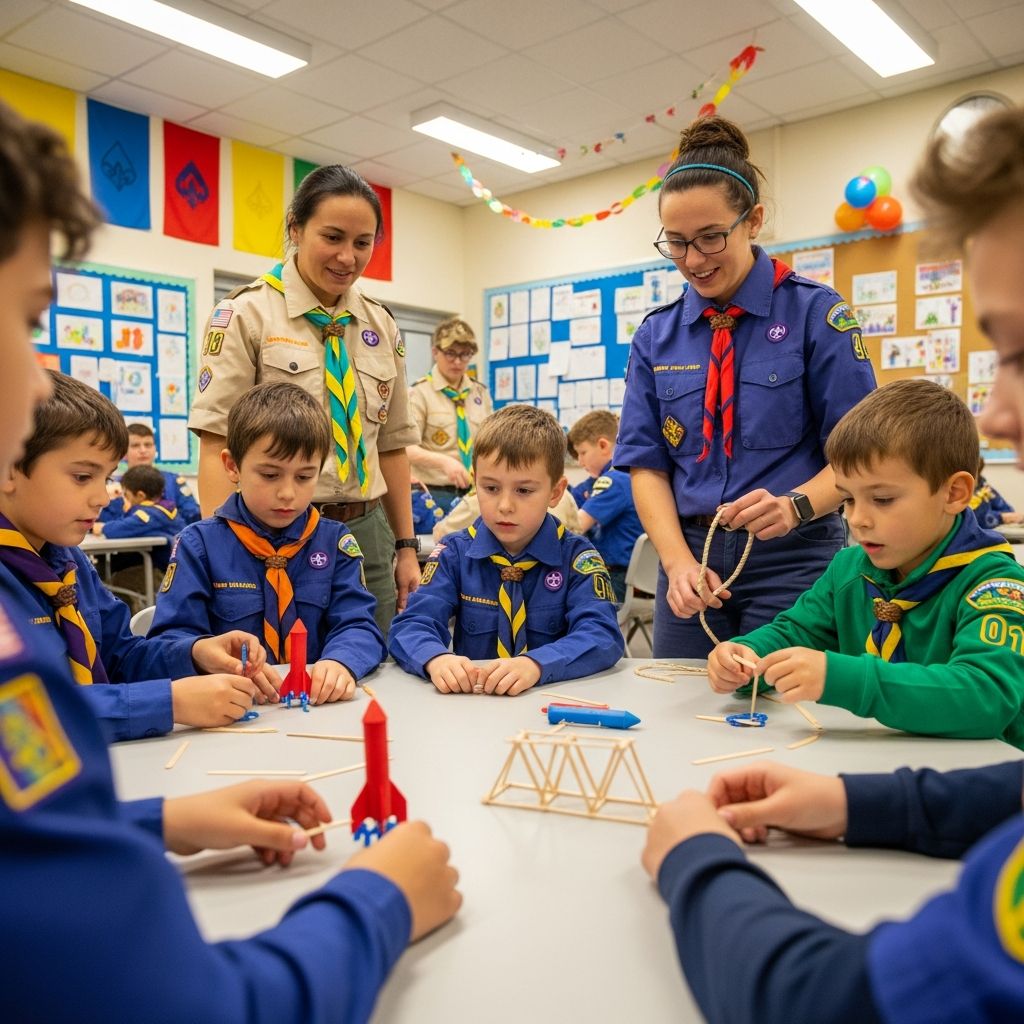
- STEM Exploration Night – Simple science demonstrations, building challenges, and model rocket awards.
- Heroes in Our Community – A visit from firefighters or police officers, service awards, and thank-you cards.
- Blue and Gold Celebration – Anniversary party for Scouting with a special meal, key advancement awards, and pack history.
- Space and Exploration Night – Constellation crafts, a moon-walk relay, and a brief talk about exploration.
Theme Planning Checklist
- Choose a theme that connects to at least one rank adventure or pack goal.
- Decide on decorations and a simple visual focus, such as a themed banner or table display.
- Align at least one game, one song or skit, and the Cubmaster’s minute with the theme.
- Plan a short way to involve parents (for example, trivia questions or a simple activity related to the theme).
Designing a Smooth Meeting Flow
Even the best ideas can fall flat without a clear structure. A predictable flow helps Scouts know what to expect and keeps the meeting moving. Think of your pack meeting in three segments: before, during, and after the formal program.
Sample Pack Meeting Agenda
| Segment | Time | Activity | Key Tips |
|---|---|---|---|
| Gathering | 10 minutes | Simple arrival activity or game as families check in. | Use self-directed stations so late arrivals can join easily. |
| Opening | 5–10 minutes | Flag ceremony, Scout Oath/Law, brief welcome. | Assign to a den; rotate monthly to build responsibility. |
| Main Program | 25–35 minutes | Theme activity, skits, songs, guest speaker, games. | Alternate high-energy and quieter elements to keep attention. |
| Awards | 10–15 minutes | Hand out badges, belt loops, and other recognitions. | Call each Scout by name and celebrate every success. |
| Announcements | 5 minutes | Upcoming events, sign-ups, reminders. | Keep it short and use handouts or email for details. |
| Closing | 5 minutes | Cubmaster’s minute and closing ceremony. | End with an inspiring or humorous thought tied to the theme. |
| After | 10 minutes | Informal visiting, clean-up, leader debrief. | Assign clean-up to different dens or families each month. |
Timing and Pacing Tips
- Keep the entire meeting to about 60–75 minutes so younger Scouts stay engaged.
- Alternate loud and quiet activities (song, then award, then game) to reset energy.
- Have a printed run-down for key leaders so everyone knows what happens next.
- Plan “backup” micro-activities (simple cheers, quick questions) to fill unexpected gaps.
Creating an Exciting Gathering Activity
The moment families walk through the door sets the tone. A good gathering activity gives early arrivals something fun to do and reduces chaos in the first few minutes. It should be simple, self-directed, and safe for all ages.
Easy Gathering Activity Ideas
- Themed Scavenger Hunt – Scouts get a card with items or symbols to find around the room.
- Guessing Jar – Fill a clear container with small items (marbles, beads, candy) and let everyone guess the number.
- Skill Station – A knot-tying rope line, a mini-craft, or a map-symbol matching activity.
- Photo Wall – Display pictures from recent outings and invite Scouts to find themselves and share memories.
- Sign-In Challenge – Have families sign in and answer a fun question related to the theme (e.g., “Your dream camp destination”).
Assign a den or a pair of parents to host the gathering activity each month so that the Cubmaster is free to greet new families and handle last-minute needs.
Making Ceremonies and Awards Memorable
Award recognition is often the emotional heart of the meeting. Instead of quickly handing badges to parents at the back of the room, turn awards into a short, meaningful ceremony that shows Scouts how proud the pack is of their work.
Elements of a Strong Award Segment
- Explain briefly what an award means before calling names.
- Call each Scout to the front, shake hands, and look them in the eye.
- Encourage applause and cheers for every Scout, regardless of the size of the award.
- Invite parents to stand with their Scout for rank advancements or major recognitions.
- Take a quick group photo of award recipients for the pack newsletter or website.
Creative Award Presentation Ideas
- Theme-Based Props – Present “space” awards on a cardboard rocket, or “outdoor” awards from a mock campfire.
- Trail to Advancement Board – Use a large poster with a trail or ladder and move each Scout’s name marker as they reach big milestones.
- Spirit Ribbons – Give a traveling ribbon or small banner to the den showing the best spirit, teamwork, or attendance.
- Instant Recognitions – Offer small stickers or fun patches for participation in games, skits, or service projects.
Keeping Scouts Actively Engaged
The difference between a “long” meeting and a “fast” one is almost always level of engagement. Plan for Scouts to do something every few minutes: sing, respond to a question, vote, move to a new station, or cheer for a friend.
Interactive Meeting Ideas
- Den Skits or Run-Ons – Short, silly performances that give every Scout a chance to be on stage.
- Audience Participation Songs – Simple repeat-after-me or motion songs that get the room moving.
- Game Interludes – Quick games like “Scout Says,” relay races, or simple team challenges.
- Voting and Shout-Outs – Ask for favorite memories, vote for the next theme, or invite Scouts to thank a leader or parent.
- Hands-On Demonstrations – Short demonstrations of outdoor skills, science experiments, or safety tips where Scouts can volunteer as helpers.
Rotate responsibility for skits, songs, and games among dens so the meeting does not depend on one or two adults leading every part.
Involving Parents and Families
A pack meeting is one of the best tools for building a family-centered program. When parents feel valued, informed, and connected, they are far more likely to volunteer and stay engaged over time.
Ways to Engage Parents
- Welcome new families by name, introduce them, and pair them with a “buddy” parent.
- Use a short “parent moment” after awards to share one practical tip for supporting Scouting at home.
- Post a simple “help wanted” board at every meeting with clearly defined jobs of all sizes.
- Invite parents to play in one of the games or participate in a friendly parent-vs-Scout challenge.
- Encourage parents to submit photos, stories, or ideas for future pack meetings.
Be specific when asking for help: instead of asking for “leaders,” ask for someone to run the next gathering game, organize a snack schedule, or manage the pack photo archive.
Managing Logistics and Communication
Behind every impressive pack meeting is a simple but solid communication plan. Families cannot participate in what they do not know about, and leaders cannot perform well if they are surprised by last-minute changes.
Pre-Meeting Logistics Checklist
- Confirm the meeting space, time, and any access needs (keys, tables, chairs, sound system).
- Prepare and test any audio-visual equipment, microphones, or speakers.
- Print or digitally share a one-page outline with key leaders and den leaders.
- Gather all supplies in a single bin labeled by activity.
- Prepare a brief script for the opening, awards, announcements, and closing.
Communicating with Families
- Send a reminder 3–5 days before the meeting with location, start time, and any special instructions.
- Highlight the theme and what Scouts might wear or bring (e.g., Class A uniforms, favorite hat, small flashlight).
- Provide an overview of major awards or recognitions that will be presented.
- Use more than one channel: email, texting apps, social media, and in-person reminders at den meetings.
Ending Strong: The Cubmaster’s Minute and Closing
The final few minutes of the pack meeting leave a lasting impression. A short, thoughtful “Cubmaster’s minute” gives meaning to the night’s activities and connects them to the values of Scouting.
Tips for a Powerful Closing
- Keep the Cubmaster’s minute to one or two minutes focused on a single idea.
- Use a simple story, observation, or object lesson that ties to the theme of the night.
- End on a positive, encouraging note that thanks Scouts, leaders, and parents.
- Use a consistent closing ceremony (closing flag, song, or circle) so Scouts recognize the moment.
After the official closing, encourage informal conversations, sign-ups, and quick feedback while Scouts help with clean-up and putting away supplies.
Continuous Improvement: Learning from Each Meeting
Even the best pack meeting can be better next time. Build in a simple habit of reflection so leaders can learn what worked well and what needs adjustment. Over time, this feedback loop will steadily improve your program.
Post-Meeting Debrief Ideas
- Gather key leaders for a five-minute hallway huddle after the meeting.
- Ask three quick questions: What worked? What didn’t? What should we change?
- Invite den leaders to share feedback from Scouts and parents.
- Keep notes in a simple notebook or shared document for future planning.
- Celebrate one success from the night, such as a new family who returned or a shy Scout who participated.
Frequently Asked Questions
How long should a Cub Scout pack meeting last?
Most packs find that 60 to 75 minutes works best for elementary-aged Scouts. Shorter than an hour can feel rushed, while longer than an hour and fifteen minutes can stretch attention spans, especially on school nights.
How often should we hold pack meetings?
Many packs choose to hold one pack meeting per month during the main program year, with weekly or bi-weekly den meetings in between. Some units add special events such as the Pinewood Derby, camping trips, or service projects that take the place of a standard pack meeting.
What if our pack is small or just starting?
Small packs can still host amazing pack meetings by combining roles and focusing on a few strong elements. Consider partnering with another local pack for special events, and rotate responsibilities so no one leader becomes overwhelmed.
Do we have to follow the same agenda every time?
Using a consistent framework is helpful, but you can vary activities inside that structure. For example, keep the pattern of gathering, opening, main program, awards, announcements, and closing, while changing the games, skits, and themes monthly.
How can we make awards more meaningful for older Cub Scouts?
As Scouts grow, invite them to help present awards, explain achievements in their own words, or share highlights from completing an adventure. Recognize leadership, helpfulness, and service as well as formal rank advancement.
When you design a pack meeting that celebrates accomplishments, invites families into the story, and keeps Scouts engaged from start to finish, you create more than just an event. You build traditions, strengthen your pack community, and give young Scouts the kind of memories that will stay with them long after they age out of Cub Scouting.