Joint birthday parties can save time, money, and energy while giving your kids or friends a memorable celebration they share together. With a bit of planning, you can host one event that feels special and fair to every guest of honor.
Why Choose a Joint Birthday Party?
Hosting a shared celebration is about more than convenience; it is a way to bring families and friends together for one fun occasion instead of juggling multiple events. When done thoughtfully, a joint birthday party can strengthen bonds between siblings or friends and reduce planning stress for adults.
Instead of repeating similar decorations, snacks, and games on two separate dates, you can pour your energy into one well-organized gathering. That means better-quality activities, more creative details, and a more relaxed host who actually gets to enjoy the party.
Start With the People, Not the Theme
Before obsessing about colors, cake designs, or favors, begin by understanding who the birthday honorees are and how they like to celebrate. Their ages, personalities, and social circles all shape the tone of the party.
- Talk to each birthday child or adult about what makes a party feel fun for them.
- Ask which friends they really want there and what activities they enjoy most.
- Clarify any hard “no” preferences: foods they dislike, themes they dislike, or games they find boring.
Once you know what matters most to each person, you can design a party that reflects both of them instead of defaulting to a generic idea that fits no one well.
Smart Guest List and Invitations
Joint parties can grow quickly because you are combining friend groups and relatives. Think strategically about how many people you can host comfortably in your space or chosen venue.
- Make separate draft lists for each honoree, then merge and edit for balance.
- Consider a cap per birthday child if space or budget is tight.
- Be mindful of school or daycare dynamics so no one feels excluded or overwhelmed.
On invitations, clarity prevents awkward moments at the door. Clearly list both birthday honorees, the shared time and place, and any helpful clarifications such as “No gifts needed” or “One small gift for both is plenty.” This helps guests understand that the event is truly shared and not two separate parties squeezed into one.
Choosing a Theme Everyone Loves
The perfect joint party theme is broad enough to include both honorees but flexible enough to highlight their differences. You do not have to pick a single hyper-specific idea; blending or layering concepts can work beautifully.
Neutral, Flexible Theme Ideas
- Color mash-up: Each honoree picks a color and you build decor, tableware, and cake accents around both.
- Adventure or travel: Maps, postcards, mini suitcases, and different “destinations” that showcase each person.
- Outdoor fun: Bubbles, chalk, lawn games, and picnic-style food that works for multiple age groups.
- Creativity corner: Art stations, building blocks, or crafts where each honoree has a featured project.
Split-but-Connected Theme Ideas
If the birthday people have very different interests, try a theme pairing that feels playful instead of clashing.
- “Space & Sea”: one side rockets and stars, the other side ocean creatures and waves.
- “Sports & Stories”: one corner with mini sports challenges, another with cozy reading and character decor.
- “Garden & Galaxy”: flowers and butterflies on one table, planets and constellations on the other.
Use a unifying element—like color palette, shared banner style, or consistent fonts—to tie the two mini-themes into a single celebration.
Fairness First: Making Each Honoree Feel Seen
The biggest emotional challenge of joint birthdays is making sure no one feels like an extra at someone else’s party. The secret is visual and experiential balance, not mathematical perfection.
- Give each honoree at least one segment of the party where attention is clearly centered on them.
- Let each choose something meaningful: the game, the playlist starter, or a favorite snack.
- Use their names equally on banners, invitations, and cake details.
Whenever possible, involve older kids in decisions so they understand why certain compromises are needed. That sense of ownership often reduces jealousy and increases enthusiasm.
Joint Party Schedule That Actually Works
A simple, predictable schedule keeps kids and adults relaxed. You want enough structure to avoid chaos but enough freedom that guests can mingle and explore activities at their own pace.
| Time | Activity | Focus |
|---|---|---|
| 0:00–0:15 | Arrivals, free play, music | Both / casual |
| 0:15–0:35 | Game or craft round 1 | Honoree A chooses activity |
| 0:35–0:55 | Game or craft round 2 | Honoree B chooses activity |
| 0:55–1:10 | Snack or light meal | Both, seated |
| 1:10–1:25 | Cake songs & candles | Two separate songs, one for each |
| 1:25–1:55 | Open play, photo time, optional gifts | Both / relaxed |
| 1:55–2:00 | Goodbyes and favor pickup | Both |
For older kids or adults, swap crafts for more complex games, a trivia match, or a short activity that reflects their interests—like a mini tasting table, a photo challenge, or a collaborative playlist game.
Cakes, Candles, and Sweet Treats
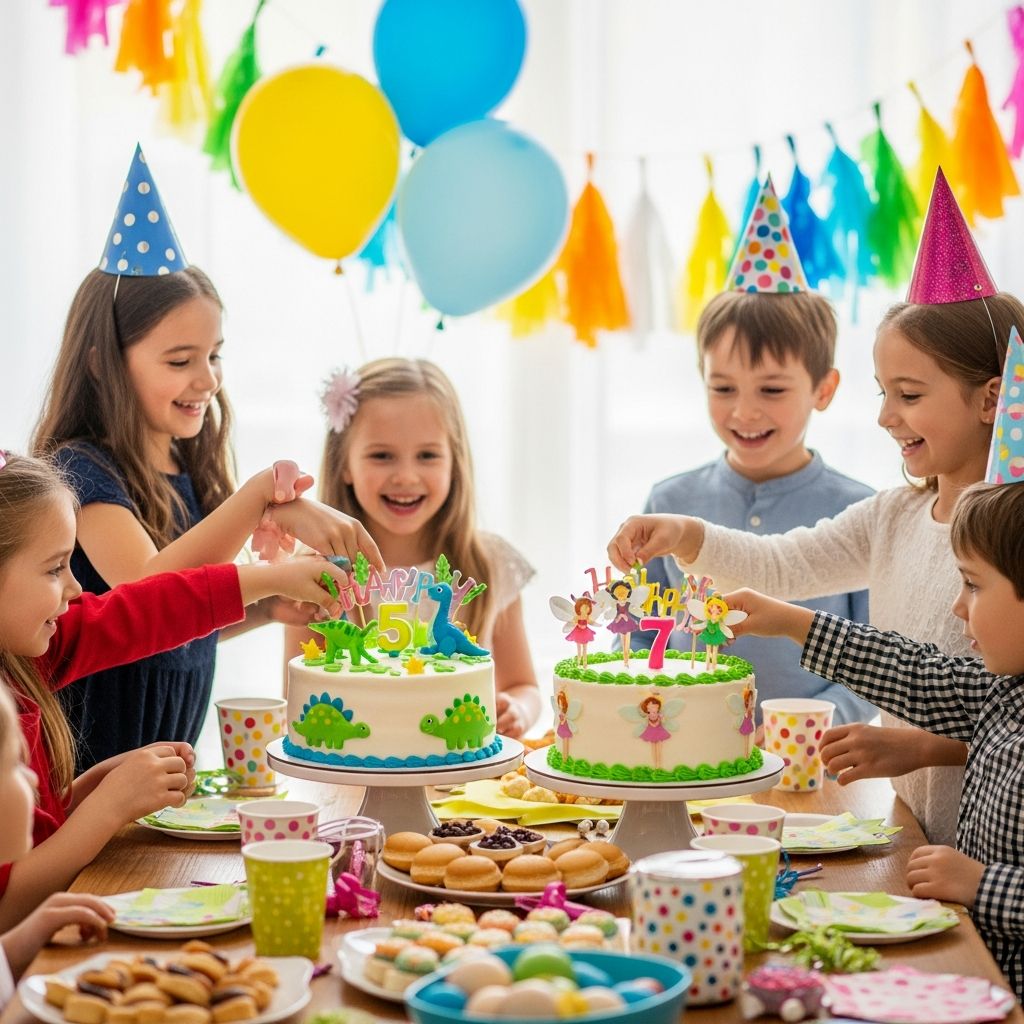
Cake can be surprisingly emotional, especially for kids. A joint party is not the time to ask two strong personalities to share a single tiny section of frosting and one wish. Whenever possible, plan for two distinct desserts.
- Two small cakes: Each honoree chooses their flavor and design. They can share a cake stand or be displayed side-by-side.
- Cake plus cupcakes: One big cake with both names, paired with custom cupcakes decorated for each person.
- Alternative treats: Consider pies, donuts, ice cream sundaes, or cookie towers if cake is not their favorite thing.
Sing the birthday song separately for each person, even if the group stays gathered in the same spot. It only adds a couple of minutes, and it communicates clearly that both are equally celebrated.
Decor Layout That Keeps the Peace
Thoughtful party layout can do half the emotional heavy lifting for you. By visually dividing the space while keeping a consistent overall look, you allow each honoree to feel represented without turning the room into two competing events.
Simple Layout Strategies
- Create two focal zones, each with a small banner, themed items, and photos of one honoree.
- Use tablecloth colors to signal each person’s zone—for example, one color for each child and a third neutral color for shared areas like the food table.
- Reserve one photo wall or backdrop where both names or initials appear together for group shots.
Keep shared spaces neutral and flexible: the main food table, drink station, and open play or seating areas should not scream one person’s style more than the other’s.
Activities for Mixed Ages and Interests
Joint parties often bring a wider age range or a mix of energetic and quieter guests. The key is offering choices instead of forcing everyone into the same high-intensity game at the same time.
- Pair an active station (like a mini obstacle course) with a calm corner (like coloring, stickers, or puzzles).
- Rotate through short, simple games so kids are never stuck in something that doesn’t fit their energy level.
- Design one activity that symbolizes the shared nature of the party, like a group mural, a time capsule box, or a giant birthday card signed by everyone.
Adults and teens may prefer fewer structured activities and more chances to talk, take photos, or enjoy music. For them, think in terms of interactive stations (DIY snack bar, photo booth, mini game table) rather than tightly scheduled rounds of play.
Simple, Crowd-Friendly Menu Ideas
Feeding two sets of guests does not mean doubling your effort. A well-planned buffet-style setup lets everyone serve themselves and go back for seconds without creating a long, awkward line.
- Offer 1–2 main options, such as build-your-own sandwiches and a big pasta or grain salad.
- Include at least one familiar, kid-friendly item like cheese pizza, mini sliders, or quesadillas.
- Provide easy grab-and-go snacks like cut fruit, veggie sticks, popcorn, or pretzels.
- Make drinks self-serve with labeled pitchers or dispensers, clearly marked for water, juice, and any special options.
Label food items, especially if there are allergies to consider. This avoids the constant “What is in this?” questions and helps kids and adults make quick choices.
Party Favors Without the Chaos
Joint parties create an easy opportunity for confusion at the favor table. To keep it smooth, decide in advance whether every guest gets the same thing or whether favors differ by age group.
- Choose universal items like small activity books, craft kits, or reusable cups that work for a wide age range.
- If ages vary widely, prepare two versions of the same idea (for example, crayons and simpler stickers for younger kids, gel pens and more complex stickers for older ones).
- Add a simple thank-you tag with both honorees’ names to emphasize that the favor comes from both of them.
Hand out favors as guests leave rather than letting them dig through a basket early in the party. This prevents lost items and early distractions.
Managing Gifts and Expectations
Gifts at a joint party can raise tricky questions: Should each guest bring two gifts? One shared gift? None at all? Setting expectations early simplifies everything for your guests and your budget.
- Use the invitation to clarify: for example, ask for no gifts, one small gift to be shared, or the option to contribute to one experience (like lessons or an outing).
- Consider opening gifts after most guests leave or at home if opening them in front of a mixed-age crowd might cause hurt feelings.
- Encourage grandparents or close relatives who want to give bigger gifts to do so privately, outside of party time.
When kids understand in advance how gifts will work, they are less likely to compare or feel slighted in the moment.
Budget Tips: Save Money, Keep the Fun
One of the biggest benefits of a joint birthday party is the built-in cost sharing. Even if only one household is paying, consolidating expenses into one event can significantly reduce the total outlay.
- Share big-ticket items like venue rentals, bounce houses, or entertainers between families.
- Prioritize: spend on what guests will actually remember (activities and food) and simplify extras like themed napkins.
- Keep decor reusable where possible: fabric tablecloths, neutral banners, and sturdy serving pieces.
If you are hosting at home or a park, lean on low-cost activities like classic games, DIY crafts, and music-based challenges instead of expensive add-ons.
Frequently Asked Questions About Joint Birthday Parties
Is a joint birthday party right for every set of siblings or friends?
Not always. If one child strongly values individual attention or the age gap is very large, a shared event might feel unfair to them. In such cases, consider a small separate celebration—like a special family dinner or outing—even if you still hold a joint party for friends.
How do I avoid hurt feelings if the kids want different things?
Start with a family or group discussion where each person lists their top two or three priorities. Look for overlap and use that as your starting point. Then trade off on the remaining decisions so each honoree gets their own non-negotiable item, whether that is a particular dessert, game, or song.
What if one birthday child is more outgoing than the other?
Adjust the plan so the quieter child has smaller, comfortable moments of focus: a short speech, a relaxed cake song, or a special photo time with their closest friends. Allow them to skip any spotlight activity that makes them uncomfortable, like group performances or large announcements.
Can I host a joint party for different age groups?
Yes, as long as the activities and schedule respect both groups. Provide age-appropriate zones—for example, a toddler-friendly play area and a more structured game corner for older kids. Keep at least one or two shared experiences so everyone still feels part of the same overall celebration.
How far in advance should I start planning?
For small, at-home parties, starting four to six weeks ahead generally gives you plenty of time to coordinate schedules, invitations, and simple decor. Larger events with venue rentals or entertainers may need two to three months of lead time, especially during busy seasons.
Make It About Connection, Not Perfection
The most memorable joint birthdays are not the ones with the most elaborate decorations or the longest guest list. They are the parties where both honorees feel genuinely celebrated and guests leave saying they had a relaxed, joyful time.
Focus on a few meaningful details, like personal touches in decor and moments of individual recognition, and let go of the pressure to stage an event that looks flawless in photos. When the atmosphere is kind, inclusive, and fun, the party is already a success.