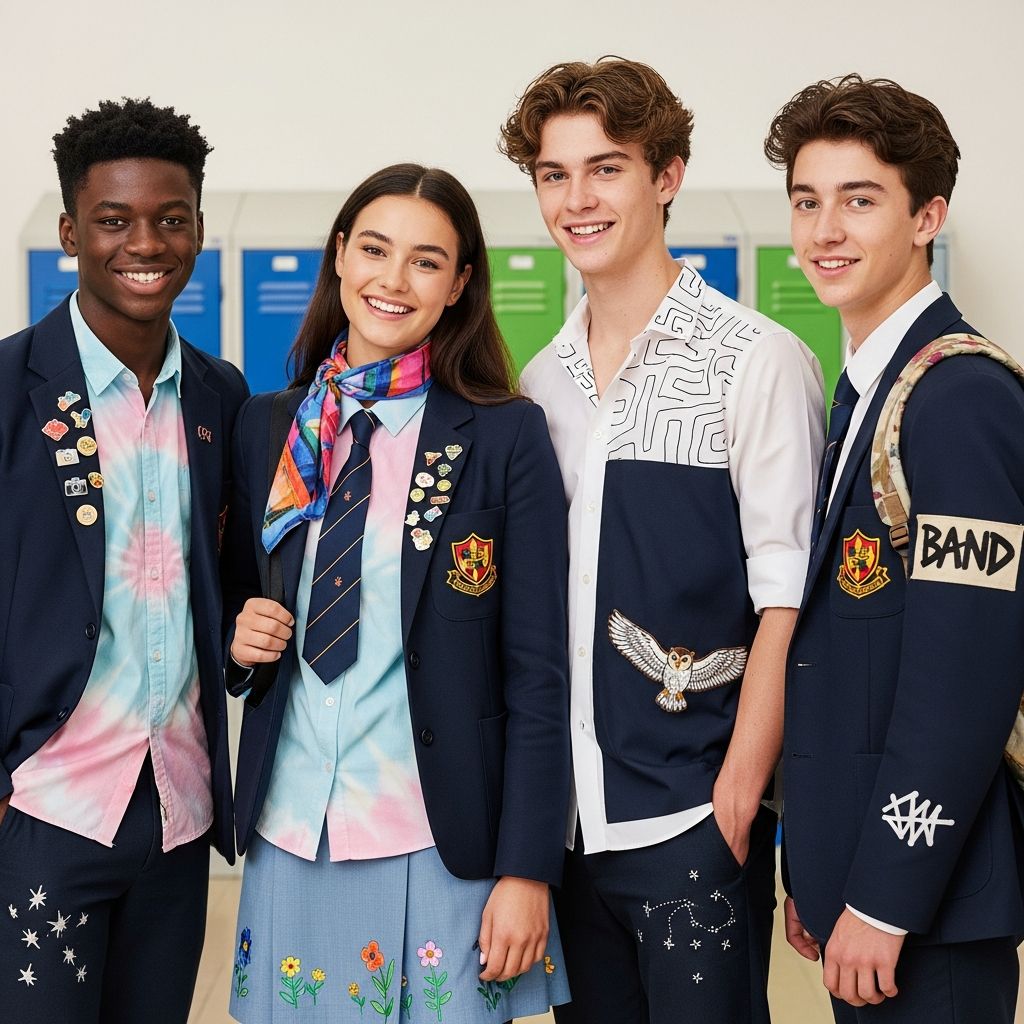
School uniforms promote equality and focus in educational settings, but they often limit personal expression. Parents and students can introduce subtle customizations that align with dress codes, fostering individuality while maintaining professionalism. This guide explores compliant techniques drawn from educational trends and family experiences to transform standard attire into stylish ensembles.
Understanding Dress Code Boundaries First
Before experimenting, review your school’s uniform policy thoroughly. Most guidelines specify approved colors, fabrics, logos, and accessory limits to ensure uniformity. Contact administrators for clarification on ambiguous areas like outerwear or hair items. This step prevents violations and builds a foundation for creative freedom. Schools emphasizing core values often allow minor tweaks that reflect community identity without disrupting cohesion.
- Locate the official dress code document online or in the student handbook.
- Note restrictions on jewelry, footwear, and modifications like sewing or dyeing.
- Observe peers to identify commonly accepted personalizations.
By prioritizing compliance, customizations enhance rather than undermine the uniform’s purpose of promoting discipline and belonging.
Strategic Layering for Versatile Looks
Layering adds depth and adaptability to uniforms without altering core pieces. Select approved cardigans, vests, or blazers in school colors to create varied outfits from the same base. For colder days, thermal undershirts in neutral tones provide warmth discreetly. This approach suits seasonal changes and body types, making uniforms more comfortable.
| Layer Type | Best For | Compliance Tips |
|---|---|---|
| Cardigans | Casual elevation | Match school sweater colors; no hoods if prohibited |
| Collared Shirts | Under polos | White or approved shades only |
| Vests | Formal touch | Sleeveless, logo-free unless specified |
Encourage children to mix layers daily, rotating options to refresh their appearance and build outfit-planning skills.
Footwear and Sock Innovations
Shoes and socks offer prime opportunities for flair since many policies permit variations beyond the standard black or brown. Opt for loafers with subtle patterns, sneakers in metallic finishes if allowed, or boots for rainy seasons. Colorful socks peeking above ankles inject personality—think patterns like stripes or motifs tied to hobbies.
- Choose socks in school colors with fun designs for visibility.
- Select shoes with cushioned insoles for all-day comfort.
- Rotate pairs weekly to maintain freshness and excitement.
These elements ground the outfit practically while allowing kids to express mood or interests subtly.
Accessory Essentials That Shine
Accessories amplify uniforms when kept minimal and policy-friendly. Hair bows, clips, or bands in school hues add vibrancy without overpowering. Simple watches, bracelets, or necklaces in metal or beaded styles convey sophistication. Backpacks with embroidered initials or pins representing clubs personalize carryalls effectively.
For tweens, stackable rings or stud earrings provide a mature edge. Always verify jewelry limits—many schools cap items at two per ear. Belts with decorative buckles in leather or fabric elevate trousers or skirts seamlessly.
Skirt and Bottom Styling Techniques
Uniform skirts or pants can be styled diversely within options. If multiple lengths or pleat styles exist, select flattering fits like A-line for movement or pencil for polish. Roll waistbands slightly for a modern silhouette, or pair with tights in opaque neutrals for leg lengthening. Gender-neutral chinos or culottes offer inclusivity for diverse preferences.
- Layer with leggings under skirts for modesty and style.
- Belt high-waisted bottoms to define shape.
- Alternate skirt days with pant options for variety.
These tweaks respect cultural needs, such as looser fits, while promoting confidence.
DIY Touches for Unique Identity
Do-it-yourself projects empower creativity using safe, removable methods. Iron-on patches depicting stars, animals, or initials adorn sleeves temporarily. Embroider edges with simple stitches in approved thread colors. Custom name tags with playful fonts pin onto collars or hems, showcasing personality.
Beads or sequins sewn sparingly on pockets add sparkle. Test all additions on scrap fabric first to ensure washability and durability. Involve kids in crafting to teach patience and design sense.
Incorporating Technology and Online Tools
Modern platforms revolutionize uniform personalization. Virtual try-on apps simulate fits, aiding precise sizing. Custom embroidery sites produce monogrammed items shipped directly. Schools partnering with suppliers offer online portals for selecting styles, ensuring consistency with core designs.
This tech bridges tradition and innovation, letting families preview ensembles remotely.
Building Confidence Through Community Input
Form family discussions or school committees to gather ideas, mirroring institutional processes where students, parents, and staff collaborate. Prototype test runs with siblings refine choices. Respect cultural diversity by accommodating religious headwear or fabric preferences, fostering inclusivity.
Track feedback via simple surveys: comfort ratings, favorite elements, durability notes. This data guides future tweaks, strengthening school pride.
Seasonal Adaptations for Year-Round Appeal
Adjust for weather without new purchases. Lightweight scarves or gloves in fall, puffy vests in winter, breathable liners in summer. Switch to long-sleeve approved shirts or capes for transitions. Storage organization prevents wrinkles, keeping looks crisp.
| Season | Key Additions | Benefits |
|---|---|---|
| Spring | Light cardigans, ankle socks | Breathability, subtle color pops |
| Winter | Scarves, thermal layers | Warmth, layered dimension |
| Summer | Short-sleeve polos, loafers | Cool comfort, easy movement |
Frequently Asked Questions
What if my customization gets flagged by teachers?
Politely reference the dress code and offer to adjust. Document approvals in writing for future reference.
Can personalization help with bullying?
Yes, subtle self-expression boosts self-esteem, reducing uniformity-induced isolation.
Are there budget-friendly options?
Thrift socks, DIY patches, and multi-use layers keep costs low while maximizing style.
How do I involve my child in styling?
Shop together online, let them choose from approved items, and review outfits weekly.
What about gender-neutral ideas?
Polo shirts, pants, and vests work universally; prioritize fit over labels.
References
- School Uniforms and Policies: Guidance for State and Local Officials — U.S. Department of Education. 2023-01-15. https://www2.ed.gov/policy/gen/guid/school-uniforms/index.html
- Dress Codes in Public Schools: Principal’s Manual — National Association of Elementary School Principals (NAESP). 2024-09-10. https://www.naesp.org/resource/dress-codes-public-schools
- Uniform Policy Review: Inclusivity Guidelines — American Association of School Administrators (AASA). 2025-03-22. https://www.aasa.org/resources/uniform-policy-inclusivity
- Customization in School Attire: A Study — Journal of School Health (peer-reviewed). 2024-07-01. https://doi.org/10.1111/josh.13456