Few toys inspire as much creativity and joy as LEGO bricks, but nothing can turn a peaceful home into chaos faster than a scattered sea of tiny plastic pieces. Parents want to encourage imaginative play, yet the constant clutter and painful encounters with bricks underfoot can make LEGO feel more like a burden than a blessing.
This guide walks through realistic, family-tested strategies to organize LEGO collections without killing creativity. Instead of a one-size-fits-all system, it helps you choose an approach that matches your space, your kids’ personalities, and how your family actually plays.
Understanding Your Family’s LEGO Style
Before buying containers or redesigning a playroom, it helps to understand how your family uses LEGO. Some kids love following instructions and rebuilding sets; others prefer to mix every brick into wild new creations. Matching your storage to real habits makes it more likely the system will last.
- Instruction-followers: These builders enjoy following booklets and recreating the original set. They often want to keep sets together and find specific pieces quickly.
- Freestyle creators: These kids love to dump everything out, mix the colors, and build whatever comes to mind. They care less about sets and more about possibilities.
- Collectors and display fans: Some children prize finished models, wanting shelves to display vehicles, castles, and favorite minifigures.
- Occasional builders: If your kids only build in bursts, a simple, low-maintenance system can keep clutter in check between phases.
Once you know your LEGO style, you can pick a storage strategy that feels natural, not forced. The best system is the one your kids will actually use on a busy weekday afternoon.
Setting Realistic Goals for LEGO Organization
A perfectly sorted LEGO wall might look gorgeous on social media, but it is not always practical for most homes. Instead of chasing perfection, define what “organized enough” looks like for your family. Clear, simple goals will guide your decisions and keep the project manageable.
- Reduce tripping hazards and make floors safer to walk on.
- Help kids find favorite pieces or sets without turning the room upside down.
- Make cleanup fast enough that kids can do it mostly on their own.
- Protect special builds from breaking or getting lost.
When expectations are realistic, you are more likely to stick with your system and less likely to feel guilty when bricks still escape into unexpected places.
Quick-Start Solutions for Overwhelmed Parents
If your current situation feels like pure LEGO chaos, start with very simple steps. You can always evolve the system later once the worst of the mess is under control. Think of this as first aid for a brick explosion.
Step 1: Create a Single “Home Base”
Designate one main location in your home where LEGO is allowed to live and spread during play—often a playroom, corner of the living room, or your child’s bedroom. Consolidating the collection stops it from creeping into every room.
- Choose a space with good lighting so kids can see small pieces.
- Use a rug or mat to visually mark the LEGO zone.
- Agree as a family that LEGO should leave this area only for short-term projects.
Step 2: Contain First, Sort Later
Instead of trying to sort immediately, focus on getting every loose brick into a container. This instantly makes your home feel calmer and safer, even if nothing is categorized yet.
- Use a large lidded bin, storage tote, or sturdy basket.
- Sweep or scoop bricks into the bin using a dustpan or your hands.
- Label the container with something simple like “LEGO – All Bricks” to set the expectation that this is their new home.
Once everything is contained, you can take time later (with kids helping) to decide if you want a more detailed system.
Choosing a LEGO Storage Strategy
There is no single “right” way to sort LEGO. The best method depends on how many pieces you own, how much storage space you have, and how picky your builders are about finding specific elements. Below is a comparison of three popular approaches.
| Sorting Method | Best For | Pros | Cons |
|---|---|---|---|
| All Bricks in One Bin | Young kids, small collections, casual builders | Simple to maintain; fastest cleanup; minimal cost | Harder to find specific pieces; more digging during play |
| Sorted by Color | Medium collections, kids who enjoy visual order | Looks tidy; easier to find colors for creative builds | Time-consuming to set up; kids may not keep it perfect |
| Sorted by Type/Category | Large collections, serious builders, older kids | Very efficient for building; great for complex creations | Requires many containers and ongoing maintenance |
Simple Bin Systems That Actually Work
For most families, a flexible bin system is the sweet spot between chaos and perfection. Bricks have a defined home, but kids do not need to think too hard about where each piece goes. A good rule of thumb: the easier cleanup is, the more likely it is to happen.
Basic Level: One or Two Big Bins
This is the easiest long-term solution and often enough for families with younger children or modest collections.
- Use one large container for all general bricks.
- Add a second smaller container for minifigures and tiny, easily lost pieces.
- Reserve a shelf or box elsewhere for completed builds that kids want to keep intact.
This approach reduces stress and works especially well when kids care more about playing than preserving specific sets.
Intermediate Level: Color or Size-Based Sorting
When the collection grows, breaking things into a few simple categories can help. Avoid going into too much detail at first; you can refine later if it proves successful.
- Sort into broad color groups such as light colors, dark colors, and special colors (like transparent or metallic).
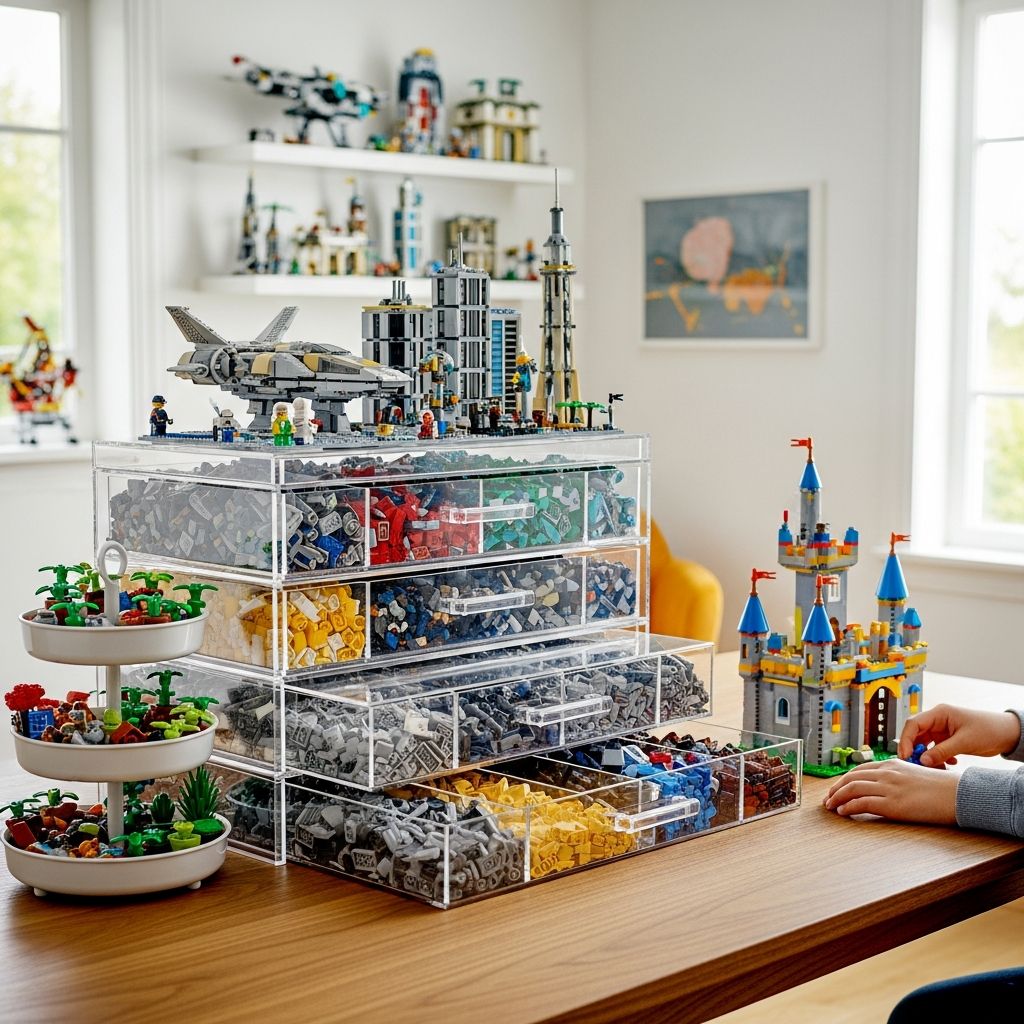
- Use shallow bins or drawers so kids can see more pieces at once.
- Consider separate containers for wheels, windows and doors, or special accessories.
If the system becomes too tedious, scale back rather than abandoning organization entirely. It is better to have a simple method everyone uses than a perfect plan no one follows.
Designing a LEGO-Friendly Play Zone
Good storage is only half the battle; the play surface and room layout also make a big difference. Setting up a space that encourages creativity while controlling mess helps everyone enjoy LEGO more.
Picking the Right Play Surface
A stable, kid-friendly work area makes building more comfortable and contains small pieces.
- Low tables or coffee tables: Ideal for younger children who prefer to sit or kneel while they build.
- Large trays or foldable tables: Helpful in small homes where play areas need to move or be packed away.
- Play mats with raised edges: Keep bricks from rolling far and make it easier to tip everything back into a bin.
Some families add baseplates to the tabletop so kids can build stable structures without pieces sliding away constantly.
Protecting and Displaying Finished Builds
Once kids complete a favorite model, they often want to admire it or use it for story-based play. Giving these creations dedicated space prevents accidental damage and arguments.
- Use wall shelves, bookcases, or floating ledges for special builds.
- Rotate displays: when shelves get full, have kids choose which models to retire and recycle for parts.
- For fragile or highly prized sets, consider higher shelves out of reach of younger siblings and pets.
Displaying completed builds signals respect for your child’s effort and creativity, turning their work into decor rather than clutter.
Smart Storage Tools and Containers
You do not need fancy, brand-specific organizers to keep LEGO under control. Many families repurpose everyday storage items to create an effective system without overspending.
- Clear plastic drawers: Let kids see what is inside while keeping pieces contained.
- Stackable tubs or shoebox-style bins: Ideal for broad categories like colors or brick sizes.
- Tackle boxes or hardware organizers: Helpful for tiny parts, minifigure accessories, and specialty elements.
- Drawstring play mats or storage bags: Allow kids to spread out bricks on a fabric surface and then quickly gather everything into a portable bag.
Whatever containers you choose, aim for durability, easy open-and-close lids, and sizes that kids can handle without adult help.
Involving Kids in the Organization Process
Any system will fail if children see it as a parent-only project. Inviting kids to help design and maintain the setup makes them more invested in keeping things organized over time.
Let Kids Help Design the System
Instead of announcing a complete plan, ask kids questions and involve them in decisions. This also turns organizing into an opportunity to learn responsibility and problem-solving.
- Ask which pieces are most important to find quickly and store those separately.
- Let kids decorate labels with drawings or symbols they understand.
- Give them choices between simple options like “one big bin” versus “three smaller bins.”
Kids are more likely to use a system they helped create, even if the result is less tidy than a parent-designed blueprint.
Build Cleanup into the Daily Routine
LEGO organization only works if cleanup becomes a habit, not a rare event. Short, predictable routines prevent small messes from turning into overwhelming disasters.
- Set a daily 5–10 minute “brick pickup” time before dinner or bedtime.
- Use a timer and turn cleanup into a mini game or challenge.
- For larger projects, allow a designated “in-progress” tray or shelf where builds can safely sit between sessions.
Consistency matters more than perfection. Even if a few pieces escape each day, regular mini-cleanups will keep the collection manageable.
Managing Instructions, Boxes, and Extra Pieces
Bricks are just one part of the LEGO puzzle. Instruction booklets, empty boxes, and spare parts can quietly add to the clutter if they are not given a home as well.
Storing Instruction Booklets
Instruction manuals help kids rebuild favorite sets or take inspiration for new designs. Keeping them in one place prevents constant hunting.
- Use a binder with clear plastic sleeves to hold booklets grouped by theme or size.
- Store the binder near the main LEGO area so kids can reference it easily.
- Recycle badly damaged or incomplete booklets and consider downloading digital versions for sets that kids rarely rebuild.
Having instructions organized also helps decide which sets to keep intact and which to break down for parts.
Deciding What to Keep or Let Go
Over the years, LEGO collections can quietly multiply. Periodic sorting sessions keep them from completely taking over your storage space.
- Invite kids to choose sets they no longer care about and donate them to schools, community centers, or younger friends.
- Separate broken or heavily chewed pieces and responsibly discard them to avoid safety issues.
- Limit containers: if the bins are full, it might be time to reduce the collection instead of adding more storage.
Learning to curate a collection teaches children valuable lessons about letting go and making room for what they truly enjoy.
Adapting Your System as Kids Grow
What works for a preschooler will not necessarily suit a preteen or teen. LEGO organization should evolve as building skills, interests, and room layouts change. Treat your initial setup as a starting point, not a permanent fixture.
- Young children benefit from larger categories and simpler bins they can manage alone.
- Older builders may prefer detailed sorting by part type for more advanced creations.
- As kids grow, consider giving them more control over how their personal LEGO collection is stored in their room or workspace.
Check in every year or two to see what still works, what feels frustrating, and what could be adjusted to better support your family’s current stage.
Frequently Asked Questions About LEGO Organization
Should LEGO be sorted by color or by type?
Both methods can work, but the best choice depends on how your children think when they build. Sorting by color tends to be more visually appealing and simple for younger kids, while older or more serious builders often prefer sorting by type because it makes finding specific functional pieces easier. If you are unsure, start with broad color groups and adjust over time as you see how your family uses the system.
How can we stop stepping on LEGO all the time?
The most effective way to protect your feet is to define a clear play zone with boundaries and make cleanup part of the daily routine. Use a play mat, table, or rug to contain most of the building activity, and keep a large bin close by so kids can quickly sweep pieces off the floor. Short, consistent pickup sessions are more effective than occasional massive cleanups.
What is the easiest LEGO storage solution for small homes?
If space is limited, aim for portability and vertical storage. Stackable bins that slide under a bed, a lidded tub that tucks into a closet, or a drawstring play mat that doubles as a storage bag all work well. Pair these with a foldable or multipurpose table so the LEGO zone can appear during playtime and disappear when you need the room for other activities.
How do we handle sets that kids want to keep built?
Give finished builds a dedicated display space, such as a shelf or bookcase, and set a clear limit on how many can be out at once. When the area fills up, let children choose which models to disassemble and return to the brick bins. Taking photos of favorite creations before they come apart can ease the emotional side of saying goodbye.
Is it worth investing in specialized LEGO storage products?
Specialized products can be helpful, especially for very large collections or families who build often, but they are not essential. Many parents find that simple, inexpensive containers and a consistent routine are enough to keep LEGO manageable. It is usually best to test a basic system first, then upgrade only if you discover specific needs that generic storage cannot meet.
With a bit of planning, some honest reflection about how your family truly plays, and a willingness to keep things flexible, LEGO can stay a source of joy instead of stress. The goal is not a showroom-perfect playroom but a livable home where creativity has plenty of room to grow—without covering every inch of the floor.