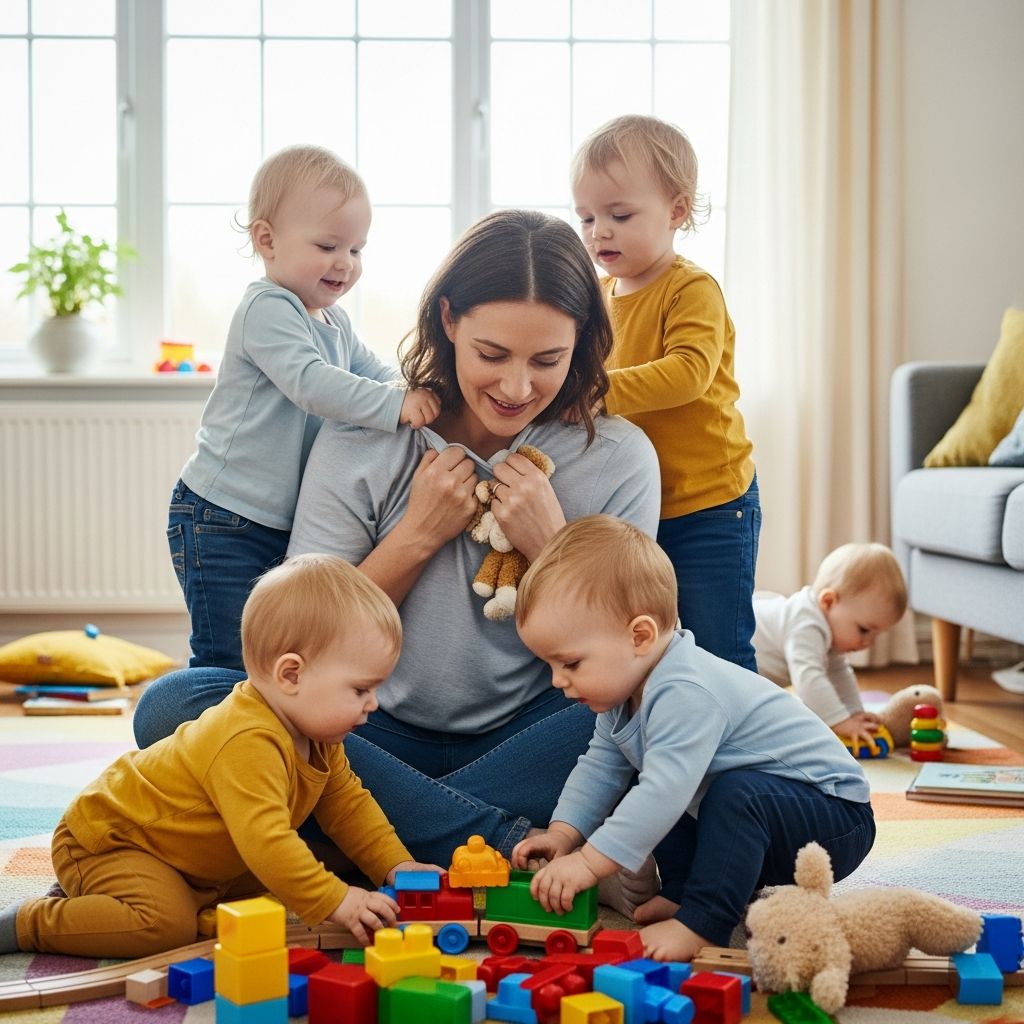
Raising four children all under the age of four presents an unparalleled challenge that tests every aspect of parental endurance. The constant demands of feeding, diapering, soothing, and entertaining can feel overwhelming, yet with targeted strategies, parents can create order from chaos and even find moments of joy. This guide draws on real-world experiences and expert-recommended approaches to help you navigate this intense phase.
Building a Foundation with Predictable Daily Structures
Consistency forms the bedrock of managing multiple toddlers and infants. Without it, days dissolve into reactive firefighting. Start by mapping out a flexible yet reliable daily framework that aligns with your children’s natural rhythms.
- Anchor points: Fix wake-up, meals, naps, and bedtime at consistent times to regulate everyone’s internal clocks.
- Visual aids: Use colorful charts or picture schedules on the fridge so even non-readers understand the flow.
- Transition signals: Employ timers, songs, or hand signals to smoothly shift between activities, reducing resistance.
Consider this sample routine adapted for a household with four young ones:
| Time | Activity | Purpose |
|---|---|---|
| 7:00 AM | Wake & Breakfast | Start day with nutrition and energy |
| 9:00 AM | Group Play/Outdoor Time | Burn energy, promote motor skills |
| 12:00 PM | Lunch & Quiet Play | Recharge before naps |
| 1:00-3:00 PM | Mandatory Nap/Quiet Time | Rest for kids, break for parents |
| 5:00 PM | Dinner Prep with Helpers | Build responsibility |
| 7:00 PM | Wind-Down Routine | Prepare for sleep |
Such structures not only minimize meltdowns but also instill security in children who thrive on predictability.
Empowering Children Through Age-Appropriate Responsibilities
Turning potential helpers into active participants lightens your load significantly. Even the youngest can contribute in small ways, fostering independence and sibling cooperation from an early age.
Begin with simple, achievable tasks:
- Infants (0-1): Hold a toy during cleanup or ‘help’ pass diapers.
- Toddlers (1-2): Place toys in bins, wipe spills with a cloth.
- Preschoolers (3-4): Set table, fold washcloths, assist younger ones with shoes.
Delegate sibling support roles too—let the oldest push a stroller or read to a sibling during downtime. Praise efforts lavishly to reinforce positive behaviors. This approach builds confidence and reduces dependency, creating a team dynamic.
Fostering Emotional Resilience and Sibling Harmony
With multiple children in close proximity, conflicts are inevitable. Proactive emotional tools prevent escalation and teach lifelong skills.
Key practices:
- Model calm: Parents set the tone; deep breaths and neutral tones de-escalate tension before it builds.
- Validate feelings: Acknowledge emotions without solving every issue—’I see you’re frustrated; let’s breathe together.’
- Conflict mediation: Guide siblings to express needs and brainstorm solutions, like using a timer for shared toys.
- Empathy building: Narrate others’ perspectives: ‘Your brother feels sad when you take his truck.’
Regular family huddles—short, positive check-ins—allow everyone a voice, strengthening bonds and preempting blowups.
Carving Out Sacred Self-Care Moments
Parental burnout is real when outnumbered. Prioritizing your well-being ensures you show up as the steady anchor your family needs.
Integrate micro-breaks:
- Nap overlaps: Use collective quiet time for a quick meditation or coffee.
- Early bedtimes: Once kids are down, claim the evening for recharge.
- Mom networks: Swap playdates or vent sessions with fellow parents of multiples.
Don’t underestimate physical outlets—short walks or stretches reset your nervous system. Remember, a recharged parent models healthy habits for children.
Streamlining Logistics for Busy Families
Efficiency hacks turn overwhelming errands into manageable missions.
| Challenge | Solution |
|---|---|
| Meal prep | Batch cook on weekends; involve kids in simple stirring. |
| Outings | Pack ‘adventure bags’ with snacks/toys; choose nearby activities. |
| Laundry chaos | One load per child daily; fold together as family time. |
| Scheduling conflicts | Cluster activities by location/day; use shared calendars. |
Flexibility is key—adapt to growth spurts or teething without rigidity.
Cultivating Individual Connections Amid the Multitude
Each child craves unique attention. Rotate special one-on-one slots, even if brief: a lunch date with the toddler while babies nap, or a story with the newborn during older kids’ play.
These moments affirm individuality, reducing rivalry and boosting security. Track them in a journal to ensure fairness.
Long-Term Mindset: Viewing Chaos as Temporary
This phase, though exhausting, passes. Focus on growth—yours and theirs. Celebrate small wins daily to sustain motivation.
Frequently Asked Questions (FAQs)
What if my kids resist the routine?
Start gradual: Introduce one change weekly, use rewards like stickers, and stay consistent. Patience yields results.
How do I handle unequal needs?
Observe personalities; tailor approaches—more structure for some, flexibility for others.
Is it okay to let siblings resolve fights alone?
Guide initially, then step back for minor issues to build skills, intervening only for safety.
Self-care feels selfish—thoughts?
It’s essential; depleted parents can’t nurture effectively.
Any gear recommendations for multiples?
Strollers for multiples, baby carriers, and organizational bins streamline mobility and storage.
References
- The Mom’s Guide to Managing Multiple Children with Ease — This Crafty Home. 2024-05-14. https://www.thiscraftyhome.com/2024/05/14/managing-multiple-children/
- Tips to help you take care of multiple kids — Doona. Accessed 2026. https://www.doona.com/en-us/parenting-tips/tips-to-help-you-take-care-of-multiple-kids
- 7 Practical Ways to Use Positive Parenting with Multiple Children — Our Daily Mess. 2021-02-19. https://ourdailymess.com/2021/02/19/7-practical-ways-to-use-positive-parenting-with-multiple-children/