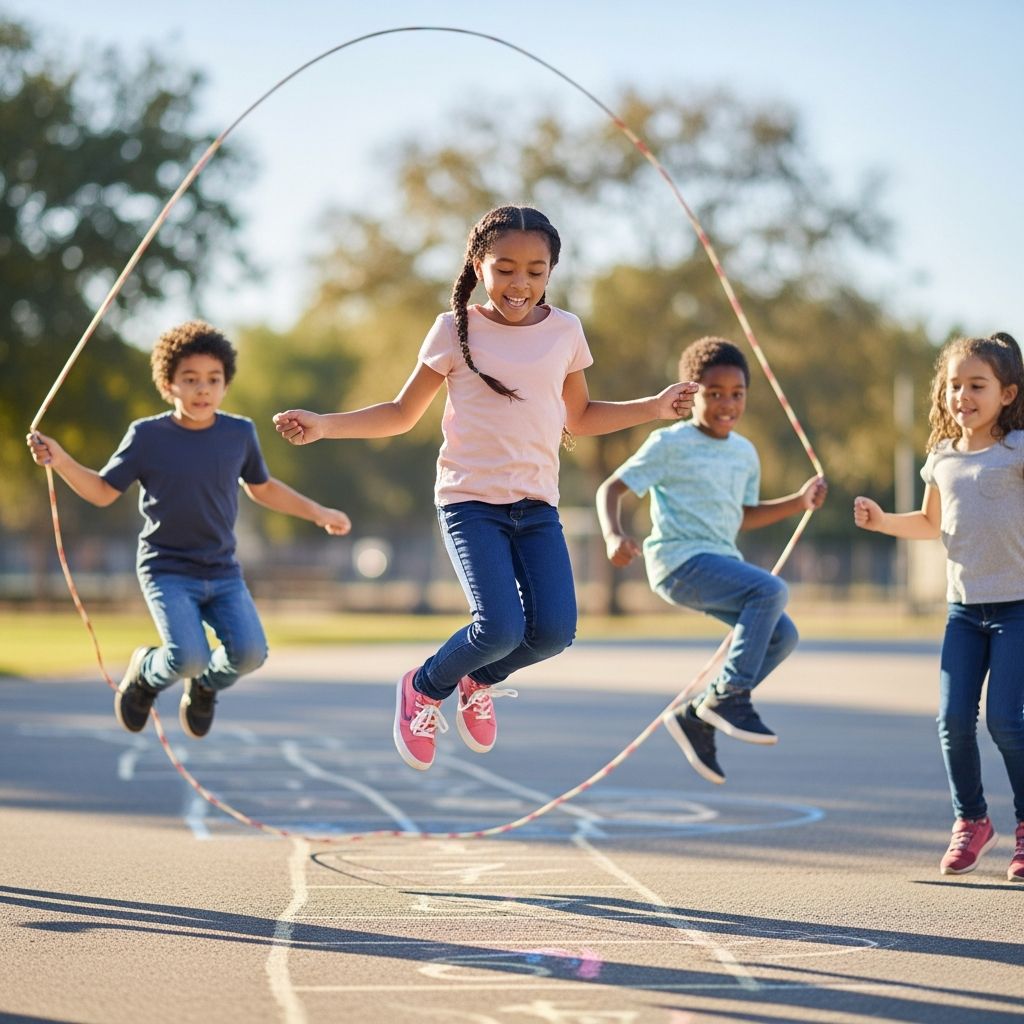
Jump Rope Songs, Rhymes, and Chants: A Complete Guide for Children
Jump rope has been a beloved childhood activity for generations, bringing joy to playgrounds and backyards around the world. What makes jump rope even more enjoyable and memorable is the collection of songs, rhymes, and chants that children sing while jumping. These musical accompaniments do more than just entertain—they help maintain rhythm, develop coordination, and create lasting memories of carefree play. This comprehensive guide explores the most popular jump rope songs and rhymes that have stood the test of time, offering both classic favorites and contemporary variations that children continue to enjoy today.
The Importance of Jump Rope Songs
Jump rope rhymes serve multiple purposes beyond simple entertainment. When children sing while jumping, they engage in a complex activity that requires coordination between their eyes, feet, and hands. The rhythmic nature of jump rope songs acts as a metronome, helping with timing and overall coordination development. The synchronized movement and singing create a multisensory learning experience that strengthens motor skills and cognitive abilities. Furthermore, these traditional rhymes represent cultural heritage and are passed down from child to child, maintaining continuity across generations.
Classic Jump Rope Rhymes Everyone Should Know
Cinderella
One of the most iconic jump rope rhymes, Cinderella is a counting rhyme that provides both fun and educational value. The traditional verse goes:
“Cinderella, dressed in yellow
Went upstairs to kiss a ‘fella
Made a mistake
And kissed a snake
How many doctors
Did it take?”
This rhyme can be adapted to provide additional mathematical challenges by having children count by twos, threes, or multiples of specific numbers, making it both entertaining and educational.
Miss Mary Mack
A popular rhyme that works equally well as a clapping game, Miss Mary Mack tells the whimsical tale of a girl with silver buttons down her back. The extended version includes numerous repetitions and tells the story of an adventure with elephants:
“Miss Mary Mack, Mack, Mack
All dressed in black, black, black
With silver buttons, buttons, buttons
All down her back, back, back
She asked her mother, mother, mother
For 50 cents, cents, cents
To see the elephants, elephants, elephants
Jump over the fence, fence, fence.”
The repetitive structure makes this rhyme easy to remember and fun to sing repeatedly.
Fuzzy Wuzzy
This beloved rhyme doubles as a tongue twister, adding an extra layer of difficulty to the jumping experience. Singing Fuzzy Wuzzy while maintaining jump rope rhythm challenges the jumper to coordinate multiple tasks simultaneously:
“Fuzzy Wuzzy was a bear.
Fuzzy Wuzzy had no hair.
Fuzzy Wuzzy wasn’t very fuzzy, was he?”
The tongue-twister aspect makes this rhyme particularly popular among older children looking for greater challenges.
Teddy Bear, Teddy Bear
For children wanting to showcase smooth jump rope skills, Teddy Bear, Teddy Bear is the quintessential rhyme. It includes action elements that can be mimicked while jumping, adding visual interest and coordination challenges:
“Teddy Bear, Teddy Bear, turn around,
Teddy Bear, Teddy Bear, touch the ground,
Teddy Bear, Teddy Bear, show your shoe,
Teddy Bear, Teddy Bear, that will do!”
The extended version continues with additional verses that incorporate more complex movements like going upstairs, saying prayers, and saying goodnight, making it perfect for demonstration and entertainment.
Mabel, Mabel
A perfect rhyme to sing just before mealtime, Mabel, Mabel is a true classic that encourages playfulness around food preparation:
“Mabel, Mabel, set the table.
Do it as fast as you are able.
Don’t forget the SALT, PEPPER, KETCHUP, MUSTARD.”
The emphasis placed on the food items at the end of the rhyme makes it memorable and fun for young jumpers.
Action-Based Jump Rope Rhymes
Texaco Mexico
Designed for more advanced jumpers, Texaco Mexico incorporates specific actions for each line, requiring coordination and skill:
“Texaco Mexico
Went over the hill
Where far away
And they do some splits, splits, splits
And they turn around round round
And they touch the ground, ground, ground”
This rhyme challenges jumpers to perform various movements while maintaining the jump rope rhythm, making it ideal for competitive play.
Butterfly, Butterfly
A simpler action-based rhyme, Butterfly, Butterfly includes a clear exit instruction:
“Butterfly, Butterfly, throws a kiss, kiss, kiss,
Butterfly, Butterfly, get out before you miss, miss, miss.”
This rhyme is excellent for younger children learning to jump rope.
Rhymes Sung to Familiar Tunes
Happy Day
Sung to the tune of “Happy Birthday,” this rhyme personalizes the jumping experience by incorporating each child’s name:
“Happy day to you!
Happy day to you!
Happy day, dear [child’s name].
Happy day to you!”
This rhyme works particularly well for group jumping with long ropes, as each child can be celebrated during their turn.
Jump a Rope
Set to the tune of “Row, Row, Row Your Boat,” this rhyme can be sung while skipping individually or as a group:
“Jump, jump, jump a rope,
Merrily in the spring.
Hop, hop on each foot,
As fast as you can sing.”
The upbeat melody encourages faster jumping with each repeated verse.
Skipping Feet
Any child familiar with “Jingle Bells” will easily learn this jump rope song:
“Skipping feet, skipping feet,
Skipping feet all day.
Oh what fun it is to skip,
The whole day away. Hey!”
The familiar tune makes this rhyme accessible to children of all ages and jumping abilities.
Additional Popular Jump Rope Rhymes
Counting and Mathematical Rhymes
Several jump rope rhymes incorporate numbers and mathematical concepts, combining physical activity with learning:
Lemon Lime: This rhyme uses a counting system where successive jumpers jump progressively fewer times before exiting, creating a fun elimination game.
Banana, Banana, Banana Split: Another counting rhyme that incorporates school subjects, making it both educational and entertaining.
Story-Based Rhymes
Jump rope rhymes like “Bluebells, Cockle Shells,” “I Know Something,” and “Birdie, Birdie in the Sky” tell small stories or present scenarios that capture children’s imagination and make the jumping experience more engaging.
Creative and Original Rhymes
Contemporary variations include “Chocolate Bears,” “Two Little Pails of Water,” and “Thumbelina,” which demonstrate how jump rope rhymes continue to evolve while maintaining the traditional format and purpose.
The Educational Benefits of Jump Rope Songs
Coordination Development
Jump rope rhymes help children develop crucial coordination skills by requiring synchronized movement of eyes, feet, and hands. The rhythmic nature of the songs acts as a natural metronome, assisting with timing and overall body coordination. This synchronized activity strengthens neural pathways related to motor control and rhythm recognition.
Cognitive Benefits
Singing while jumping engages multiple cognitive functions simultaneously, including memory, concentration, and linguistic processing. Children must remember the lyrics, maintain the jump rope rhythm, and coordinate their movements—a complex cognitive task that strengthens neural connections and improves cognitive flexibility.
Social and Cultural Learning
Jump rope rhymes serve as vehicles for cultural transmission, with songs and chants passed down through generations. This oral tradition preserves cultural heritage and allows children to connect with their peers and with children from previous generations through shared play experiences.
Tips for Teaching Jump Rope Songs to Children
When introducing jump rope songs and rhymes to children, consider the following approaches:
Start Simple: Begin with shorter rhymes like “Fuzzy Wuzzy” or “Teddy Bear, Teddy Bear” before progressing to longer, more complex rhymes.
Use Familiar Melodies: Rhymes set to well-known tunes like “Happy Birthday” or “Jingle Bells” are easier for children to learn and remember.
Incorporate Actions: Teach children to include the actions mentioned in rhymes like “Teddy Bear, Teddy Bear” to enhance their enjoyment and coordination development.
Practice as a Group: Group jumping with shared rhymes creates community, encourages participation, and makes the experience more enjoyable.
Allow Variations: Encourage children to create their own variations of traditional rhymes or compose entirely new ones, fostering creativity and personal connection to the activity.
Frequently Asked Questions
Why is jump rope good for children?
Jump rope is an excellent form of physical activity that improves cardiovascular health, develops coordination, builds strength, and enhances balance. When combined with songs and rhymes, it also provides cognitive and social benefits.
How do jump rope rhymes help with coordination?
Jump rope rhymes act as a metronome, helping children maintain consistent rhythm while jumping. Singing while jumping requires synchronization of multiple motor and cognitive functions, which develops overall coordination between the eyes, feet, and hands.
What age is best for starting jump rope?
Children typically begin jumping rope around ages 5-6 years old, though this varies by individual development. Younger children can participate in group jumping while longer rhymes are more appropriate for older, more coordinated children.
Can jump rope rhymes be modified for different age groups?
Yes, absolutely. Simple rhymes work well for younger children, while longer and more complex rhymes with actions suit older children. Rhymes can also be adapted to incorporate different counting methods or mathematical concepts based on the child’s learning level.
Are these jump rope rhymes still taught to children today?
Many traditional jump rope rhymes remain popular and continue to be taught to new generations, though exposure varies. Some schools and communities actively teach these rhymes, while in other areas they are primarily transmitted through peer-to-peer sharing.
Where can I find more jump rope rhymes?
Jump rope rhymes are documented in children’s game books, educational resources, online databases, and through community elders who remember traditional playground games. Online communities dedicated to childhood games and rhymes are also valuable resources.
Conclusion
Jump rope songs, rhymes, and chants represent a rich tradition of childhood play that combines physical activity, cognitive development, and cultural heritage. From the counting challenges of “Cinderella” to the action-packed movements of “Teddy Bear, Teddy Bear,” these rhymes provide entertainment while developing crucial skills in coordination, rhythm, and social interaction. Whether sung to familiar melodies or presented in traditional formats, jump rope rhymes continue to bring joy to children’s play experiences and deserve recognition as valuable educational and recreational tools. By sharing these classic rhymes with new generations, we preserve important cultural traditions while promoting healthy, active, and joyful childhood experiences.
References
- 11 Catchy Jump Rope Rhymes — Care.com. 2024. https://www.care.com/c/11-catchy-jump-rope-rhymes/
- The Ultimate List of Jump Rope Songs & Skipping Rhymes — Elite Jumps. 2024. https://elitejumps.co/blogs/guides/jump-rope-rhymes-songs
- Kids Explain Their Rhymes, Games, and Songs — Library of Congress Folklife Today. 2020-06. https://blogs.loc.gov/folklife/2020/06/kids-explain-their-rhymes-games-and-songs/
- Childhood Playground Games of the Early 1950s — WeHaveKids. 2024. https://wehavekids.com/parenting/a-childhood-in-the-early-50s-the-games-we-played-at-home-and-at-school
- Physical Activity Guidelines for Children and Adolescents — U.S. Department of Health and Human Services Office of Disease Prevention and Health Promotion. 2024. https://health.gov/our-work/nutrition-physical-activity/physical-activity-guidelines