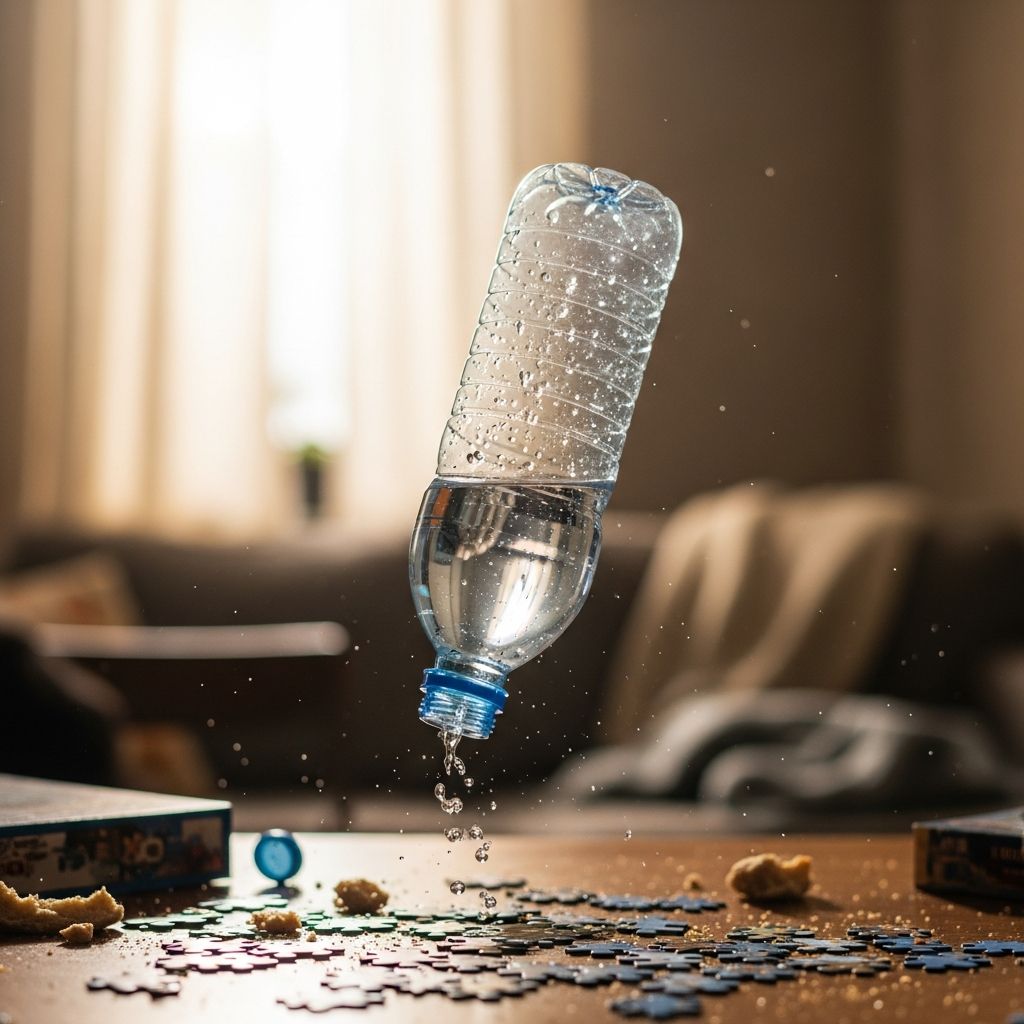
If the soundtrack of your home or classroom is now a steady rhythm of thuds, splashes, and triumphant shouts of “Did you see that?!,” you are not alone. The water bottle flip craze has turned simple plastic bottles into tiny, noisy projectiles and caught many adults off guard. This guide shows you how to manage the trend calmly, set clear limits, and even transform it into a chance to teach focus, resilience, and respect.
Why Kids Love Bottle Flipping
Before trying to stamp out the habit, it helps to understand what makes this trend so irresistible. From a child’s point of view, bottle flipping offers immediate feedback and a simple, repeatable challenge that feels almost like a magic trick they can master.
- Instant gratification: A flip takes seconds, and the result is clear: success or failure.
- Low barrier to entry: All you need is a partially filled bottle and a flat surface.
- Social currency: Kids love showing off tricks, challenging friends, and comparing “records.”
- Skill development: Hand–eye coordination, timing, and fine motor control are quietly being practiced.
Once adults see the attraction, it becomes easier to respond with empathy instead of only irritation. The goal is not to crush the fun, but to channel it.
The Hidden Upsides (Yes, There Are Some)
It might feel like a pointless fad, but bottle flipping can serve as more than just a source of noise. Handled thoughtfully, it can support valuable skills and offer a break from screens and passive entertainment.
- Screen-free engagement: Kids are moving, experimenting, and interacting with real objects.
- Practice with persistence: Few children land flips perfectly at first; success nudges them to keep trying.
- Informal science play: Angle, force, rotation, and water level all change the result, inviting curiosity.
- Social skills: Turn-taking, cheering for friends, and managing friendly competition are all in the mix.
Recognizing these positives can shift your mindset from “This must stop now” to “This needs boundaries and a purpose.”
When the Fun Crosses the Line
Of course, every trend has a tipping point. What begins as harmless fun can quickly wear down adult patience and household objects. It helps to name the specific problems instead of declaring bottle flipping “bad” across the board.
- Noise overload: Constant thudding on tables, floors, and desks is distracting and stressful.
- Mess and damage: Spills, cracked bottles, and scratched furniture can follow careless flips.
- Safety concerns: Flying bottles near faces, electronics, or breakables are an obvious risk.
- Timing issues: Flipping during homework, meals, lessons, or bedtime derails routines.
Instead of simply banning the activity, describe the impacts: lost focus, broken items, upset siblings, and frazzled adults. This keeps the conversation grounded and more cooperative.
Setting Calm, Clear Ground Rules
The quickest way to reduce conflict is to move from constant nagging (“Stop flipping that bottle!”) to predictable ground rules. Children cope better when they know exactly when and where an activity is allowed.
Decide the Basics: Where, When, and How
- Where: Choose safe, durable spaces (like a playroom, backyard, or specific table) and protect sensitive areas (near TVs, glass, or fragile items).
- When: Allow flipping only during free time, not during meals, homework, or bedtime routines.
- How: Require gentle attempts, no wild throws, and no aiming near people or pets.
Involve your child in writing these rules. Ask, “If you were in charge, what would be fair rules so flipping can still be fun but not annoying or unsafe?” Kids are more likely to follow boundaries they helped create.
Sample Family Rule Set
| Rule Area | Example Rule |
|---|---|
| Location | Flips are allowed only at the kitchen table or outside on the patio. |
| Timing | No bottle flipping during meals, homework, or after lights-out. |
| Noise | If a family member says the noise is too much, you pause or move. |
| Safety | No flips near faces, animals, stairs, or electronics. |
| Clean-up | Any spills must be wiped up immediately; bottles are refilled in the sink only. |
Use this table as a starting point and customize it to fit your family’s space, routines, and tolerance levels.
Using the Craze as a Teaching Tool
Instead of treating bottle flipping as a nuisance to eliminate, think of it as a low-stakes laboratory. Many children are willing to tweak, test, and repeat flips endlessly, which makes it a perfect platform for learning subtle skills.
Focus and Mindfulness
- Encourage kids to take a deep breath before each flip and visualize the bottle landing upright.
- Ask what they noticed: “Did changing your stance or grip make a difference?”
- Limit attempts: “You get five focused flips, then we stop,” turning quantity into quality.
This introduces the idea that attention and body awareness influence results, a concept they can transfer to sports, music, or schoolwork.
Growth Mindset and Resilience
- Celebrate effort: “You kept trying different ways until you landed it.”
- Normalize failure: Count how many misses it takes to land five good flips and treat it like a fun stat, not a score.
- Ask reflective questions: “What did you change between the try that missed and the one that worked?”
Learning to view failed attempts as information, not proof of inability, is one of the most powerful life skills a child can gain from something as simple as a water bottle.
Creating Bottle Flip Zones and Times
If bottle flipping is happening everywhere, all the time, it will feel unmanageable. Creating designated zones and time windows provides a compromise: kids still get their fun, and adults reclaim some peace.
Design a “Flip-Friendly” Space
- Choose a sturdy surface that can handle impact (like a solid wooden table, counter, or outdoor bench).
- Place a mat, old towel, or rubber pad to muffle noise and prevent slipping.
- Keep a small basket with approved bottles so kids don’t raid every drink container in the house.
Simply announcing, “Bottle flipping happens here” gives kids a clear destination and reduces surprise flips on fragile surfaces.
Schedule Flip Breaks
- Offer short “flip breaks” between homework tasks or chores as a movement and focus reset.
- Set a timer: 5–10 minutes of flipping, then move on to the next activity.
- Use flipping as a transition tool: “When the timer rings, finish three flips, then it’s bath time.”
Kids often respond well to predictable, time-limited opportunities for intense play, especially when they feel heard and respected.
Alternatives for High-Energy Kids
Sometimes the issue is not the bottle itself but the underlying need: movement, control, and a sense of mastery. Offering alternatives gives children other outlets while preserving sanity and furniture.
- Quiet fidgets: Stress balls, squishy toys, and textured rings can keep hands busy during calmer times.
- Physical outlets: Trampoline jumps, ball games, or a quick dance break can satisfy the urge to move.
- Skill challenges: Stacking cups, card tricks, coin flips, or simple juggling can scratch the “trick” itch.
Explain the reasoning: “Your body wants to move and do tricks. Here are some things that are better during homework/indoors/near your sister.” This reframes your decision as problem-solving, not punishment.
Working With Schools and Other Caregivers
Bottle flipping rarely stays confined to home. It sneaks into classrooms, aftercare programs, and carpools. Staying in sync with other adults prevents kids from getting mixed messages about what’s acceptable.
- Check school policies: Ask teachers or administrators how they handle bottle flipping and share your home rules.
- Talk to caregivers: Babysitters, grandparents, and coaches may appreciate clear guidance: “We allow it outside only,” or “It’s fine during playtime but not at the dinner table.”
- Coach your child: Help them practice phrases like, “We don’t flip bottles in class,” so they can self-remind when tempted.
Consistent boundaries across environments help kids internalize expectations and reduce arguments like “But at Grandma’s we can do it all the time!”
Turning It Into a Family Activity
Sometimes the fastest way to defuse a trend’s power is to join it. When adults participate playfully, kids can become more open to structure and compromise.
Ideas for Cooperative Fun
- Family challenge night: Everyone gets the same number of attempts, and you track creative achievements instead of pure success (like “most graceful miss” or “funniest flip”).
- Design a scoreboard: Hang a poster where family members can write down milestones, like “First outdoor landing” or “Landed on the book!”
- Create themes: Try “silent flips” where everyone must land bottles without speaking, adding a built-in noise limit.
When kids see that you are willing to enter their world, they are often more willing to respect your limits.
Handling Pushback and Negotiations
New boundaries almost always meet resistance: whining, bargaining, or sudden “forgetfulness.” Preparing a calm, consistent response in advance can keep you from getting pulled into endless debates.
- Use simple, repeatable phrases: “Flips happen at the table,” or “Flips are for after homework.”
- Offer choices within limits: “You can flip for five minutes now or save your time for after dinner.”
- Follow through: If rules are ignored, pause the activity for a set period rather than escalating into lectures.
Consistency is more effective than intensity. Calm repetition and predictable consequences usually work better than a single dramatic outburst.
Frequently Asked Questions
Is it better to ban bottle flipping completely?
A total ban might bring temporary relief but often pushes the behavior underground or turns it into a forbidden thrill. A more sustainable approach is usually to allow it in specific places and times, with safety and respect at the center. That way, kids still enjoy the challenge while learning how to manage impulses and consider others.
What if my child can’t seem to stop, even with rules?
If your child continues flipping despite clear boundaries, treat it as a self-control skill that needs extra practice. Reduce temptation by limiting access to bottles outside of designated times, and pair this with positive reinforcement when they follow the rules. If impulse control challenges show up in many areas, consider discussing strategies with a pediatrician, teacher, or counselor.
How do I respond when the noise is driving me crazy?
It is completely valid to acknowledge your own limits. Tell your child, “My brain needs quiet right now,” and then offer a specific plan: “You may flip at the table for ten more minutes, or you can switch to a quiet activity.” Modeling respectful communication about your needs teaches children to respect their own and others’ boundaries.
Are there safer types of bottles to use?
Yes. Lightweight plastic bottles with secure caps and a moderate water level are generally safer than heavy, rigid bottles or those made of glass or metal. Avoid bottles that can crack easily or have sharp edges when damaged, and regularly inspect them for wear and tear. Always keep flips away from stairs, faces, and delicate objects, regardless of the bottle type.
How do I keep younger siblings safe?
If there are toddlers or babies in the home, extra supervision is crucial. Designate child-free zones where flipping is absolutely off-limits, and explain that the game is for older kids only. Store flipping bottles out of reach when not in use, and remind older children that part of being “big” is protecting younger siblings, not putting them at risk.
From Annoyance to Opportunity
Fads come and go, but the way adults respond to them can leave a lasting impression. Bottle flipping does not have to become a years-long battle or a constant source of tension. With a blend of clear rules, empathy, and a willingness to occasionally join the fun, this noisy little craze can become a surprisingly useful tool for teaching focus, respect, and resilience.
The bottles will eventually move on to the recycling bin. The lessons your child learns about boundaries, self-control, and problem-solving, however, will stick around far longer—and those are worth flipping for.