Slime is a favorite sensory activity for many kids, but traditional recipes often use borax powder as the main activator. Some families prefer to avoid borax, especially for young children who may rub their eyes or put their hands in their mouths. This guide explores simple, kid-friendly ways to make slime without borax powder while keeping playtime fun and low-stress for parents.
Why Make Slime Without Borax Powder?
Borax (sodium borate) is a common household cleaning ingredient and laundry booster, but it can irritate the skin and eyes in some people when used directly, especially at higher concentrations or with prolonged contact. While small amounts in properly diluted form are generally considered safe for typical household use, parents often look for gentler options for hands-on play.
Choosing borax-free slime recipes can help:
- Reduce the risk of skin irritation for kids with sensitive skin
- Lower the chance of eye irritation if children rub their eyes while playing
- Use ingredients you may already have in the kitchen or bathroom cabinet
- Make cleanup easier with water-soluble, washable products
Common Ingredients in Borax-Free Slime
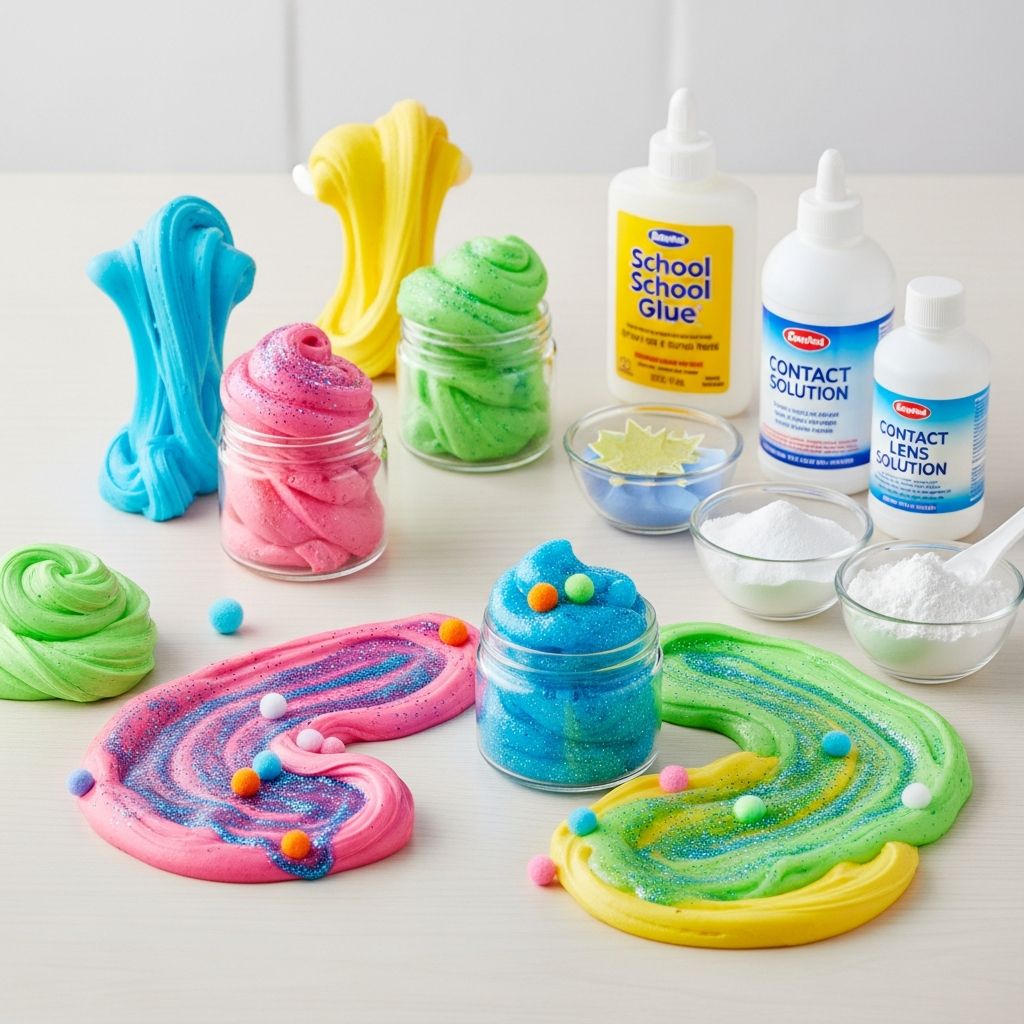
Most borax-free slime recipes rely on a combination of glue and a mild activator that contains a borate compound in much lower, pre-diluted amounts, or they avoid borates altogether.
Typical Base Ingredients
- School glue (usually white PVA glue): forms the stretchy base of the slime
- Water: helps adjust the thickness and stretchiness
- Baking soda (sodium bicarbonate): often used to help firm the slime and adjust pH
Gentler Activators and Mix-Ins
- Saline or contact lens solution that contains boric acid or sodium borate in low concentrations as a built-in activator
- Dish soap or shampoo for no-glue, very soft slimes
- Shaving cream for fluffy textures
- Food coloring or washable paint to add color (use sparingly to avoid staining)
- Glitter, confetti or foam beads for visual interest and extra sensory feedback
| Ingredient | Main Role | Notes for Parents |
|---|---|---|
| White school glue (PVA) | Creates stretchy base | Choose non-toxic, washable brands for easier cleanup. |
| Baking soda | Firms slime, adjusts consistency | Common kitchen ingredient; avoid inhaling powder directly. |
| Saline/contact solution | Acts as activator | Look for formulas with boric acid/sodium borate; use as directed on label. |
| Dish soap / shampoo | Creates very soft or stretchy textures | Use mild products; rinse hands after play to prevent dryness. |
| Shaving cream | Makes slime fluffy | Test a small amount on skin first if your child has sensitivities. |
Basic Borax-Free Slime Recipe with Saline Solution
This recipe gives a classic slime texture using school glue and saline solution instead of powdered borax. Saline solutions used for contact lenses typically contain borate compounds in a diluted, regulated form, which is why they can activate slime.
Ingredients
- 1 small bottle (about 8 oz) of non-toxic white school glue
- 1 tablespoon baking soda
- 1.5–2 tablespoons saline or contact lens solution (check the label for boric acid or sodium borate)
- Food coloring or washable paint (optional)
Step-by-Step Instructions
- Prepare the glue base.
Pour the glue into a medium plastic bowl. If you want colored slime, add a few drops of food coloring or a small amount of washable paint and stir until the color is even. - Stir in baking soda.
Add the baking soda and mix well. This helps the slime thicken and makes the activator work more effectively. - Add saline solution gradually.
Start with about 1.5 tablespoons of saline solution and stir. The mixture should begin to pull away from the sides of the bowl. If it is still very sticky, add a few more drops at a time, mixing between additions. - Knead the slime.
Once it clumps together, remove it from the bowl and knead with clean hands for a few minutes. The texture should become smoother and less sticky as you work it. - Adjust the texture.
If the slime is too sticky, add a few drops more saline solution and knead again. If it feels too stiff, you can work in a small squirt of glue.
Storage tip: Keep the finished slime in an airtight container or a resealable plastic bag. In most homes, slime will last several days to a week before drying out, depending on humidity and how often it is handled.
Soft, Soapy Slime Without Glue
If you prefer to avoid glue entirely, you can make a very soft, squishy slime-like material using dish soap or shampoo with baking soda. This texture is closer to putty or thick gel than traditional slime, but many kids love the silky feel.
What You Need
- 2–3 tablespoons thick dish soap or shampoo
- 4–6 tablespoons baking soda (approximate, adjust as needed)
- Food coloring (optional)
How to Make It
- Pour the dish soap or shampoo into a small bowl. Add color if desired and stir.
- Sprinkle in baking soda a spoonful at a time, stirring between additions.
- Continue adding baking soda until the mixture thickens into a soft, moldable mass that can be picked up without running through your fingers.
- Knead gently. The texture should be smooth and slightly stretchy. Add a bit more baking soda for a firmer feel or a drop more soap for a softer gel.
Note: This type of slime tends to be more fragile and may break apart more easily than glue-based versions. It is best used the day you make it.
Fluffy Borax-Free Slime for Extra Sensory Fun
Fluffy slime uses shaving cream to trap air bubbles, giving a pillowy, marshmallow-like texture. This can be calming for kids to squeeze and stretch. Use a gentle shaving cream and test on a small patch of skin if your child is sensitive.
Ingredients
- 1 cup white school glue
- 1–2 cups shaving cream
- 1 tablespoon baking soda
- 1.5–2 tablespoons saline solution
- Food coloring (optional)
Directions
- In a large bowl, combine the glue and shaving cream. Stir gently until fully blended and fluffy.
- Add food coloring if desired and mix until the color is even.
- Stir in baking soda.
- Add saline solution gradually, mixing as the slime begins to form.
- When the mixture pulls away from the bowl, knead with your hands until smooth and fluffy.
Fluffy slime usually deflates somewhat over time as the air bubbles escape, so expect the texture to change after a day or two.
Safety Tips for Slime Play
Homemade slime can be a safe activity when simple precautions are followed. Health agencies note that household chemical products can cause irritation if misused, especially in children whose skin and eyes are more sensitive.
Before You Start
- Choose non-toxic, washable glue and kid-safe colorants where possible.
- Read labels on saline solutions, soap, and shaving cream, and avoid products with known allergens for your child.
- Cover the work area with a plastic tablecloth or tray to protect surfaces.
During Play
- Supervise young children closely so slime does not go into the mouth.
- Remind kids to keep slime away from eyes and face. If contact occurs, rinse with clean water.
- Have children wash their hands with soap and water after playing. This removes residues that could irritate skin or be transferred to the eyes.
When to Stop Using a Batch
- Throw away slime that becomes discolored, smells odd, or grows visible mold.
- Discard any batch if a child develops redness, itching, or a rash on the hands; talk with a healthcare professional if symptoms persist.
Cleaning Up and Protecting Your Home
Slime is less stressful when you know it will not damage your furniture or clothing. A few simple habits can limit mess and make cleaning easier.
Smart Setup
- Have children wear old clothes or a craft apron.
- Keep slime play at a table rather than on carpet or upholstered furniture.
- Use plastic mats, trays, or cookie sheets as play surfaces.
Removing Slime from Surfaces
- Hard surfaces: Gently scrape off excess slime, then wipe with warm, soapy water.
- Clothing: Let any remaining slime dry slightly, then scrape off what you can. Soak the area in cold water and wash according to the garment label. Using a laundry detergent that is effective on protein and dye stains can help.
- Hair: Work a small amount of conditioner or oil into the affected hair, then gently comb out the slime before shampooing.
Educational Benefits of Slime Play
Beyond entertainment, slime can support learning and development. Early-childhood experts note that sensory play helps children explore textures, practice language, and build fine motor skills.
- Sensory exploration: Kids experience squishing, stretching, and pulling, which can be calming and help them understand cause and effect.
- Fine motor skills: Pinching, rolling, and molding the slime strengthens small hand muscles used for writing and self-care.
- Early science learning: Mixing ingredients and watching them change introduces basic ideas about reactions and states of matter.
- Creativity: Kids can invent their own add-ins, colors, and play scenarios, encouraging imagination.
Frequently Asked Questions (FAQs)
Is borax-free slime completely risk-free?
No activity is entirely risk-free, but using diluted household ingredients and supervising children closely can reduce the chance of problems. Skin and eye irritation are the main concerns; prompt rinsing and hand washing help minimize these issues.
What age is appropriate for slime play?
Slime is best for children who no longer put toys in their mouths. Many families start around ages 4–5 with close supervision. For younger toddlers, consider safer alternatives like water play, edible doughs, or store-bought sensory toys designed for that age group.
Can my child play with slime if they have sensitive skin?
It depends on the child and the ingredients. You can:
- Check product labels for fragrances and potential irritants
- Test a small amount of slime on the forearm and watch for redness or itching
- Limit playtime and have children wash and dry hands thoroughly afterward
If reactions occur, discontinue use and consult a healthcare professional if needed.
Is saline solution really different from powdered borax?
Contact lens solutions that activate slime typically contain boric acid or sodium borate, but they are highly diluted and regulated for use around the eyes when used as intended. In slime, you are still relying on borate chemistry, but not on loose powdered borax. Parents who want to avoid borate compounds entirely can choose no-glue, soap-based recipes instead.
How long does homemade slime last?
Most borax-free slimes made with glue stay usable for a few days to about a week if stored in a sealed container. Over time, slime may dry out, become sticky, or develop an odor. Discard any batch that looks or smells off.
References
- Household Chemical Products and Their Health Risks — Government of Canada. 2021-03-11. https://www.canada.ca/en/health-canada/services/home-safety/household-chemical-products-health-risks.html
- Borates: Uses and Regulatory Facts — U.S. Environmental Protection Agency (EPA). 2020-10-30. https://www.epa.gov/ingredients-used-pesticide-products/borates-uses-and-regulatory-facts
- Play and Children’s Learning: A Review of the Literature — UNICEF Office of Research. 2018-01-01. https://www.unicef-irc.org/publications/1009-play-and-childrens-learning-a-review-of-the-literature.html
- Contact Lens Solution Basics — American Optometric Association. 2022-04-15. https://www.aoa.org/healthy-eyes/caring-for-your-eyes/contact-lens-care
- Baking Soda Uses and Safety — Arm & Hammer (Church & Dwight Co.). 2022-05-10. https://www.armandhammer.com/articles/kid-friendly-slime