Every parent knows the frenzy of morning rushes: shoes missing, coats forgotten, and clocks ticking relentlessly. Transforming this chaos into a smooth departure requires thoughtful planning and family teamwork. This guide offers fresh, actionable approaches to cut down preparation time while fostering independence in children.
Master Advance Preparation the Evening Prior
One of the most effective ways to ease morning stress begins the night before. Dedicate 15-20 minutes after dinner to handle key tasks. Lay out clothing for each family member, including undergarments and accessories, to eliminate last-minute wardrobe debates. Pack school bags with completed homework, books, and any required forms. Prepare lunches in reusable containers and store them in the fridge for quick grabs.
Extend this prep to parental needs too: select your own outfit, pack work essentials, and charge devices. Check the vehicle—fuel levels, tire pressure—and place keys in a designated spot. This forward-thinking reduces decision fatigue when everyone is groggy.
- Clothing selection: Involve kids in choosing outfits to build ownership.
- Bag organization: Use labeled compartments for easy location of items.
- Meal prep: Batch-cook simple options like wraps or fruit cups for the week.
Studies from child development experts emphasize that such routines enhance predictability, lowering resistance in young ones.
Design a Dedicated Launch Zone at Home
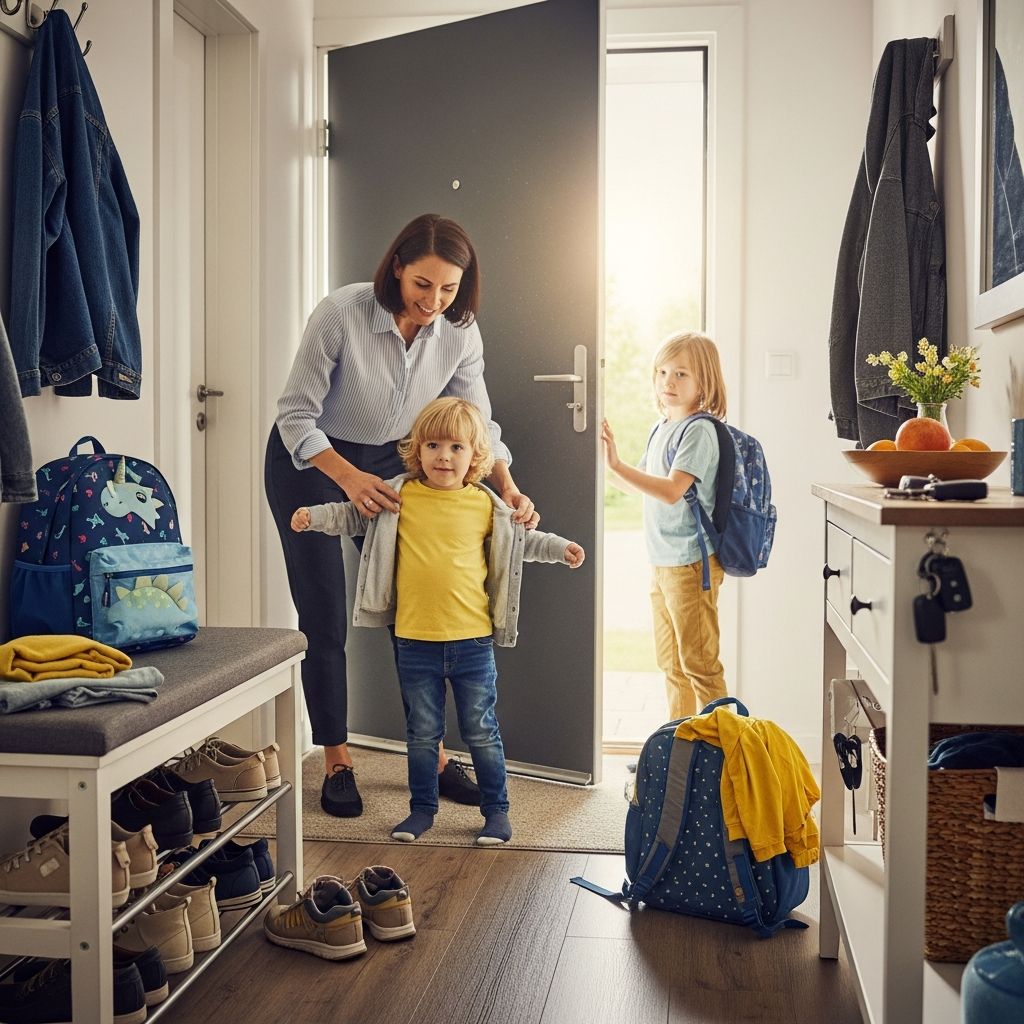
Create a “command center” near your main exit—a centralized area equipped for departures. Install low hooks for jackets, backpacks, and leashes at child height. Add cubbies or trays for hats, gloves, and scarves. Place a low bench for shoe changes and a shoe rack to keep floors clear.
Label everything with pictures for pre-readers: a boot icon for footwear, a backpack for school items. Stock a small basket with essentials like sunscreen, masks, or wet wipes. This setup promotes self-reliance, as kids can access and manage their gear independently.
| Zone Element | Purpose | Child Benefit |
|---|---|---|
| Low hooks | Hang outerwear | Reachable without help |
| Shoe bench | Easy on/off | Safe seating |
| Labeled bins | Store accessories | Visual cues for sorting |
| Family calendar | Track events | Anticipate needs |
This organized space not only speeds exits but teaches spatial awareness and responsibility.
Establish a Visual Morning Roadmap
Visual aids turn abstract routines into concrete steps. Craft a pictorial checklist on poster board or laminate it for reuse. Sequence tasks: wake up, bathroom, dress, breakfast, teeth, shoes, out. Use photos of your kids performing each action for relatability.
Hang it in a high-traffic area like the bathroom or kitchen. For older children, add checkboxes or magnets to mark progress. Turn it into a game—first to complete wins a sticker or extra playtime. This method builds habits without constant nagging.
- Customize by age: Simple icons for toddlers, words for school-age.
- Include fun elements: A smiley for “hugs from mom/dad.”
- Review weekly: Adjust based on what works.
Pediatric guidelines support visual schedules for improving executive function in children.
Cultivate Calm Through Connection First
Begin the day with positivity to fill emotional tanks. Allocate 5-10 minutes for cuddles, stories, or gentle play upon waking. This bonding reduces defiance later, as secure kids cooperate more readily.
Avoid abrupt commands; instead, use a soft wake-up routine like opening curtains gradually or playing soothing music. Transition to tasks with phrases like, “Time for our adventure—let’s get dressed!” Whisper reminders or use playful tones to engage without overwhelming.
Implement Time-Sensitive Cues and Choices
Respect children’s processing speed by announcing transitions early: “Five minutes until shoes!” Offer limited choices to empower them: “Red coat or blue today?” or “Brush teeth now or after breakfast?”
For dawdlers, employ one-word prompts: “Coat.” Get to their level, make eye contact, and describe observations neutrally: “I see shoes off, and we’re heading out.” These techniques minimize power struggles.
Incorporate timers as allies—sand timers or phone apps with fun sounds. Music playlists work wonders: upbeat tunes for dressing, a final song signaling departure.
Leverage Teamwork and Role Division
Distribute responsibilities clearly. If two parents, assign zones: one handles breakfast and hygiene, the other outfits and bags. For single parents, enlist older siblings as helpers—”Can you remind your brother about socks?”
Weekly family meetings set expectations: Review the schedule, practice routines playfully. Rotate fun roles like “breakfast DJ” to keep engagement high.
Optimize Personal Parental Readiness
Rise 30-45 minutes earlier for your shower, coffee, and mindfulness. A composed parent sets the tone. Quick hairstyles or capsule wardrobes save minutes—practice efficient routines via online tutorials.
prep breakfast simply: Overnight oats, smoothies, or pre-portioned yogurt. Set clocks 10 minutes fast house-wide for a buffer.
Common Roadblocks and Fixes
| Challenge | Solution |
|---|---|
| Meltdowns over clothes | Nightly choices from 2-3 outfits |
| Forgotten items | Launch zone checks |
| Sibling squabbles | Staggered routines |
| Oversleeping | Consistent bedtimes, alarms |
Frequently Asked Questions
What if my child resists the checklist?
Start small with 2-3 tasks, praise efforts, and model it yourself. Gradually expand as they succeed.
How early should we wake up?
Aim for 1.5-2 hours before departure, factoring in ages and needs. Test and tweak.
Does this work for multiple kids?
Yes—personalize checklists and stagger starts, like oldest first.
What about non-morning school days?
Apply to any exit: playdates, errands. Consistency builds habits.
Can tech help?
Use kid-friendly apps for timers or routine trackers, but limit screens until ready.
These strategies, drawn from parenting best practices, can shave 20-30 minutes off routines, creating calmer starts. Consistency yields results in weeks.
References
- American Academy of Pediatrics: HealthyChildren.org – Morning Routines — American Academy of Pediatrics. 2024-01-15. https://www.healthychildren.org/English/family-life/family-dynamics/communication-discipline/Pages/Creating-Structured-Routines.aspx
- Child Mind Institute: Executive Function Skills — Child Mind Institute. 2025-03-10. https://childmind.org/article/strategies-to-make-mornings-easier/
- Zero to Three: Daily Routines for Young Children — Zero to Three. 2023-11-20. https://www.zerotothree.org/resource/daily-routines/
- CDC: Parenting Tips for Healthy Habits — Centers for Disease Control and Prevention. 2025-02-05. https://www.cdc.gov/parents/essentials/routines/index.html
- NIH: Sleep and Child Development — National Institutes of Health. 2024-06-12. https://www.nichd.nih.gov/health/topics/sleep/conditioninfo/sleep-child