Chaotic school mornings can set a negative tone for the entire day, but with targeted strategies, parents can create efficient, calm routines that benefit everyone. Drawing from pediatric insights and practical family experiences, this guide outlines actionable steps to prepare the night before, organize spaces, and build habits that minimize rushes and maximize positivity.
Preparation the Night Before: The Foundation of Smooth Starts
One of the most effective ways to ease morning pressure is handling key tasks before bedtime. Encourage children to select outfits, pack backpacks, and gather supplies like homework, library books, or sports gear. This prevents last-minute searches and fashion disputes, allowing more time for restful sleep.
- Outfit Selection: Have kids choose complete ensembles, including socks, underwear, and accessories, and place them in a designated spot like a bedroom hanger or drawer bin.
- Backpack Organization: Check off essentials such as notebooks, water bottles, and lunches. For tech-savvy older kids, ensure devices are charged and ready.
- Activity Bags: Prep bags for after-school events like dance or soccer to avoid afternoon scrambles.
Implementing these steps nightly fosters independence and reduces decision fatigue, leading to fewer arguments and a peaceful household.
Designing a Central Launch Zone for Daily Essentials
A dedicated “launch pad” serves as a command center for school items, eliminating the hunt for misplaced belongings. Choose a high-traffic area near the exit, such as the entryway or mudroom, and equip it with hooks, bins, or shelves labeled for each child.
| Zone Component | Purpose | Customization Tips |
|---|---|---|
| Backpack Hooks | Store packed bags overnight | One per child, at reachable height |
| Shoe Bins | Quick grab for footwear | Clear plastic for visibility |
| Key/Lunch Shelf | Holds permissions, meals | Magnetic board for notes |
| Instrument Slots | Musical gear or gym clothes | Padded for protection |
This setup streamlines exits and teaches responsibility. Even adults benefit from such systems on busy days.
Visual Checklists and Schedules: Empowering Independence
Visual aids transform abstract tasks into concrete steps, especially for younger children or those needing structure. Create checklists with pictures or icons for activities like brushing teeth, making beds, and grabbing lunches. Display them near the launch zone or bathroom.
- Picture-Based Lists: Use photos of beds, toothbrushes, and backpacks for pre-readers; kids can check off or move magnets as tasks complete.
- Digital Timers: Pair with apps showing time blocks for dressing (10 min) and breakfast (15 min).
- Practice Runs: Rehearse the routine on weekends playfully, role-reversing to build confidence.
These tools provide predictability, reducing anxiety during transitions.
Nutritious and Quick Breakfast Strategies
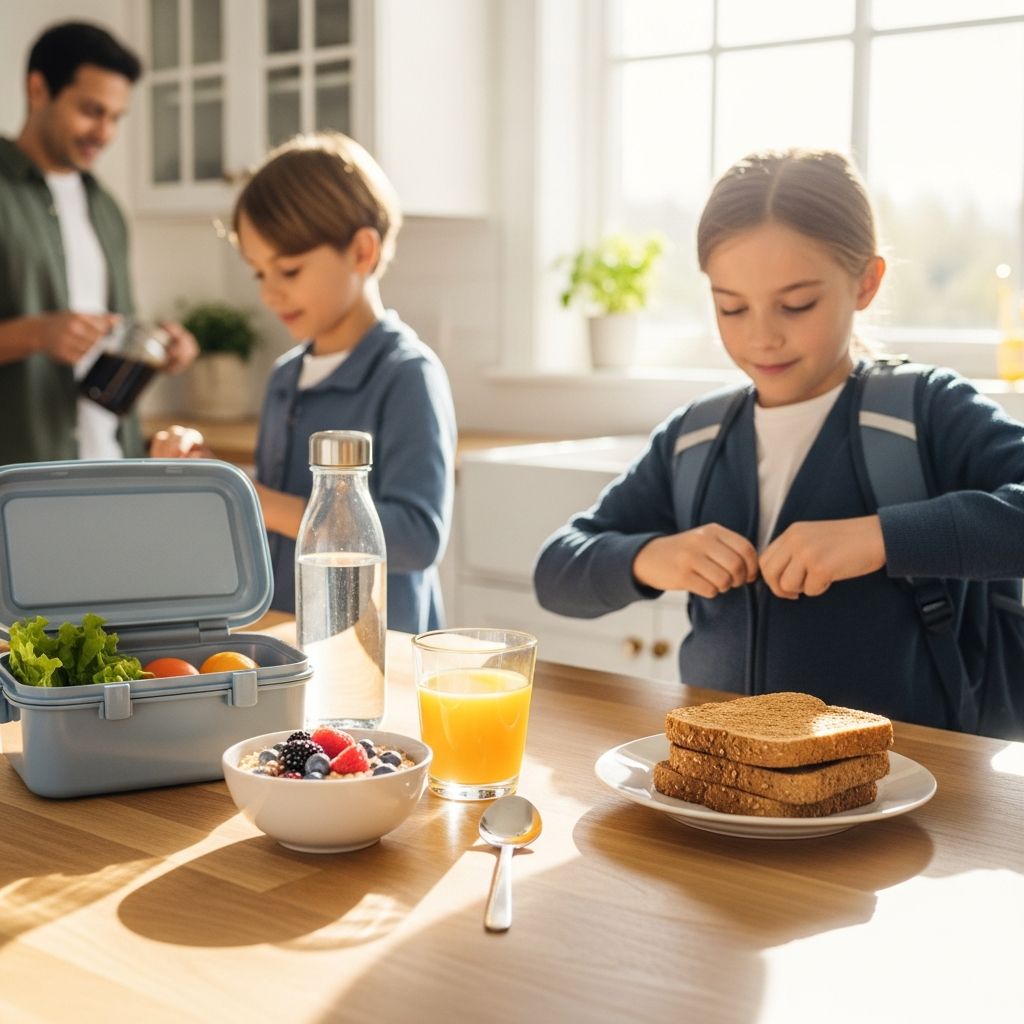
Skipping breakfast leads to hangry, unfocused kids, so prioritize time for fuel. Wake up 15-20 minutes earlier to prepare grab-and-go options without rushing.
Pediatric experts emphasize nutrient-dense meals for cognitive performance: whole grains, proteins, and fruits sustain energy until lunch.
- Prep Bowls: Portion yogurt parfaits, overnight oats, or smoothie ingredients in containers the night before.
- Batch Cooking: Make muffins or hard-boil eggs weekly for easy access.
- Family Table Time: Keep it short (10 min) but consistent to model healthy habits.
A full stomach supports learning; even portable items like nut bars prevent mid-morning slumps.
Bathroom and Personal Care Organization
Mornings often bottleneck in the bathroom due to scattered toiletries. Streamline by creating kid-friendly zones with labeled bins for hair tools, toothpaste, and brushes.
- Category Storage: Divide drawers into hair, dental, and skincare sections.
- Turntable Trays: Spin for quick access to brushes and ties.
- Mirror Checklists: Dry-erase lists for face washing and combing.
This cuts chaos, freeing mental energy for school focus.
Wake-Up Rituals and Time Management
Gentle, consistent wake-ups prevent groggy starts. Use alarms with fun sounds, followed by light exposure or upbeat music. Build in buffer time: 5-10 extra minutes accounts for slow risers.
Break the routine into timed segments:
- 7:00 AM: Wake and stretch (5 min)
- 7:05-7:15: Dress (10 min)
- 7:15-7:30: Hygiene (15 min)
- 7:30-7:45: Breakfast (15 min)
- 7:45-8:00: Launch check and depart (15 min)
Practice builds speed; positivity like high-fives reinforces success.
Infusing Positivity and Connection
Beyond logistics, emotional warmth sets a winning tone. End with hugs, “I love yous,” or lunch notes. Limit screens until after school to prioritize real interactions.
- Affirmation Circles: Quick shares of one exciting thing about the day.
- Buddy Systems: Pair siblings for mutual reminders.
- Wind-Down Evenings: Reading together eases into prep mode.
These gestures boost confidence and reduce separation anxiety.
Adapting for Different Ages and Needs
Tailor routines by age: Toddlers need heavy visuals, teens more autonomy. For neurodiverse kids, ABA-inspired breakdowns (e.g., one task at a time) work wonders.
| Age Group | Key Focus | Tools |
|---|---|---|
| Preschool (3-5) | Pictures, songs | Velcro checklists, timers |
| Elementary (6-10) | Independence | Color-coded bins, apps |
| Teens (11+) | Accountability | Shared calendars, notes |
Flexibility ensures routines evolve with family dynamics.
Frequently Asked Questions (FAQs)
What if my child resists the routine?
Start small, praise efforts, and use rewards like stickers. Practice playfully to build buy-in.
How do I handle multiple kids with staggered schedules?
Stagger wake times and use individual checklists. Designate zones per child.
Can these tips work for working parents?
Yes—night prep and visuals minimize morning involvement. Batch Sunday planning saves time.
What about weekends?
Loosen structure but maintain core habits like breakfast together for consistency.
How long to see results?
1-2 weeks of consistency; adjust based on feedback.
References
- Morning Routine Makeover for Children Returning to School — ADDitude Magazine. 2024. https://www.additudemag.com/morning-routine-back-to-school-plan/
- 5 Tips for a Calm Morning Routine in the Classroom — Happy Hearts in 1st. 2024. https://happyheartsin1st.com/5-tips-for-a-calm-morning-routine-in-the-classroom/
- How to Make School Mornings Easier for You and Your Kids — University of Utah Health. 2025-08. https://healthcare.utah.edu/the-scope/kids-zone/all/2025/08/how-make-school-mornings-easier-you-and-your-kids
- Mastering Morning Routines: Back to School Made Easy — Secrets of a Super Mom. 2024. https://secretsofsupermom.com/mastering-morning-routines-back-to-school-made-easy-part-1/
- Morning Routine Tips: 10 Back-to-School ABA Strategies — Integrity ABA. 2024. https://integrityaba.com/morning-routine-tips-10-back-to-school-aba-strategies-that-work/