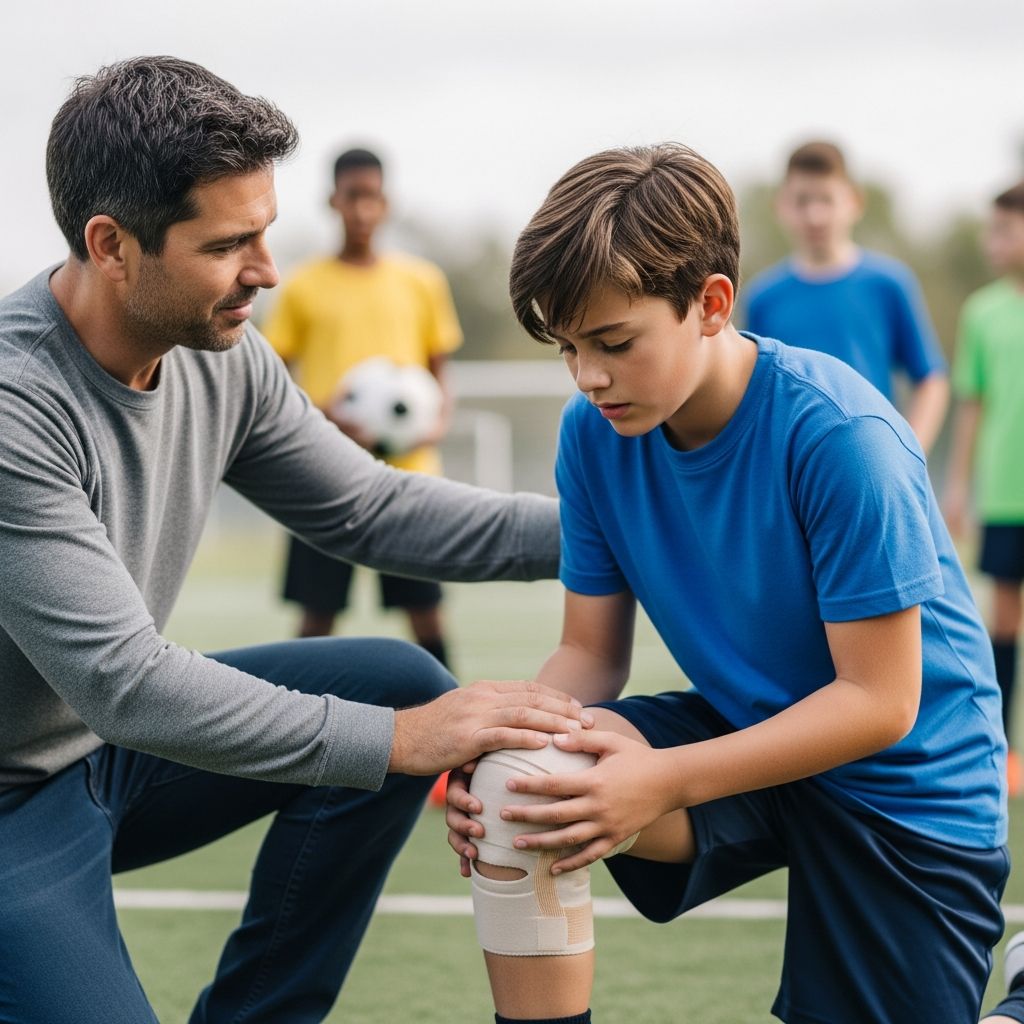
The anterior cruciate ligament (ACL) is a vital band of tissue in the knee that stabilizes the joint by connecting the thigh bone (femur) to the shin bone (tibia), preventing excessive forward movement of the shin. In young athletes, ACL tears are frequent due to high-impact sports, disrupting daily activities and sports participation. Parents play a key role in early detection, treatment decisions, and long-term recovery.
Understanding the Knee’s Anatomy and ACL Role
The knee joint involves the femur, tibia, patella, and supporting structures like ligaments, cartilage, and meniscus. Four primary ligaments maintain stability: medial collateral (MCL) on the inner side, lateral collateral (LCL) on the outer side, anterior cruciate (ACL) crossing centrally to control forward shin slide, and posterior cruciate (PCL) to limit backward motion. The ACL, rope-like and strong, is crucial for pivoting, jumping, and directional changes common in youth sports.
In children, the ACL is more elastic but still vulnerable, especially during growth spurts when coordination and muscle balance may lag. Damage often pairs with meniscus or MCL tears, complicating recovery.
Common Mechanisms Leading to ACL Tears in Kids
ACL injuries typically stem from non-contact twists or sudden forces. Key triggers include:
- Sudden stops or direction changes while running, as in soccer or basketball.
- Awkward landings from jumps, frequent in volleyball or gymnastics.
- Pivoting with a planted foot, common in football or skiing.
- Direct impacts, like tackles in contact sports.
- Overextension of the knee joint beyond its natural range.
These occur in sports demanding agility, with basketball, soccer, football, and skiing topping the list. Females face higher risk, possibly due to anatomical differences like wider hips, hormonal factors, or training patterns.
Recognizing ACL Injury Symptoms in Children
Immediate signs help parents act swiftly. Children often report:
- A loud “pop” or sensation in the knee at injury moment.
- Intense pain preventing weight-bearing or continuing play.
- Rapid swelling within hours from joint fluid buildup.
- Instability or “giving way” sensation.
- Limited motion range and tenderness.
Milder sprains may allow walking but cause buckling during stairs or turns. Accompanying issues like meniscus damage amplify pain and swelling.
| Severity | Description | Symptoms | Healing Potential |
|---|---|---|---|
| Mild Sprain | Ligament stretched | Mild pain, minor instability | Often heals with rest |
| Partial Tear | Partial fiber damage | Moderate swelling, some giving way | May heal conservatively |
| Complete Tear | Full rupture, gap forms | Severe pain, swelling, instability | Requires surgery for athletes |
Complete tears rarely self-heal due to poor blood supply in the ligament’s midsection.
Diagnostic Process for Suspected ACL Tears
Seek orthopedic evaluation promptly. Doctors use:
- Physical exams like Lachman or pivot-shift tests to assess laxity.
- MRI scans for detailed ligament and soft tissue views.
- X-rays to rule out fractures, especially in growing bones.
Differentiate from MCL, PCL, or meniscus issues, as multi-ligament injuries are common.
Non-Surgical Management Options
Not all tears need surgery, particularly in less active kids. Conservative approaches include:
- RICE protocol: Rest, Ice (20 minutes hourly), Compression, Elevation.
- Bracing to support stability during healing.
- Physical therapy focusing on quad strengthening, balance, and proprioception.
- Anti-inflammatory medications for pain and swelling.
Success suits low-demand lifestyles, but young athletes often need surgery for full function.
Surgical Reconstruction: What Parents Should Know
For active youth, ACL reconstruction replaces the torn ligament using autografts (patient’s tendon) or allografts. Arthroscopic surgery minimizes incisions. Risks include infection, stiffness (arthrofibrosis), graft failure, or blood clots, though rare with proper care.
In kids, surgeons consider growth plates, using physeal-sparing techniques to avoid stunting. Procedure duration: 1-2 hours, often outpatient.
Rehabilitation Roadmap Post-Surgery
Recovery spans 6-9 months, divided into phases:
- Weeks 1-2: Protect graft, reduce swelling, gentle motion.
- Weeks 3-6: Build strength, full extension, partial weight-bearing.
- Weeks 7-12: Advanced strengthening, balance training.
- Months 4-6: Sport-specific drills, agility work.
- Months 6-9: Return-to-sport testing, clearance.
Compliance is crucial; PT 2-3 times weekly initially. Full return to sports requires 90% strength symmetry.
Prevention Strategies for Young Athletes
Reduce risk through:
- Neuromuscular training programs like FIFA 11+ for proper landing mechanics.
- Strengthening hamstrings, glutes, core for balanced knees.
- Warm-ups emphasizing dynamic stretches and agility drills.
- Proper footwear and coaching on technique.
- Monitoring fatigue to avoid overtraining.
Such programs cut injury rates by up to 50% in youth.
Long-Term Outlook and Complications
Most kids resume sports post-rehab, but risks include osteoarthritis later due to joint stress. Monitor for re-injury, especially opposite knee. Parental support aids mental recovery from setbacks.
Frequently Asked Questions (FAQs)
Can kids recover from ACL tears without surgery?
Yes, mild or partial tears in non-athletes can heal with bracing and therapy, but active kids often need reconstruction for stability.
How long until a child can play sports again?
Typically 6-12 months post-surgery with rigorous rehab; clearance based on tests.
Why are girls more prone to ACL injuries?
Possible factors: narrower ACL notch, wider pelvis affecting biomechanics, estrogen effects on ligaments.
What sports have highest ACL risk for youth?
Basketball, soccer, football, skiing, gymnastics due to cutting, jumping, twisting.
Does ACL injury increase arthritis risk?
Yes, early osteoarthritis possible from instability or meniscus damage, even post-repair.
References
- Anterior Cruciate Ligament (ACL) Injury — Penn Medicine. 2023. https://www.pennmedicine.org/conditions/anterior-cruciate-ligament-acl-injury
- ACL Injury: Causes, Symptoms, Treatments, Recovery — Medpark Hospital. 2024. https://www.medparkhospital.com/ja-JP/disease-and-treatment/anterior-cruciate-ligament-acl-injury
- ACL injury – Symptoms and causes — Mayo Clinic. 2025-01-10. https://www.mayoclinic.org/diseases-conditions/acl-injury/symptoms-causes/syc-20350738
- Anterior cruciate ligament (ACL) injury — Bupa UK. 2024. https://www.bupa.co.uk/health-information/knee-pain/anterior-cruciate-ligament-acl-injury
- Anterior Cruciate Ligament Injury (ACL) Symptoms & Causes — Spire Healthcare. 2024. https://www.spirehealthcare.com/conditions/anterior-cruciate-ligament-injury/
- ACL Tear & Injury: Symptoms & Recovery — Cleveland Clinic. 2025. https://my.clevelandclinic.org/health/diseases/16576-acl-tear