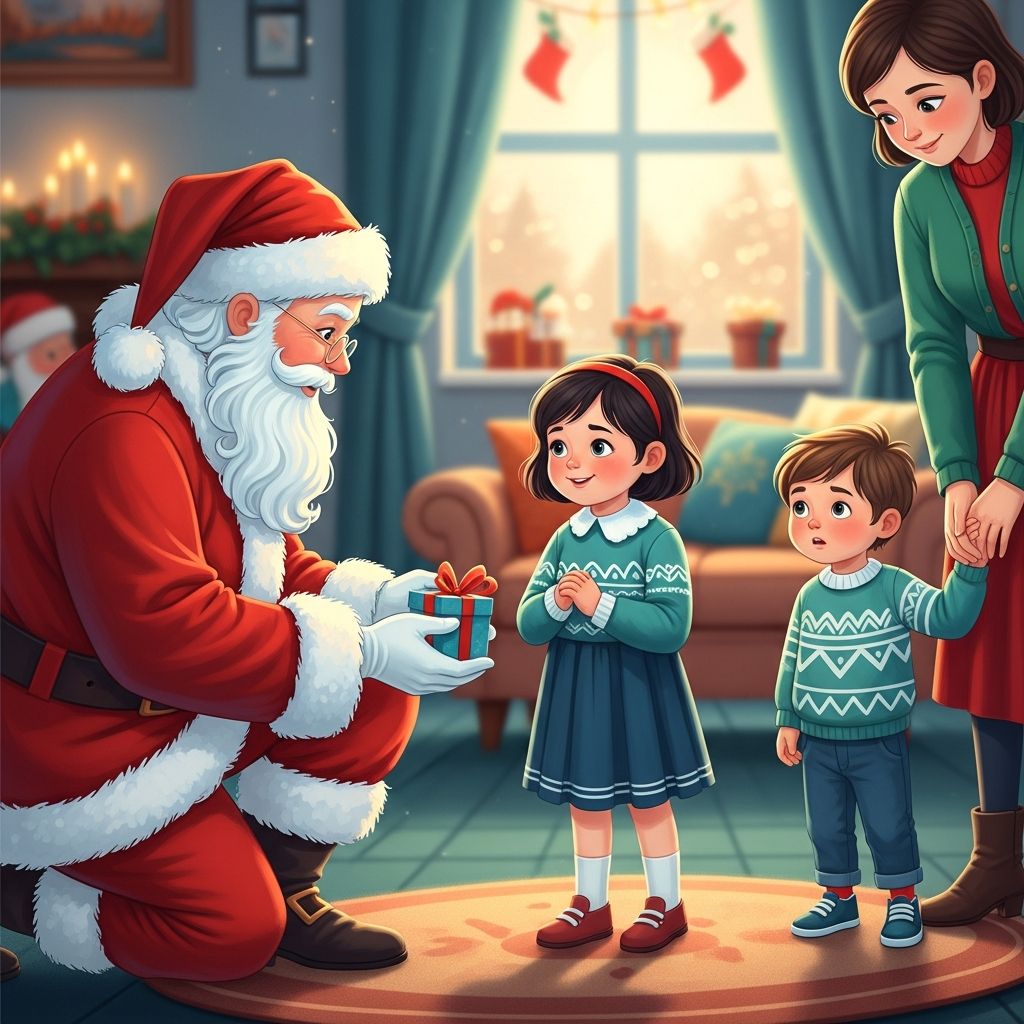
Holiday seasons bring joy through traditions like meeting Santa Claus, but parental expectations for perfect photos can create undue stress for children. Experts emphasize prioritizing a child’s emotional comfort over staged images to build positive memories.
Understanding the Emotional Impact of Forced Interactions
Young children often experience stranger anxiety, a normal developmental stage peaking around 8-12 months where infants become wary of unfamiliar people. Placing a child on Santa’s lap—a stranger in a costume—can trigger fear responses, leading to tears or distress. Child psychologist Dr. Elizabeth Gosch notes that this wariness is an adaptive safety mechanism, helping kids stay protected from potential threats.
Forcing compliance ignores these instincts, potentially teaching children that their feelings are secondary to adult desires. Over time, repeated pressure during holidays may erode trust in parental judgment, as kids learn their boundaries aren’t respected. Research shows that while most children handle fantasy beliefs like Santa well, abrupt or coercive experiences can amplify negative emotions like sadness upon disillusionment.
Developmental Stages and Reactions to Santa
Children’s responses to Santa vary by age. Infants under 12 months may simply cry from overstimulation. Toddlers (1-3 years) grapple with separation anxiety, becoming upset when briefly apart from parents. By ages 4-7, belief in Santa thrives, fueled by imagination, but skepticism emerges around age 8 on average.
- 0-12 months: High risk of distress due to stranger anxiety.
- 1-3 years: Separation fears dominate; short waits feel eternal.
- 4-7 years: Peak belief phase—excitement possible with preparation.
- 8+ years: Logical questions arise; handle gently to preserve joy.
A study in Developmental Psychology found children discover Santa’s myth around age 8, often through peer testimony or observation. About one-third report short-term sadness, especially if parents heavily promoted the fantasy without room for questions.
Preparation Strategies for Positive Santa Experiences
To minimize tears, parents can prepare thoughtfully. Start by discussing Santa in advance using storybooks or videos showing happy interactions. Dr. Gosch recommends modeling calm excitement: “If parents appear stressed, children mirror that anxiety.”
Practical tips include:
- Ensure the child is fed, rested, and dressed comfortably—avoid scratchy outfits.
- Practice sitting on a “Santa chair” at home with a stuffed toy.
- Bring a familiar caregiver to entertain during lines; allow movement to burn energy.
- Opt for low-pressure venues like brief walk-up photos instead of long queues.
Timing matters—visit early when lines are short and kids are fresh. Praise efforts afterward, regardless of outcome, to reinforce bravery.
Alternatives to Traditional Lap Photos
Not all Santa encounters require lap-sitting. Many malls now offer “Santa drive-thrus,” wave-and-smile options, or photo booths where kids stay with parents. These respect boundaries while capturing magic.
| Approach | Pros | Cons | Best For |
|---|---|---|---|
| Lap Photo | Classic image | High distress risk | Confident 4+ year olds |
| Wave from Afar | Low stress | Less personal | Infants/Toddlers |
| Drive-Thru | Quick, car-safe | Weather-dependent | Babies, shy kids |
| Parent-Held | Security for child | Not traditional | Anxious 2-4 year olds |
These options allow families to participate meaningfully without force, aligning with expert advice to attune to individual needs.
The Psychology Behind Cherished Santa Traditions
Santa photos tap into nostalgia, evoking parents’ fond memories and a desire to recreate them. Psychologically, they symbolize innocence and holiday magic. Yet, as Dr. Candice Mills explains, the value lies in the experience’s joy, not perfection—most adults (87-95%) want to share Santa with their kids despite eventual disbelief.
Belief fosters imagination, cognitive skills like theory of mind (understanding others’ perspectives), and family bonding. A Psychology Today article highlights how fantasy play aids emotional regulation and creativity, making Santa a developmental boon when handled sensitively.
Navigating Belief Transitions Gracefully
As kids question Santa—”How does he visit all houses?”—avoid deception at all costs. Dr. Mills advises responding to their lead: “What do you think?” This empowers critical thinking. Negative emotions from discovery are brief for most, but stronger promotion correlates with more disappointment.
Shift focus to Santa as a symbol of generosity. Families can reveal gradually: “Santa is the spirit of giving we all share.” This maintains trust and transitions smoothly.
Long-Term Benefits of Child-Centered Holidays
Prioritizing consent teaches emotional intelligence. Kids learn to voice discomfort, building resilience and self-advocacy. Parents model empathy, strengthening bonds. Studies affirm that positive holiday rituals enhance family cohesion without perfectionism.
Reflect post-visit: What made it fun? Adjust next year. Over years, these attuned celebrations create lasting, authentic memories.
Frequently Asked Questions
What if my child cries during the Santa visit?
Comfort them immediately, remove from the situation, and praise their feelings. Skip the photo—memories of empathy outlast images.
At what age should I stop the Santa pretense?
Follow your child’s cues around age 7-9. Most figure it out by 8; gentle guidance preserves magic.
Is stranger anxiety with Santa harmful?
No, it’s protective. Forcing overrides healthy instincts; patience nurtures security.
Can Santa belief damage trust in parents?
Rarely—most view it fondly. Open dialogue prevents issues.
What are quick prep tips for toddlers?
Feed/rest them, practice at home, keep waits short with distractions.
Building Joyful, Pressure-Free Holiday Memories
Holidays thrive on connection, not snapshots. By observing cues, preparing wisely, and embracing alternatives, parents craft traditions that honor childhood wonder. Experts agree: a happy child trumps a posed photo every time. This approach not only reduces tears but cultivates confident, trusting kids ready for life’s adventures.
References
- Preparing your kids for tear-free picture-perfect photos with Santa — WPVI 6abc Action News. 2019 (approx.). https://6abc.com/post/preparing-your-kids-for-tear-free-picture-perfect-photos-with-santa/4855183/
- ‘Yes, Virginia, About Santa …’: Expert Explores Shifts in Belief — The University of Texas at Dallas News Center. 2023-11-13. https://news.utdallas.edu/health-medicine/santa-beliefs-2023/
- Expert slams parents who insist on taking pictures with Santa even kids crying — HerFamily.ie. 2019-12-15. https://www.herfamily.ie/parenting/expert-slams-parents-insist-taking-pictures-santa-even-kids-crying-333818
- The Psychology of Santa Photos: Why We Love Them So Much — Satya Photography Blog. N/A. https://satyaphotography.com/seattle-orcas-photo-blog/title-the-psychology-of-santa-photos-why-we-love-them-so-much
- Is It Wrong to Tell Children About Santa Claus? — Psychology Today. 2024-12. https://www.psychologytoday.com/us/blog/spotlight-on-special-education/202412/is-it-wrong-to-tell-children-about-santa-claus