May Day baskets are a sweet, low-pressure way to welcome spring, connect with neighbors, and give children a simple taste of generosity and surprise. This guide offers a completely fresh approach to making and sharing these baskets using easy supplies and flexible ideas you can adapt to your home, budget, and style.
Why May Day Baskets Still Matter
Even though the custom is less common today, the idea behind May Day baskets is timeless: share beauty, celebrate new growth, and spread a little anonymous kindness. A handmade basket on a doorknob or porch rail turns an ordinary morning into something quietly magical.
Unlike large holidays that can feel stressful or commercial, May Day baskets are small in scale and big in heart. A few flowers, a scrap-paper container, and a quick doorstep dash are enough to create a family memory that children will remember for years.
The Story Behind the Tradition
May Day, celebrated on the first day of May in many places, grew out of older spring festivals that welcomed warmer weather, green fields, and blooming plants. Over time, these celebrations shifted from public rituals like dancing around a pole to quieter gestures like giving flowers and treats.
The small basket tradition evolved as a friendly way to mark the turning of the seasons. Instead of grand ceremonies, people began leaving modest, handmade containers filled with blossoms or sweets at neighbors’ doors, often without signing their names. The mystery became part of the fun and gave givers a new way to show care without expecting anything in return.
Planning Your May Day Basket Project
A little planning makes the basket-making process smoother and more enjoyable, especially when children are involved. Start by choosing how many baskets you want to make and who will receive them.
- List 3–10 neighbors, friends, or local helpers (such as teachers or coaches).
- Choose a simple basket style that fits your time and craft comfort level.
- Decide whether you’ll use real flowers, faux blooms, or non-flower treats.
- Set a budget for supplies so the project stays fun and stress-free.
Simple Basket Styles for Every Crafter
You do not need fancy materials to create charming May Day baskets. Many everyday items can be transformed into containers with just a bit of folding, cutting, or tying.
Paper Cone Basket
The paper cone is quick, cute, and ideal for young children. It hangs easily on a doorknob and works well for flowers or wrapped candies.
- Materials: Sturdy paper or lightweight cardstock, tape or glue, hole punch, string or ribbon.
- Steps: Roll paper into a cone, secure seam, punch two holes near the top, and tie on a handle.
- Best for: Fresh flowers, small notes, lightweight treats.
Upcycled Cup or Jar Basket
This style uses items you already own, making it both thrifty and eco-friendly. Plastic cups, yogurt containers, and small jars can all become baskets with minimal effort.
- Materials: Clean cup or jar, ribbon or twine, washi tape or paint, nail or hole punch for plastic.
- Steps: Decorate the outside, attach a handle, and line with tissue paper or fabric.
- Best for: Heavier goodies like potted plants, seed packets, or homemade cookies.
Mini Box or Carton Basket
Small boxes or food cartons can be trimmed and covered to create sturdy, lunch-pail-style May Day baskets.
- Materials: Cereal boxes, cracker boxes, or small cartons; scissors; paper or fabric to cover; tape or glue; handle material.
- Steps: Cut to the desired height, wrap with decorative paper, reinforce the bottom with tape, and attach a handle across the top.
- Best for: Mixed fillers like flowers, snacks, and a note all in one container.
Quick Reference: Basket Options
Use this table to match basket types with skill levels, budgets, and common fillers.
| Basket Style | Skill Level | Cost Range | Time Needed (per basket) | Ideal Fillers |
|---|---|---|---|---|
| Paper cone | Beginner / kid-friendly | Very low (just paper and ribbon) | 5–10 minutes | Fresh or paper flowers, small wrapped candy |
| Upcycled cup or jar | Beginner to intermediate | Low (reuse containers, add ribbon) | 10–15 minutes | Cookies, seed packets, tea bags, small plants |
| Mini box or carton | Intermediate (more cutting and covering) | Low to moderate (decorative paper, tape) | 15–20 minutes | Mixed treats, notes, craft supplies, crayons |
Choosing What to Put Inside
The contents of your May Day baskets can be as simple as a few clippings from your yard or as elaborate as a miniature care package. Focus on items that feel light, bright, and spring-like.
Flower and Plant Ideas
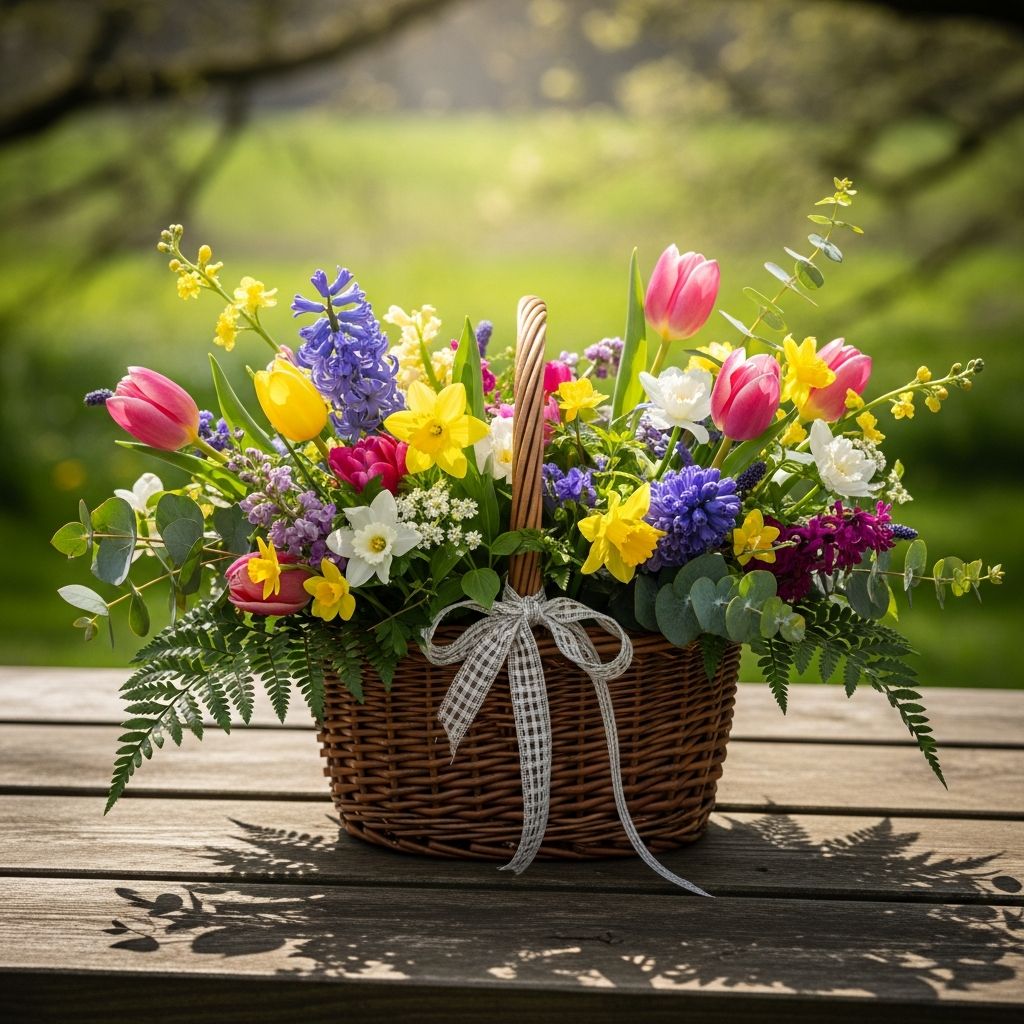
- Cut flowers from your own garden (tulips, daffodils, pansies, or whatever is in season).
- Small store-bought bouquets divided among several baskets.
- Potted herbs such as basil, mint, or parsley for a practical, fragrant gift.
- Packets of seeds for vegetables or pollinator-friendly flowers.
Edible Treats
- Wrapped candies or chocolates for easy distribution and cleanliness.
- Individually wrapped cookies or bars, homemade or store-bought.
- Tea bags, hot cocoa packets, or instant coffee sachets for adults.
- Small bags of trail mix, popcorn, or dried fruit for a lighter option.
Non-Food Surprises
- Mini notebooks, crayons, or stickers for children on the block.
- Bookmarks or a short printed poem for book-loving recipients.
- Homemade coupons for simple favors: plant-watering, dog-walking, or a shared walk.
- Self-care tokens such as lip balm, travel-size lotion, or a bath sachet.
Step-by-Step: A Family May Day Basket Session
If you are crafting with children, treat the process as an activity in itself rather than just a way to reach the finished basket. Break the project into stages that match attention spans and energy levels.
- Prep the workspace. Cover the table, set out supplies, and pre-cut any tricky pieces for very young kids.
- Let kids choose colors. Offer a small range of paper or ribbon colors so they can personalize without overwhelming choices.
- Assemble containers. Older children can handle folding and taping, while younger helpers add stickers or doodles.
- Fill thoughtfully. Invite kids to think of each recipient and choose items accordingly (for example, tea for an elderly neighbor, crayons for a younger friend).
- Add notes. Write short, upbeat messages such as “Happy Spring!” or “Thinking of you today,” and have kids sign their names only if you are not keeping the gift anonymous.
Making Delivery Fun (and Respectful)
Part of the charm of May Day baskets is the element of surprise. Many families like to adopt a playful “drop, knock, and dash” ritual, but it helps to keep courtesy and safety in mind.
- Avoid very late or very early deliveries; mid-morning or early evening is usually comfortable.
- Place baskets where they will be clearly seen and not stepped on or damaged.
- Consider allergies: avoid open nuts or strong fragrances if you are unsure.
- With children, designate grown-up drivers or walkers and discuss basic safety rules before heading out.
Adapting the Tradition for Different Settings
May Day baskets are wonderfully flexible. You can adapt the idea to fit apartment living, classrooms, workplaces, and community groups.
- Apartment buildings: Hang small, flat baskets on door handles or leave compact, sturdy containers on doormats.
- Schools: Invite each child to decorate a paper bag or cup, then classmates trade baskets in a simple exchange.
- Offices: Place mini baskets on coworkers’ desks before they arrive, using non-messy items like tea, pens, or notepads.
- Community groups: Organize a block-wide basket day where each household agrees to surprise one neighbor.
Adding Personal and Eco-Friendly Touches
Small details can turn an ordinary basket into something that feels uniquely yours. Personalized tags, hand-drawn decorations, or family photos attached with a clothespin all add meaning.
- Use recycled paper, fabric scraps, and saved ribbons to reduce waste.
- Choose fillers that can be planted, reused, or consumed without creating clutter.
- Include a line on your note encouraging recipients to “pass it on” next year if they enjoyed the surprise.
- Keep a few baskets for your own family; setting one at your breakfast table signals the start of a new household tradition.
Frequently Asked Questions About May Day Baskets
Do May Day baskets have to be given on a specific date?
Traditionally, May Day baskets are delivered on the first of May, but you can easily adjust the timing to suit your schedule, local climate, or school calendar. The spirit of the tradition—welcoming spring and sharing kindness—matters more than the exact day.
Is it okay to sign my name, or should the baskets be anonymous?
Both options work. Anonymous baskets preserve the playful mystery of trying to guess the giver, while signed notes can be more comfortable in communities where neighbors may feel uneasy about unexplained items left at their door. Choose the approach that matches your neighborhood and your family’s comfort level.
What if my neighbors are not familiar with May Day?
If the custom is new to your area, include a short explanation on the note: a sentence or two about celebrating spring with a small surprise is enough. You might inspire others to join you next year or start a new local tradition.
Can I make May Day baskets without flowers?
Absolutely. While flowers are classic, many people enjoy baskets filled with snacks, practical items, or small crafts. This flexibility is especially helpful if you live in a region where early May is still chilly or your recipients have allergies.
How many baskets should we make?
There is no required number. Some families choose one or two recipients and put extra care into each basket, while others create a dozen very simple containers and focus on the fun of delivering them. Start small your first year and adjust in future seasons.
What if we don’t have a yard or garden?
You can still fully enjoy the tradition. Purchase an inexpensive bouquet to divide among several baskets, use potted herbs from a grocery store, or skip plants entirely and focus on handwritten notes, drawings, or treats instead.
Bringing It All Together
Creating May Day baskets offers a rare mix of craft time, community connection, and simple seasonal celebration. With a few household supplies and a bit of imagination, you can build a new tradition that children look forward to each year and neighbors come to cherish.
Whether your baskets hold flowers, cookies, seed packets, or just a kind note, the message is the same: this world is more welcoming when we take small, thoughtful actions for one another. May Day gives you a ready-made excuse to do exactly that, one tiny basket at a time.