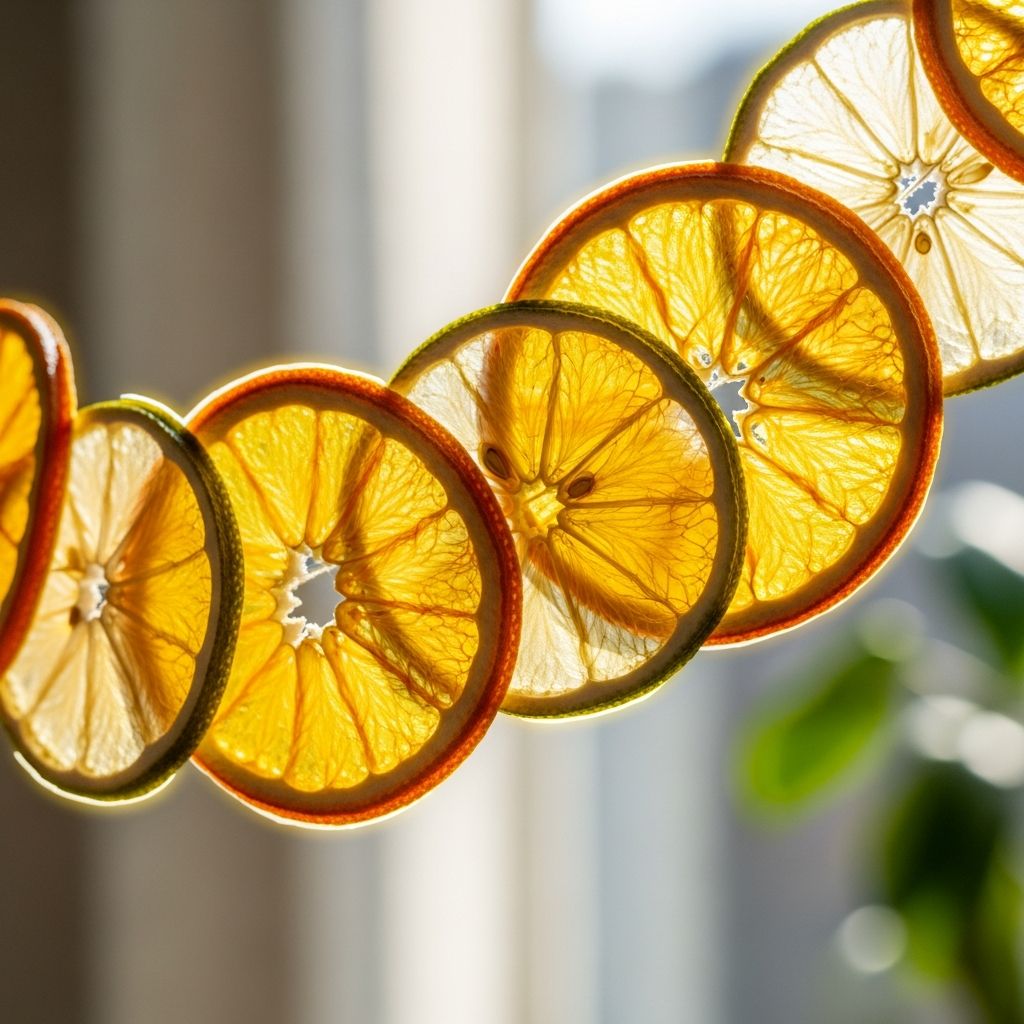
Baked citrus slices can be transformed into glowing suncatchers that catch the light, add a burst of color to your home, and make a fun sensory craft for kids and adults alike. Instead of using synthetic materials or complicated tools, this project relies on fresh fruit, a standard oven, and a bit of string or ribbon. The result is a cheerful garland that looks beautiful in a sunny window, over a mantel, or as a seasonal party decoration.
Why Craft with Citrus Slices?
Decorating with baked citrus slices blends art, science, and sensory play in one simple activity. Children see how juicy fruit slowly dries into translucent pieces, while adults appreciate the natural fragrance and warm, stained-glass appearance the slices take on once baked and backlit by sunlight. The project is inexpensive, eco-friendly, and easy to customize with different fruits, shapes, and arrangements.
- Uses accessible materials you likely already have in the kitchen.
- Provides a safe, supervised way for kids to practice fine motor skills.
- Creates reusable decor that works for holidays, birthdays, and everyday cheer.
Materials and Tools You Will Need
Gather everything before you begin so the craft flows smoothly, especially if children are helping. Many of these items can be substituted with what you already own, so there is no need for special equipment.
Basic Supplies
- Citrus fruit: oranges, lemons, limes, grapefruits, or blood oranges.
- Sharp knife for slicing (adults only).
- Cutting board.
- Baking sheets or trays.
- Parchment paper or silicone baking mats.
- Paper towels or clean kitchen towels.
- Oven (with low-temperature setting).
For Stringing the Garland
- Twine, ribbon, cotton string, or thin yarn.
- Large sewing needle, skewer, or toothpick to make holes.
- Scissors.
- Optional: small beads, wooden shapes, or faux greenery to mix with slices.
Choosing and Preparing Your Citrus
The type and quality of citrus you choose will dramatically influence the look of your finished garland. Firm fruit slices more cleanly and dries more evenly, while a variety of sizes and colors adds visual interest when the garland is hung.
Picking the Best Fruit
- Choose firm, unblemished fruit for cleaner slices and better color.
- Experiment with multiple varieties: oranges for warm amber tones, lemons for bright yellow, limes for fresh green, and blood oranges for deep red or burgundy accents.
- Avoid fruit that is overly soft or very ripe, as it may collapse or lose its shape in the oven.
Washing and Slicing
Before cutting, wash the citrus thoroughly to remove wax or residue, especially if the peel will remain on the slices. Dry the fruit and set up a stable cutting area away from small children.
- Slice the citrus into even rounds, ideally between 3–6 mm thick (about 1/8–1/4 inch).
- Discard the end pieces if they are mostly rind with little flesh.
- Check that slices are similar in thickness so they dry at roughly the same rate.
Drying Citrus Slices in the Oven
The goal during baking is to remove moisture slowly so the slices dry, not burn. A low oven temperature, patience, and occasional flipping will help you achieve translucent, jewel-like pieces that are sturdy enough to string.
Removing Excess Juice
Reducing moisture before baking speeds up drying time and improves the clarity of each slice. It also helps prevent the fruit from becoming sticky or overly caramelized.
- Lay sliced citrus on a layer of paper towels or a clean kitchen towel.
- Cover with another towel and gently press to absorb excess juice.
- Repeat once or twice with fresh towels if the fruit is particularly juicy.
Arranging on the Baking Tray
- Line baking trays with parchment paper or a silicone mat to prevent sticking.
- Place slices in a single layer so they are close but not overlapping.
- Group slices by thickness or fruit type if you expect different drying times.
Recommended Baking Approach
Every oven behaves a little differently, so think of the baking process as gradual dehydration rather than precise baking. You want the slices to look dry and slightly firm, but not browned or crisp to the point of breaking.
- Set the oven to a low temperature, such as 90–100°C (around 190–210°F).
- Place trays in the middle of the oven to encourage even heat.
- Check and flip slices periodically, approximately every 45–60 minutes.
- Continue baking until the fruit looks mostly dry, translucent in the center, and no longer glossy with moisture.
When finished, allow the slices to cool completely on a rack or the baking sheet. They will firm up slightly as they cool. Fully cooled slices are easier to handle and less likely to tear when you begin stringing.
Safety Tips for Crafting with Kids
Family crafts are more enjoyable when everyone is safe and comfortable. While this project is very child-friendly, certain stages involve sharp tools and hot surfaces that must remain under adult control.
- Assign adults or older teens to handle knife work and anything involving the oven.
- Allow younger children to help with washing fruit, arranging slices on trays, pressing with towels, and later threading pre-punched slices onto string.
- Explain the process so kids understand why they must wait for cooling before touching the baked pieces.
Stringing and Assembling the Garland
Once the slices are cooled and dry, the fun design phase begins. You can create a long, flowing garland, several short strands, or even individual ornaments. Plan your arrangement before you start making holes to minimize waste and keep the design consistent.
Creating Holes for Hanging
- Use a toothpick, skewer, or large needle to pierce a small hole near the rind of each slice.
- Avoid punching holes too close to the edge, as the dried peel can sometimes split.
- If using thicker twine or ribbon, gently widen the hole by rotating the tool.
Planning Your Pattern
Before threading, lay the slices and any decorative additions on a table. This overview makes it easier to notice color clusters, gaps, or patterns you want to change. You can design something symmetrical or go for a random, whimsical look.
- Alternate citrus types for a striped effect: orange, lemon, lime, repeat.
- Group similar colors for gentle ombré transitions from pale yellow to deep orange.
- Insert small beads or knots of ribbon between slices for added texture.
Threading the Garland
- Cut a length of twine or ribbon longer than the final display area to leave room for knots and adjustments.
- Tie a knot at one end to prevent slices from sliding off as you work.
- Thread each slice through its hole, spacing them evenly or clustering in sections.
- Leave 5–10 cm (2–4 inches) of extra string at both ends of the garland for hanging.
Where and How to Display Your Suncatchers
The magic of citrus suncatchers appears when light shines through the slices. Placing your garland in a bright spot will turn everyday sunshine into a colorful display reminiscent of stained glass.
- Hang across a sunny window so the light reveals the segments and seeds.
- Drape along a mantel or bookshelf for cozy seasonal color.
- Wrap gently around a wreath form or indoor plant for a natural accent.
- Use shorter strands as chair backs, party decor, or photo backdrop details.
Design Ideas and Creative Variations
Once you master the basic technique, it is easy to adapt the project for different holidays, color schemes, or personal preferences. Small changes can make the garland feel completely new without requiring extra tools.
Color and Texture Variations
- Mix fresh herbs or small evergreen sprigs between slices for a botanical look.
- Pair dried citrus with cinnamon sticks, star anise, or whole cloves (secured carefully) for added scent and rustic texture.
- Combine slices with felt shapes, paper stars, or fabric tassels for a mixed-media garland.
Occasion-Themed Garlands
- Winter or holiday: Use mainly oranges and blood oranges, plus dark ribbon or twine.
- Spring: Focus on lemons and limes with pastel cotton string.
- Summer parties: Mix all citrus types and add bright beads or painted wooden shapes.
- Birthdays: Combine citrus slices with tiny paper flags or name tags.
Simple Citrus Garland Planning Table
The table below offers quick ideas for planning different styles of garland. Use it as a starting point and tailor each row to your own taste.
| Garland Style | Suggested Citrus | Recommended String | Extra Decorations |
|---|---|---|---|
| Warm & Cozy Window | Oranges, blood oranges | Natural jute twine | Cinnamon sticks, star anise |
| Fresh Spring Accent | Lemons, limes | White cotton string | Small leafy sprigs, light ribbon bows |
| Festival or Party | Mixed citrus variety | Colorful yarn or ribbon | Mini flags, beads, paper confetti shapes |
| Minimalist Modern | Uniform oranges or grapefruits | Thin, clear fishing line | None, evenly spaced slices only |
Storage, Longevity, and Care
Properly dried citrus slices can last for multiple seasons, especially if they are stored thoughtfully. While they will slowly deepen in color over time, many people find that gentle aging adds character to the finished garland.
- Keep garlands in a dry, cool place when not in use, ideally in a box or bag with tissue paper around the slices.
- Avoid damp areas, which can encourage mold or softening.
- If slices become dusty, gently brush them off with a clean, dry paintbrush or cloth rather than washing them.
Frequently Asked Questions (FAQs)
How can I tell when the citrus slices are fully dried?
The slices should feel mostly firm and dry when touched, with no visible pools of moisture on the surface. A slightly flexible center is fine, as long as it is no longer sticky or wet. If in doubt, give them extra time in the oven at a low temperature, checking regularly to prevent browning.
What if my slices turn brown?
Mild browning around the edges is common and can give the slices a caramelized, rustic appearance. Deep or uneven browning usually means the temperature was too high or the slices were left in too long in one position. Lowering the heat and flipping more frequently during the next batch can help preserve bright colors.
Can I air-dry citrus slices instead of baking them?
Air-drying is possible in very dry climates, but it often takes several days and may lead to uneven drying or mold if the environment is humid. Oven-drying provides more predictable results and helps ensure the slices are safe to keep as decorations. If you try air-drying, place slices on a rack with good airflow and check them daily.
Is this garland safe around pets and small children?
The materials are generally non-toxic, but the garland should still be treated as a decorative item rather than a snack. Keep it out of reach of pets that may chew on the slices or string, and explain to young children that the baked fruit is for looking at, not eating. Supervision is essential during crafting and display.
Can I reuse slices for future projects?
As long as the citrus remains dry, firm, and free of mold, you can rearrange or restring the slices as often as you like. Some crafters remove the slices from the string after the season, store them flat, and create new designs the following year. If any pieces show signs of damage or softness, discard them and replace with fresh slices.
Do I need any special sealant or finish?
Many people enjoy the natural look and feel of unsealed citrus slices. Adding sealant can sometimes darken the color or make the slices less translucent. If you do experiment with a clear craft sealer, test it on a single slice first to observe any changes before treating the full batch.
Bringing Light and Color into Everyday Spaces
Creating a citrus suncatcher garland is more than just a craft; it is a simple ritual of slowing down, noticing color and fragrance, and sharing time with family or friends. Each slice captures a tiny piece of sunlight, turning ordinary windows or walls into warm, uplifting focal points. With a few pieces of fruit and a bit of patience, anyone can enjoy this gentle, nature-inspired decoration throughout the year.