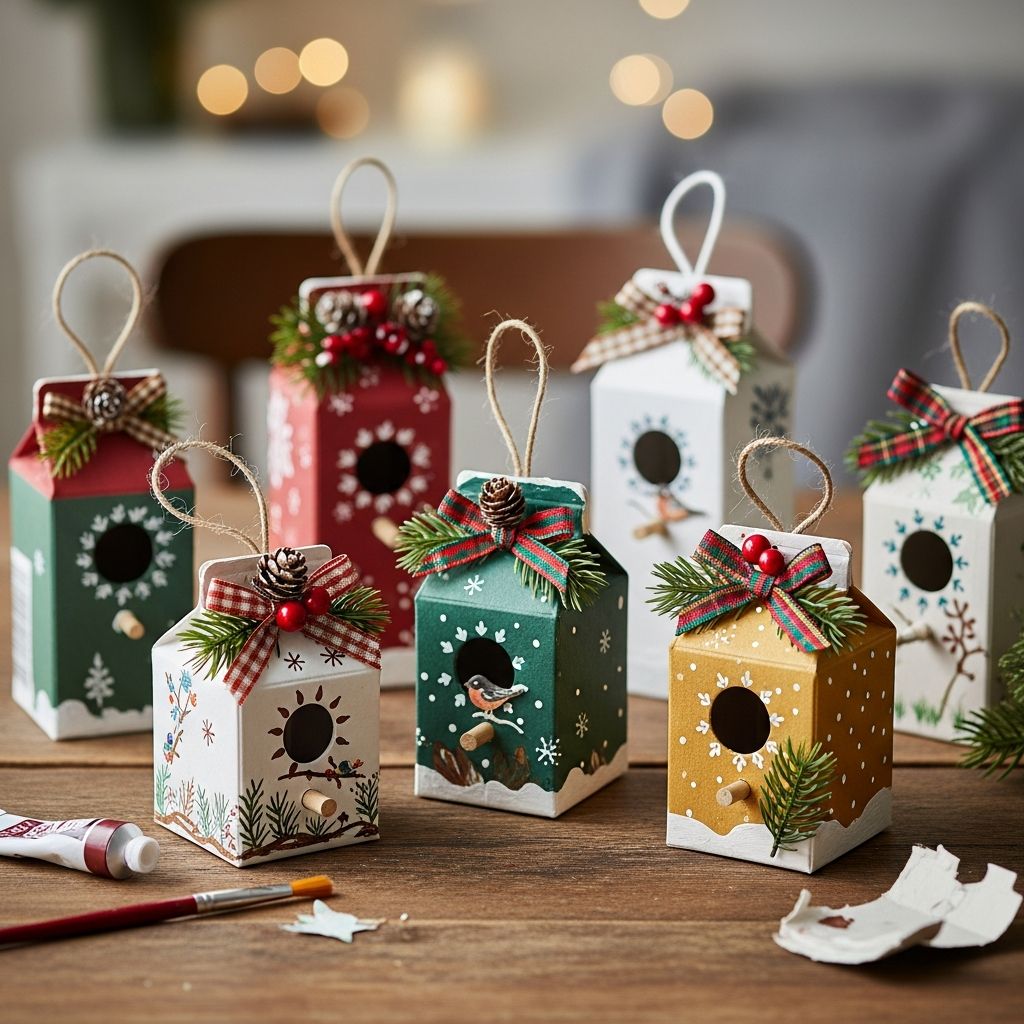
Turning an ordinary drink or food carton into a tiny birdhouse ornament is an easy way to decorate for the holidays, entertain kids, and keep a few containers out of the recycling bin. This guide walks through the entire process, from choosing the right carton to hanging your finished birdhouse on the tree or in a sunny window.
All of the ideas below are designed to be flexible, so you can use what you already have at home—paint, patterned paper, markers, or simple string—to create a flock of one-of-a-kind ornaments.
Why Make Birdhouse Ornaments from Cartons?
Recycled birdhouse ornaments are more than just cute decorations; they are a hands-on way to talk about creativity, resourcefulness, and caring for the environment. Because cartons are light and easy to cut, this project is also well-suited to crafting with kids, with appropriate adult supervision.
- Eco-conscious crafting: Give juice and milk cartons a second life instead of tossing them straight into the recycling bin.
- Budget-friendly activity: Most supplies can be found in a typical kitchen drawer or basic craft box.
- Kid-approved fun: Painting, gluing, and decorating the tiny houses keeps little hands busy and imaginations active.
- Customizable décor: Change colors and details to fit holidays, seasons, or room themes.
Essential Materials and Helpful Substitutions
You do not need specialized tools to make these ornaments. In fact, the charm comes from using simple, accessible supplies and letting each family member interpret the design in a slightly different way.
| Item | Primary Use | Possible Substitutions |
|---|---|---|
| Small cardboard or shelf-stable carton (juice, milk, cream, etc.) | Base body of the birdhouse ornament | Cardboard box section, cracker box, or heavy cardstock formed into a box |
| Acrylic paint or craft paint | Colorful background and details | Tempera paint, paint markers, or layered colored paper |
| Craft knife or sharp scissors (adults only) | Cutting the entry hole and trimming the roof | For kids: pre-cut holes made by an adult; heavy-duty hole punch for small openings |
| Glue (white craft glue or low-temp glue gun) | Attaching roofs, perches, and decorations | Glue dots, double-sided tape for lightweight decorative pieces |
| String, yarn, or thin ribbon | Hanging loop for the ornament | Twine, embroidery thread, fishing line for an almost invisible hanger |
| Wooden skewer, twig, or toothpick | Optional perch under the entry hole | Rolled scrap paper, small dowel, or broken craft stick |
| Decorative extras | Adding personality and seasonal flair | Glitter, buttons, sequins, stickers, fabric scraps, pom-poms |
Preparing Cartons for Crafting
Proper preparation ensures the finished ornament is clean, safe, and sturdy enough to last more than one season. Spend a few minutes getting the carton ready before bringing younger children into the project.
- Rinse the inside thoroughly with warm water to remove any residual liquid, then leave the carton upside down to dry.
- Peel away any loose outer labels or plastic film that might interfere with painting or gluing.
- Gently press the sides of the carton to check for soft or damaged areas and avoid using cartons that feel flimsy or damp.
- If the surface is glossy, lightly scuff it with fine sandpaper so that paint and glue adhere more evenly.
Basic Structure: Turning a Carton into a Birdhouse Shape
The classic birdhouse silhouette—a small box with a pitched roof and a circular opening—is easy to create from almost any small carton. Think of the carton as the main body of the house, then add a roof and finishing details.
- Mark the entry hole: Use a bottle cap, coin, or small round lid to trace a circle on one face of the carton, positioned slightly above the midpoint.
- Cut the opening: Adults should carefully pierce the center of the traced circle with a craft knife, then cut along the line until the opening is smooth. Kids can help by sanding rough edges with a nail file or small piece of sandpaper.
- Shape the top: If the carton has a peaked top (as many drink cartons do), trim or fold it into a neat triangular roof. If the top is flat, leave it for now; a separate cardboard roof can be added later.
- Seal and reinforce: Close any spouts or flaps with glue or tape so the structure feels solid in your hand.
Adding a Roof and Perch
The roof is where color, texture, and creative ideas really come to life. Depending on how much time you have and what supplies are available, you can choose between a simple wraparound roof or a layered one with faux shingles.
Simple Cardboard Roof
- Measure the top of the carton and cut a rectangle of cardboard slightly wider and longer than the top surface.
- Score a line down the middle of the rectangle so that it bends easily to form a peak.
- Glue the roof along the top of the carton, holding it until the adhesive sets or securing it with clips while it dries.
Decorative Perch
- Use a pointed object to create a small horizontal hole just beneath the circular entry opening.
- Insert a toothpick, twig, or piece of skewer through the hole so that both ends protrude equally.
- Secure from the inside with a dab of glue to keep the perch from sliding out.
Painting and Decorating Ideas
Once the basic shape is complete, the rest of the process is about color, pattern, and personality. Encourage each participant to choose a theme or story for their birdhouse, then let the decorations reflect that idea.
- Base coat first: Apply a solid coat of white or light-colored paint to help later colors stand out, especially on darker cartons.
- Layered color: After the base coat dries, add stripes, dots, checks, or abstract shapes using thin brushes, cotton swabs, or even fingertips.
- Patterned roofs: Try painting shingles, tiles, or scallops on the roof or covering it with patterned paper for a patchwork look.
- Nature-inspired touches: Glue on tiny leaves, dried flowers, or small pinecones to make the house look at home in a woodland scene.
- Seasonal themes: Use frosty blues and snowflake doodles for winter, bright florals for spring, or orange and gold leaves for autumn.
Kid-Friendly Versions and Classroom Adaptations
This project scales easily from a one-on-one weekend activity to a classroom or party craft station. A few small adjustments make the birdhouses safer and more manageable for younger makers.
- Pre-cut the entry hole and perch slots before handing cartons to children, particularly if they are using only safety scissors.
- Offer washable paint and glue sticks instead of permanent markers and hot glue for mess-free cleanup.
- Set up color stations: one table for painting base coats, another for details, and a final one for glitter, stickers, and embellishments.
- Provide smocks or oversized shirts to protect clothing from accidental splashes and drips.
Creating the Hanging Loop and Displaying Your Ornaments
Even the most charming carton birdhouse needs a secure hanging loop. Make sure the loop is sturdy and balanced so the ornament hangs straight on the tree or wall.
- Attach the loop: Use a hole punch or craft knife to make a small hole at the center of the roof peak.
- Thread the cord: Push a length of string, yarn, or ribbon through the hole from the outside to the inside.
- Secure with a knot: Tie a double knot on the inside so the cord cannot slip back through, then trim any extra ends.
- Check the balance: Hold the ornament by the loop and adjust the position slightly if it tilts too far forward or backward.
Display ideas include hanging birdhouses on a holiday tree, arranging them along a garland, suspending several at different heights in front of a window, or placing them on a mantel as part of a seasonal village scene.
Design Themes to Inspire Your Birdhouses
If you are making several birdhouse ornaments at once, choosing a unifying theme can help the collection feel intentional and cohesive. These concepts work well for families or groups where everyone wants to add their own twist while still matching the overall look.
- Winter cottage village: Use soft blues, creams, and silver accents, adding painted snow on roofs and around the entry holes.
- Rainbow flock: Assign each house a single bright color, then line them up in rainbow order on the tree or windowsill.
- Woodland retreat: Focus on earthy greens, browns, and deep reds, decorating with tiny mushrooms, faux moss, or hand-drawn vines.
- Storybook streets: Turn each birdhouse into a different shop or home—bakery, library, candy store—by adding simple hand-lettered signs.
Safety Notes and Tool Tips
Carton crafts are generally forgiving, but working with sharp tools and certain adhesives does require some care. Taking a few precautions helps everyone stay focused on creativity rather than Band-Aids.
- Assign all cutting tasks to an adult or responsible older child, especially when using craft knives or heavy scissors.
- Choose a low-temperature glue gun when children participate, and keep the cord and hot tip away from small hands.
- Always protect your work surface with newspaper, cardboard, or a washable tablecloth.
- Allow paint and glue to dry completely before hanging the ornaments to prevent smudges and drips on furniture or floors.
Care, Storage, and Reuse
Though cartons are lightweight, they can last for multiple seasons if stored carefully. Treat them like any other handmade paper or cardboard decorations.
- Store birdhouse ornaments in a dry, cool place away from direct sunlight to minimize fading and warping.
- Wrap each ornament loosely in tissue paper or paper towels to protect delicate roofs, perches, and glued decorations.
- Consider refreshing the paint or adding new embellishments each year, turning the collection into an evolving family tradition.
Frequently Asked Questions
Can these carton birdhouses be used outdoors for real birds?
These ornaments are designed primarily as decorative crafts for indoor use. Standard cartons and basic craft glues do not hold up well to rain, snow, or prolonged sun exposure. For real outdoor bird shelters, look for weather-resistant materials and plans specifically intended for wildlife.
What size carton works best?
Small to medium cartons, such as those used for individual drinks or small quantities of milk or cream, typically work best. They are light enough to hang from branches yet large enough to include a visible opening and decorations. Oversized cartons can be used for tabletop displays rather than tree ornaments.
Is spray paint safe to use on these ornaments?
Spray paint can cover cartons quickly, but it should only be used by adults in a well-ventilated outdoor area. If children are involved, stick to brush-on paints labeled as non-toxic and washable for maximum safety and easy cleanup.
How can this project be adapted for different holidays?
Simply change the color palette and decorative details to align with each holiday. For example, pastel shades and painted flowers work for spring celebrations, orange and black accents with painted bats suit autumn, and red, green, or metallic finishes fit winter festivities.
What if I don’t have paint?
If paint is unavailable, cover the carton with colored paper, pages from old magazines, or wrapping paper. Markers, colored pencils, and crayons can also add plenty of personality without liquid paint.
Wrapping Up Your Birdhouse Ornament Project
Upcycled carton birdhouse ornaments offer a satisfying mix of creativity, sustainability, and family connection. With just a few everyday materials, anyone can create a miniature birdhouse village that brightens a holiday tree, window, or mantelpiece while celebrating the joy of handmade décor.
Whether you follow the steps exactly or use them as a jumping-off point for your own ideas, this project invites experimentation and personal expression—no two birdhouses will ever look exactly the same.