Youth sports offer more than physical exercise; they serve as a vital arena for developing essential life skills like respect, resilience, and ethical decision-making. By prioritizing sportsmanship, parents, coaches, and young players can create environments where children thrive both on and off the field.
Understanding the Core of Sportsmanship
Sportsmanship goes beyond basic rule-following—it’s a commitment to ethical conduct, mutual respect, and a positive mindset during competition. It involves honoring opponents, appreciating officials’ efforts, and maintaining composure regardless of the score. For young athletes, this means viewing every game as an opportunity to demonstrate character rather than just chase victory.
At its foundation, sportsmanship balances fierce competition with fairness. Children who embrace it learn to compete honestly, celebrate collective efforts, and handle pressure with poise. This multifaceted approach not only elevates the game but also instills values that extend into classrooms, workplaces, and relationships.
Key Benefits for Developing Minds and Bodies
Instilling sportsmanship early yields profound advantages for children’s growth.
- Enhances Respect Dynamics: Young players learn to value others’ efforts, fostering empathy and reducing conflicts. This respect extends to teammates, rivals, and authority figures, creating harmonious interactions.
- Strengthens Emotional Resilience: Facing wins and losses teaches humility in success and perseverance in defeat, equipping kids to manage real-world setbacks without bitterness.
- Upholds Integrity and Fairness: By rejecting shortcuts like cheating, children internalize that true achievement stems from effort and honesty, building a moral compass.
- Cultivates Team Unity: Positive attitudes encourage support among peers, leading to stronger bonds and sustained participation in sports.
- Prepares for Broader Life Challenges: Skills like teamwork and self-control translate seamlessly to academic, social, and professional spheres.
Practical Strategies for Parents to Lead by Example
Parents play a pivotal role in modeling sportsmanship. Their actions in the stands often speak louder than words on the field.
| Action | Why It Matters | Example |
|---|---|---|
| Cheer constructively | Promotes positivity without pressure | Focus praise on effort: “Great hustle!” instead of “You should’ve scored!” |
| Respect officials | Teaches deference to authority | Avoid arguing calls; discuss privately post-game if needed |
| Celebrate all efforts | Builds inclusive mindset | Applaud opponents’ good plays |
| Handle losses calmly | Models grace under pressure | Say, “Tough game, but you gave it your all.” |
By consistently demonstrating these behaviors, parents reinforce that character trumps trophies.
Coaching Techniques to Embed Lasting Values
Coaches shape team culture through deliberate practices. Start sessions with discussions on respect and fairness, incorporating scenarios where players role-play handling disputes or victories. Reward sportsmanlike actions publicly—perhaps with a “Team Player of the Game” award for encouragement or honesty, not just stats.
Incorporate team-building exercises like post-game circles where everyone shares a positive highlight from an opponent or teammate. This shifts focus from individual glory to collective growth. Coaches should also debrief losses as learning opportunities, emphasizing improvement over blame.
- Enforce clear expectations: No trash-talking or unsportsmanlike gestures.
- Promote inclusivity: Ensure bench players feel valued.
- Lead with integrity: Admit coaching errors openly.
Empowering Kids to Own Their Sportsmanship
Children actively practice sportsmanship through daily choices. Encourage them to:
- High-five opponents pre- and post-game.
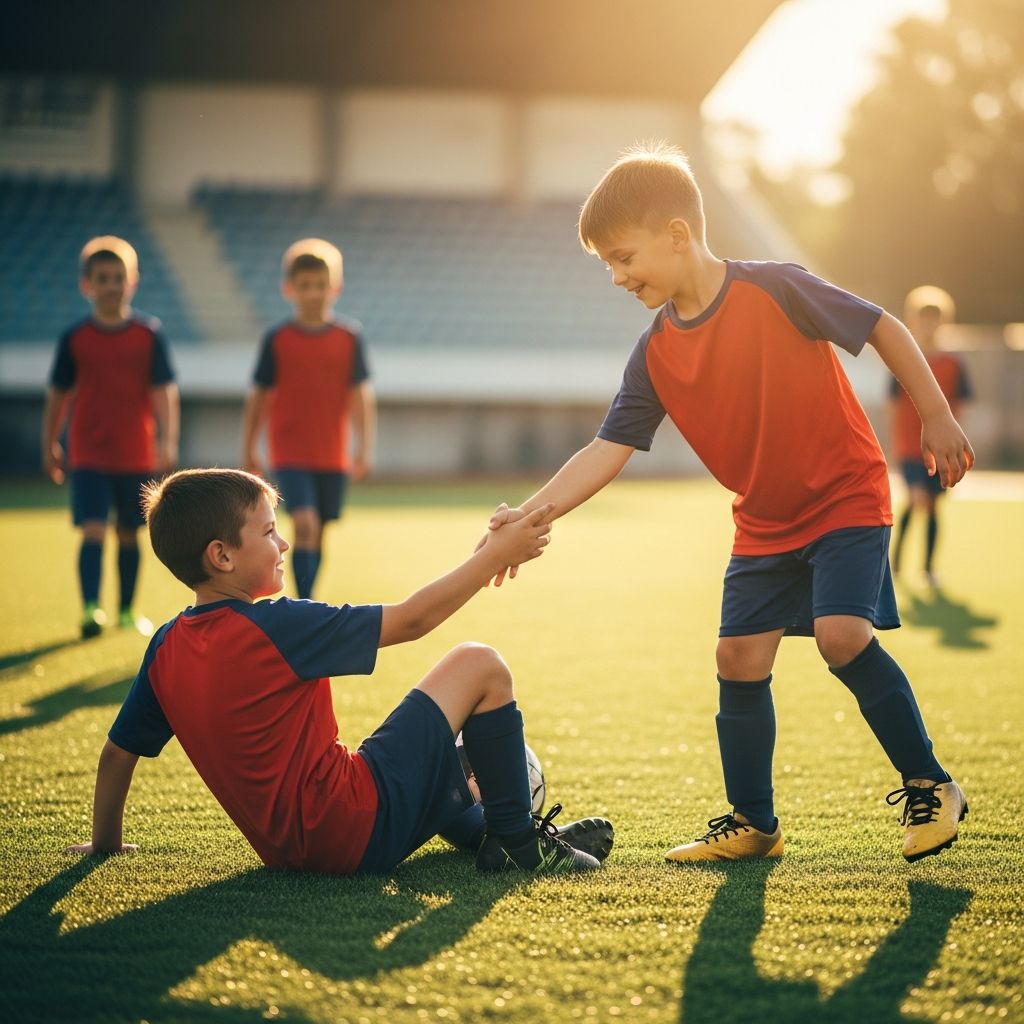
- Assist fallen players, regardless of team.
- Own mistakes and suggest self-improvements.
- Stay enthusiastic, cheering from the sidelines.
These habits build intrinsic motivation. For instance, a player who passes instead of forcing a shot learns collaboration’s joy. Over time, such actions become second nature, enhancing enjoyment and retention in sports.
Navigating Common Challenges in Youth Sports
High-stakes games can test sportsmanship. Intense rivalries might tempt taunting, while lopsided scores frustrate the losing side. Address these by pre-game huddles reminding players of core values. For parents showing poor conduct, leagues often implement codes of ethics with consequences like temporary sidelines.
Age-appropriate guidance helps: Younger kids need simple reminders like “Play hard, play nice,” while teens benefit from discussions on long-term impacts, such as how poor behavior affects scholarships or reputations.
Building a Community-Wide Culture of Excellence
Sportsmanship flourishes in supportive ecosystems. Leagues can host workshops for families, partner with schools for character education, and showcase exemplary players via newsletters. When entire communities prioritize these values, youth sports become transformative platforms for holistic development.
Statistics underscore the impact: Programs emphasizing sportsmanship see higher retention rates and fewer incidents of misconduct, proving that positive cultures yield engaged, well-rounded athletes.
Frequently Asked Questions (FAQs)
What age should kids start learning sportsmanship?
From the first team experience, around 5-6 years old. Use simple stories and games to make concepts relatable.
How do you handle a child upset after losing?
Validate feelings, then redirect to positives: “It’s okay to feel sad. What did you do well?” Focus on growth.
Can competitive parents ruin sports for kids?
Yes, aggressive sideline behavior models poor conduct. Promote calm support to keep experiences fun.
What’s the difference between competitiveness and poor sportsmanship?
Competitiveness drives improvement; poor sportsmanship undermines others. Channel passion ethically.
How can coaches measure sportsmanship progress?
Track via peer nominations, observation checklists, and post-season feedback surveys.
Long-Term Impact: Champions Beyond the Field
Investing in sportsmanship creates lifelong winners. These youth grow into adults who navigate challenges with grace, collaborate effectively, and lead ethically. Sports become not just games, but enduring teachers of humanity’s best traits.
In a world valuing quick wins, sportsmanship reminds us that true success lies in how we play the game of life. By nurturing it now, we equip the next generation for excellence in every arena.
References
- Sportsmanship and Why It’s Important In Youth Sports — Unlocked Potential. 2025-08-14. https://unlockedpotential.net/2025/08/14/sportsmanship-and-why-its-important-in-youth-sports/
- A Young Athlete’s Guide to Sportsmanship and Fair Play — AAA State of Play. N/A. https://www.aaastateofplay.com/young-athletes-guide-to-sportsmanship/
- The Importance of Sportsmanship and What it Should Look Like — Fort Worth Country Day. 2018-09-28. https://www.fwcd.org/news/2018-09-28/the-importance-of-sportsmanship-and-what-it-should-look-like
- Sportsmanship | Research Starters — EBSCO. N/A. https://www.ebsco.com/research-starters/sports-and-leisure/sportsmanship
- What Sportsmanship Means to Us — i9 Sports. N/A. https://www.i9sports.com/blog/what-sportsmanship-means-to-us
- Teaching Children Good Sportsmanship — Stanford Children’s Health. N/A. https://www.stanfordchildrens.org/en/topic/default?id=teaching-children-good-sportsmanship-1-4524
- Sportsmanship — Northeastern Youth Sports Association. N/A. https://www.neysa-sports.org/Default.aspx?tabid=1166150