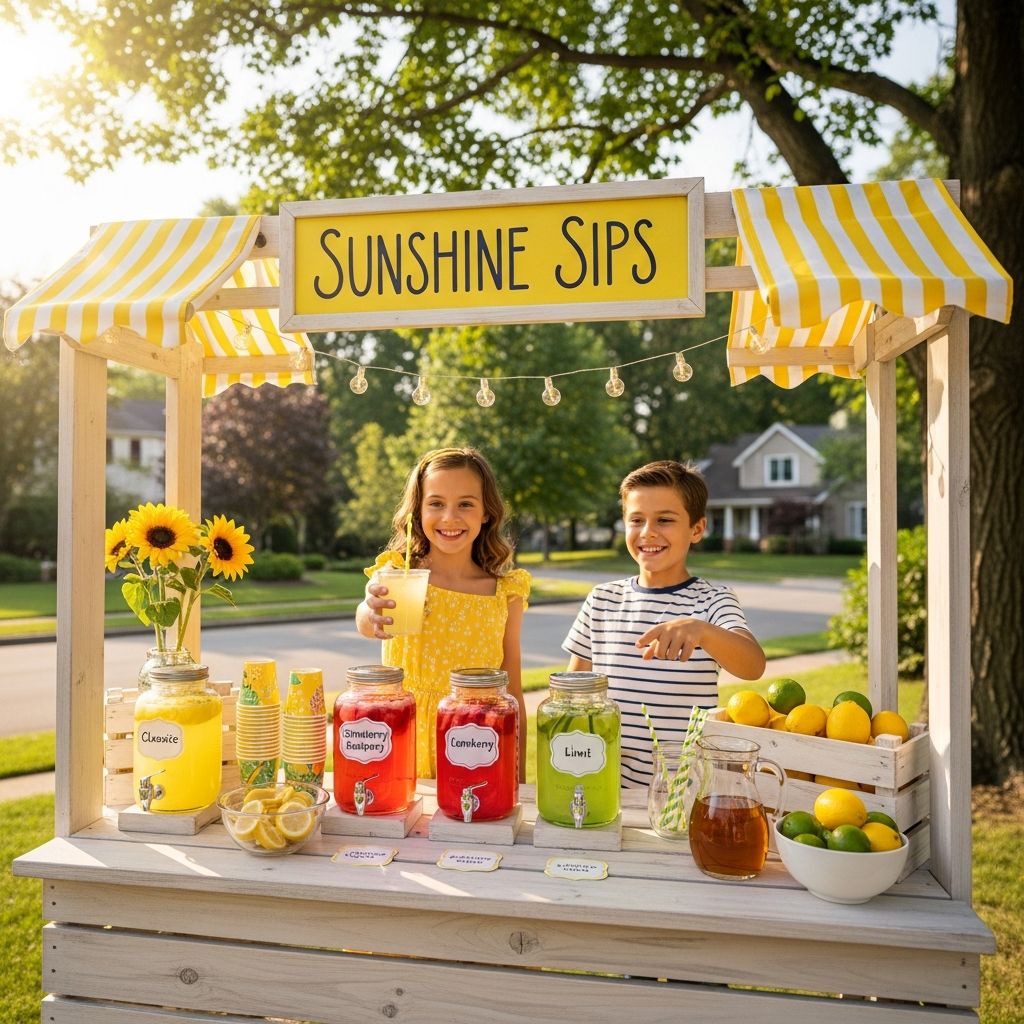
A lemonade stand is more than a pitcher and a few cups on a table. It is a hands-on lesson in creativity, responsibility, and simple money skills disguised as a fun family activity. With a bit of planning, you can help kids design a cheerful stand that feels special, welcoming, and easy for them to manage.
This guide walks through every step of building a kid-friendly lemonade stand—from picking the perfect spot and choosing recipes to setting prices, talking to customers, and wrapping up the day so everyone feels proud of what they created.
Why a Lemonade Stand Is the Perfect First “Business”
Running a lemonade stand gives children a chance to act like entrepreneurs on a small, safe scale. They see how their effort and ideas turn into real results when neighbors stop by and support them. The experience also encourages teamwork between siblings and friends as they divide simple tasks and work together.
Parents gain a low-pressure way to show kids basic money concepts, such as counting change, tracking simple costs, and deciding what to do with profits. At the same time, it offers a screen-free activity that gets kids outdoors, talking, and using their imaginations.
Planning the Big Lemonade Day
A little planning makes the difference between a rushed setup and a smooth, fun day. Before anyone squeezes a lemon, sit down with your child to talk through what the stand will look like and what they hope to do with the money they earn.
- Decide when the stand will be open and how long it will run.
- Talk about where to set up so it is safe and easy for people to see.
- Agree on goals, such as saving for a toy, donating to a cause, or splitting money between several uses.
Choosing a Safe and Visible Location
The best location balances visibility with safety. A shaded spot at the edge of a driveway or front yard allows neighbors and walkers to notice the stand without placing children too close to traffic. Avoid sharp turns, busy intersections, and steep driveways where drivers have limited visibility.
If your home is on a quiet street, consider asking a friend or relative with better foot traffic if you can host the stand at their place. Always ensure an adult is nearby to supervise money handling, food safety, and general safety throughout the day.
Location Checklist
- Easy for walkers and neighbors to see.
- Far enough from the road to feel safe.
- Shady or partially shaded during peak hours.
- Flat ground for tables, chairs, and coolers.
Gathering Supplies Without Overcomplicating It
You do not need expensive decor or custom printed items to create a charming stand. Simple, sturdy supplies make the experience more manageable for kids and easier for adults to clean up later. Most families can gather nearly everything from items already in the house.
Focus on a solid surface for serving, enough cups for the expected visitors, and a way to keep drinks cold. Add a few fun touches like a colorful tablecloth or hand-drawn sign to give the stand personality without adding stress.
Basic Supply List
- Sturdy table or folding card table.
- 2–3 chairs or stools (one for the child, one for an adult).
- Pitchers or drink dispensers with lids.
- Disposable paper cups or reusable plastic cups you can wash.
- Cooler with ice or frozen water bottles to keep lemonade cold.
- Napkins, paper towels, or small cloths for spills.
- Trash bag or small bin for used cups and napkins.
- Cash box, lidded container, or zipper pouch for money.
- Markers, poster board, and tape or string for signs.
Designing a Stand That Feels Special
The design of the stand is where kids can truly express themselves. Encourage them to choose colors, themes, or decorations that feel fun and personal. Even simple details like a bright cloth, colorful bunting, or hand-drawn lemons can transform an ordinary table into something worth walking over to see.
Make sure decorations do not interfere with movement or safety. Keep pathways clear so kids are not tripping over banners or tangled in string while pouring drinks or reaching for cups.
Simple Design Ideas Kids Love
- Use a bright tablecloth as a starting point and build colors around it.
- Create a small menu sign with prices and doodles of lemons or fruit.
- Hang paper chains or flags made from construction paper.
- Offer a “Tip Jar” decorated with stickers or drawings.
Creating Easy, Tasty Lemonade
Taste matters. A refreshing drink makes customers more likely to compliment the stand, take photos, and tell friends to stop by. Choose a recipe that kids can help mix, pour, and taste without feeling overwhelmed by complicated steps.
You can keep things traditional with fresh-squeezed lemonade or use a mix for convenience. Many families enjoy offering one classic flavor and one simple twist so customers can choose without being confused by a long menu.
Basic Lemonade Formula (Adjustable)
For a simple starting point, aim roughly for this ratio, then adjust to taste:
- 1 part freshly squeezed lemon juice.
- 1 part simple syrup or sugar dissolved in warm water.
- 3–4 parts cold water, plus ice.
Always taste the lemonade before serving. Some lemons are more sour, and kids can have fun experimenting by adding a little more water or sweetness until it feels just right.
Fun Flavor Variations
- Berry twist: Stir in a spoonful of crushed strawberries or raspberries.
- Herb refresh: Add a few sprigs of mint to the pitcher for a gentle flavor.
- Sparkling option: Mix half lemonade and half sparkling water for fizzy cups.
Setting Prices and Talking About Money
Pricing is a great moment to introduce kids to basic math and the idea that supplies cost money. Talk about how lemons, sugar, cups, and decorations add up, then help them pick a price that covers those costs and leaves a little extra as profit. Using simple prices like whole dollars or half-dollars makes change easier.
Before the stand opens, practice handling pretend purchases so kids can get used to taking bills, giving change, and placing money in a safe container. An adult can quietly double-check during the day if needed, but allowing kids to try first builds confidence.
Sample Pricing Table
| Item | Suggested Price | Kid-Friendly Reasoning |
|---|---|---|
| Small cup of lemonade | $0.50 | Easy coin change for younger kids. |
| Large cup of lemonade | $1.00 | Simple whole-dollar price. |
| Refill (same cup) | $0.50 | Encourages repeat customers and less waste. |
| Cookie or snack (optional) | $0.75–$1.00 | Great add-on but still a small purchase. |
Making Simple Signs That Attract Attention
Clear, bright signs help people notice the stand and understand what is being sold at a glance. Encourage kids to use large letters, contrasting colors, and a few short, punchy words rather than trying to squeeze in a lot of text. A fun name for the stand can also make people smile and stop to see what is going on.
Signs do not have to be perfect or professional. In fact, slightly uneven, colorful kid-made signs often feel more charming and genuine to neighbors than polished ones.
Sign-Making Tips
- Use thick markers or paint so letters are visible from a distance.
- Include the price clearly to avoid confusion or awkward questions.
- Add simple images such as lemons, sunshine, or smiling faces.
- Place an arrow sign at the corner if your yard is not directly on the main path.
Teaching Customer Service Skills
A lemonade stand gives children a safe way to practice talking to people and being polite. Before customers arrive, role-play a few situations so kids are ready with simple greetings, thank-yous, and responses to common questions. This makes them feel more comfortable when strangers walk up to the stand.
Explain that every customer deserves a smile, a clean cup, and a kind farewell. These small details turn the experience into something visitors remember fondly, even long after they finish their drinks.
Easy Phrases to Practice
- “Hello! Would you like some lemonade?”
- “Here you go! Your lemonade is nice and cold.”
- “Thank you for stopping by!”
- “Have a great day!”
Keeping Things Clean and Safe
Because the stand serves drinks, basic hygiene matters. Adults should supervise handwashing, ingredient handling, and the overall cleanliness of the table. Use a separate area for money so that kids are not touching cash and then reaching directly into ice or pitchers.
Encourage frequent handwashing or the use of hand sanitizer, particularly after handling money, touching faces, or picking items up from the ground. Keep napkins, extra cups, and cleaning cloths nearby in case of spills or sticky messes.
Simple Safety Guidelines
- Always have an adult present during setup, sales, and cleanup.
- Keep lemonade covered when not pouring to reduce bugs and debris.
- Store extra ingredients in a cooler or inside the house, away from direct sun.
- Make sure cords, decorations, and chairs are not in walkways where people could trip.
Adding Optional Extras Without Stress
Once the basic stand is running smoothly, consider small extras to enhance the experience. These should be easy to manage and not overwhelm kids with too many tasks. Think about one or two simple options rather than a full menu of add-ons.
Extras can also be used as rewards for reaching certain goals. For example, if the stand runs successfully once, kids can plan a “special flavor day” next time or design punch cards for returning customers.
Fun Optional Add-Ons
- Offer a “flavor of the day” such as strawberry or mint lemonade.
- Sell a small snack like pre-packaged cookies or crackers.
- Create paper loyalty cards with a free refill after several visits.
- Set out a jar for donations to a cause the child cares about.
Wrapping Up: Counting, Reflecting, and Celebrating
Closing the stand is not just about putting away cups and wiping the table. It is also an opportunity to show kids how to review what happened and feel proud of their effort. After everything is packed up, sit down together with the cash box and a piece of paper.
Help your child count the money, subtract the cost of supplies, and see how much is left as true profit. Then talk through what went well, what could be improved next time, and how they would like to use or save their earnings.
End-of-Day Reflection Questions
- What was your favorite part of running the stand?
- What was the hardest part, and how did you handle it?
- If you do it again, is there anything you would change?
- How do you want to divide your money between saving, spending, and sharing?
Frequently Asked Questions
Do kids need permission or permits to run a lemonade stand?
Rules vary by community, so it is wise for an adult to quickly check local guidelines or neighborhood association rules before setting up. In many residential areas, casual, short-term stands by children are tolerated or even welcomed, but it is still responsible to be aware of any specific restrictions in your area.
How long should a lemonade stand stay open?
For most families, a two- to three-hour window is long enough for kids to stay enthusiastic and focused without becoming exhausted. Shorter sessions also make it easier to keep drinks cold, maintain cleanliness, and avoid wasting a large amount of leftover lemonade.
What if there is extra lemonade left over?
Leftovers can be offered at a discount toward the end of the stand’s hours, shared with friends and neighbors, or poured into ice cube trays to freeze for future drinks. The important thing is to explain to kids that unsold drinks are part of learning how much to make next time.
How can siblings share responsibilities fairly?
Before starting, list all the tasks—greeting customers, pouring drinks, handling money, making signs—and rotate roles every 15–20 minutes so everyone gets a turn. This prevents arguments and helps each child try different skills instead of being stuck with the same job.
Can a lemonade stand support a charitable cause?
Yes, many families choose to donate a portion of profits to a local shelter, school fundraiser, or other cause. When kids help choose the cause and learn a bit about it, they see how their efforts can positively affect people beyond their own home.
With thoughtful planning, simple supplies, and lots of encouragement, a lemonade stand becomes more than a way to cool off on a hot day. It turns into a shared memory and a small but powerful lesson in responsibility, generosity, and the joy of creating something from scratch.