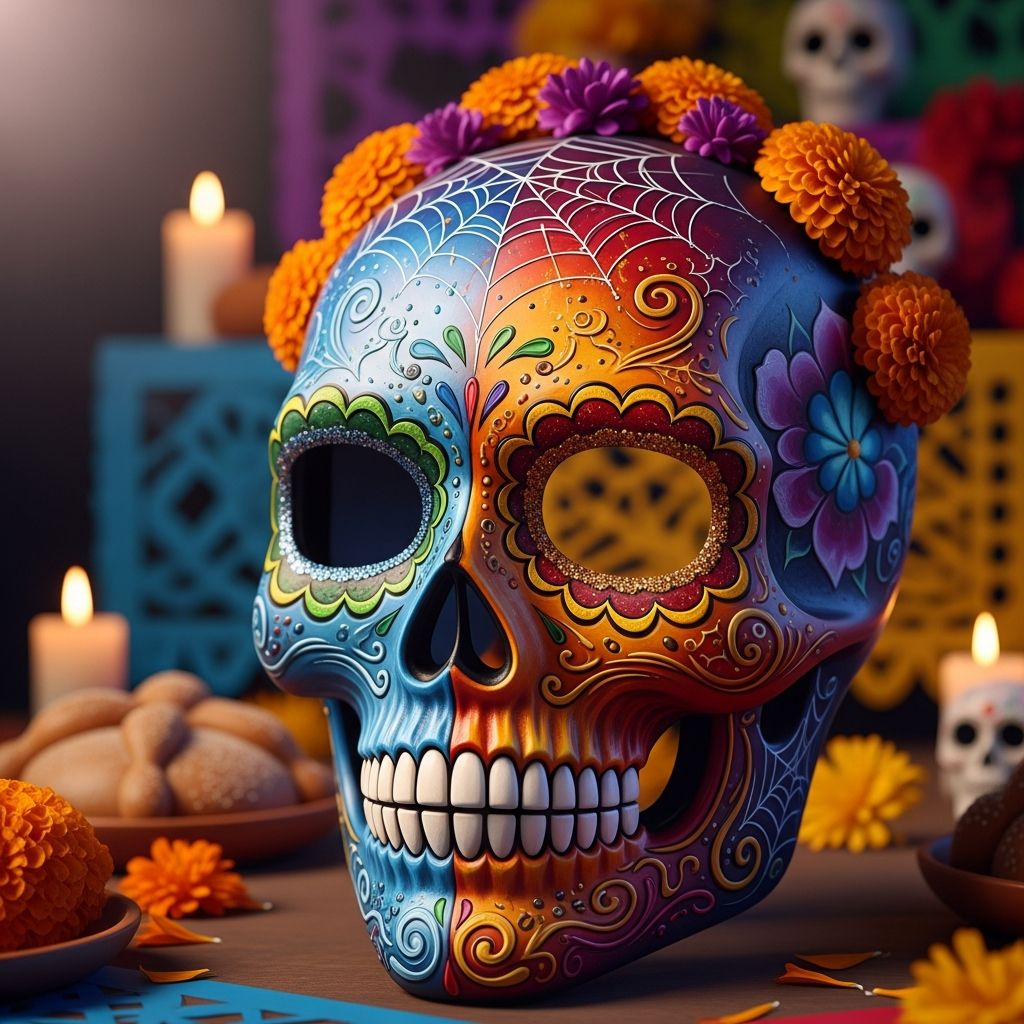
Día de los Muertos, or Day of the Dead, is a joyful Mexican and Latin American tradition that honors loved ones who have died through altars, food, flowers, music, and striking skull imagery, including masks and face paint.
Crafting a mask inspired by this celebration can be a powerful way for families and individuals to connect with the holiday’s message: death is part of life, and remembrance can be colorful, loving, and full of hope.
Understanding the Meaning Behind the Masks
Día de los Muertos has roots in pre-Hispanic Mesoamerican traditions that later blended with Catholic observances of All Saints’ Day and All Souls’ Day, creating a distinct celebration focused on remembering the dead with joy rather than fear.
Skull masks and makeup, often called calaveras, are worn as a playful, welcoming symbol meant to greet the returning spirits of loved ones, not to frighten them.
Symbolism in Día de los Muertos Mask Designs
The visual language of Day of the Dead masks is rich with symbols, colors, and motifs that each carry their own meaning, from flowers of remembrance to patterns that evoke the cycle of life.
Understanding this symbolism helps crafters move beyond simple decoration and create masks that tell a personal story of memory, gratitude, and connection.
Common Symbols and Their Meanings
- Skulls (Calaveras): Represent the presence of the dead and the idea that death is a natural, sometimes humorous, part of life.
- Marigolds (Cempasúchil): Bright yellow-orange flowers believed to guide spirits with their scent and color.
- La Catrina–style motifs: Elegant skeletal imagery inspired by a famous Mexican engraving, often used to mock vanity and highlight that everyone becomes equal in death.
- Crosses and candles: Reflect the Catholic elements of the holiday and the idea of light helping souls find their way home.
- Hearts and doves: Emphasize love, peace, and the continuing bond with those who have died.
Helpful Symbolism Reference Table
| Visual Element | Typical Meaning | How to Use on a Mask |
|---|---|---|
| Marigold petals | Guidance for visiting spirits and remembrance. | Paint flower rings around the eyes or along the forehead. |
| Intricate swirls | The ongoing cycle of life and death. | Fill in cheek areas with curled, scrolling lines. |
| Hearts | Love for specific family members or friends. | Place a heart at the center of the forehead or chin. |
| Crosses or small rays | Spiritual light and protection. | Add a subtle cross near the brow or rays radiating from the eyes. |
| Bright gemstones or glitter | Celebratory attitude toward memory and life. | Dot around the eyes or outline teeth with sparkling accents. |
Choosing a Respectful Creative Approach
Because Día de los Muertos is deeply meaningful to many Mexican and Latin American communities, approaching mask-making with curiosity and respect is essential, especially if the holiday is not part of your own heritage.
Talking about the history, pronunciation of Spanish terms, and the holiday’s focus on remembrance helps children and adults understand they are honoring a tradition, not simply adopting a costume style.
Questions to Ask Before You Start
- Whose memory do you want to honor on your mask?
- What colors or flowers remind you of that person?
- How can you acknowledge the holiday’s origins and give credit to the culture it comes from?
- Are you using the mask in a context that celebrates, rather than trivializes, the tradition?
Materials and Setup for Family-Friendly Mask Crafting
Día de los Muertos masks can be made with simple, accessible materials like cardstock, cardboard, or premade blank masks, making this project adaptable to different ages and budgets.
Setting up a dedicated craft space with organized supplies also makes it easier to focus on the stories and memories that inspire each design.
Basic Materials Checklist
- Thick paper, cardstock, or lightweight cardboard mask bases
- Elastic cord, ribbon, or string for attaching the mask
- Non-toxic paints, markers, or colored pencils
- Glue sticks or craft glue
- Scissors or child-safe cutters
- Decorations: paper flowers, tissue paper, sequins, rhinestones, colored foil, and craft feathers
- Optional: stencils for symmetrical designs, small brushes for fine details
Safety and Comfort Tips
- Pre-cut eye and nose openings for younger children so they do not handle sharp tools.
- Use lightweight materials if the mask will be worn during a parade or extended celebration.
- Test any face-contact surfaces for rough edges and cover with felt or tape if needed.
Step-by-Step Guide to Designing Your Mask
Designing a Día de los Muertos–inspired mask works best when you move from simple shapes to more intricate details, adding layers of meaning and decoration as you go.
Encouraging family members to share stories as they work can transform a basic craft into a meaningful ritual of remembrance.
1. Start with the Shape
Begin by sketching or tracing a skull-like outline onto your base material, making sure the mask will sit comfortably on the wearer’s face.
Cut out eye holes large enough for clear vision and adjust the nose and cheek area so breathing and speaking feel easy.
2. Plan the Symbolic Layout
- Draw light pencil guidelines dividing the mask into forehead, eye, cheek, and chin zones.
- Assign a feeling or memory to each area, such as “flowers for grandmother” on the forehead or “music notes” on the cheeks.
- Select a few key symbols from the reference table above and decide where they will go.
3. Apply Base Colors
Paint or color the entire mask with a base layer, such as white for a traditional skull effect or a soft pastel for a more playful look.
Allow this layer to dry completely before adding darker outlines and small details to avoid smudging.
4. Add Details and Patterns
- Outline eye sockets with bold circles, then fill them with flowers, dots, or tiny hearts.
- Draw stylized teeth along the mouth area using rectangles or small arches.
- Fill empty spaces with swirls, leaves, or geometric motifs that echo embroidery and folk art.
5. Attach Embellishments
Once the paint or marker lines are dry, glue on paper flowers, sequins, or rhinestones to create dimension and sparkle.
Keep heavier elements near the top and sides of the mask so they do not obstruct breathing or vision.
6. Fit and Finish
- Punch small holes on the sides of the mask and tie elastic or ribbon to fit the wearer’s head.
- Test the mask while standing, walking, and turning the head to ensure comfort.
- Make any final adjustments, such as adding padding to the nose or trimming edges.
Mask Themes Inspired by Loved Ones
One of the most moving aspects of Día de los Muertos is the way families personalize altars and offerings based on the hobbies and personalities of the deceased, and mask designs can echo that same spirit.
Adapting this idea to mask-making encourages children to remember details about their relatives and to think of death in terms of stories and relationships rather than fear.
Theme Ideas for Your Mask
- Musician Mask: Decorate with musical notes, tiny instruments, and rhythmic patterns for someone who loved music.
- Gardener Mask: Fill the cheeks and forehead with flowers, leaves, and vines to honor a plant-loving relative.
- Storyteller Mask: Use symbols from favorite books, stars, and moons to represent shared tales and bedtime stories.
- Food Lover Mask: Include small drawings of favorite dishes or fruits that would appear on the family altar.
Displaying and Using Your Día de los Muertos Masks
Día de los Muertos masks may be worn during community parades, processions, and family gatherings, or they can be displayed as part of a home altar, known as an ofrenda.
Whether worn or hung, they serve as colorful reminders of loved ones and visual proof that remembrance can be both solemn and joyful.
Ideas for Display
- Hang masks above or beside an altar with photos, candles, and marigolds.
- Arrange several family-made masks along a wall to form a “memory gallery” for the season.
- Place a single mask on a stand or shelf next to a framed picture of the person it honors.
Participating in Celebrations
- Wear the mask at a local Day of the Dead event that welcomes community participation.
- Combine the mask with traditional clothing, such as embroidered blouses or shirts, to acknowledge the holiday’s cultural roots.
- Use the mask during a family storytelling night, where each person explains the meaning of their design.
Frequently Asked Questions About Día de los Muertos Masks
Is Día de los Muertos the same as Halloween?
No. Halloween is generally centered on scares, costumes, and trick-or-treating, while Día de los Muertos focuses on remembering loved ones through altars, food, and symbolic imagery like skulls and marigolds.
Although the dates are close, the origins and purposes of the two celebrations are different, and Day of the Dead is not meant to be a horror holiday.
Can I participate if I am not Mexican or Latin American?
Many communities welcome respectful participation from people of different backgrounds, especially when they take time to learn about the history, language, and beliefs behind the holiday.
If you join in, focus on honoring real people and recognizing the culture that created the tradition instead of using the imagery purely as a costume or trend.
Are masks required to celebrate Día de los Muertos?
No. Some people use face paint, others prefer not to wear any skull imagery, and many focus instead on altars, candles, and visiting graves.
Masks are one of many artistic options, and their use varies across regions and families.
What colors are most traditional for masks?
Bright colors like orange, yellow, red, pink, and turquoise are common, echoing marigolds, candles, and festive decorations used throughout Día de los Muertos.
White is often used as a base for skull imagery, while black may outline features and create contrast.
How can I teach children about death through this craft?
Using mask-making as a conversation starter allows children to ask questions, share memories, and hear stories that frame death as part of the human experience, rather than only something to fear.
Emphasizing love, continuity, and cultural tradition can help them feel supported while they create.
Bringing Art, Memory, and Culture Together
Día de los Muertos masks bring together art, symbolism, and storytelling in a way that invites participants of all ages to reflect on those who have passed while celebrating the beauty of life.
By choosing symbols thoughtfully, crafting with care, and respecting the holiday’s roots, families can create colorful masks that serve as both creative projects and heartfelt tributes.