Family vacations offer excitement and bonding opportunities, but they often disrupt children’s sleep patterns. New surroundings, altered schedules, and overstimulation can lead to overtired kids and exhausted parents. By implementing targeted strategies, parents can minimize these issues and ensure restful nights even in unfamiliar settings. This guide draws from pediatric sleep recommendations to help you sustain healthy sleep habits on the road.
Understanding Sleep Disruptions on Vacations
Children’s sleep is governed by circadian rhythms, which rely on consistent cues like light, activity, and routines. Travel introduces variables such as jet lag, hotel noises, or family gatherings that confuse these rhythms. Infants and toddlers, in particular, struggle with transitions because their sleep needs are higher—up to 14-17 hours daily for under-fives, per pediatric guidelines. Older kids may resist bedtime amid vacation fun, leading to cumulative sleep debt that manifests as crankiness or meltdowns.
Maintaining sleep supports immune function, mood regulation, and cognitive growth. Research from sleep experts emphasizes consistency to anchor a child’s internal clock, reducing adjustment time upon return. Prioritizing this aspect enhances the overall trip experience.
Establishing a Portable Bedtime Ritual
A predictable bedtime sequence signals the body to wind down, regardless of location. Aim for 20-30 minutes of calming activities like bathing, reading, or gentle massages, extending slightly if needed to counter excitement.
- Pack familiar books, lullaby playlists, or a favorite stuffed animal to evoke home comforts.
- Incorporate sensory elements such as dim lights or soft music to promote melatonin production.
- For toddlers, use phrases like “Vacation quiet time begins” to set expectations without demanding immediate sleep.
Consistency reinforces security; even grandparents’ houses benefit from this structure, preventing FOMO-driven resistance.
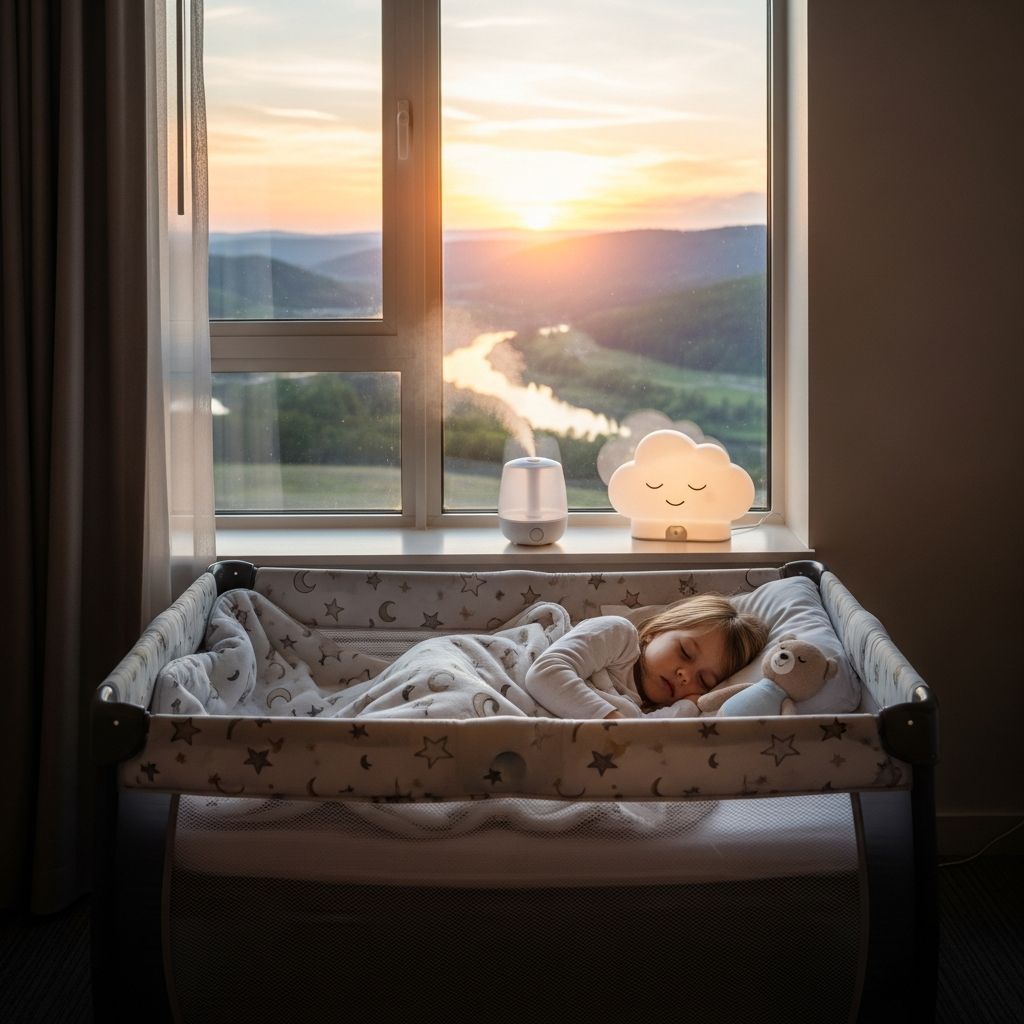
Optimizing the Sleep Space Anywhere
Replicate home conditions to cue sleepiness. Darkness, quiet, and cool temperatures (around 68-72°F) are foundational.
| Element | Home Setup | Travel Adaptation |
|---|---|---|
| Light Control | Blackout curtains | Portable blackout shades or eye masks |
| Sound | White noise machine | Battery-powered noise player or app |
| Comfort | Familiar bedding | Lovey, sleep sack, or extra pillows |
| Temperature | AC or fan | Portable fan; light clothing layers |
Invest in compact gear like inflatable bed rails for preschoolers or a travel crib. Remove screens 30-60 minutes pre-bedtime to avoid blue light interference with melatonin. These tweaks transform hotel rooms or relatives’ guest spaces into sleep sanctuaries.
Navigating Naps and Daily Schedules
Preserve nap times to prevent overtiredness, which paradoxically hinders night sleep. If a nap is skipped, advance bedtime by 30-60 minutes. For multi-day trips, anchor wake-ups and bedtimes to home clock initially, adjusting gradually for long-haul travel.
- Schedule naps in shaded strollers or quiet corners during outings.
- Cap naps at usual durations to safeguard nighttime sleep pressure.
- Encourage daytime activity like park play to build sleep drive, finishing an hour before bed.
Nutrition matters too: balanced meals and limited caffeine/sugar sustain energy without crashes.
Handling Time Zone Challenges
Jet lag hits kids hard due to immature clocks. For short trips (<1 week) or single-zone shifts, stick to home times. Longer journeys warrant phased adjustments.
- Pre-trip prep: Shift schedules 15-60 minutes daily beforehand, based on age (slower for babies).
- On arrival: Expose to natural light mornings; dim evenings. Delay/advance meals and sleep incrementally.
- Westward travel: Easier; extend evenings with bright activities.
- Eastward: Tougher; wake early for sunlight exposure.
Babies adapt at 15-30 minutes/day; toddlers at 30-60. Hydration and motion exposure during flights aid regulation.
Setting Boundaries with Hosts and Family
Relatives may encourage late nights, but firm communication preserves sleep. Explain needs upfront: “We prioritize rest for happy days.” Offer compromises like daytime spoiling but structured evenings.
Separate siblings if sharing rooms disrupts; use room dividers or staggered bedtimes. Post-fun days, enforce routines compassionately.
Extra Comfort Without Bad Habits
New settings heighten separation anxiety, prompting extra cuddles. Provide reassurance but fade assistance to match home methods—e.g., pats instead of co-sleeping.
- Pack duplicates of loveys for laundry rotation.
- Use quiet toys for wind-down if naps are missed.
- Validate feelings: “I know it’s exciting here; bedtime helps us recharge.”
Flexibility is key; occasional lapses won’t derail progress if recommitted promptly.
Post-Trip Recovery Strategies
Return disrupts renewed routines. Reset swiftly:
- Resume home schedule Day 1, using sunlight cues.
- Limit screens 2 hours pre-bed; prioritize outdoor play for circadian realignment.
- Refresh rituals with favorite elements like storytime or oils.
- Monitor for 3-5 days; adjust wake times if oversleeping persists.
Family meals enforce structure. Most kids rebound within a week with diligence.
Age-Specific Adjustments
Infants (0-12 Months)
Feed-play-sleep cycles travel well. Use portable white noise and sacks; adjust slowly for zones.
Toddlers (1-3 Years)
Bring clocks signaling sleep; enforce quiet time. Extra hugs bridge novelty.
Preschoolers (3-5 Years)
Visual schedules aid compliance. Activity packs distract from skipped naps.
School-Age (6+ Years)
Involve in planning; tie privileges to bedtime adherence.
Frequently Asked Questions
What if my child refuses bedtime on vacation?
Extend the routine calmly with soothing additions; stay firm on quiet bed time. Consistency pays off by night 3.
How do I handle shared hotel rooms?
Stagger bedtimes or use white noise/earplugs; pack bed tents for privacy.
Is it okay to skip naps entirely?
Avoid if possible; overtiredness worsens nights. Short power naps preserve balance.
Can screens help with jet lag?
No—avoid; blue light delays sleep. Opt for audiobooks.
How long to readjust post-trip?
1-7 days typically, faster with routine enforcement and light exposure.
Essential Travel Sleep Kit
- White noise device
- Blackout shades
- Comfort items (2x loveys)
- Toddler clock
- Sleep sack/pajamas
- Quiet books/toys
- Portable fan/humidifier
Prioritize lightweight, multi-use items for ease.
References
- How to Manage a Healthy Child’s Sleep During Summer Vacation — Penn State Extension. 2023-06-10. https://5210.psu.edu/how-to-manage-a-healthy-childs-sleep-during-summer-vacation/
- How to keep baby and toddler sleep on track while traveling — Sleep Training Solutions. 2024-05-15. https://www.sleeptrainingsolutions.com/blog/how-to-keep-baby-and-toddler-sleep-on-track-while-traveling
- Holiday Travel Sleep Guide: Real Parents, Real Solutions — Dr. Craig Canapari. 2023-11-20. https://drcraigcanapari.com/holiday-travel-sleep-guide/
- Traveling with kids? How to keep your sleep routine on track — Huckleberry. 2024-12-01. https://huckleberrycare.com/blog/sleep-tips-during-travel-holidays
- How to Reset Your Kids’ Sleep Schedule After the Holidays — Naturepedic. 2024-01-05. https://www.naturepedic.com/blog/reset-kids-sleep-after-the-holidays
- Family holidays, kids’ sleep & jet lag — Raising Children Network (Australian Government-funded). 2025-03-12. https://raisingchildren.net.au/toddlers/sleep/better-sleep-settling/sleep-travelling